Rated 4.9/5 · History Tutors in 60+ Cities and Online
Private History Tutoring for SMA: Timelines, Sources, and TKA
A history tutor visits the student at home or teaches online, for grades 10, 11, and 12. Sessions work on the order of events, reading historical documents, and TKA History practice, following each school's own sequence.
1,664+
tutors
7,870+
students
4.9
rating · 2,362 reviews
60+
cities
What is High School History Tutoring?
High school history tutoring is private lessons for grade 10 to 12 students taking History in Indonesia's national curriculum, which runs from the Hindu-Buddhist kingdoms in grade 10 to the Reformasi era in Phase F. Tutors train chronology, source reading, and cause-and-effect writing, all of which TKA History tests. Lessons start at Rp79.000 per hour.
- In grade 10, history is one strand of the combined Social Studies (IPS) subject in Phase E: the basics of historical method plus the Hindu-Buddhist and Islamic kingdoms.
- Grades 11 and 12 take History as a core subject in Phase F, covering nine official topics from Western colonial rule to Reformasi.
- Students who choose the elective Sejarah Tingkat Lanjut (Advanced History) study world history for 5 lesson periods a week, and the tutor prepares that material separately.
- TKA History has six content areas that reach back to grade 10 material, so grade 12 students need to revisit the Hindu-Buddhist and Islamic periods.
Services
History Tutoring Formats
Pick a format that fits around school. An SMA history lesson takes 60, 90, or 120 minutes, chosen when booking. Card prices are worked out from a monthly plan of 28 sessions.
Online History Lessons
Sessions run on Zoom or Google Meet. The tutor can share a screen to show maps, archive photos, or document excerpts while the student takes notes.
Rp 98.000/ 60-minute session
Price on the 28-session monthly plan, 60-minute sessions. Fewer meetings, higher price per session.
- Online sessions between 06:00 and 23:00
- Session recordings saved in the learner app
- Join from any city or from abroad
In-Person Private History Tutoring
The tutor comes to the student's home. A good fit for students who like to build timelines and concept maps on paper alongside the tutor.
Rp 124.000/ 90-minute session
Price on the 28-session monthly plan, 90-minute sessions. Fewer meetings, higher price per session.
- One tutor, one student
- Content follows the chapter the class is on
- Tutor replacement guarantee if the match is not right
Small Group History Lessons (2 Students)
Two students learn together with one tutor, which suits classmates preparing for TKA History or a shared project. The card shows the fee per student.
Rp 74.000/ 60-minute session
Price on the 28-session monthly plan, 60-minute sessions. Fewer meetings, higher price per session.
- Lower fee per student than private lessons
- Discussion and debate over source interpretation
- Groups of 3 students also available
Online and in-person cost the same — the gap between these cards is session length, nothing else.
How History Changes from Grade 10 to Grade 12
The weight of history shifts every year. Grade 10 shares its hours with three other social science strands, grades 11 and 12 treat it as its own subject, and students on the advanced track add world history on top.
Grade 10
Phase E, inside Social StudiesGrade 10 history shares 288 lesson periods of classroom IPS time a year with Sociology, Economics, and Geography, so school hours for history alone are limited. Students use tutoring to firm up core concepts and research habits before Phase F begins.
Subjects:
Foundations of historical methodHistorical researchHindu-Buddhist kingdomsIslamic kingdoms
Focus Areas:
- Telling chronology apart from change
- Writing their own historical questions
- Linking local, national, and global events
Grade 11
Phase F, core HistoryHistory becomes a standalone subject with 72 lesson periods a year, project time included. The content moves into the colonial era and the national movement, and each school decides which chapters land in grade 11.
Subjects:
Western colonial ruleRegional resistance to colonial powersThe Indonesian national movementThe Japanese occupation
Focus Areas:
- Diachronic and synchronic thinking
- Tracing the effects of colonial policy
- Small research tasks with libraries and archives
Grade 12
Phase F continued, plus TKA preparationCore History in grade 12 gets 64 lesson periods a year. Students who pick History for the TKA also have to reconnect the Proclamation-to-Reformasi chapters with grade 10 content they last saw two years earlier.
Subjects:
The Proclamation and defending independenceThe Sukarno yearsThe Suharto yearsReformasi
Focus Areas:
- Interpreting primary and secondary sources
- Complex multiple-choice practice
- Reviewing the Hindu-Buddhist and Islamic periods
Advanced History (Sejarah Tingkat Lanjut)
Elective for grades 11 and 12This elective runs 5 lesson periods a week, or 180 a year, with a global perspective tied back to Indonesia. Students who take it read world history and build a history project in digital or print form.
Subjects:
Human originsMajor world civilisationsMajor world revolutionsWorld Wars I and II, the Cold War
Focus Areas:
- Historical significance
- Change, continuity, and recurrence
- Historical empathy and moral judgement
What SMA History Tutoring Covers Under the 2025 Learning Outcomes
Each module follows BSKAP Decree No. 046/H/KR/2025 on Learning Outcomes (Capaian Pembelajaran) and the Pusmendik assessment framework for TKA History. Tutors adjust the order to match the student's school.
The 2025 Learning Outcomes moved early human migration and the Nusantara spice routes into junior high Social Studies. Schools still using older textbooks or lesson sequences may teach grade 10 in a different order, and the tutor follows whatever the student's class is using.
Phase E Foundations: How History Works
What grade 10 students need before memorising a single name: what makes something a historical event, and how historians trace it.
- Humans, space, time, chronology, and change as core concepts
- Links between past, present, and future
- The steps of historical research, from question to conclusion
- Gathering evidence from primary and secondary sources, observation, and documentation
- +1 more
Hindu-Buddhist to Islamic Kingdoms
The grade 10 content range under the 2025 outcomes. It returns in TKA History, which is why grade 12 students often come back to this module.
- Theories on how Hindu-Buddhist influence reached the archipelago
- Hindu-Buddhist kingdoms in local, national, and global context
- How Islam arrived and spread
- Islamic kingdoms and their trade networks
- +1 more
Phase F, Part One: Colonialism and the National Movement
The first four topics of core History in Phase F. The key skill here is explaining why a particular colonial policy triggered a particular kind of resistance.
- Western colonial rule and its policies
- Regional resistance across Sumatra, Java, Maluku, Papua, and beyond before the 20th century
- The Ethical Policy and the rise of nationalist organisations
- The Japanese occupation and its effect on society
Phase F, Part Two: Proclamation to Reformasi
The next five topics complete the nine official Phase F items. Schools split them between grades 11 and 12 as they see fit, so the tutor starts from whichever chapter the class is on.
- The Proclamation of Indonesian Independence
- Defending independence through diplomacy and armed struggle
- The Sukarno years: liberal and guided democracy
- The Suharto years
- +1 more
Advanced History: The World Story
A module only for students on the elective. The lens is global, and themes such as maritime, agrarian, environmental, technological, and health history can be woven in.
- Human origins and the great civilisations
- Major ideas and major revolutions in world history
- World War I, World War II, and the Cold War
- Contemporary world events up to the 21st century
- +1 more
Historical Research and School Projects
Phase F asks students to run an inquiry and present what they find. The tutor coaches each stage, and the report and presentation remain the student's own work.
- Framing questions with who, what, when, where, why, and how
- Heuristics: library study, archives, interviews, and observation
- Source criticism through selection, verification, and cross-checking
- Interpretation and writing a short historiography
- +1 more
TKA History Elective Preparation
Practice for grade 12 students who choose History as one of their two TKA electives. The questions use document excerpts, maps, tables, and photos, so the practice leans heavily on reading sources.
- Six TKA content areas, opening with basic historical concepts and closing with the New Order and Reformasi
- Three cognitive levels: knowing, applying, and reasoning
- Standard multiple choice and complex items with more than one correct answer
- True-or-false category items
- +1 more
Who It Is For
Who High School History Tutoring Suits
History students need different things depending on their grade and subject choices. These five groups enrol most often.
Grade 10 students meeting history as a discipline
In junior high, history sits inside integrated Social Studies. In grade 10 students are suddenly asked to research, frame questions, and work with sources, and that shift often feels confusing in the first semester.
Recommended:
60-minute private lessonsPhase E Foundations moduleHindu-Buddhist and Islamic timeline practice
Grade 11 and 12 students in core History
The nine Phase F topics are dense with names, events, and policies. A student who falls behind on one chapter usually struggles with the next, because the story runs continuously.
Recommended:
90-minute in-person lessonsColonialism to Reformasi modulesCause-and-effect summaries per chapter
Students taking Advanced History
The elective adds 5 lesson periods a week of world history, from human origins to 21st-century events. The reading load and vocabulary are far heavier than in core History.
Recommended:
90-minute private lessonsWorld history modulePractice with the seven historical thinking criteria
Grade 12 students sitting TKA History
TKA History tests understanding of events in space and time, change and continuity, and cause and effect, from the Hindu-Buddhist period to Reformasi.
Recommended:
2-student group or private lessonsTKA preparation moduleComplex multiple-choice practice
Students working on a history project or research report
Phase F inquiry projects call for research, source criticism, and a presentation. The tutor helps plan the research and checks the logic of the report, while the writing stays the student's.
Recommended:
Extra sessions before the project deadlineHistorical research modulePresentation rehearsal
Where SMA History Gets Stuck
Six Common Sticking Points in High School History
Several of these show up in published research on history teaching in Indonesian schools. Each one has a practice routine a student can work through with a tutor.
Events come out in the wrong order when a student explains a period
Why it happens
Chronological thinking is one of the weakest skills. In the Solok study, 43.2% of 125 grade 10 students scored in the low category for chronological thinking, while only 31.2% reached the good category.
How we fix it
The student builds a timeline for each period, then explains in their own words why event A led to event B. The tutor checks the cause-and-effect links first and the dates last.
History feels like a list of years and names to memorise
Why it happens
Research on Indonesian history classrooms describes the subject as still largely taught through rote learning, teacher-centred, with little variety in sources.
How we fix it
Every name and year gets pinned to a question: who, what, when, where, why, and how. With that anchor the fact is easier to recall under exam conditions.
Primary and secondary sources get mixed up
Why it happens
The TKA History framework lists identifying the function and difference of the two source types as a competency, and its questions use document excerpts, maps, and photos.
How we fix it
Practice with real document extracts: who made it, when, for whom, and whether the author witnessed the event. The same four questions are repeated until they become habit.
Students reach for a search engine or AI before trying to explain
Why it happens
The Samarinda study observed students needing a 1 to 2 minute pause to search Google or AI when asked to narrate an event in order, and teachers named reliance on AI as an obstacle.
How we fix it
In the session, the student tells the story first with the screen off, however short. Only then is the answer checked against the textbook and other sources, so the student can see which parts they truly own.
Anachronism: terms or figures placed in the wrong era
Why it happens
This mismatch of time appears when students know many events in isolation without knowing what was happening at the same moment elsewhere.
How we fix it
The tutor uses the two readings the curriculum asks for: diachronic for long sequences, synchronic for one moment across several regions, such as resistance in Java and Maluku in the same century.
Grade 10 material has faded by the time the TKA arrives in grade 12
Why it happens
TKA History covers the Hindu-Buddhist and Islamic periods from Phase E, even though students studied them two years earlier.
How we fix it
Grade 12 lessons build in regular Phase E reviews, with mixed practice sets that jump between periods the way the real exam does.
The Solok figures come from Yeni Puspita Sari's study (UNP, 2016) of 125 grade 10 students. The Samarinda observations come from a study at SMAN 8 and SMAN 10 Samarinda published in Fajar Historia, 2025.
High School History Tutors from UM, UNY, UGM, UPI, Unimed, and Unej
These six tutors studied History Education, History, or Historical Science in Malang, Yogyakarta, Medan, Bandung, and Jember. Tell us the learner's grade, the topics that feel hardest, and any plans to sit the TKA, and the EduPoint team finds the tutor whose approach fits best.
Tutor Qualifications
- Graduated in History Education, History, or Historical Science at university level
- Knows how History is sequenced across Phase E and Phase F in the 2025 Learning Outcomes
- Uses primary sources, maps, and timelines as practice material in sessions
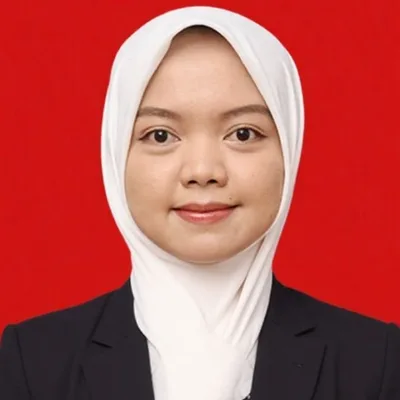
Hani H.
History Education, Universitas Negeri Malang
Tidying the grade 10 to 12 timeline“At Universitas Negeri Malang, Hani studied History Education, a programme that trains future teachers to arrange the past into a sequence that is easy to follow. With a student she usually starts from a simple timeline on one sheet of paper, then fills it chapter by chapter until events from grade 10 and grade 12 read as one connected story.”

Rafi R.
History Education, Universitas Negeri Yogyakarta
Reading historical sources with the right questions“Archives, old photographs, and speech excerpts often appear in History questions as material to analyse. Rafi, a History Education graduate of Universitas Negeri Yogyakarta, has students ask who made a source, when it was made, and for whom, before they draw a conclusion.”
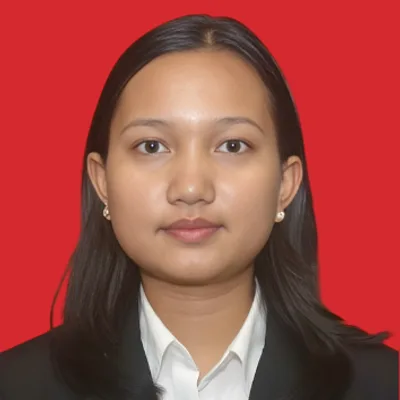
Weni W.
History Education, Universitas Negeri Medan
Linking national chapters to regional history“Weni studied History Education at Universitas Negeri Medan. She connects the national movement and the independence revolution to events in the regions, such as a resistance that once took place in the student's own city, so long chapters gain an anchor that feels close to home.”

Ajril A.
History Education, Universitas Pendidikan Indonesia
Unpacking TKA History stimulus material“Many TKA History questions start from a stimulus such as a text, a picture, or a table. With a History Education degree from Universitas Pendidikan Indonesia, Ajril works through that stimulus with students one sentence at a time and links it to concepts they have already met in class.”
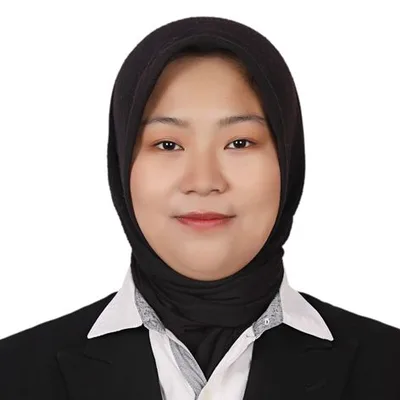
Aulia A.
History, Universitas Gadjah Mada
Guiding small-scale history research tasks“As a History graduate of Universitas Gadjah Mada, Aulia knows how historians work: collect sources, test them, then write them up again. She brings that habit to the papers and simple history research reports that schools now ask for from grade 10 onward.”
Jamil M.
Historical Science, Universitas Jember
Breaking down the causes and effects of an event“Why did a kingdom fall, and why was a treaty finally signed? Jamil, a Historical Science graduate of Universitas Jember, likes to open a session with questions like these, then guides students to build their answer from several connected factors.”
High School History Tutoring Fees
History tutoring follows EduPoint's SMA rate, starting at Rp79.000 per hour. The same rate applies to core History, Advanced History, and TKA preparation.
Starting from
Rp 79.000 / hour
Final price is set at registration.
This is the lowest hourly rate, derived from the 28-session monthly plan at 120 minutes per session. Per-session prices (60, 90, or 120 minutes) appear in the format options above.
Register & Get a QuoteFlexible payment — QRIS, Virtual Account, Alfamart, Indomaret, transfer & e-wallets.
That hourly rate assumes a history learner books 28 meetings a month, each running 120 minutes. Every common payment method is accepted, including QRIS, Virtual Account, e-wallets, cards, and cash at Indomaret or Alfamart.
FAQ
High School History Tutoring FAQ
Short answers to what students, and whoever enrols them, ask most often.
Private history tutoring for SMA starts at Rp79.000 per hour. It assumes 28 meetings a month, each lasting 120 minutes. Sessions of 60 and 90 minutes can also be booked, and groups of 2 or 3 students bring the fee per student down. Each cost line is itemised once the learner fills in the sign-up form.
Yes. History is one of the elective subjects in the Pusmendik TKA for SMA, alongside the three compulsory subjects of Mathematics, Indonesian, and English. Each student picks two electives. TKA History has six content areas, opening with basic historical concepts and closing with the New Order and Reformasi.
The main 2026 SMA TKA window is set for 26 October to 8 November 2026, with make-up sittings on 16 to 29 November and results due on 23 December 2026, based on Pusmendik's timetable as reported in the media. Each student's exact sitting comes through their school.
The UTBK SNBT consists of the Scholastic Potential Test and Literacy Tests, with no History subject test, and its scores do not use TKA results. For SNBP 2026, TKA results are required, so History counts through the TKA when a student chooses it. Rules for later years follow SNPMB announcements.
Core History is taken by every grade 11 and 12 student and focuses on Indonesian history from colonial rule to Reformasi. Advanced History (Sejarah Tingkat Lanjut) is an elective of 5 lesson periods a week covering world history, such as the great revolutions, both world wars, and the Cold War, linked back to Indonesia.
Complete Guide
A Complete Guide to High School History Tutoring
History in Indonesian high school runs across two phases. In grade 10 it sits inside the Social Sciences subject alongside Sociology, Economics, and Geography, so the four disciplines share 288 lesson periods of classroom time a year. This is Phase E: the basic ideas of historical study such as people, place, time, chronology, and change, practice in historical research, and a stretch of content running from the Hindu-Buddhist kingdoms to the Islamic kingdoms.
From grade 11, History becomes a core subject of its own under Phase F, with 72 lesson periods a year in grade 11 and 64 in grade 12, project time included. It covers nine topics in order: Western colonial rule, regional resistance, the national movement, the Japanese occupation, the Proclamation, defending independence, the Sukarno years, the Suharto years, and Reformasi. Because the Learning Outcomes only fix content by phase, the split of those nine topics across grades 11 and 12 is left to each school.
Phase F is officially described as a continuation of Phase E, which means the grade 10 groundwork keeps coming back. A student who never quite separated chronology from change tends to feel it in the colonial chapters, where causes and effects start to stack up. For that reason a high school history tutor usually starts by locating the student on this path: the chapter being taught in class, any chapter left behind, and whether the school still follows the older grade 10 sequence from earlier textbooks.
Home practice in history pays off most when the student produces something with their own hands: a timeline, a cause-and-effect summary, or a written answer. Three habits work well without anyone sitting alongside.
A handwritten timeline. For each chapter, the student writes five to eight key events in order, then adds one sentence between each pair explaining how the first led to the second. A study of 125 grade 10 students in Solok found 43.2% in the weak category for chronological thinking, so this habit targets the most common gap.
One event, six questions. Pick a single event, say the Ethical Policy, and answer what, who, when, where, why, and how without looking at notes. The why and how answers are usually the hardest, and those are exactly the parts worth bringing to the next session with the tutor.
Explaining it out loud. Research at two state high schools in Samarinda observed students needing a 1 to 2 minute pause to search Google or an AI tool when asked to explain events in sequence. Talking through one period for two minutes, recording it on a phone, and listening back lets the student check whether the sequence has actually stuck.
The self-study materials and lesson recordings on app.edupoint.id are open at any hour, so a student can replay the tutor's explanation of a chapter before starting the practice.
In the SMA TKA administered by Pusmendik, History sits on the list of electives. Students choose two electives in addition to Mathematics, Indonesian, and English. The assessment framework has six content areas: Introduction to Historical Study, the Hindu-Buddhist and Islamic Kingdoms, Resistance to European Powers, the National Movement up to the Proclamation of Independence, the Independence Revolution up to Guided Democracy, and the New Order through Reformasi. The first two come from grade 10, so TKA preparation needs time set aside to revisit Phase E material.
Each item targets one of three cognitive levels: understanding, applying, or reasoning. Pusmendik's published sample items come in three formats: single-answer multiple choice, complex multiple choice with more than one correct option, and complex multiple choice in which every statement gets marked Correct or Incorrect. Question stems draw on document excerpts, maps, tables, and photographs, so reading primary and secondary sources is tested alongside command of the facts.
A sensible order of work: find the weakest content area with one mixed practice set, rebuild the chronology for each area, then drill the complex formats that ask the student to judge every statement on its own. The timetable reported in the press puts the main 2026 SMA TKA window at 26 October to 8 November 2026, with each student's sitting confirmed by their school. TKA results feed into SNBP 2026, while the UTBK SNBT does not use them.
Advanced History (Sejarah Tingkat Lanjut) is an elective for grades 11 and 12 carrying 5 lesson periods a week, or 180 a year. Its essential content moves from human origins through the great civilisations and ideas of the world, the major revolutions, the First and Second World Wars, and the Cold War, up to contemporary events of the 21st century, and every topic is tied back to Indonesia.
What sets the subject apart is its seven criteria for historical thinking: historical significance, working with sources, change with continuity and recurrence, rise and decline, the spatial side of history, empathy and moral judgement, and historical actors. Working with sources breaks down into four steps of its own: identification, attribution, contextualisation, and corroboration. Students used to memorising are often caught off guard because the tasks ask for judgement, for instance how much a revolution mattered to people at the time and how much it matters to people today.
One study method that helps: build a table for each major topic with columns for causes, actors, global impact, and the link to Indonesia. For the Cold War, that last column can hold Indonesia's stance under Sukarno, which also appears in core History, so the two subjects reinforce each other. The subject closes with a history project in digital or non-digital form, and it gives a useful footing to students drawn to history, history education, archaeology, international relations, politics, or philosophy.
Material brought from class gives a history lesson its direction: notes, assignments, a formative assessment sheet, or questions answered wrongly. From that material the tutor can see which chapter needs another pass and which skill is lagging, whether that is sequencing, reading sources, or writing cause and effect.
Many schools assess history through inquiry projects and presentations. The stages follow the Phase F Learning Outcomes: heuristics to gather sources, source criticism to test their reliability, interpretation, and finally historiography, the writing itself. The tutor coaches each stage through questions and feedback, and the finished piece remains the student's own work.
Lesson length is 60, 90, or 120 minutes. One chapter or one question set fits into an hour, 90 minutes fits a long chapter such as the colonial period, and 120 minutes works for reviewing several content areas in the run-up to the TKA. Students book anywhere from 4 to 28 history sessions per month, in person or online, placed at any hour between 06:00 and 23:00.
It all begins with a consultation. At that stage the student, or the person enrolling them, passes on the schedule and the chapters that need work. The EduPoint team then finds a suitable tutor, and lessons begin. After 3 to 4 sessions most students can tell whether the tutor's teaching style fits, and the tutor replacement guarantee applies if it does not. Lesson recordings and progress reports stay in the learner app, so progress on each chapter can be reviewed later.
Guides & Tips
Supporting articles to help you decide and maximize learning outcomes.
How to Learn History Through Cause and Effect
History becomes easy to remember once each event is understood as a link in a chain, with a cause behind it and a consequence ahead of it.
How to Memorize Historical Chronology the Easy Way
Master the order of time by grouping eras, planting anchor events, and chaining what happened into one story that flows.
How to Memorize History Material for Exams
Six memory techniques that make dates, figures, and event sequences stick until exam day.
Tips for Studying Indonesian History for Exams
How to turn centuries of material into a map you can master before the history exam.
More Programs for High School Students
Subjects often taken alongside history, including other social science strands and university entrance preparation.
Ready to Study SMA History with a Tutor?
Share the grade, school, and chapter currently in progress. The EduPoint team will find a history tutor who fits an in-person or online schedule.
Grades 10, 11, 12, and Advanced HistorySource practice for TKA HistoryTutor replacement guarantee