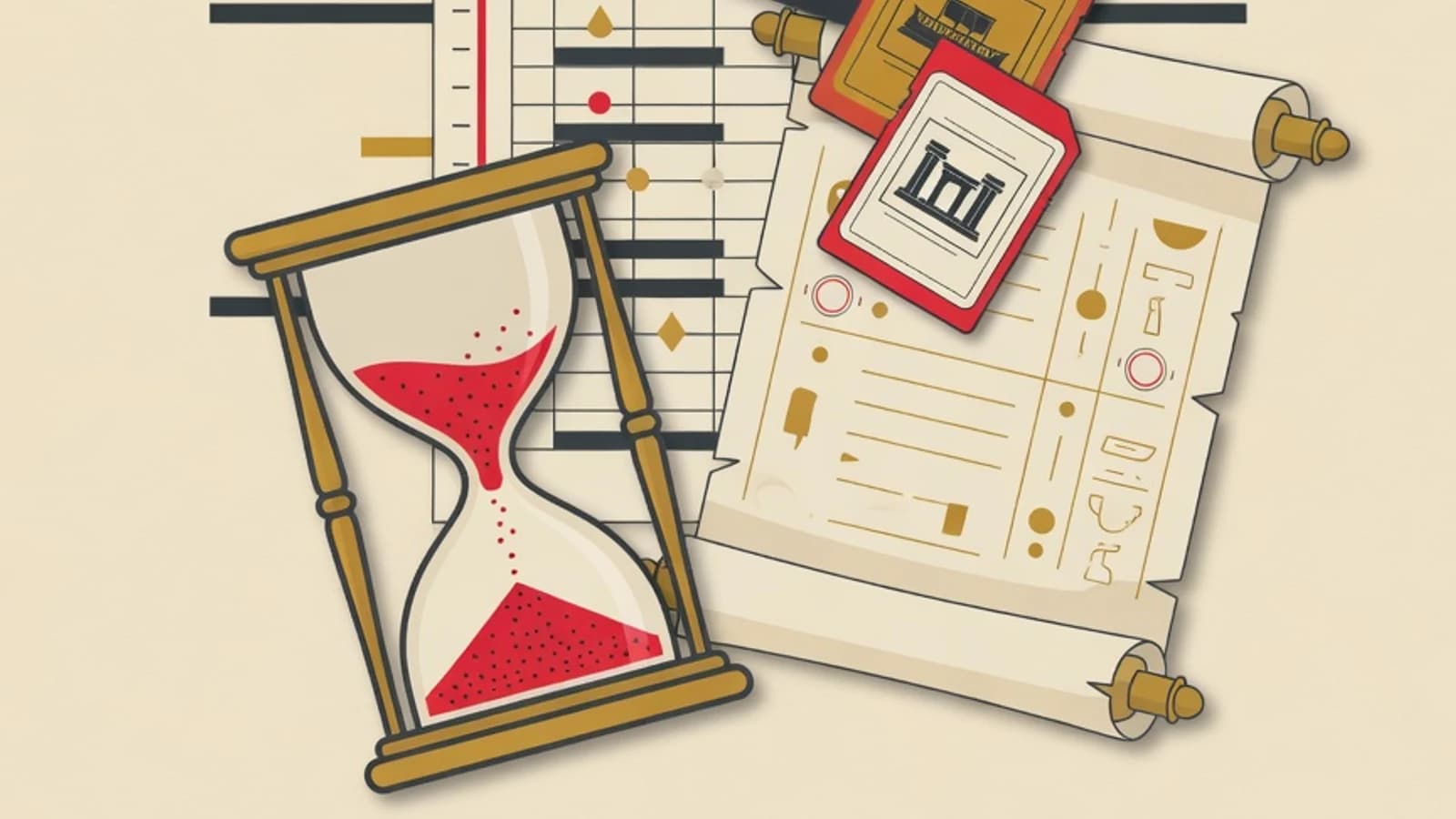
The most durable way to memorize history material for exams is to arrange events on a timeline, give each date a mnemonic or memory image, then review it in spaced sessions by closing your notes and retelling it. Facts tied to a story and a sequence last far longer than dates read over and over.
- A timeline turns a list of dates into a single, memorable flow
- Mnemonics and memory images lock down look-alike names and numbers
- Spaced review and active recall hold off forgetting as the exam nears
- The syllabus or exam blueprint for the history material tested
- Recall cards (paper or a flashcard app)
- A blank timeline to fill in gradually
- A two-week spaced review schedule
Why history facts fade so fast
Understand first, memorize second
Memorizing history gets lighter once you first grasp what you are memorizing. Indonesia's Merdeka Curriculum arranges history chronologically so students catch the cause-and-effect thread across the nation's journey. Put that to work: before jotting down the date of the Youth Pledge or the Proclamation, ask which event came before it and what followed. The brain stores meaningful information far more tightly than loose numbers. A date attached to a story carries many links, so it is easier to retrieve when an exam question appears. Once the story frame is clear, the techniques below simply lock in the remaining details: names of figures, exact years, and sequences that are easy to mix up.
Six steps to memorize history material for exams
Work through them in order, starting two to three weeks before the exam. Each step builds on the last, so your grip on dates and figures grows gradually.
- Step 1
Break the syllabus into small chapters
Take the exam blueprint or the list of tested chapters, then split it into small chapters, for example the Hindu-Buddhist kingdoms era, the colonial era, the national movement, and independence. The brain memorizes chunks of five to seven events more comfortably than one long list. Give each chapter its own page. This makes the volume of history feel manageable and shows you exactly which part is still shaky. Mark the chapters densest with dates so they later get more practice.
Tips- Cap each chapter at seven core events so it stays masterable
- Order chapters from the ones you know best to the least familiar
- Step 2
Build a timeline for each chapter
Draw one horizontal line, then place events in year order from left to right. A timeline turns scattered dates into a flow with direction, so you remember an event's position within the flow, with its year anchored to that spot. As you fill it, say the links out loud: this event happened because of the previous one, and triggered the next. Color each era differently so your eye recognizes its group quickly. When an exam asks for the order of events, this timeline image will surface first.
Tips- Redraw the timeline from memory instead of only copying it
- Space the points to match the year gaps so proportions feel real
Avoid memorizing dates detached from their context. A number standing alone is the first to get mixed up during an exam. - Step 3
Create mnemonics for similar numbers and names
For key dates and figures that are easy to confuse, build mnemonics or acronyms. A year like 1945 can be locked with a short phrase you invent, and a list of committee names can shrink into a funny acronym. The sillier and more personal the link, the stickier it is, because the brain favors the standout. Make your own, since a mnemonic built by someone else rarely holds as firmly as yours. Gather them all on one dedicated list for a fast review near exam day.
Tips- Tie numbers to a sound or word that resembles them for easy recall
- Keep one page holding all the mnemonics you invented
- Step 4
Place major events in a method of loci
The method of loci sets information along familiar places, such as the corners of your room or the streets from home to school. Picture walking that route and drop one historical event at each point, complete with a vivid image. A 2022 study recorded a recall gain of about 20.4 percent when this method was used over ordinary memorization. It suits long ordered sequences especially well, like a run of cabinets or the stages of a revolution. Walk through your memory palace a few times until each spot triggers its event automatically.
Tips- Use places you genuinely know so the route stays stable
- Make images that move and glow with color so they stay vivid
- Step 5
Test yourself with active recall
Close all your notes, then write or retell one chapter from memory. Pulling information out of your head strengthens it far more than rereading the same page. Research on students shows that combining self-testing and spaced review measurably improves academic results. Make question-and-answer cards: the front asks something like when the second Youth Congress was held, the back gives the answer. Every miss flags a part you need to revisit, so study time aims straight at the weak spots.
Tips- Say the answer out loud before flipping the card
- Separate the cards you know well from those you still miss
Rereading notes repeatedly feels productive, yet the memory it forms is shallow. Prioritize testing yourself. - Step 6
Review in spaced sessions until exam day
Schedule reviews at widening gaps: review one day after learning, then three days, then seven. This spaced pattern fights the forgetting curve and keeps material fresh with less effort than daily repetition. An analysis of hundreds of experiments found spaced study leads by 10 to 30 percent over piling everything into one sitting. Set aside cards you already know for longer intervals, and prioritize the ones you still miss. Near the exam, a quick pass over the timeline and mnemonic list is enough.
Tips- Mark review dates on a calendar so none slip by
- Avoid piling all the memorizing onto the night before the exam
Matching the technique to the material
| Material type | Main technique | Example |
|---|---|---|
| Event sequence | Timeline | Stages of the national movement |
| Dates and numbers | Mnemonics | Proclamation and treaty years |
| Long ordered lists | Method of loci | Cabinet lineups or treaties |
| Figures and roles | Question cards | Committee members and their work |
Most history chapters demand a mix of techniques. Combine them to fit the shape of the material.
Readiness checklist before the history exam
- Every chapter has a timeline you can redraw from memory
- Each easily confused date and name has its own mnemonic
- Question cards are split between mastered and still-missed
- The spaced review schedule is followed step by step across two weeks
- A quick pass over the timeline and mnemonic list is ready for the day before
“Students who retell a chapter with their notes closed always remember more than those who read the same chapter three times. Memorizing history strengthens when the memory is pulled out of the head, while staring at a page over and over only leaves a shallow trace.”
- Arrange events on a timeline so the order and the position of years get memorized as one whole flow.
- Lock similar dates and names with your own mnemonics and vivid memory images.
- Test yourself with notes closed and review in spaced sessions to hold off the forgetting curve until exam day.