1,040+ SMA Chemistry Tutors Registered
Private SMA Chemistry Tutoring for Grades 10, 11 and 12
In grade 10, chemistry sits inside the combined science subject alongside physics and biology. From grade 11 it becomes its own elective with 5 lessons a week. A chemistry tutor helps you connect three things that often drift apart in class: the reaction you can see, the particles you cannot, and the formulas that describe both.
1,040+
tutors
11,760+
students
5
rating · 3,528 reviews
60+
cities
What is SMA Chemistry Tutoring?
SMA chemistry tutoring is a private session with a chemistry tutor for students in grades 10 to 12, online or in person, starting from Rp 79,000 per hour. Lessons follow your school: atomic structure and the basic laws of chemistry in grade 10, moles through thermochemistry in grade 11, then acids and bases, electrochemistry and carbon compounds in grade 12.
- Grade 10 (Phase E): chemistry is taught within science, sharing 216 instructional lessons a year with physics and biology.
- Grades 11 and 12 (Phase F): Chemistry is an elective at 5 lessons a week, taken by the students who choose it.
- Each topic is worked through the three levels of chemical representation: macroscopic, submicroscopic and symbolic.
- Chemistry is one of the elective papers in the SMA TKA, covering Basic, Analytical, Physical and Organic Chemistry.
- A chemistry session runs 60, 90 or 120 minutes, and the slot can open as early as 06:00 or wrap up by 23:00, leaving room around lab reports and school tests.
Services
SMA Chemistry Tutoring Formats
Pick the way of learning that fits your school timetable and where you live. In-person rates already include the tutor's travel.
Private In-Person
A chemistry tutor comes to your home or another study place you choose, bringing worked examples and practice sets for the chapter you are on at school.
Rp 124.000/ 90-minute session
Price on the 28-session monthly plan, 90-minute sessions. Fewer meetings, higher price per session.
- One tutor, one student
- Lab reports can be reviewed straight from your notebook
- Sessions between 06:00 and 23:00
Private Online
Sessions over Zoom or Google Meet with screen sharing and a digital whiteboard, handy for sketching molecular structures and voltaic cell diagrams together.
Rp 98.000/ 60-minute session
Price on the 28-session monthly plan, 60-minute sessions. Fewer meetings, higher price per session.
- Session recordings to replay before a test
- Digital whiteboard
- Chat for questions between sessions
Small Group of Two
Study in a pair with a classmate working on the same chapter, for example in the run-up to a stoichiometry or equilibrium test.
Rp 93.000/ 90-minute session
Price on the 28-session monthly plan, 90-minute sessions. Fewer meetings, higher price per session.
- Price per student
- Topics agreed together
- Online or in person
Online and in-person cost the same — the gap between these cards is session length, nothing else.
SMA Chemistry Topics by Grade
The chapters that usually appear in grades 10, 11 and 12, plus the lab and inquiry skills and preparation for the TKA Chemistry paper. Your tutor sets the order from your school textbook and test calendar.
The grade split shown here follows the MGMP Kimia topic map built on the 2024 learning outcomes. Each school may arrange its own sequence, so the chapter you meet this week can sit in a different place at another school. Bring your notes or worksheets from your school chemistry teacher to the first session so the tutor can match your pace straight away.
Grade 10: Chemistry Inside Science
Grade 10 chemistry is still reported under science. Schools may teach it integrated with physics and biology, in alternating blocks, or in parallel with separate hours. This is where the groundwork for all SMA chemistry is laid, above all atomic structure and writing reactions.
- Measurement in scientific work and lab safety
- Development of atomic theory and atomic structure
- Electron configuration, element position and periodic trends
- Writing and balancing chemical equations
- +2 more
Grade 11: Chemical Calculations and Reaction Dynamics
Grade 11 is the first year of Chemistry as an elective, 180 lessons across the year. Nearly every chapter rests on the mole, so tutoring at this stage spends a lot of time converting units and reading coefficient ratios.
- The mole: mass, gas volume and number of particles
- Stoichiometry, limiting reactant and excess reactant
- Chemical bonding and molecular shape
- Reaction rates and the factors behind them
- +2 more
Grade 12: Solutions, Electrochemistry and Carbon Compounds
Grade 12 keeps Chemistry at 5 lessons a week over a shorter year, 160 lessons in 32 weeks. The chapters are heavy on solution calculations and finish with organic chemistry, which asks for naming rules and a real feel for functional groups.
- Acids, bases and pH calculations
- Salt hydrolysis and solubility product (Ksp)
- Buffer solutions
- Redox reactions, voltaic cells and electrolysis
- +2 more
Chemistry Process Skills
The Chemistry learning outcomes have two strands. One is chemical understanding; the other is process skills, assessed through practicals, lab reports and projects. Your tutor can also help you write up lab reports and read experimental data.
- Observing
- Questioning and predicting
- Planning and carrying out investigations
- Processing and analysing data
- +2 more
Preparing for the TKA Chemistry Paper
The SMA TKA assessment framework lists Chemistry as one of the elective papers. Questions test conceptual command, applying concepts to solve problems, and analysing chemistry in everyday life, drawing on core content from both the 2013 Curriculum and the Merdeka Curriculum.
- Basic Chemistry: atoms, periodicity, bonding, stoichiometry
- Analytical Chemistry: solutions, acids and bases, pH, colloids
- Physical Chemistry: reaction energetics and dynamics
- Organic Chemistry: structure and reactivity of carbon compounds
- +2 more
Who It Is For
Who Takes SMA Chemistry Tutoring
A grade 10 student needs something different from a grade 12 student, so the chemistry tutor sets the starting point and session goals from where you are now.
Grade 10 students meeting chemistry inside science
Grade 10 chemistry shares its hours with physics and biology, while atomic structure and the basic laws become the footing for every later chapter. Tutoring at this stage tidies up that footing.
Recommended:
Atomic structure and electron configurationBalancing equationsBasic laws of chemistry
Grade 11 students who chose Chemistry
Choosing Chemistry means 5 chemistry lessons every week. The mole, stoichiometry and equilibrium arrive one after another within a single year, so a chapter left behind shows up quickly in the next one.
Recommended:
The mole and stoichiometryReaction rates and equilibriumThermochemistry
Grade 12 students preparing for the TKA
Chemistry can be one of the two elective TKA papers, picked to match the degree or career you are aiming for. Sessions combine grade 12 chapters with practice on complex multiple-choice questions.
Recommended:
Acids and bases, Ksp and buffersElectrochemistry and carbon compoundsQuestions set in industrial and environmental contexts
Students training for the Chemistry OSN
Chemistry is one of the nine SMA fields of the national science olympiad run by Puspresnas. Olympiad problems demand deeper reasoning than school tests, so sessions lean toward deriving concepts and multi-step problems.
Recommended:
Deeper physical and organic chemistryMulti-step reasoning problemsEduPoint OSN programme
Students on Cambridge or IB programmes
Tutors also cover chemistry for Cambridge IGCSE, AS and A Level, and the IB Diploma Programme, using English terminology and question formats.
Recommended:
IGCSE and A Level ChemistryIB ChemistrySessions in English
Sticking points documented in chemistry education research
The SMA Chemistry Chapters Where Students Most Often Get Stuck
Trouble in SMA chemistry rarely shows up at random. Chemistry education studies in Indonesia keep pointing to the same chapters, and most of them trace back to one thing: the particle level you cannot see directly.
Stoichiometry problems stall at step one
Why it happens
A literature review on stoichiometry found the most frequent causes are a shaky grasp of the mole and equations that were never balanced. Once those two slip, every coefficient ratio after them goes wrong as well.
How we fix it
The tutor starts by balancing the reaction, then converts grams, litres of gas and particle counts to moles along one calculation route used for every problem.
Limiting and excess reactants get swapped
Why it happens
Many students take the largest mass as the reference. The limiting reactant is decided by each substance's moles relative to its coefficient, and that step is easy to skip.
How we fix it
Every problem is laid out in an initial, reacting and remaining table, so theoretical yield and leftover reactant come out of the same grid.
Bonding is memorised with no picture of the particles
Why it happens
Research on submicroscopic representation in chemical bonding found that lessons which skip the particle level leave students memorising formulas without understanding the concept.
How we fix it
The tutor sketches electron arrangements and molecular models first, writes the formula afterwards, then asks you to explain it back using your own drawing.
Strong acids and concentrated acids are treated as the same thing
Why it happens
A study of the three representation levels in acid-base chemistry recorded misconceptions about acid and base strength, with the weakest results where students link what they observe to a pH calculation.
How we fix it
Two questions are kept apart from the start: how much of the substance ionises, and how much of it was dissolved. The pH formula only comes in once both are clear.
Equilibrium feels like nothing is happening
Why it happens
Equilibrium is known as an abstract, layered chapter. Forward and reverse reactions run at the same time while the beaker shows no visible change.
How we fix it
The tutor uses a table of initial, change and equilibrium concentrations, then tests the direction of a shift with one disturbance at a time.
Voltaic cells are calculated without knowing which way electrons flow
Why it happens
A literature review on voltaic cells notes the topic asks for all three representation levels at once. When they stay unconnected, misconceptions surface in cell notation and cell potential.
How we fix it
The full cell is drawn first: anode, cathode, salt bridge and electron flow. Notation and potential calculations are written once the drawing is right.
Your tutor first works out where you get stuck from the way you solve problems, then decides which chapter needs rebuilding from the ground up.
SMA Chemistry Tutors from Six Campuses
The six tutors below studied Chemistry or Chemistry Education, from Universitas Pendidikan Indonesia in Bandung to Universitas Airlangga in Surabaya, and each campus and major is taken as recorded in their education history. When registering, the learner only needs to name the chapter they are working on at school and their free hours, and the EduPoint team finds a chemistry tutor who fits.
Tutor Qualifications
- Studied Chemistry or Chemistry Education at university level
- Familiar with chemistry inside grade 10 science and elective Chemistry in grades 11 and 12
- Used to writing out mole, stoichiometry, and pH calculations step by step

Ghozi M.
Chemistry, Universitas Pendidikan Indonesia
The mole through everyday counting units“The mole often feels abstract because its numbers are too large to picture. Ghozi, a Chemistry graduate of Universitas Pendidikan Indonesia, starts from familiar counting units such as a dozen and a score, then leads the learner toward Avogadro's number and grade 11 stoichiometry.”

Dia D.
Chemistry Education, Universitas Negeri Surabaya
Balancing reactions with an atom table“In grade 10, an unbalanced equation becomes the source of calculation errors in every chapter that follows. Dia studied Chemistry Education at Universitas Negeri Surabaya, and she has the learner count the atoms of each element on the left and right in a small table before filling in any coefficient.”
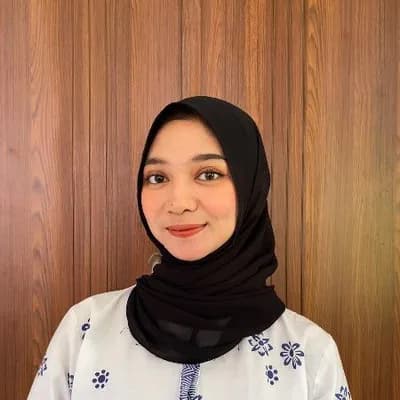
Shely S.
Chemistry, Universitas Diponegoro
Reading which way equilibrium shifts“Chemical equilibrium asks students to picture a reaction running in two directions at once. Her Chemistry degree from Universitas Diponegoro left Shely used to sketching the state before and after a disturbance, so the learner can predict the shift under Le Chatelier's principle and explain why.”
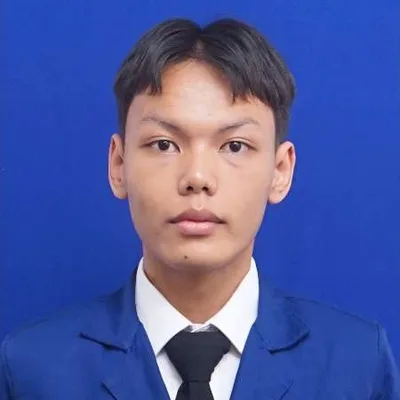
Erif E.
Chemistry Education, Universitas Negeri Yogyakarta
Atomic structure as the door to bonding“Electron configuration understood in grade 10 makes chemical bonding and molecular shape easier a year later. Erif studied Chemistry Education at Universitas Negeri Yogyakarta, and in sessions he asks the learner to explain where an element sits in the periodic table from its own electron arrangement.”
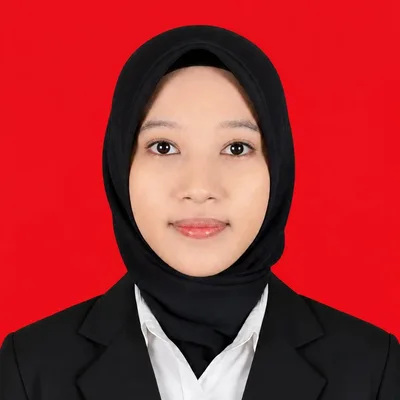
Fiya L.
Chemistry, Universitas Airlangga
Acids, bases, and pH worked in order“Buffer solutions, salt hydrolysis, and pH calculations often blur together for grade 12 learners. From her Chemistry studies at Universitas Airlangga, Fiya brings one opening question that pulls them apart: which substances are still left in the solution once the reaction is over.”
Alya S.
Chemistry Education, Universitas Sebelas Maret
Redox and electrochemistry for grade 12“Grade 12 carries redox reactions into voltaic cells and electrolysis, where oxidation numbers start doing the counting. Alya studied Chemistry Education at Universitas Sebelas Maret and Chemistry at Universitas Gadjah Mada, and she guides the learner to mark the oxidation number of every atom before naming the cathode and anode.”
SMA Chemistry Tutoring Fees
SMA chemistry tutoring starts from Rp 79,000 per hour at the SMA level, the same for grades 10, 11 and 12. Each chemistry lesson lasts 60, 90 or 120 minutes, whichever suits the chapter.
Starting from
Rp 79.000 / hour
Final price is set at registration.
This is the lowest hourly rate, derived from the 28-session monthly plan at 120 minutes per session. Per-session prices (60, 90, or 120 minutes) appear in the format options above.
Register & Get a QuoteFlexible payment — QRIS, Virtual Account, Alfamart, Indomaret, transfer & e-wallets.
A monthly chemistry plan holds between 4 and 28 sessions, sized to how many chapters you need to cover. The registration fee is listed on the sign-up form. Chemistry lessons can be paid for by card, QRIS, digital wallet, Virtual Account or a transfer to the EduPoint account, and cash payments work at any Indomaret or Alfamart.
SMA Chemistry Tutoring Online and In Person
Online Tutoring
Online WorldwideOnline chemistry tutoring works from any city. Session recordings are kept, and chemistry self-study material and progress reports open from the EduPoint learner app (app.edupoint.id).
- Zoom or Google Meet
- Screen sharing and digital whiteboard
- Session recordings
- Progress reports in the learner app
In-Person Tutoring
All CitiesIn-person chemistry tutors are available in 60+ cities across Indonesia. Once you share your address and schedule, the team looks for a tutor close to where you study.
FAQ
Questions About SMA Chemistry Tutoring
Short answers on fees, topics by grade, the TKA, and how you get matched with a chemistry tutor.
SMA chemistry tutoring starts from Rp 79,000 per hour for private sessions. You pick a lesson length of 60, 90 or 120 minutes, and monthly plans run from 4 to 28 sessions. The registration fee appears on the sign-up form. Payment works by bank transfer, Virtual Account, QRIS, e-wallets and debit or credit cards, and cash can be paid at Alfamart or Indomaret stores.
Yes. In grade 10 a school may teach science as one integrated subject, in alternating blocks, or in parallel with separate hours, so the order of chemistry chapters varies between schools. Your tutor works from the textbook, worksheets and test dates you bring to the session.
It is, because grade 10 chapters such as atomic structure, chemical reactions and the basic laws of chemistry come back in almost every grade 11 chapter. Elective subjects are chosen at the end of grade 10, and a learner who wants to switch electives still has room to do so until the even semester of grade 11 ends, under the current curriculum rules.
The 2026 UTBK-SNBT has no chemistry subject test. It consists of the Scholastic Potential Test, Indonesian Literacy, English Literacy and Mathematical Reasoning. SMA chemistry shows up through your school report and through the TKA, where Chemistry is one of the elective papers.
Under the BSKAP assessment framework, TKA Chemistry has four strands: Basic, Analytical, Physical and Organic Chemistry. Questions are set in contexts of scientific inquiry, everyday phenomena, the environment and industrial processes such as Haber-Bosch or the contact process, in simple and complex multiple-choice formats.
Complete Guide
Complete Guide to SMA Chemistry Tutoring: How Topics Connect, Home Practice, and TKA Prep
Each SMA chemistry chapter rests on an earlier one, so a gap left in grade 10 tends to resurface in grade 11 or 12. In grade 10 (Phase E), chemistry still shares its hours with physics and biology inside the combined science subject, so time is short even though this is the year the foundations are laid. Atomic structure leads to electron configuration, electron configuration explains where an element sits on the periodic table, and that position is the starting point for understanding chemical bonding.
Grade 11 (Phase F) turns Chemistry into an elective subject with 5 lessons a week, roughly 180 lesson hours a year. The mole sits at the centre of it all: stoichiometry, reaction rates, equilibrium, and thermochemistry all calculate in moles. A learner who still hesitates when converting grams to moles will feel it in nearly every chapter that follows.
Grade 12 keeps the 5 lessons a week over an assumed 32 teaching weeks, about 160 lesson hours. Acids and bases, salt hydrolysis, Ksp, and buffer solutions reuse equilibrium from grade 11. Redox and electrochemistry depend on balancing equations from grade 10, while carbon compounds return to bonding and molecular shape.
Because the chain is long, SMA chemistry tutoring often starts by tracing backwards, from the problem that is stuck today to the older topic at its root. Schools are free to order topics differently, so this map is a general guide, and the textbook from your own school stays the reference for each session.
Nearly every chemistry concept can be read on three levels. The macroscopic level is what shows up in the lab: a solution changes colour, gas bubbles out, the beaker feels warm. The submicroscopic level is the arrangement and movement of particles you cannot see: ions breaking apart, electrons moving, molecules colliding. The symbolic level is how all of that gets written down, as formulas, equations, pH values, and cell notation.
Chemistry education research identifies the submicroscopic level as the hardest, because it asks for abstract thinking. The effect shows up in several topics. In chemical bonding, learners who rarely see a particle picture tend to memorise formulas without grasping the concept. In acids and bases, the lowest scores appear when an observation has to be linked to symbols and calculation, for example explaining why two solutions of the same concentration can have different pH values. In voltaic cells all three levels are in play at once, and failing to join them is a common source of misconceptions.
A simple habit helps connect them. Every time you write an equation, sketch the particles in two small boxes, one before and one after the reaction, then write one sentence about what you would actually see in the test tube. It feels slow at first, and over time it makes equilibrium and electrochemistry easier to follow.
In a private session, an SMA chemistry tutor may ask you to explain a problem using your own drawing. The drawing shows which level has not connected yet, so session time goes to the part that genuinely needs it.
The days between two tutoring sessions decide whether the chemistry actually sticks. A few practice habits that suit SMA chemistry:
- Balance two or three equations every day. Balancing comes back in stoichiometry, redox, and electrochemistry, so the skill keeps paying off right up to grade 12. - Work stoichiometry problems with an initial, reacting, and remaining table, including the ones that look easy. Writing the table every time keeps the limiting reagent and the excess reactant from getting swapped. - Draw a concept map for each chapter. A literature review on stoichiometry difficulties lists concept maps among the strategies that help, and the map also shows which chapters depend on one another. - Keep an error notebook. Write down the problem you got wrong, the step where it went off track, and the correct method, then revisit it a week later. - Rehearse the steps a lab report asks for: watch the reaction closely, pose a question and a prediction, plan the investigation, process the data, evaluate it, then report what you found.
Learners who study online can replay session recordings on app.edupoint.id while they practise, alongside self-study materials and progress reports. The pace of tutoring is flexible too, with monthly packages of 4 to 28 sessions. A 60-minute session suits working through one type of problem, 90 minutes covers a subtopic, and 120 minutes is enough to finish a whole chapter with practice.
Daily assessments, mid-semester tests, and end-of-semester tests are set by each school, and graduation remains the school's decision. The most useful practice material for school tests is the outline or worksheet from your chemistry teacher, plus earlier test papers redone to spot recurring mistakes.
Grade 12 learners have one more milestone: the Tes Kemampuan Akademik (TKA). Its compulsory papers are Indonesian, Mathematics, and English, plus two elective papers chosen to match the study programme or career a learner is aiming for, and Chemistry is on that elective list. TKA results are one of the considerations in university admission, while graduation itself does not depend on the TKA.
The BSKAP assessment framework splits TKA Chemistry into four elements. General Chemistry covers atomic structure, periodic properties, bonding, molecular geometry, intermolecular forces, basic laws, and stoichiometry. Analytical Chemistry deals with solutions, solution equilibria, acids and bases, pH, and colloids. Physical Chemistry covers the energetics and dynamics of reactions, and Organic Chemistry covers the structure and reactivity of carbon compounds. The content draws on the essential material of both Kurikulum 2013 and Kurikulum Merdeka, which means grade 10 and 11 topics are tested as well.
The chemistry paper uses three formats: standard multiple choice with one answer, complex multiple choice where several answers can be right, and category-based multiple choice. Contexts include scientific investigation, everyday phenomena, environmental problems, and industrial processes such as Haber-Bosch for ammonia or the contact process for sulfuric acid. TKA chemistry practice is therefore best done with long, context-heavy questions that ask you to read the data first and calculate second.
Private SMA chemistry tutoring pays off most when each session targets a specific sticking point. Before the first session, gather three things: the chapter your class is on, two or three problems you cannot solve yet, and the date of your next test. With that in hand, the tutor can see straight away at which step your working stops.
For calculation-heavy chapters such as stoichiometry or Ksp, a common session pattern runs in three rounds. The tutor solves one problem while explaining the reason behind each step, you solve a similar one while talking through your steps, and then you finish a third on your own. For conceptual chapters such as bonding or equilibrium, more of the session goes into drawing particles and explaining ideas back in your own words.
Signing up takes four steps. It starts with a consultation, then you or whoever enrols you shares the schedule and learning needs, the EduPoint team finds a suitable SMA chemistry tutor, and the sessions begin. Whether the tutor comes in person or teaches online, a chemistry slot may begin at 06.00 at the earliest and end by 23.00, so it fits before a practical or after a long school day. If a tutor's teaching style does not feel right, you can ask for a replacement at no cost.
As sessions go on, the progress report in the learner app records which chapters have been covered. That record helps decide when sessions should move from catching up on a missed chapter to mixed practice across chapters, for instance ahead of end-of-semester tests or the TKA.
Guides & Tips
Supporting articles to help you decide and maximize learning outcomes.
How to Balance Chemical Equations Quickly
Balancing reactions becomes fast when you handle atoms in a fixed order, starting with elements that appear in few places and finishing with hydrogen and oxygen.
How to Learn Chemistry: Master the Mole and Stoichiometry from Scratch
Chemistry becomes logical once the mole is understood as a way of counting particles, and every calculation flows from there.
How to Memorize the Periodic Table and Electron Configuration
The periodic table becomes easy to recall when elements are clustered by groups that share properties, then locked in through mnemonics and electron configuration practice.
How to Study Organic Chemistry in High School
A step-by-step study map from the carbon skeleton to reaction patterns, written for grade 11 students who want a solid foundation.
Programmes Related to SMA Chemistry Tutoring
Chemistry tutoring at other levels, the full SMA programme, and olympiad preparation.
Start SMA Chemistry Tutoring With a Tutor Who Fits
Tell us your grade, the chemistry chapter you are working on and when you are free. The EduPoint team finds a chemistry tutor, and your first session can begin.
From Rp 79,000 per hourOnline or in person in 60+ citiesFree tutor replacement guarantee