Online Drum Lessons
Online Drum Lessons: Building Beats with a Real Teacher from Home
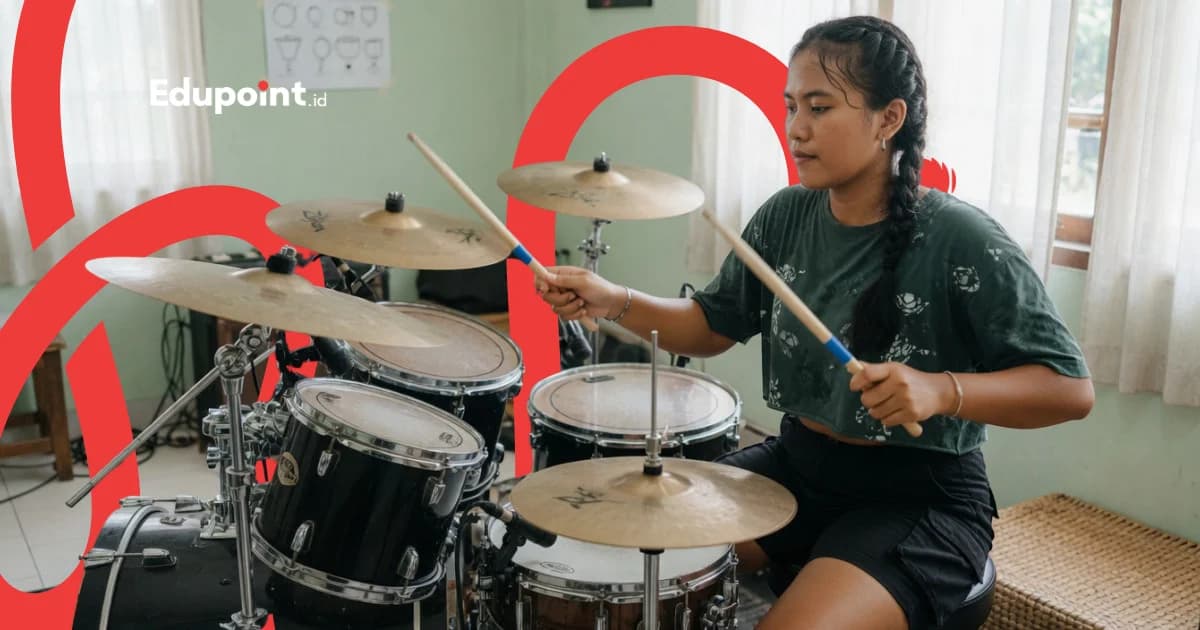
A student sits at a drum kit or practice pad, the teacher guides the hands and feet through the screen, and a steady groove slowly starts to take shape. EduPoint online drum lessons keep every session personal, recorded, and tracked, so practice at home has a clear direction.



3,500+
tutors
1,400+
students
4.9
rating · 924 reviews
60+
cities
What is Online Drum Lessons?
Online drum lessons are private drum classes held live over video, one teacher with one student. The teacher and student open the same modules on screen, the teacher watches posture, grip, and footwork through the camera, then corrects the beat in real time. Every session is recorded so the student can replay the material whenever they practise.
- Live one-on-one sessions with a teacher watching directly, so corrections arrive the moment a mistake happens.
- The camera is aimed at the hands and feet so the teacher clearly sees stick and pedal technique.
- EduPoint drum modules (notation, sticking charts, play-along tracks) open together on screen and can be revisited in the app.
- Comfortable to start from a practice pad plus pedal when a full drum kit is not yet available at home.
- Drum teachers from respected arts campuses can teach a child in any city with no distance barrier.
Stages of Online Drum Lessons
Each student joins at the point that suits their ability, then moves up once the basic groove feels solid.
Beginner: Beat Foundations
Getting to know the kit and basic rhythmThe first stage of online drum lessons focuses on how to hold the sticks, sitting posture, and the most basic hand-foot coordination. The teacher makes sure the first strokes are relaxed and consistent before adding any patterns.
Subjects:
Grip and postureBasic 4/4 beatGetting to know the drum kit
Focus Areas:
- Relaxed, steady strokes
- Right-left hand coordination
- Reading simple notation
Intermediate: Groove and Coordination
Bringing all four limbs togetherAt the intermediate stage, students play full rock and pop grooves, adding hi-hat and bass drum that move together. The teacher breaks the pattern down limb by limb until all four move automatically.
Subjects:
Rock and pop groovesSimple fillsCore rudiments
Focus Areas:
- Four-limb coordination
- Timing with a metronome
- Transitions between song sections
Advanced: Repertoire and Performance
Backing songs with confidenceThe advanced stage invites students to play full songs, shape dynamics, and develop more expressive fills. Session recordings are used to compare playing from week to week.
Subjects:
Full song repertoireFills and dynamicsPlaying with backing tracks
Focus Areas:
- Loud-soft dynamics
- Tempo consistency through a song
- A personal playing style
Online Drum Lesson Material
Six modules opened together on screen and revisited through the app each time the student practises.
The order of modules adapts to each student's age and pace; teachers may move faster through parts already mastered.
Posture, Grip, and Basic Strokes
Laying the foundation for how to sit, hold the sticks, and produce relaxed strokes so the hands do not tire quickly.
- Matched grip
- Seating and throne height
- Full stroke and down stroke
Reading Notation and Sticking
Getting to know drum symbols on the staff and sticking patterns, shown live on screen with the teacher.
- Drum notation
- R-L sticking charts
- Reading counts and subdivisions
Core Rudiments
Training single strokes, double strokes, and paradiddles as the basic hand vocabulary before moving into grooves.
- Single stroke roll
- Double stroke
- Paradiddle and variations
Groove and Coordination
Bringing hi-hat, snare, and bass drum together into a full groove with the help of a shared metronome.
- 8th note groove
- 16th note patterns
- Snare ghost notes
Fills, Dynamics, and Transitions
Filling the gaps between song sections with clean fills and shaping the loud-soft feel of the playing.
- One and two bar fills
- Crash and accents
- Moving between song sections
Play-Along and Performance
Playing full songs with a backing track, then recording the performance for the teacher to review.
- Backing a favourite song
- Holding tempo without rushing
- Recording and self-assessment
Who It Is For
Who Online Drum Lessons Are For
The online drum class is open to different ages and goals, from those just holding sticks to those ready for the stage.
Children Starting from Scratch
Children curious about the drums who want to learn from the basics with patient guidance through the screen.
Recommended:
Basic grip and postureSimple beatsPlay-along with kids' songs
Teens Backing a School Band
Teens who want to back a school band or event and need clean grooves and fills.
Recommended:
Rock and pop groovesFills and transitionsPlaying with a band
Adults with Busy Schedules
Adults who take up drums as a balancing hobby and need a flexible schedule from home.
Recommended:
Evening or night slotsShort focused practiceFavourite song repertoire
Families in Any City
Families who want an experienced drum teacher for their child without travelling far to a studio.
Recommended:
Teachers from arts campusesLearning from homeRecorded sessions
Challenges of Learning Drums Online
Common Hurdles and How Teachers Handle Them
Learning drums through a screen has its own obstacles. EduPoint online drum teachers have solutions ready from the very first session.
Timing drifts when playing without a tempo reference
Why it happens
Without a beat reference, the hands tend to speed up or slow down a pattern without the student noticing.
How we fix it
The teacher turns on a shared metronome or click track on screen and trains the student to lock the tempo step by step.
Grip and stroke are hard to see through the camera
Why it happens
A poor camera angle hides the hand technique, so small mistakes pile up.
How we fix it
In the first sessions the teacher helps set the camera to point at the hands and feet, then corrects the grip in detail.
No full drum kit at home yet
Why it happens
Not every family owns a complete acoustic kit, so students hesitate to begin.
How we fix it
Students can start from a practice pad and pedal; the modules are built up gradually so the foundation still forms without a full kit.
A child gets bored repeating rudiments
Why it happens
Repetitive technique drills feel monotonous when they are not linked to a song.
How we fix it
The teacher weaves in play-alongs of favourite songs and small weekly targets so practice stays enjoyable.
These solutions are part of everyday teaching, discussed openly with parents from the start.
Online Drum Groove Map
The Grooves Learned Through the Screen
Every music style has its own feel. In the online class, the teacher plays the example, the student copies it, then recordings help match the feel.
Rock
Tempo: 100 to 140 BPM
Firm and powerful
Signature Pattern
Snare backbeat on counts 2 and 4 with a steady walking hi-hat.
Key Technique
Full-arm strokes so the snare sounds thick and consistent.
Try at Home
Play bass-snare-bass-snare slowly while counting 1-2-3-4 with a metronome.
Pop
Tempo: 90 to 120 BPM
Light and flowing
Signature Pattern
A simple groove that keeps the song in the spotlight.
Key Technique
Dynamic control so the hi-hat stays soft and the vocals still come through.
Try at Home
Back one favourite pop song with the basic groove, no fills at first.
Funk
Tempo: 95 to 115 BPM
Bouncy and full of texture
Signature Pattern
Tight 16th note hi-hat with subtle snare ghost notes.
Key Technique
Balancing loud accents with barely audible ghost notes.
Try at Home
Practise soft ghost notes on a practice pad before adding the bass drum.
Jazz Swing
Tempo: 120 to 200 BPM
Swinging and relaxed
Signature Pattern
A swung ride pattern with hi-hat foot on counts 2 and 4.
Key Technique
Feeling the triplet so the ride swing sounds loose.
Try at Home
Tap the ride pattern 'ding-ding-da-ding' while stepping the foot on 2 and 4.
Dangdut Koplo
Tempo: 110 to 140 BPM
Cheerful and made for dancing
Signature Pattern
Kendang accents moved onto the toms and snare with quick strokes.
Key Technique
Hand speed on the small toms and control over the accents.
Try at Home
Play a tom-snare pattern back and forth slowly, then raise the tempo gradually.
Latin Bossa Nova
Tempo: 120 to 140 BPM
Warm and gently swaying
Signature Pattern
A cross-stick pattern on the snare with a clave-based bass drum.
Key Technique
Keeping the cross-stick consistent while the foot plays a fixed pattern.
Try at Home
Practise a slow cross-stick on the snare rim before adding the bass drum.
Teachers pick grooves around the student's favourite songs so practice feels close and enjoyable.
Why Us
Why Online Drum Lessons at EduPoint
An online drum class that still feels personal thanks to a real teacher, structured modules, and recordings that support practice.
A Real Teacher, Live One-on-One
Every online drum session runs live with a teacher who listens to the student play and corrects on the spot, guiding every session personally.
The EduPoint Learning System, Opened Together
Teacher and student open the same modules on screen, from notation and sticking charts to play-along tracks, so the direction of practice is always clear.
Recorded Sessions to Replay
A recording of every session is saved in the app, making it easy for the student to revisit tricky parts and for parents to follow their child's progress.
Arts-Campus Teachers Reaching Every City
Many of our drum teachers are graduates of respected arts campuses, and through online classes they can teach a child in any city without distance getting in the way.
Flexible Schedule and No Travel Cost
Sessions can be arranged between 06.00 and 23.00 to fit the family's rhythm, and learning from home saves both the time and cost of travelling to a studio.
Online Drum Teachers
Teachers with a background in music and performing arts who are used to guiding students through online classes.
Tutor Qualifications
- Graduates or students of arts and music education campuses
- Experienced teaching drums through one-on-one online sessions
- Patient at breaking complex patterns into small, easy steps
- Skilled at setting the camera angle so hand and foot technique stays visible
Igo G.
Music, Indonesian Institute of the Arts Yogyakarta
Building a steady groove through the screen“In online classes I usually ask the student to point the camera at their hands so I can keep the groove and tempo in check from the very first stroke.”
Fahmi F.
Performing Arts Education, State University of Malang
Patiently training hand-foot coordination“I like breaking hand and foot patterns down step by step on screen, and the session recording helps the student revisit any part that is not yet automatic.”
Rizaldy M.
Performing Arts Education, Indonesian Institute of the Arts Yogyakarta
Turning a student's energy into tidy beats“I guide energetic students through play-alongs of their favourite songs, so the urge to hit hard turns into neat, musical beats.”
Testimonials
Family Stories about Online Drum Lessons
Experiences from parents and students who took the online drum class with EduPoint teachers.
At first I doubted drums could be taught online, but the teacher aimed the camera at my child's hands and corrected each stroke. Now my child feels more confident holding the sticks.
Mrs. Ratna W.
Parent • Bekasi
Our schedule is packed, so an evening class from home was a big help. The session recordings let my child revisit the material without waiting for the next meeting.
Mr. Denny S.
Parent • Surabaya
I picked up drums as a hobby as an adult. The teacher patiently broke down a funk pattern I thought was impossible, and practising ghost notes on a practice pad was enough to get started.
Aldi P.
Adult student • Yogyakarta
There are not many drum teachers in our city, so this online class was the answer. The modules opened together on screen helped my child see the direction of the practice.
Mrs. Sari M.
Parent • Samarinda
Online Drum Lesson Fees
The rate is calculated by the registration engine and shown per hour so families can compare easily before deciding.
Starting from
Rp 61.000 / hour
Final price is set at registration.
This is the lowest hourly rate, derived from the 28-session monthly plan at 120 minutes per session. Per-session prices (60, 90, or 120 minutes) appear in the format options above.
Flexible payment — QRIS, Virtual Account, Alfamart, Indomaret, transfer & e-wallets.
The total depends on the session length of 60, 90, or 120 minutes and the number of sessions per month chosen in the registration form.
How Online Drum Lessons Work
Needs Consultation
We listen to the child's age, playing experience, the gear available at home, and the songs they want to learn as a starting point.
Matched with the Right Teacher
The team finds a drum teacher who fits the student's learning style and goals, then arranges a schedule that suits the family.
First Session and Adjustment
In the first meeting the teacher sets the camera angle, assesses the starting level, and builds a practice plan together with the parents.
Regular Learning and Progress Reports
Sessions run regularly with structured modules, recordings saved, and progress reported so parents always know where their child stands.
Schedule and Device Flexibility
Online Tutoring
Online WorldwideOnline drum lessons run over Zoom or Google Meet as the family prefers, while modules and session recordings are stored in the EduPoint app. All that is needed is a drum or practice pad, a device with a camera, and an internet connection.
- Live sessions over Zoom or Google Meet as the family prefers
- Notation and play-along modules opened together on screen
- A recording of every session can be replayed in the app
- Can begin from a practice pad when a drum kit is not yet available
- Schedule follows the family's rhythm with no trip to a studio
Student Achievements
Online Drum Learning Journeys
A few stories of students who grew through the online drum class, written with masked names.
Success
From Practice Pad to a Full Song
Raka, age 11
Challenge
Raka wanted to learn drums but the family did not have a kit yet, only a practice pad and a simple pedal.
Solution
The teacher built up gradual practice from rudiments on the pad, added a foot pattern, then moved to the kit once one was available.
Journey
Month 1: Mastered single and double strokes on the practice pad
Month 3: Played a basic rock groove with a metronome
Month 5: Backed one favourite song from start to finish
Now practises regularly and backs his favourite songs at home.
“Turns out starting from a practice pad was fine, what mattered was being consistent and having a teacher to guide me.”
Success
Finding a Steady Tempo
Nisa, age 14
Challenge
Nisa often sped up without realising it during fills, so the groove sounded less than tidy.
Solution
The teacher trained Nisa to lock the tempo with a click track and recorded her playing to compare consistency each week.
Journey
Month 1: Got used to practising with a metronome
Month 2: Two-bar fills stayed in line with the tempo
Month 4: Held a steady tempo through a full song
Plays with a far steadier tempo and is ready to back the school band.
“After hearing my own recording, I finally understood where my tempo kept running off.”
Success
A New Hobby amid a Busy Life
Yusuf, age 34
Challenge
Yusuf wanted to learn drums as a counterbalance to work but struggled to set aside a fixed time.
Solution
Sessions were scheduled in the evening from home with short, focused practice, using modules he could revisit any time.
Journey
Month 1: Mastered the basic pop groove
Month 3: Tried a funk pattern with ghost notes
Month 5: Backed several favourite songs at ease
Turned drum practice into a relaxed weekly routine to look forward to.
“Being able to learn in the evening from home is finally what got this hobby going.”
FAQ
Questions about Online Drum Lessons
The things parents and prospective students most often ask before starting the online drum class.
Guides & Tips
Supporting articles to help you decide and maximize learning outcomes.
How Beginners Learn the Basic Drum Beat: Building Your First Groove
One steady beat grows from three simple layers stacked slowly over a clear count.
How to Learn Drums from Scratch: Understanding the Beat and Basic Coordination
Learning drums from scratch feels most comfortable in order: first understand how beats are counted within a bar, drill each limb on its own, combine them into a basic beat, then play along to a song with the metronome as your guide.
Related Programs
Other programs that might be suitable for you
Start Online Drum Lessons from Home
Enroll your child or yourself in the online drum class with an experienced teacher, with structured modules and recordings that support every practice.
Live one-on-one sessionsModules and recordings in the EduPoint appFlexible schedule from 06.00 to 23.00