Music #1
Piano Lessons
Private piano lessons for all ages and levels. From beginners to ABRSM & Trinity Grade 1-8 exam preparation. Professional tutors with structured curriculum, learn classical or pop piano according to your interest.
450+
tutors
3,200+
students
4.9
rating · 892 reviews
60+
cities
What is Piano Lessons?
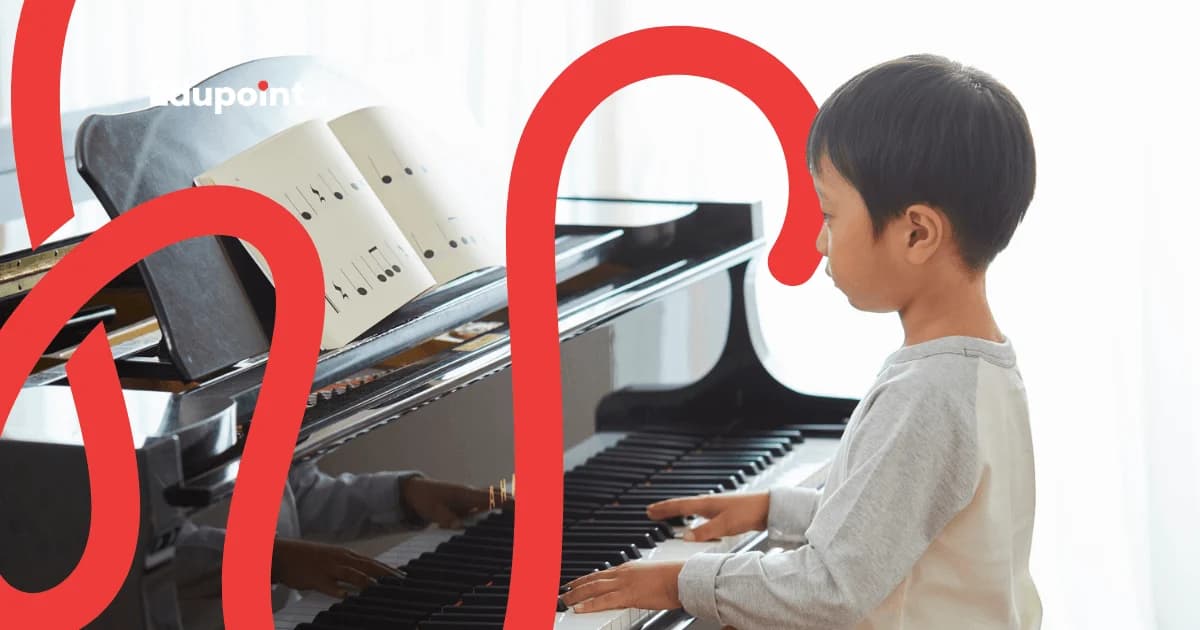
Piano lessons are one-on-one learning programs with professional tutors. Our programs follow international ABRSM (Associated Board of the Royal Schools of Music) and Trinity College London curricula, from Initial level to Grade 8 and Diploma. Options include classical, pop, jazz, or a combination according to the student's interests and goals.
- ABRSM & Trinity Grade 1-8 curriculum
- Classical, pop, jazz, and contemporary piano
- For children from age 4 to adults
- International grade exam preparation
- Integrated music theory and sight-reading
- In-person or online lessons via Zoom
Services
Three Ways to Learn Piano With Us
A tutor at your home on your own piano, a Zoom session that records every practice run, or a duet lesson with a friend. Each format keeps technique correction precise.
In-Person Lessons
Tutor comes to your home with your piano
Rp 78.000/ 60-minute session
Price on the 28-session monthly plan, 60-minute sessions. Fewer meetings, higher price per session.
- Optimal direct interaction
- Posture and technique correction
- Learn on your own piano
- Suitable for all levels
Online Lessons
Via Zoom with screen sharing
Rp 78.000/ 60-minute session
Price on the 28-session monthly plan, 60-minute sessions. Fewer meetings, higher price per session.
- Flexible from anywhere
- Session recording available
- Sheet music screen sharing
- Save travel time
Duet/Trio Lessons
Learn with 1-2 friends
Rp 48.000/ 60-minute session
Price on the 28-session monthly plan, 60-minute sessions. Fewer meetings, higher price per session.
- Learn ensemble skills
- Motivation with friends
- More affordable
- Recital preparation together
Online and in-person cost the same — the gap between these cards is session length, nothing else.
Piano Learning Programs
Comprehensive curriculum for various piano learning needs
Programs are tailored to student's level, age, and learning goals
Classical Piano
Standard program with ABRSM/Trinity curriculum for strong technical foundation
- Basic to advanced technique
- Classical repertoire (Baroque to Modern)
- Integrated music theory
- Sight-reading & ear training
- +1 more
Pop & Contemporary Piano
Learn popular songs with practical and fun approach
- Popular chord progressions
- Favorite song arrangements
- Lead sheet reading
- Basic improvisation
- +1 more
Piano for Kids
Special program for children aged 4-10 with fun learning methods
- Suzuki & Bastien methods
- Games & activities
- Children's & cartoon songs
- Recital & performance
- +1 more
Jazz Piano
For those who want to explore jazz piano and improvisation
- Jazz chord voicings
- Blues scales & patterns
- Improvisation techniques
- Jazz standards
- +1 more
Piano Exam Preparation
Intensive program for ABRSM/Trinity exam preparation
- Mock exam practice
- Repertoire coaching
- Scales & arpeggios drill
- Sight-reading intensive
- +1 more
Who It Is For
Piano Lessons for Every Age and Goal
A four-year-old meeting the keys for the first time, a teenager chasing an ABRSM grade, an adult finally living the dream of playing piano. We guide each one along a different path.
Children (4-10 years)
Piano for Kids program with fun learning methods. Focus on technical foundation, note reading, and building love for music. Ideal age to start piano.
Recommended:
Piano for KidsSuzuki MethodFun Learning
Teenagers (11-17 years)
Structured program with ABRSM/Trinity grade targets. Preparation for music school portfolio or serious hobby.
Recommended:
ABRSM PreparationTrinity GradesPop Piano
College Students & Young Adults
For those just starting or continuing piano learning. Flexible between classical, pop, or jazz according to interest.
Recommended:
Adult BeginnerPop & ContemporaryJazz Piano
Professionals & Hobbyists
Program for adults who want to learn piano as a hobby or new skill. It's never too late to start!
Recommended:
Adult BeginnerRepertoire BuildingRelaxation Piano
Aspiring Piano Teachers
Preparation to become a piano teacher with focus on pedagogy and teaching diploma preparation.
Recommended:
Teaching DiplomaGrade 8 PreparationPedagogy Course
Students with Other Instruments
Pianists who already play other instruments and want to add piano as a secondary instrument.
Recommended:
Second InstrumentMusic TheoryAccompaniment Skills
Featured
Track Piano Learning Progress
Monitor piano development with regular reports
Report Features
Monthly Report
Progress on technique, repertoire, and music theory
Grade Tracking
Monitor progress toward target ABRSM/Trinity grade
Repertoire Log
List of mastered pieces
Recital Video
Performance recording for each period
Sample Progress Report
Alya Putri
January 2026
79%
Overall Progress
Sessions Completed
12 of 16
Next Milestone
Mock Exam Grade 2
Feb 15, 2026
Technique
Improving75/85
Scales smooth, need to improve arpeggio speed
Repertoire
On Track80/85
Pieces 1 & 2 performance-ready, piece 3 in progress
Sight-reading
Needs Attention68/80
Need more daily sight-reading practice
Aural
On Track78/80
Interval recognition good, rhythm clapping excellent
ABRSM
ABRSM Piano Certification Levels
International standard for measuring your piano proficiency
ABRSM (Associated Board of the Royal Schools of Music) was founded in 1889 and is the world's largest music examination board with 4 million candidates per year in 93 countries. In Indonesia, ABRSM exams have been available since 1977.
Exam Components
Performance
60%
3 pieces from the syllabus selection
Scales & Arpeggios
12%
Scales and arpeggios according to grade
Sight-reading
12%
Reading and playing a new score
Aural Tests
16%
Musical ear tests
I
Initial Grade
Introduction level for complete beginners. Focus on hand position, posture, and basic note reading. Suitable for children aged 4-6 or adult beginners.
Typical Age
4-7 years or adult beginners
Estimated Time
6-8 months
Daily Practice: 15-30 minutes/day
Skills:
- Correct sitting position and posture
- Basic hand and finger position
- Reading notes on treble clef
1
Grade 1
Solid piano technique foundation. Students begin playing short songs with both hands and understand basic music theory.
Typical Age
6-8 years
Estimated Time
12-15 months from beginner
Daily Practice: 30 minutes/day
Skills:
- Both hands coordination
- Reading treble and bass clef
- C, G, F major scales (1 octave)
2
Grade 2
Development of technique and musical expression. More varied repertoire with more complex dynamics and articulation.
Typical Age
7-10 years
Estimated Time
18-24 months from beginner
Daily Practice: 30-45 minutes/day
Skills:
- Legato and staccato playing
- D, A, Bb major scales + minors
- Basic arpeggios
3
Grade 3
Intermediate technique with emphasis on musicality. Students begin playing repertoire from various musical eras.
Typical Age
9-12 years
Estimated Time
2.5-3 years from beginner
Daily Practice: 45 minutes/day
Skills:
- All major scales (2 octaves)
- Minor scales (harmonic & melodic)
- Chord progressions
4
Grade 4
Important turning point in piano learning. More advanced technique and deeper musical understanding.
Typical Age
10-14 years
Estimated Time
3-4 years from beginner
Daily Practice: 45-60 minutes/day
Skills:
- Scales contrary motion
- Chromatic scales
- Advanced arpeggios
5
Grade 5
Intermediate-advanced level. Grade 5 Theory must be passed before taking Grade 6-8. Technically and musically demanding repertoire.
Typical Age
12-16 years
Estimated Time
4-5 years from beginner
Daily Practice: 1 hour/day
Skills:
- All scales 4 octaves
- Dominant & diminished 7ths
- Advanced sight-reading
6
Grade 6
Advanced level. Repertoire demanding virtuoso technique and deep understanding of musical styles.
Typical Age
14-18 years
Estimated Time
5-7 years from beginner
Daily Practice: 1-1.5 hours/day
Skills:
- Advanced scale patterns
- Double 3rds and 6ths
- Complex pedaling
7
Grade 7
Pre-diploma level with concert repertoire. Students master various musical styles and advanced techniques.
Typical Age
16+ years
Estimated Time
7-9 years from beginner
Daily Practice: 1.5-2 hours/day
Skills:
- Virtuoso technique
- Advanced musical analysis
- Stage presence
Grade 8
Highest level before diploma. Equivalent to conservatory entrance level. Professional standard concert repertoire.
Typical Age
17+ years
Estimated Time
8-12 years from beginner
Daily Practice: 2+ hours/day
Skills:
- Concert-level technique
- Complete musical maturity
- Professional repertoire
Your Learning Journey
I
1
2
3
4
5
6
7
8
Diploma Path After Grade 8
After Grade 8
ARSM
Associate of the Royal Schools of Music
Entry level performance diploma
DipABRSM
Diploma of ABRSM
Undergraduate-level recital
LRSM
Licentiate of the Royal Schools of Music
Postgraduate-level performance
FRSM
Fellowship of the Royal Schools of Music
Highest performance diploma
Why Us
Why Families Trust EduPoint With Their Piano Lessons
A measurable ABRSM and Trinity curriculum, tutors who hold at least Grade 8 or a conservatory Diploma, and a recital every six months to build stage confidence.
ABRSM & Trinity Curriculum
Programs follow internationally recognized ABRSM and Trinity standards. Measurable progress from Initial to Grade 8.
Highly Qualified Tutors
All tutors minimum Grade 8 or Diploma from leading conservatories. Average 7+ years teaching experience.
Flexible Programs
From classical, pop, jazz to accompaniment piano. For children, teenagers, or adults. Online or in-person.
Proven Exam Results
Track record of 95% ABRSM/Trinity exam pass rate with 60% achieving Merit or Distinction.
60+ City Coverage
In-person lessons available in 60+ Indonesian cities. Online available worldwide.
Recitals & Performance
Opportunity to perform at student recitals every 6 months. Building confidence and stage experience.
Featured Piano Tutors
Experienced piano tutors with various specializations
Tutor Qualifications
- Bachelor's degree in Music or equivalent (Conservatory)
- Minimum ABRSM/Trinity Grade 8 or Diploma
- Min. 3 years of piano teaching experience
- Recital and performance experience
- Passed EduPoint training and certification
Gladys G.
Music Education, Institut Seni Indonesia
Two-hand coordination“Gladys trains left and right hand coordination gradually, the part that most often overwhelms piano beginners.”
Refael R.
Music Performance, ISI Yogyakarta
Reading sheet music“Refael guides students through reading staff notation slowly, until eyes and fingers get used to moving together on the keys.”
Lisa L.
Music Education, Universitas Negeri Jakarta
Simple songs from day one“Lisa has students play a simple song from the first session, so enthusiasm grows before deeper theory begins.”
Elis E.
Music Education, Universitas Pendidikan Indonesia
Right posture and fingering“Elis watches for proper sitting posture and fingering early on, the foundation that keeps piano playing comfortable long term.”
Helki H.
Music Education, Universitas Pendidikan Indonesia
Steady tempo“Helki trains students to keep a steady tempo with the beat, so their playing sounds neat and pleasant.”

Stefanus S.
Music Composition, ISI Yogyakarta
Understanding harmony“With a composition background, Stefanus introduces basic harmony, so students grasp why certain notes sound right together.”
Testimonials
From the First Key to the Recital Stage
Stories from our piano students: a child who passed Grade 2 with Merit, a 35-year-old beginner who finally played Fur Elise in full, and one admitted to a Piano major at a music college.
Ayla started piano lessons at age 5, couldn't read notes at all. Now at 8, she passed ABRSM Grade 2 with Merit and performed at school recital. Most proudly, she fell in love with music!
StartCouldn't read notes
MilestoneABRSM Grade 2 Merit
NowPreparing for Grade 3
Journey of 3 years
Mrs. Ratna
Parent of Ayla (8 years old) • South Jakarta
I started learning piano at age 35, many said it was too late. But EduPoint tutors patiently taught from scratch. Now after 2 years, I can play complete Fur Elise and several favorite pop songs!
StartComplete beginner at 35
MilestoneMastered Fur Elise
NowLearning Chopin Waltz
Journey of 2 years
Mr. Hendri
Manager, 37 years old • Bandung
Kevin took piano lessons elsewhere for 2 years but didn't progress. Switched to EduPoint, within 1 year passed ABRSM Grade 3 with Distinction! The right methodology and teacher really make a difference.
StartStagnant at beginner level
MilestoneABRSM Grade 3 Distinction
NowTarget Grade 5
Journey of 1 year at EduPoint
Mrs. Lina
Parent of Kevin (12 years old) • Surabaya
I could already play classical piano but wanted to learn jazz. Mr. Rizki from EduPoint taught voicing and improvisation systematically. Now I can jam session and play at cafes!
StartClassical pianist, couldn't improvise
MilestoneFirst jam session
NowRegular cafe gigs
Journey of 8 months
Dinda Permata
Music Student, 22 years old • Yogyakarta
My childhood dream was to play piano. At age 50, it finally came true! The tutor is patient and online lessons are very flexible with my work schedule. Now every night I can play my favorite songs.
StartChildhood dream, started at 50
MilestoneCan play 20+ songs
NowLearning classical for relaxation
Journey of 1.5 years
Mrs. Sri Wahyuni
Entrepreneur, 52 years old • Medan
My child has autism and we doubted if he could learn music. EduPoint tutors are very patient and understand how to teach special needs children. Ryan can now play several songs and music has become wonderful therapy for him.
StartDoubt if learning was possible
MilestonePerformed at school event
NowMusic as therapy
Journey of 2 years
Mr. Ahmad
Parent of Ryan (10 years old, autism) • Bekasi
Piano Lesson Costs
Investment for lifelong musical ability
Starting from
Rp 61.000 / hour
Final price is set at registration.
This is the lowest hourly rate, derived from the 28-session monthly plan at 120 minutes per session. Per-session prices (60, 90, or 120 minutes) appear in the format options above.
Flexible payment — QRIS, Virtual Account, Alfamart, Indomaret, transfer & e-wallets.
Prices may vary depending on level, location, and tutor qualifications. Free consultation for best offers.
Piano Lessons Availability
Online Tutoring
Online WorldwideOnline piano lessons via Zoom available for students throughout Indonesia and overseas
- Session recording
- Sheet music screen sharing
- Digital metronome
- PDF materials
In-Person Tutoring
All CitiesIn-person lessons with tutors coming to your home available in the following cities
Jakarta120+ tutorsBandung45+ tutorsSurabaya40+ tutorsYogyakarta35+ tutorsSemarang25+ tutorsMalang20+ tutorsMedan30+ tutorsMakassar15+ tutors
+2 more citiesFAQ
What Prospective Students Ask About Piano Lessons
From the ideal age for a child, to whether you need a piano at home, to how long Grade 8 takes, to the difference between ABRSM and Trinity. Here are the short answers.
Complete Guide
Complete Piano Lessons Guide
Guides & Tips
Supporting articles to help you decide and maximize learning outcomes.
How to Choose Piano Lessons for Young Children: A Parent's Guide
Choosing piano lessons for young children goes smoothly when parents gauge readiness first, then match the method, teacher, and session format to the child's own pace.
How to Learn Piano for Beginners: A Step by Step Guide
Piano practice flows best in a clear order: get to know the instrument, build correct hand position, then raise the difficulty little by little.
How to Read Piano Sheet Music from the Staff to the Keys
Reading piano sheet music goes most smoothly in a clear order: understand the two staves, learn note names on lines and spaces, read note values, then connect them to the keys.
How to Train Two-Hand Coordination on Piano From Scratch for Beginners
Seven sequential stages that carry a beginner from strengthening each hand separately to playing a full song where melody and accompaniment flow together smoothly.
Related Programs
Other programs that might be suitable for you
Press Your First Piano Key Today
Begin with a free assessment: our tutor gauges your playing level, then maps out the classical, pop, or Grade preparation path that fits you best.
Free level assessmentTutor & program recommendationstutor replacement guarantee