Music #1
Guitar Lessons
Private guitar lessons for all ages and three learning tracks: acoustic & pop for song players, classical toward ABRSM grade exams, plus electric & rock with Trinity Rock & Pop. Specialist teachers guide you from your first open chord and smooth transitions all the way to the band stage and international grade exams.




380+
tutors
2,400+
students
4.9
rating · 644 reviews
60+
cities
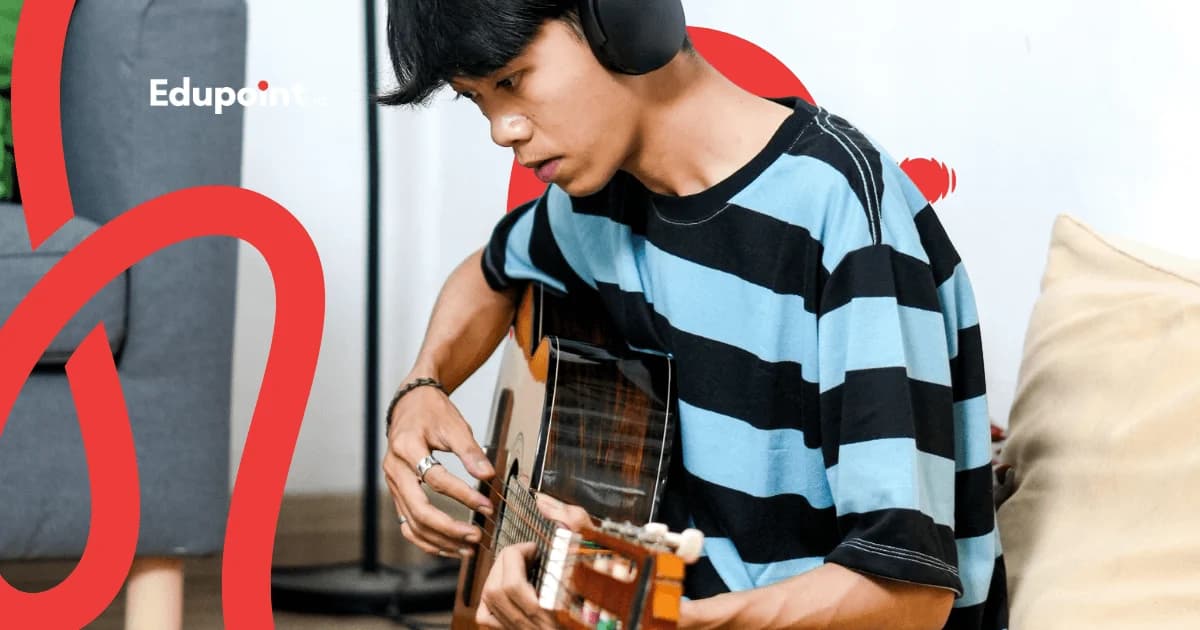
What is Private Guitar Lessons?
Private guitar lessons are one-on-one guitar instruction with professional teachers. Our program covers three main tracks: acoustic guitar (fingerstyle and pop song strumming), classical guitar (ABRSM Classical Guitar curriculum), and electric guitar (Trinity Rock & Pop Guitar and RGT). Material includes fingering technique, chord shapes, scales, rhythm, lead playing, and basic music theory. Available for children from age 7 up to adult beginners, with options for at-home in-person lessons or online via Zoom.
- Three tracks: Acoustic/Pop, Classical (ABRSM), and Electric/Rock (Trinity)
- International certifications: Trinity Rock & Pop, RGT, and ABRSM Grade 1-8
- For children from age 7 up to adult beginners
- Material: chords, scales, fingerpicking, strumming, lead, and music theory
- Band audition prep, recording, and international grade exam readiness
- In-person across 60+ cities or online via Zoom
Services
Pick Your Guitar Lesson Setup
Teacher at home with hands-on fingering correction, an online class with the camera trained on your fretboard, or a duet with a friend for harmony practice
In-Person Lessons
Guitar teacher visits your home with their own guitar as backup
Rp 78.000/ 60-minute session
Price on the 28-session monthly plan, 60-minute sessions. Fewer meetings, higher price per session.
- Direct posture and finger position correction
- Close-up technique demonstration
- Student prepares their own guitar
- Ideal for beginners needing hand-guidance
Online Lessons
Via Zoom with camera angle on fretboard and strumming hand
Rp 78.000/ 60-minute session
Price on the 28-session monthly plan, 60-minute sessions. Fewer meetings, higher price per session.
- Flexible from anywhere
- Session recording for review
- Digital tabs and chord charts
- Saves commute time
Duet/Trio Lessons
Learn with 1-2 friends, focus on guitar harmony and ensemble
Rp 48.000/ 60-minute session
Price on the 28-session monthly plan, 60-minute sessions. Fewer meetings, higher price per session.
- 2-3 part guitar harmony practice
- Band or classical ensemble prep
- More affordable per person
- Great for friends or siblings
Online and in-person cost the same — the gap between these cards is session length, nothing else.
Three Guitar Learning Tracks
Choose a track based on your favorite music style and learning goals
You don't have to pick just one — many students take 2 tracks together (e.g., acoustic + electric)
Acoustic & Pop Guitar
Most popular track for those who want to play favorite songs, fingerstyle, and perform at informal events
- Indonesian & Western pop song strumming patterns
- Fingerstyle arrangement (Sungha Jung style)
- Pop chord progressions
- Capo usage and transposing
- +1 more
Classical Guitar
Formal track with ABRSM Classical Guitar curriculum for solid fundamental technique
- Right-hand technique (rest stroke, free stroke)
- Classical repertoire (Renaissance to Modern)
- Music notation reading (not TAB)
- Tárrega, Sor, Carcassi, Villa-Lobos
- +1 more
Electric & Rock Guitar
Trinity Rock & Pop track for those who want to play rock, blues, metal, or form a band
- Power chords and palm muting
- Lead playing: bending, vibrato, tapping
- Pentatonic and modal scales for improvisation
- Effect pedal usage (overdrive, delay, wah)
- +1 more
Fingerstyle Guitar
Solo fingerstyle specialization with complex thumb-melody-bass technique
- Travis picking and PIMA patterns
- Chord-melody arrangements
- Percussive techniques (slap, tap)
- Altered tunings (DADGAD, Open D)
- +1 more
Kids Guitar
Specialized program for children ages 7-11 with fun & developmentally appropriate methods
- Mini guitar (3/4 size) usage
- Indonesian and international kids songs
- Games & strumming play
- Recital & performance
- +1 more
Bass Guitar & Band Accompaniment
Bass guitar track plus band accompaniment skills for those who want to perform with a group
- Bass guitar fundamentals
- Walking bass and groove
- Pop song chord accompaniment
- Full strumming patterns with capo
- +1 more
Who It Is For
The Guitar Players We Coach
From a child holding a 3/4 mini guitar, a teenager eyeing the school band, to an adult starting from scratch at 40
Children (Ages 7-11)
Kids Guitar program with 3/4 size mini guitar and fun learning method. Focus on open chords, kids songs, and basic strumming. Ideal age to start guitar.
Recommended:
Acoustic GuitarTrinity JuniorSuzuki Guitar Method
Teenagers (Ages 12-17)
Structured Trinity Rock & Pop or ABRSM Classical program. Many teens want to join school bands or become guitar YouTubers.
Recommended:
Trinity Rock & PopLead GuitarFingerstyle Pop
University Students & Young Adults
For new starters or those continuing guitar. Many want to play acoustic guitar for favorite songs and gatherings.
Recommended:
Acoustic & PopFingerstyleSongwriter Accompaniment
Aspiring Band & Audition
Intensive program for forming bands or auditions (guitar competitions, ISI, Java Jazz competition). Focus on lead playing and improvisation.
Recommended:
Trinity Rock & Pop Grade 5+Lead Guitar IntensiveBand Coaching
Adult Professionals & Hobbyists
Program for adults wanting to learn guitar as a hobby or stress relief. It's never too late to start guitar!
Recommended:
Adult BeginnerAcousticRelaxation Fingerstyle
Band Players & Event Accompanists
For those who want to perform with a band or accompany singing at family, community, and event gatherings.
Recommended:
Bass GuitarBand CoordinationAcoustic Guitar
Trinity Rock & Pop / RGT / ABRSM
International Guitar Certification Pathways
International standards from Trinity Rock & Pop, RGT, and ABRSM Classical Guitar
Guitar has three internationally-recognized certification pathways. **Trinity Rock & Pop Guitar** is popular for electric and acoustic guitar with rock, pop, blues, and funk repertoire. **RGT (Registry of Guitar Tutors)** offers Electric, Acoustic, and Bass Guitar tracks with very comprehensive curricula. **ABRSM Classical Guitar** is the standard for classical guitar with repertoire from Renaissance to contemporary. In Indonesia, Trinity and RGT exams are available in Jakarta, Surabaya, Bandung, and Bali 3-4 times per year.
Exam Components
Performance Pieces
60%
3 pieces from syllabus options per track (rock/pop or classical)
Technical Exercises
15%
Scales, arpeggios, chord shapes, and track-specific techniques
Session Skills / Sight-reading
13%
Trinity Rock & Pop: improvisation. ABRSM Classical: sight-reading from notation
Aural / Music Knowledge
12%
Aural test on rhythm, intervals, and song-related questions
I
Initial Grade
Introductory level for absolute beginners. Focus on guitar holding posture, left-hand fretboard position, basic strumming, and open chords. Suitable for ages 7-9 or adult beginners.
Typical Age
Age 7-10 or adult beginner
Estimated Time
4-6 months
Daily Practice: 15-25 min/day
Skills:
- Correct sitting posture and guitar holding
- Introduction to 6 strings and note names
- Basic open chords: Em, Am, D, G, C
1
Grade 1
Solid foundation in guitar technique. Students start playing simple pop songs with consistent strumming and smooth chord transitions.
Typical Age
Age 8-11
Estimated Time
10-12 months from beginner
Daily Practice: 25-30 min/day
Skills:
- All major open chords (Em, Am, Dm, D, G, C, E, A)
- Varied strumming patterns (waltz, ballad, rock 8th)
- Basic right-hand picking
2
Grade 2
Technique and repertoire development. Students start mastering barre chords and basic fingerpicking technique, plus pentatonic scales for early improvisation.
Typical Age
Age 9-13
Estimated Time
18-24 months from beginner
Daily Practice: 30 min/day
Skills:
- F and B major barre chords
- Minor pentatonic scale pattern 1
- Basic fingerpicking patterns (Travis picking)
3
Grade 3
Intermediate technique with emphasis on musical expression. Students start playing simple lead solos and master various rhythm styles.
Typical Age
Age 10-14
Estimated Time
2.5-3 years from beginner
Daily Practice: 30-45 min/day
Skills:
- All major and minor barre chords
- Major and minor pentatonic scales (5 patterns)
- Basic lead playing with bending
4
Grade 4
Important turning point in guitar learning. Students master lead playing, simple improvisation, and various guitar tunings.
Typical Age
Age 11-15
Estimated Time
3-4 years from beginner
Daily Practice: 45 min/day
Skills:
- Full 3-octave major scales
- Modal scales (Dorian, Mixolydian)
- Basic sweep picking and economy picking
5
Grade 5
Intermediate-advanced level. For RGT/Trinity, Grade 5 is a prerequisite for Grade 6-8. Students master virtuoso lead playing and improvisation with strong music theory.
Typical Age
Age 13-17
Estimated Time
4-5 years from beginner
Daily Practice: 1 hour/day
Skills:
- Tapping and legato playing
- Advanced bending (bend & release, pre-bend)
- Chord extensions (7th, 9th, 11th)
6
Grade 6
Advanced level. Repertoire demanding virtuoso technique, strong dynamic control, and deep understanding of musical styles from classical to contemporary.
Typical Age
Age 15-18
Estimated Time
5-7 years from beginner
Daily Practice: 1-1.5 hours/day
Skills:
- Advanced sweep picking and arpeggios
- Hybrid picking and chicken picking
- Complex time signatures (5/4, 7/8)
7
Grade 7
Pre-diploma level with concert repertoire. Students master virtuoso technique and can perform as session players or professional performers.
Typical Age
Age 16+
Estimated Time
7-9 years from beginner
Daily Practice: 1.5-2 hours/day
Skills:
- Two-handed tapping
- Advanced chord-melody arrangements
- Polyrhythm and polymeter
Grade 8
Highest level before diploma. Equivalent to entry-level for music conservatory or professional session musician. Professional concert standard repertoire.
Typical Age
Age 17+
Estimated Time
8-12 years from beginner
Daily Practice: 2+ hours/day
Skills:
- Concert-level technique across all styles
- Complete musical maturity
- Professional repertoire 30+ minutes
Your Learning Journey
I
1
2
3
4
5
6
7
8
Diploma Pathway After Grade 8
After Grade 8
ALCM
Associate of the London College of Music (Guitar)
Entry-level performance diploma for guitar - 30-minute recital
DipABRSM
Diploma of ABRSM (Classical Guitar)
Undergraduate-level classical guitar recital, 35 minutes
LRSM
Licentiate of the Royal Schools of Music
Postgraduate-level classical guitar performance
FLCM
Fellowship of the London College of Music
Highest performance diploma for guitar (rock/pop/classical)
Why Us
What Makes EduPoint Guitar Lessons Stand Out
Three certification tracks with a specialist teacher for each, repertoire spanning Indonesian pop to classical, and the chance to perform at recitals
Three Structured Tracks
Choose from Acoustic/Pop, Classical (ABRSM), or Electric/Rock (Trinity) — or combine them! Each track has a complete curriculum from Initial to Grade 8.
Specialist Teachers per Track
All guitar teachers specialize in their respective tracks. No 'jack of all trades' — our classical teachers differ from our electric teachers.
Trinity, RGT, ABRSM Certification
Access to internationally recognized Trinity Rock & Pop, RGT, and ABRSM Classical Guitar exams. Certificates valid for music college portfolios.
Indonesian & International Repertoire
Besides Trinity/ABRSM repertoire, our teachers also teach Indonesian pop songs (Sheila on 7, Payung Teduh, Iwan Fals) for greater engagement.
60+ Cities Coverage
In-person lessons available in 60+ cities across Indonesia with local teachers. Online available worldwide with flexible timezones.
Band & Recital Performance
Opportunities to perform at student recitals every 6 months and annual band collaboration day. Builds performance confidence and networking among fellow guitarists.
Featured Guitar Teachers
Experienced guitar tutors with different specializations
Tutor Qualifications
- Bachelor's degree in Music or conservatory (UPH, ISI, UI, or equivalent)
- Minimum Trinity Grade 8, RGT Grade 8, or ABRSM Grade 8
- Min. 3 years experience teaching private guitar
- Live performance or session player experience
- Verified by EduPoint before taking students
Aldi A.
Music Education, Universitas Pendidikan Indonesia
From basic chords to favorite songs“Aldi starts from a few basic chords then quickly has students play the songs they love, so practice feels fun from the very start.”
Bintang B.
Music Performance, ISI Yogyakarta
Clean finger technique“With his ISI performance background, Bintang watches for clean fingering, so a student's guitar tone rings clear without buzzing.”
Dika A.
Music, ISI Yogyakarta
Smooth chord changes“Dika trains students to read chord progressions and switch positions smoothly, the key to accompanying any song.”
Isach O.
Music, Universitas Pasundan
Rhythm and strumming“Isach stresses a sense of rhythm and right-hand strumming patterns, the part that makes guitar playing sound alive.”

Raka R.
Music Education, Universitas Pendidikan Indonesia
Patient with total beginners“Raka is used to guiding beginners who have never held a guitar, making sure each step is understood before adding new material.”

Yobel Y.
Ethnomusicology, Universitas Sumatera Utara
Exploring varied styles“With an ethnomusicology background, Yobel introduces varied playing styles, so students stay open to many colors of music.”
Testimonials
From Sore Fingers to the Stage
Our guitar students' journeys, from a first chord that stung the fingers to passing Trinity grades and performing at events
My son Rafa started guitar lessons at age 8 — at first his fingers hurt and he almost gave up. The EduPoint teacher was very patient and picked his favorite songs (Coldplay) for motivation. Now after 2 years, he's passed Trinity Grade 2 and can play 15+ songs!
StartSore fingers, almost gave up
MilestoneTrinity Rock & Pop Grade 2
NowPreparing for Grade 3 + school recital
Journey of 2 years
Mrs. Sadaria Marbun
Mother of Rafa (age 10) • South Jakarta
I started learning guitar at age 40, originally just wanted to play Iwan Fals songs at home. Mr. Rangga taught from scratch with great patience. Within 1 year, I could play 30+ songs and now perform at community events!
StartComplete beginner at age 40
MilestonePlaying 30+ Indonesian songs
NowRegular performer at community events
Journey of 1 year
Mr. Raditya Akbar
Engineer, age 41 • Bandung
Riffat took guitar lessons elsewhere for 1 year but never leveled up. We moved to EduPoint with Mr. Ahmad, and in just 8 months he could play the full Sweet Child O' Mine intro and passed Trinity Grade 3 with Distinction! Methodology really matters.
StartStuck on basic chords
MilestoneTrinity Grade 3 Distinction
NowSchool band lead guitarist, targeting Grade 5
Journey of 8 months at EduPoint
Mrs. Ani Zakiah
Mother of Riffat (age 14) • Surabaya
I could already play pop guitar but wanted Sungha Jung fingerstyle. Mr. Rangga taught PIMA patterns and chord-melody systematically. Now I've covered 'River Flows in You' and 'Canon Rock' in fingerstyle!
StartPop strumming, no fingerstyle ability
MilestoneCover River Flows in You
NowYouTube channel covering fingerstyle
Journey of 10 months
Anindya Azzahra
University Student, age 21 • Yogyakarta
Since high school I dreamed of playing classical guitar like John Williams. At age 38 I finally got serious! Mrs. Miranda teaches classical repertoire with detail and patience. Now I can play Lagrima and Romance de Amor well.
StartDream since high school, started at age 38
MilestonePlaying Lagrima & Romance de Amor
NowPreparing for ABRSM Classical Guitar Grade 4
Journey of 1.5 years
Mr. Vando Prayudha
Doctor, age 39 • Medan
My son is autistic and we doubted whether he could learn guitar. Mr. Irfan really understood teaching special needs children with patient repetition. Ksatria can now play 5 simple songs — guitar has become an amazing self-regulation tool.
StartDoubts about learning ability
MilestonePlaying 5 songs at school event
NowGuitar as therapy & expression
Journey of 2 years
Mr. Tri Andria
Father of Ksatria (age 11, autistic) • Bekasi
Guitar Lesson Pricing
Investment in lifelong musical skills
Starting from
Rp 61.000 / hour
Final price is set at registration.
This is the lowest hourly rate, derived from the 28-session monthly plan at 120 minutes per session. Per-session prices (60, 90, or 120 minutes) appear in the format options above.
Register & Get a QuoteFlexible payment — QRIS, Virtual Account, Alfamart, Indomaret, transfer & e-wallets.
Prices may vary based on track (acoustic/classical/electric), level, location, and teacher qualifications. Electric guitar is typically 10-15% more expensive due to more complex setup. Free consultation for best pricing.
Guitar Lessons Availability
Online Tutoring
Online WorldwideOnline guitar lessons via Zoom available for students across Indonesia and overseas
- Session recording
- Digital TABs & chord charts
- Backing track library
- Tuner app integration
In-Person Tutoring
All CitiesIn-person lessons with teachers visiting your home available in the following cities
Jakarta140+ tutorsBandung55+ tutorsSurabaya48+ tutorsYogyakarta38+ tutorsSemarang28+ tutorsMalang22+ tutorsMedan32+ tutorsMakassar18+ tutors
+2 more citiesFAQ
Guitar Lessons FAQ
Starting age, choosing acoustic or electric, practice duration, and those sore fingers in week one, all answered here
The ideal age to start guitar is 7-10 years old, when a child's hands are large enough to reach strings comfortably. For children under 7, we recommend a mini 3/4 or 1/2 size guitar. There's no upper age limit — we have many adult students who started at age 40-50 and succeeded!
For beginners, acoustic guitar is most flexible and needs no additional setup. Classical guitar (nylon strings) is gentler on beginner fingers, suitable for children. Electric guitar is technically the easiest physically because of low string action, but requires an amplifier (added cost). Talk it over in the free consultation, or with your teacher in the first lesson.
Yes, you must have a guitar for daily practice — you can't rely on lesson time alone. For beginners, an entry-level acoustic guitar such as the Yamaha F310 or Cort AD810 is more than adequate. An electric guitar needs a separate amplifier, so the total outlay is higher. Our teachers can recommend trusted brands and shops within your budget.
With consistent 20-30 minute daily practice, most students can play simple pop songs (3-4 chords) within 2-3 months. Basic fingerstyle takes 6-9 months. Lead solos like Sweet Child O' Mine intro take 12-18 months. Daily practice consistency matters more than session duration.
Trinity Rock & Pop Guitar focuses on rock, pop, blues, funk repertoire with emphasis on improvisation. RGT (Registry of Guitar Tutors) offers Electric, Acoustic, and Bass tracks with very detailed curricula. ABRSM Classical Guitar is specifically for traditional classical guitar. Trinity and RGT are more relevant for pop/rock; ABRSM for classical. All internationally recognized.
Complete Guide
Complete Guide to Guitar Lessons
Guitar is the most popular instrument in the world with over 50 million active players. Learning guitar offers unique benefits not found in other instruments:
Cognitive Benefits: 1. Brain-Hand Coordination: Playing guitar intensely trains left-right brain communication — left hand operates the fretboard while right hand strums/picks in different rhythms. 2. Pattern Memory: Memorizing chord shapes and scale fingering develops spatial memory. 3. Musical Mathematics: Understanding time signatures, rhythm subdivisions, and music theory develops logical thinking.
Social Benefits: 1. Communal Instrument: Guitar is the most suitable instrument for campfires, family gatherings, and community events, unlike piano. 2. Self-expression: Can accompany your own vocals at more affordable cost than piano. 3. Band Formation: Many students make friends with fellow guitarists and form bands.
Career Benefits: 1. Skill for Life: Guitar enjoyable from age 7 to 70+. 2. Income Stream: Can become guitar teacher, session player, or guitar YouTuber. 3. Music Industry: Entry point to recording, songwriting, or production.
Unlike piano (mostly ABRSM), guitar has three international certification pathways each with different focus:
1. Trinity Rock & Pop Guitar: - Focus: Rock, pop, blues, funk - Strengths: Contemporary repertoire (famous band songs), emphasis on improvisation - Best for: Those who want to play in bands or popular songs - Available: Initial-Grade 8 + Performance Diploma
2. RGT (Registry of Guitar Tutors): - Focus: Very detailed per track (Electric, Acoustic, Bass) - Strengths: Most comprehensive curriculum with thick handbooks - Best for: Those wanting very strong fundamental technique - Available: Preliminary-Grade 8 + Performance Diploma
3. ABRSM Classical Guitar: - Focus: Traditional classical guitar (nylon strings) - Strengths: Highest prestige reputation, prerequisite for conservatories - Best for: Those pursuing academic classical music path - Available: Initial-Grade 8 + Diploma path (DipABRSM, LRSM, FRSM)
Which to choose? You don't have to pick just one. Many of our students take Trinity while occasionally performing Classical Guitar. What matters is consistency in one main track while exploring others as supplements.
Your first guitar choice greatly impacts your learning journey. Each type has different characteristics:
Acoustic Guitar (Steel String): - Pros: Flexible (pop, acoustic rock, fingerstyle), no amp needed - Cons: Steel strings slightly painful for beginner fingers - Entry-level examples: Yamaha F310, Cort AD810 - Best for: Teens-adults wanting pop/folk
Classical Guitar (Nylon String): - Pros: Soft nylon strings on fingers, wider neck (easier for children), usually the most affordable type - Cons: Not suitable for aggressive strumming or rock - Entry-level examples: Yamaha C40, Cort AC100 - Best for: Small children or those serious about classical track
Electric Guitar: - Pros: Lowest string action (physically easiest), varied sound with effects - Cons: Requires a separate amplifier, so the total outlay is the highest; sounds thin without an amp - Entry-level examples: Squier Bullet plus a small practice amp - Best for: Those committed to band or rock
Beginner Recommendation: For children under 12, start with a mini 3/4 classical guitar. For teens-adults wanting flexibility, acoustic guitar is the safest choice. For those certain about rock, going straight to electric guitar + small amp is fine.
- 120-minute daily practice beats 2 hours once a week — muscle memory needs consistent repetition
- 2Use a metronome from day one: solid rhythm is the hallmark of pro vs amateur players
- 3Practice slow first: fast tempo comes after accuracy at slow tempo
- 4Practice chord transitions with metronome: target 60 BPM then increase gradually
- 5Record yourself: weekly recordings for evaluation and progress tracking
- 6Learn favorite songs in full and play them from intro to outro, mastering every chord along the way instead of only 'knowing the chords'
- 7Practice with backing tracks or drum loops to simulate playing with a band
- 8Buy a capo early — an inexpensive accessory sold at every music shop that lets you play songs in various keys without learning hard barre chords
Jumping to barre chords too soon
Master all open chords with smooth transitions first before starting barre chords. Barre chords require finger strength built gradually.
Ignoring rhythm and strumming patterns
Many beginners focus on chords but have chaotic rhythm. Practice strumming patterns with metronome as foundation. Pro motto: 'rhythm is everything'.
Not practicing scales because they're 'boring'
Scales are the foundation of improvisation and lead playing. Make it 5-10 minute daily warm-up. Without scales, ability stagnates at chords only.
Buying a guitar that's too cheap
Bottom-of-the-market guitars are often hard to tune and uncomfortable to play, making beginners quit. Choose an entry-level guitar from a trusted brand (Yamaha, Cort) for a good learning experience.
Learning from YouTube alone without a teacher
YouTube is great for inspiration but can't correct wrong posture, fingering, and technique. Every uncorrected technique error becomes a bottleneck at intermediate level.
Acoustic Guitar (Beginner - Intermediate): - Entry-level: Yamaha F310, Cort AD810, Sigma DM-1ST - Mid-level: Yamaha FG800, Cort Earth70, Tanglewood TW28 - High-level: Yamaha LL series, Taylor Academy, Martin LX
Classical Guitar (Beginner - Intermediate): - Entry-level: Yamaha C40, Cort AC100 - Mid-level: Yamaha CG series, Cort AC250 - High-level: Yamaha GC series, Esteve, Alhambra
Electric Guitar + Amp: - Entry-level: Squier Bullet Strat + Fender Frontman 10G amp - Mid-level: Squier Classic Vibe + Boss Katana 50W - High-level: Fender Player Strat + Fender Mustang amp
Prices for each tier differ between shops and change often; our teachers help you compare offers against your budget before buying.
Essential Accessories: 1. Tuner (digital clip-on, or free app TonalEnergy/GuitarTuna) 2. Capo (Kyser or D'Addario) 3. Various thickness picks (Dunlop, Jim Dunlop Tortex) 4. Strap for standing practice 5. Guitar stand for display & quick access
Optional Accessories: - Digital metronome or free app - Backing track app (iReal Pro, Time Trainer) - Effects pedal (for electric guitar) - Foot rest for classical
Children have different needs from adults when learning guitar:
Right Guitar Size: - Ages 4-6: 1/4 size guitar (Yamaha CGS101A, Cordoba Mini) - Ages 7-10: 1/2 or 3/4 size guitar (Yamaha CGS103A, Cordoba C3M) - Ages 11+: Full size (4/4) guitar
Song Selection: Pick songs the CHILD likes, not what PARENTS like. For Indonesian kids: songs by Sherina Munaf, Tasya Rosmala, or even Cocomelon for younger ones. For Western pop: songs from Coco (Disney), Encanto, or Frozen.
Practice Duration: - Ages 5-7: 10-15 minutes/day (or 2x 7 minutes) - Ages 8-11: 15-25 minutes/day - Ages 12+: 25-30 minutes/day
Don't push beyond this — burnout in kids is hard to cure.
Motivation & Reward: - Recitals or family event performances 2-3x/year - Small rewards for milestones (new chord passed, first song completed) - Have teachers attend recitals as form of respect - AVOID large material rewards — can make kids learn for rewards, not love of music
Signs Your Child Should Pursue Seriously: 1. Self-initiated practice without prompting 2. Can focus 15+ minutes on same song 3. Excited listening to guitar music outside lessons 4. Starting to compose own songs/riffs
Fahrezy Athaya
Trinity Rock & Pop Grade 5 Merit, admitted to ISI Guitar PerformanceDuration: 5 years
“From Grade 1 to 5 with EduPoint. Mr. Ahmad didn't just teach technique but opened my eyes to Indonesia's professional guitar scene.”
Anindya Azzahra
100K YouTube subscribers covering fingerstyle guitarDuration: 3 years
“EduPoint was a turning point. I started as ordinary pop player, now I have identity as fingerstyle guitarist and big YouTube community.”
Mr. Raditya Akbar
From zero to regular community event performerDuration: 1.5 years
“Thought it was too late to learn guitar at 40. Now guitar is my favorite me-time — I even perform regularly at alumni community events!”
Guides & Tips
Supporting articles to help you decide and maximize learning outcomes.
How to Learn Basic Guitar Chords for Beginners: A Clear Practice Order
Five open chords are the first foundation that unlocks hundreds of popular songs. This guide sequences them step by step so your fingers settle in and every string rings clean.
How to Learn Guitar for Beginners: A Step-by-Step Guide
Learning guitar flows best in a clear order: get to know the parts of the guitar, build correct hand position, master the basic chords, then raise the difficulty little by little.
How to Read and Switch Guitar Chords Smoothly
Reading guitar chords starts with understanding the chord diagram, and the ability to switch chords smoothly grows from anchor fingers, economical motion, and counted daily practice.
How to Tune a Guitar for Beginners From a Tuner to Tuning by Ear
Six ordered steps that carry a beginner from learning the standard tuning E-A-D-G-B-E, to tuning neatly with a device, to matching pitches with the ear alone.
Related Programs
Other music programs that might suit your needs
Strum Your First Chord with EduPoint Guitar Lessons
A free consultation to pick your acoustic, classical, or electric track and agree on a sensible starting point
Free consultation on your trackSpecialist teacher recommendationtutor replacement guarantee