Integrated IPS, Phase D · Grades 7-9
Private IPS Tutoring for Junior High: One Event, Four Lenses
In SMP, maps, market prices, social interaction and historical timelines all sit inside a single subject. An IPS tutor helps students in grades 7, 8 and 9 see how the four connect, at home or over Zoom and Google Meet.
1,904+
tutors
12,050+
students
4.9
rating · 3,616 reviews
60+
cities
What is Private IPS Tutoring for Junior High?
Private IPS tutoring for junior high pairs one tutor with one student in grades 7 to 9 for Phase D social studies, which blends geography, economics, sociology and history. Grades 7 and 8 schedule 108 core lesson hours of IPS a year, roughly 3 a week. Rates start from Rp61.000 per hour.
- The syllabus follows the Phase D IPS learning outcomes in BSKAP decree 046/H/KR/2025, which covers grades VII, VIII and IX.
- Schools assess two strands together in every topic: Conceptual Understanding and Process Skills.
- Each IPS lesson is a 60, 90 or 120 minute IPS block, held in the student's home or over video, and the price follows that length.
- IPS is outside the national TKA test for SMP, so the checkpoints sit at school: assignments, projects, end-of-chapter competency tests and semester assessments.
Services
Ways to Take Private IPS Tutoring
Sessions come in 60, 90 and 120 minutes. Online and in-person cost the same for the same length.
At home, 90 minutes
The IPS tutor comes to the student's home. Ninety minutes leaves room for one concept, one timeline or map, and practice questions.
Rp 97.000/ 90-minute session
Price on the 28-session monthly plan, 90-minute sessions. Fewer meetings, higher price per session.
- One tutor, one student
- Tutor travel already included
- Scheduling between 06.00 and 23.00
Online, 60 minutes
A session on Zoom or Google Meet, well suited to reviewing one sub-chapter or practising before a class quiz.
Rp 78.000/ 60-minute session
Price on the 28-session monthly plan, 60-minute sessions. Fewer meetings, higher price per session.
- Zoom or Google Meet
- Join from another city or from abroad
- Recordings and materials in the learner app
Group of 2 students, 90 minutes
Two students in the same grade and on a similar syllabus share one tutor. The rate is per student.
Rp 73.000/ 90-minute session
Price on the 28-session monthly plan, 90-minute sessions. Fewer meetings, higher price per session.
- Rate per student
- Good for classmates
- At home or online
Online and in-person cost the same — the gap between these cards is session length, nothing else.
What Grades 7, 8 and 9 Cover in IPS, Based on the Government Textbooks
The learning outcomes are set for the whole phase, and each school decides which topics land in which grade. The order below follows the government student books, and the tutor adapts it to the sequence the student's school actually uses.
The grade VIII book in circulation predates the 2025 learning outcomes, so grade 8 topic order can vary between schools. Tutors start from whatever book and notes the student brings.
Grade 7: The Neighbourhood as a Starting Point
The revised 2023 grade VII book uses four themes that begin with where the student lives and widen out to economic potential and social and cultural life.
- Home location and connectivity between places
- Climate change and natural hazard risk across Indonesia
- Economic activity, needs and caring for the environment
- Core ideas of history: people, place, time, chronology, change
- +2 more
Grade 8: Resources, Diversity and Nationhood
Grade 8 is where history takes up more room. Students move from geography to early archipelago trade, colonialism and the movement toward independence.
- Indonesia's natural variety and how resources are used
- Contact with foreign peoples in the Hindu-Buddhist and Islamic kingdom eras
- Different kinds of economic activity and social mobility
- Ocean exploration, colonialism and imperialism
- +2 more
Grade 9: The Spice Route, Disaster Mitigation and the Digital Economy
The revised 2025 grade IX book has three chapters, each closing with a competency test and a reflection. The first chapter carries the heaviest load of new terms.
- Origins of Indonesia's ancestors: the Yunnan, Out of Taiwan and Out of Africa theories, Proto and Deutero Malay
- The archipelago spice route and international trade
- A plural society, social conflict, mediation and negotiation
- Disaster mitigation linked to the SDGs, and social and cultural change
- +2 more
Process Skills That Count Toward the Grade
The second strand of the IPS outcomes asks students to investigate and present, and it usually shows up as a project or a class presentation.
- Observing a phenomenon and spotting similarities and differences
- Asking questions, tracing causes and predicting effects
- Gathering information from primary sources and keeping notes
- Drawing conclusions from a case study or a real situation
- +1 more
Who It Is For
Who This IPS Tutoring Is For
Students sign up themselves, or a parent, guardian or older sibling does it for them. Either way, the sessions are built around the student who is learning.
Grade 7 students meeting integrated IPS for the first time
Social studies in primary school feels familiar and light. In grade 7, terms from four disciplines arrive at once, so study habits need resetting from the first semester.
Recommended:
60-minute sessions, twice a weekCore history concepts and connectivity between places
Strong memorisers who stall on analysis questions
Kurikulum Merdeka IPS questions are often case studies asking for causes, effects or predictions. Students used to memorising need practice building an argument from the data in the question.
Recommended:
90-minute sessionsCase studies and written-answer practice
Students working on an IPS project or presentation
Process skills are graded through projects. The tutor helps the student frame questions, find sources and plan the presentation, and the student does the work.
Recommended:
90 or 120-minute sessionsSupport in the run-up to a deadline
Grade 9 students heading into grade 10
In grade 10, Phase E IPS may be split into separate subjects. Grade 9 is a good moment to tidy up the foundations in geography, economics, sociology and history before they part ways.
Recommended:
90-minute sessions, twice a weekChapter reviews and end-of-level assessment
Where IPS gets hard
Where Junior High Students Tend to Get Stuck in IPS
Findings from Indonesian research on junior high social studies, and how a private IPS tutor works on each one.
The subject feels like one long list to memorise
Why it happens
IPS packs four disciplines into about three lesson hours a week. With so little time, students fall back on memorising definitions, while the learning outcomes ask them to explain ideas in their own words.
How we fix it
The tutor asks the student to re-explain each idea using something from daily life, such as prices at a nearby market, before moving to the next term.
Basic economics ideas get mixed up the most
Why it happens
A study of grade VII students at one SMP (Jurnal Dialektika Pendidikan IPS, 2021) found 80.9% had not yet grasped the economics concepts tested, and misconceptions across social, economic and cultural concepts averaged 47.6%.
How we fix it
Ideas like needs, price and market go into one cause-and-effect diagram the student draws, then get tested with word problems set in familiar situations.
The order of historical events blurs together
Why it happens
A literature review in Jurnal Pendidikan IPS (September 2025) found student history literacy weakest in chronology, historical concepts and source analysis.
How we fix it
Students build their own timeline for each theme, from the Hindu-Buddhist era to independence, and pin each event to a place on the map.
It makes sense in class, then disappears in the test
Why it happens
A study of 30 grade VIII students (LAURU, 2025) recorded trouble recalling material after lessons, trouble answering test questions, nerves and low confidence.
How we fix it
Each session ends with a short closed-book quiz, so the student practises pulling material from memory in a calm setting.
Each study below sampled students from a single school, so treat the figures as patterns worth watching. They do not describe every SMP student.
Why Us
What Students Get from IPS Tutoring at EduPoint
The same service terms apply to every student, from grade 7 through grade 9.
A tutor found for the need
After a consultation about grade, school and the topic in progress, the EduPoint team finds an IPS tutor who fits the student's schedule.
Unlimited tutor changes
When a tutor's way of explaining does not suit the student, a replacement can be requested at no extra cost, as often as needed.
Flexible scheduling
A junior high learner can place IPS sessions at any slot between 06.00 and 23.00, so revision for a history or geography test fits after school and clubs. Rescheduling takes one WhatsApp message.
Self-study between sessions
The learner app keeps materials, recordings and progress reports, so the student can revisit any IPS topic at any time.
30-day deposit protection
Every tutoring package payment is covered by a 30-day deposit guarantee.
Junior High IPS Tutors from Social Science Programmes
Six tutors who studied Social Studies Education, Social Science, History Education, and Geography Education. Names are shown as a nickname and an initial.
Tutor Qualifications
- Studied Social Studies Education, Social Science, History Education, or Geography Education
- Support grade 7, 8, and 9 IPS material following the Kurikulum Merdeka textbooks
- Campus and major are taken from the education records on each tutor's profile
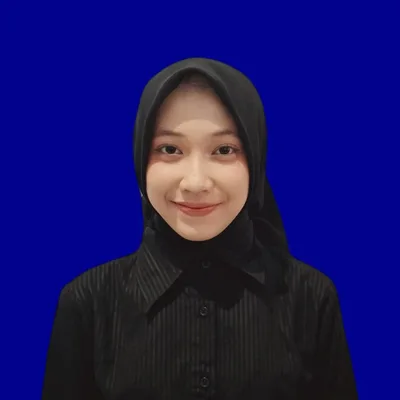
Fadila F.
Social Studies Education, Universitas Negeri Malang
Linking maps, markets, and history within one chapter“Junior high IPS combines geography, economics, sociology, and history in a single book. Fadila studied Social Studies Education at Universitas Negeri Malang, a programme built to prepare teachers for this integrated subject, so she is used to showing students the thread that runs between chapters.”
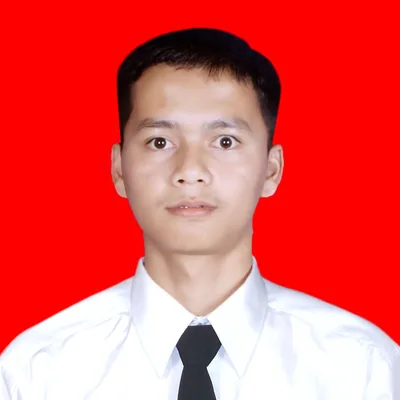
Rahman R.
Social Science, Universitas Bale Bandung
Starting from what happens around the learner's home“Social interaction and economic activity are easiest to grasp through examples a student sees every day. Rahman, who studied Social Science at Universitas Bale Bandung, opens each topic with the learner's own surroundings and then connects it to the terms the textbook uses.”
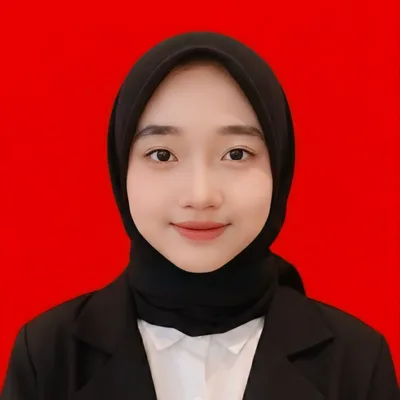
Tiara T.
Social Studies Education (final-year student), Universitas Negeri Yogyakarta
Practice with tables, charts, and word problems“A final-year Social Studies Education student at Universitas Negeri Yogyakarta, Tiara is studying how integrated IPS is taught. With her, grade 7 to 9 students practise reading the tables, charts, and word problems that often appear in school assessments.”

Oman A.
History Education, Universitas Negeri Jakarta
Indonesian history as a cause-and-effect timeline“The history chapters of junior high IPS, from prehistory to independence, feel long when memorised date by date. Oman studied History Education at Universitas Negeri Jakarta as well as Islamic History and Culture at UIN Syarif Hidayatullah Jakarta, and he arranges the material into a timeline students can retell in their own words.”

Agung F.
Geography Education, Universitas Negeri Yogyakarta
Reading maps and the links between regions“Maps, location, and the connections between regions open the spatial material in grade 7. Agung, who studied Geography Education at Universitas Negeri Yogyakarta, has students read a map carefully before they answer questions about what a region has to offer.”
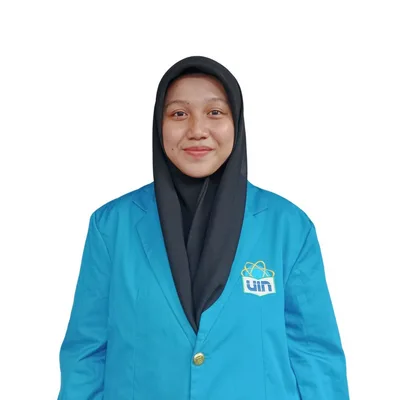
Wawa N.
Social Studies Education, Economics Concentration, UIN Syarif Hidayatullah Jakarta
Everyday economics for grades 8 and 9“Supply, demand, and the roles of economic actors come up again and again in grades 8 and 9. Wawa took Social Studies Education with an economics concentration at UIN Syarif Hidayatullah Jakarta, which makes this the part she knows best when supporting students.”
Private IPS Tutoring Rates for Junior High
Junior high IPS tutoring starts from Rp61.000 per hour for private sessions. The final figure depends on the city, the school curriculum and how many sessions are booked.
Starting from
Rp 61.000 / hour
Final price is set at registration.
This is the lowest hourly rate, derived from the 28-session monthly plan at 120 minutes per session. Per-session prices (60, 90, or 120 minutes) appear in the format options above.
Register & Get a QuoteFlexible payment — QRIS, Virtual Account, Alfamart, Indomaret, transfer & e-wallets.
Before paying, the sign-up form shows the full total with the registration fee already included. Accepted methods include QRIS, Virtual Account, bank transfer, card, e-wallet, and Alfamart or Indomaret counters.
FAQ
Questions About Private IPS Tutoring for Junior High
Short answers on topics, tests, rates and how to sign up for junior high IPS tutoring.
Private IPS tutoring for junior high starts from Rp61.000 per hour. A meeting can be booked as 60, 90 or 120 minutes, depending on what the student needs that week, and home visits and online lessons are charged at the same hourly rate. The final figure depends on the city, the school curriculum and the number of sessions a month, and the total shows in the form before payment.
No. The 2026 TKA for SMP tests only Indonesian and Mathematics, and the minister has said TKA at primary and junior high level is optional and does not decide graduation. IPS is assessed at school through assignments, projects, presentations, end-of-chapter competency tests and end-of-semester or end-of-level assessments.
Phase D IPS blends geography, economics, sociology and history, with links to anthropology. Topics include Indonesia's geography, climate change and disasters, prices and markets, social interaction, unity in diversity, local history and place names, and the archipelago spice route. How these split across grades follows each school's own learning sequence.
Yes. Mention the theme you are on during the consultation, such as colonialism or the national movement, and the tutor plans sessions around it. Students usually practise building timelines and reading sources, since those two skills are what make the history chapters feel heavy.
There are four steps: a consultation about what is needed, agreeing on schedule and format, the EduPoint team finding a suitable IPS tutor, and then the first session. Students can register themselves, or a parent, guardian or sibling can do it. Every session is paid, the first one included.
Complete Guide
A Study Guide to Junior High IPS (Kurikulum Merdeka) for Grades 7, 8 and 9
In Indonesian junior high schools, IPS (social studies) is taught as one integrated subject in Phase D, which covers grades 7, 8 and 9. The learning outcomes for IPS are set out in BSKAP decree 046/H/KR/2025, which describes the whole phase in one go. Each school decides how the topics are split across the grades through its own learning sequence, so two schools in the same city can be on different chapters in the same semester.
Following the government textbooks, the pattern looks roughly like this. Grade 7 starts close to home: where students live, how places connect, everyday economic activity, and the basic ideas of history such as space, time, chronology and change. Grade 8 widens to the scale of the archipelago and carries more history, from trade in the Hindu-Buddhist era to the movement towards independence. The revised 2025 grade 9 textbook has three chapters: the spice route and the origins of Indonesia's ancestors, disaster mitigation and social and cultural change, and trade in the digital era.
Each grade leans on the one before it. A student who never got comfortable with chronology in grade 7 usually feels it again in the grade 8 chapters on colonialism, and the grade 7 ideas about prices and markets come back when international trade is covered. That is why junior high IPS tutoring often opens by checking the basic concepts underneath the chapter currently running at school. After grade 9, Phase E IPS in grade 10 may be taught as separate disciplines, so it helps to have all four fields in order before they split.
The IPS learning outcomes have two elements that run together through every topic. Understanding Concepts asks students to define, interpret and phrase ideas in their own words while grasping the context around them. Inquiry Skills ask students to observe, form questions, gather information, process it, draw conclusions and present what they found in a suitable medium.
You can see the effect in the shape of IPS questions and assignments. Definition questions still appear, yet case studies take up a growing share. A typical item gives a short set of data on climate change in one region, then asks how it affects the local economy and what one sensible adaptation would be. Projects and presentations are graded too, because that is where inquiry skills are easiest for a teacher to observe.
There is a simple way to find out which element needs work. Ask the student to explain one term from the latest chapter without opening the book, then give one example of it from their own surroundings. If the explanation flows yet the example will not come, practice should move towards applying the idea. If the example is there and the terms are mixed up, the meaning itself needs revisiting. A small check like this helps a private IPS tutor decide where the first session should begin.
IPS feels lighter when a student keeps three tools going from chapter to chapter. The first is a map: whenever the book names a place, whether a port on the spice route, the territory of a kingdom or a region discussed under disaster mitigation, the student looks it up in an atlas or a digital map and marks it. The second is a timeline, one sheet per history theme, filled in gradually across the semester. The third is a cause-and-effect diagram for economics, such as the chain from needs to economic activity, then to prices and markets.
Another habit that pays off is recalling without the book. After reading one subsection, the student closes the book, writes down what they still remember for five to ten minutes, then checks it against the text. Whatever was missed becomes the next thing to study. This suits students who feel they understand while reading and then struggle in the test.
Practice material is also close at hand. The story behind the name of your own neighbourhood or street is an example of the place-name study covered in grade 7. News about staple food prices can be used to practise demand and markets. The IPS outcomes also stress checking information before sharing it, so comparing two news reports on the same event is a fair exercise in inquiry skills.
The junior high Academic Ability Test (TKA) leaves IPS out of its subject list. The junior high TKA ran for the first time in 2026 with two subjects, Indonesian and Mathematics, and its main sitting took place from 6 to 16 April 2026. According to the education minister, sitting the TKA at primary and junior high level is optional and has no bearing on graduation, though results can serve as one basis for selection in the academic achievement track of school admissions. The National Assessment for grade 8 also tests reading literacy and numeracy, so IPS is outside its scope as well.
That places the IPS milestones inside school. The revised grade 9 textbook closes each chapter with a Competency Test and a Reflection. There is a summative assessment at the end of each semester, and grade 9 adds an end-of-level assessment. Schools use different names for these, and the format can be a written test, a practical task, an assignment, a project or a presentation.
Well-organised preparation usually starts two or three weeks before the end-of-semester assessment. The student lists the chapters being tested, reworks the Competency Tests in the book, then practises essay questions that include data, maps or extracts from historical sources. For projects, a large deadline is broken into smaller steps: choosing the question, finding sources, processing the data and preparing the presentation. In grade 9 IPS tutoring, the same order is used for the end-of-level assessment.
Registration opens with a consultation, where the learner or the person enrolling them describes where IPS stands right now: which grade, which school curriculum and textbook, which chapter the class has reached, and any quiz dates or project deadlines on the calendar. Once the schedule and needs are agreed, the EduPoint team finds a suitable IPS tutor and the first session begins. A student who finds the tutor's approach a poor fit for them is free to request a replacement.
Session length can follow what the week calls for. A 60-minute session is enough to review one subsection or practise questions before a daily quiz. With 90 minutes, a lesson can cover a single concept, work through a map or timeline, and still finish with practice questions. A 120-minute session is usually chosen before the end-of-semester assessment or while a project is underway. Monthly IPS bookings range from 4 to 28 sessions, and each one is scheduled at any hour from 06.00 to 23.00 to fit around school and extracurricular hours.
Sessions work better when the student brings the textbook, class notes and the latest marked test. From that test paper the tutor can see the kind of mistake involved: terms mixed up, events in the wrong order, or essay answers that leave out the data given in the question. Between sessions, the EduPoint learner app keeps materials, recordings and progress reports, so the student can go back over IPS topics at their own pace.
Guides & Tips
Supporting articles to help you decide and maximize learning outcomes.
How to Study Integrated Social Studies for Junior High: Uniting Space, Time, Society, and Economy
A step-by-step guide to mastering Phase D social studies in the Merdeka Curriculum through a single theme that unites geography, history, sociology, and economics.
How to Study Social Studies (IPS) Effectively for Every Grade
A step-by-step guide to understanding Geography, History, Economics, and Sociology through cause and effect, concept maps, and active practice that stays in memory.
Programs Often Taken Alongside IPS
Other junior high subjects, and IPS tutoring at other levels.
Ready to Start Private IPS Tutoring?
Share the grade, the school and the IPS chapter the class is working through. EduPoint then looks for a tutor who fits, and a date for the first session is agreed.