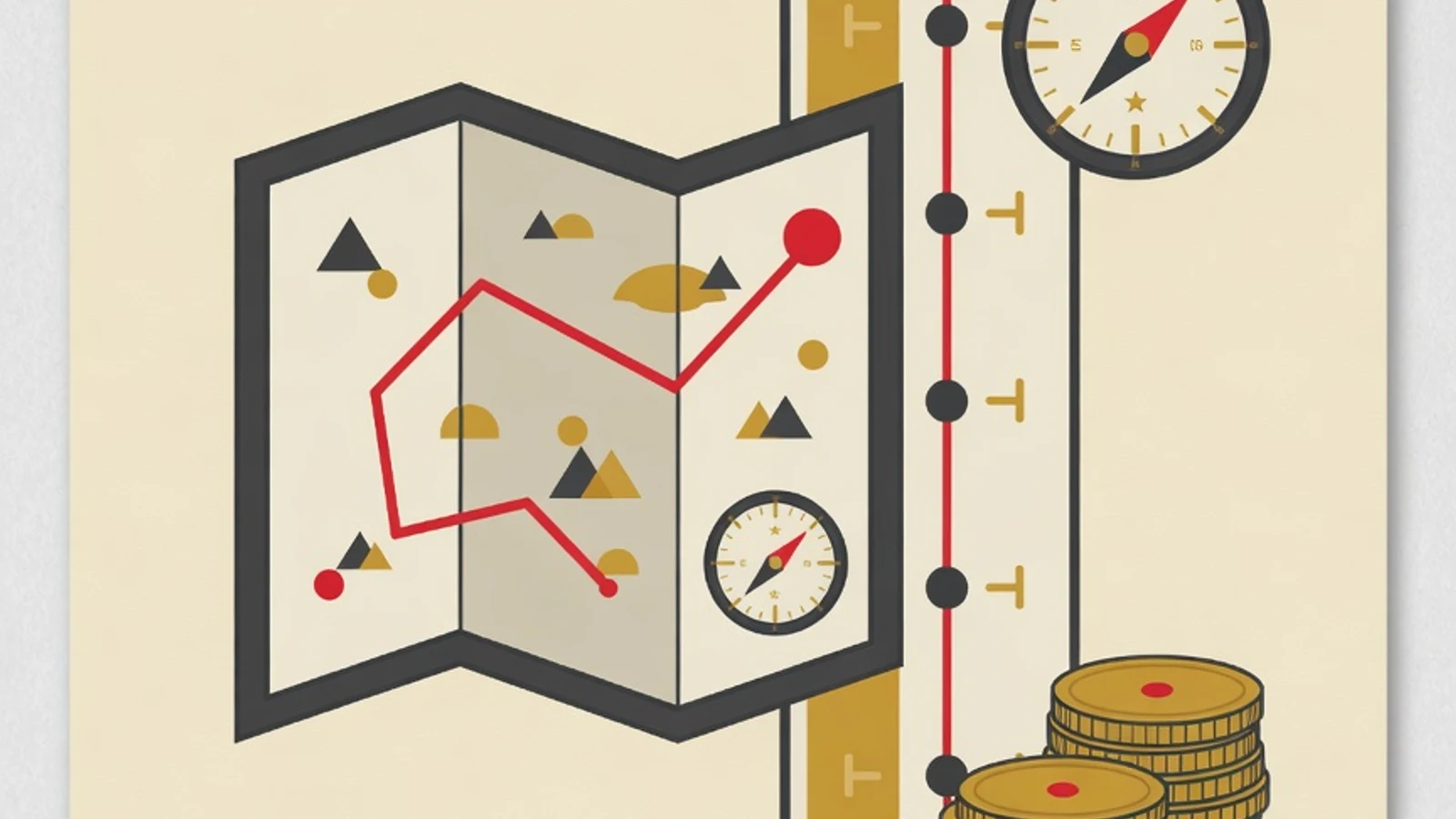
How to study integrated social studies for junior high starts by viewing one event from four angles at once: space, time, society, and economic need. In Phase D of the Merdeka Curriculum, geography, history, sociology, and economics are woven into a single theme. Students in grades 7 through 9 learn through inquiry questions and connect every concept to daily life.
- Phase D integrated IPS weaves four disciplines into one interconnected theme
- Inquiry learning lets students ask a question first, then find the answer themselves
- Retention grows when concepts are tied to the world around the student
- Phase D social studies textbook for grade 7, 8, or 9
- A map of Indonesia and a simple atlas
- A notebook for timelines and concept maps
- Everyday news or events to use as discussion material
Integrated IPS in Phase D at a Glance
What integrated IPS means in junior high
Integrated social studies in junior high presents geography, history, sociology, and economics as one interconnected whole. The Phase D Teacher Guide describes the subject as interdisciplinary and transdisciplinary, so students see social reality as a complete picture. Material is organised into themes, such as social change, the digital economy, or cooperation between nations, and each theme is read through several disciplines at once. How to study integrated social studies junior high therefore centres on the habit of connecting concepts, with memorising dates and place names playing a supporting role. A student studying urban flooding, for example, examines the geographic location (space), the history of the area's development (time), how residents respond (society), and the cost of mitigation (economy). This connecting mindset sits at the heart of Phase D and offers the most help when facing higher-order thinking questions.
The four learning elements woven together
Space and Inter-Regional Connectivity
Rooted in geography. Students read maps, understand location and climate, and see how one region links to another through the movement of people, goods, and information.
Chronology of Social Development
Rooted in history. Students build timelines, grasp cause and effect, and observe how the past shapes the present.
Social Interaction and Dynamics
Rooted in sociology. Students observe relationships between individuals and groups, norms, social institutions, and change within society.
Economic Behaviour and Technology
Rooted in economics. Students understand needs, scarcity, production and consumption, and the role of digital technology in a global era.
Steps to study integrated social studies for junior high
The five steps below turn how to study integrated social studies junior high from memorising fragments into understanding the whole. Repeat this cycle for every new theme.
- 1
Map one theme to four angles
Take a theme from the textbook and write four guiding questions: where (space), when and in what order (time), who is involved (society), and what are the gains and costs (economy). Studying integrated social studies becomes far lighter once a big topic is split into four clear angles. For a traditional market theme, space explains the location and reach of buyers, time traces the market's history, society captures the interaction between sellers and shoppers, and economy discusses prices and the flow of money. These four angles then become the frame for tidy notes.
Tips- Use one page divided into four boxes so all angles are visible at once
- Colour-code each discipline to make it easier to recall during a test
- 2
Build a timeline and a simple map
Visuals speed up understanding of integrated IPS. For the history element, arrange a timeline from the earliest to the most recent event, complete with cause and effect. For the geography element, draw a simple map or mark locations on an atlas. The brain stores information more easily when it has spatial shape and order. When studying the development of Indonesian transport, a timeline shows the shift from sea routes to land and air, while a map reveals which routes link the islands. Together these two visuals explain why certain cities grew quickly.
Tips- A hand-drawn map is enough, as long as the positions between regions are correct
- Add arrows to the timeline to mark cause-and-effect links
- 3
Ask inquiry questions
Inquiry learning places the question first, then the student searches for the answer. The Phase D Teacher Guide encourages students to explore social problems around them. Start with a question that invites analysis, such as why vegetable prices rise during the rainy season, or why people move to big cities. Questions like these call for answers from several disciplines at once, so integrated thinking forms naturally. Note an early guess, gather supporting data from books or news, then compare the guess with the findings. This process trains the reasoning that higher-order thinking questions assess.
Tips- Keep a list of open questions and add one each time you notice something interesting
- Practise answering with a cause, process, and effect pattern
- 4
Connect concepts to daily life
Integrated IPS concepts stick when a student finds them around home. Link lessons to real things: the structure of the nearby market, weather patterns that affect the harvest, family traditions with historical roots, or spending decisions that reflect economic principles. Connecting concepts to direct experience makes the material feel relevant and easier to recall during exams. An effective way to study integrated social studies junior high treats the surrounding environment as a second classroom. A short chat with parents about economic news or environmental change also strengthens understanding.
Tips- Choose one real example for every new theme you study
- Write a single sentence linking the lesson to something happening nearby
- 5
Test understanding with case studies and HOTS questions
The final step checks whether the four angles have truly merged. Work on case-based questions that require cross-disciplinary analysis, such as assessing the impact of a new toll road on the economy, the environment, and residents' lives. Questions like these match the higher-order thinking type found in assessments. After answering, check that every angle has been addressed and explain the reasoning in your own words. If any part feels stuck, return to step one for that theme. Focused repetition builds confidence gradually.
Tips- Work through a story problem, then mark which disciplines your answer used
- Re-explain your answer in your own words to test understanding
Memorising answers without understanding how the disciplines connect leaves a student struggling when the question context changes.
Studying in parts and studying as a whole
| Aspect | Studying in Parts | Studying Integrated |
|---|---|---|
| Perspective | Four subjects standing alone | One theme seen from four angles |
| Focus | Memorising loose facts | Understanding links between concepts |
| HOTS questions | Feel unfamiliar and hard | Feel familiar through practised analysis |
| Retention | Fades soon after a test | Lasts because it ties to experience |
Phase D of the Merdeka Curriculum is designed for an integrated pattern, so assessment emphasises cross-disciplinary analysis.
Studying integrated IPS on your own
- Study time can be arranged freely to match the child's rhythm
- It builds independence and curiosity from an early age
- Free resources are available, from Phase D textbooks to digital maps
- A flawed line of thinking is hard to spot without feedback
- Case-study questions need guided correction to sharpen analysis
- Weekly consistency demands a high level of discipline
“Integrated IPS feels heavy when students try to memorise everything at once. The moment they view one theme through space, time, society, and economy, the pieces click together and the subject starts to make sense.”
A weekly routine for integrated IPS
- Read one new subtheme and mark its four angles
- Create or update the timeline and concept map for that theme
- Write one inquiry question and find its answer
- Link one concept to something happening around home
- Work on two cross-disciplinary case-study questions
- Re-explain this week's material to a parent or friend
- Phase D integrated IPS weaves geography, history, sociology, and economics into one theme for grades 7 through 9
- How to study integrated social studies junior high works best by viewing each theme from four angles: space, time, society, and economy
- Timelines, concept maps, and inquiry questions speed up understanding while training analysis for HOTS questions
- Connecting concepts to daily life keeps social studies material in memory for the long term