1,504 Middle School Indonesian Tutors · Rated 4.9/5
Indonesian Language Tutoring for Middle School, Grades 7 to 9
Our Indonesian language tutors help SMP students take apart the text type behind each chapter: how it is structured, which language features it relies on, and how to write and present one of their own. Lessons run at home or online, at a time agreed with the tutor.
1,504+
tutors
8,830+
students
4.9
rating · 2,648 reviews
60+
cities
What is Middle School Indonesian Language Tutoring?
Private Indonesian language tutoring for middle school is one-to-one support for grades 7, 8 and 9, following the Phase D learning outcomes: listening, reading and viewing, speaking and presenting, and writing. Schools give the subject 5 lesson periods a week. The tutor teaches in person or online, with rates starting from Rp61,000 per hour.
- Lessons follow the student's own school textbook and learning-objective sequence (ATP), including schools that use privately published books.
- In grades 7 and 8 Bahasa Indonesia has the largest classroom allocation of any subject: 180 lesson periods a year, ahead of Mathematics and Science at 144 each.
- Spelling is checked against EYD Edisi V, the official guideline that replaced PUEBI on 18 August 2022.
- Grade 9 students can add reading practice on informational and literary texts in the TKA question format.
Services
Ways to Learn Middle School Indonesian: At Home, Online or in a Pair
A home lesson and an online lesson of equal length are priced alike, with the tutor's travel already included. Choose whatever fits the student's week.
Tutor Visits at Home
A middle school Indonesian tutor comes to the student's home. Handy for longer writing practice marked up directly on paper.
Rp 97.000/ 90-minute session
Price on the 28-session monthly plan, 90-minute sessions. Fewer meetings, higher price per session.
- One tutor, one student
- Writing corrected on the spot
- Presentation and read-aloud practice
Online Indonesian Lessons for SMP
Lessons over Zoom or Google Meet from anywhere. Drafts can be shared on screen and edited together.
Rp 78.000/ 60-minute session
Price on the 28-session monthly plan, 60-minute sessions. Fewer meetings, higher price per session.
- Zoom or Google Meet
- Shared-screen draft editing
- Recordings and materials in the learner app
Small Group of Two
Two SMP students share one tutor, for example classmates working on the same chapter. The fee is charged per student.
Rp 59.000/ 60-minute session
Price on the 28-session monthly plan, 60-minute sessions. Fewer meetings, higher price per session.
- Lower fee per student
- Paired text discussion
- Dialogue and presentation practice
Online and in-person cost the same — the gap between these cards is session length, nothing else.
What Middle School Indonesian Covers, Grade by Grade
For Indonesian, BSKAP decree 046/H/KR/2025 describes the Phase D outcomes across all three SMP years at once; the per-grade detail lives in the textbook and each school's learning-objective sequence. The chapters below follow the student books published by the Ministry of Education.
Schools are free to choose another publisher, so the chapter order in class may differ from this list. In the first session the tutor looks at the student's book, notes and upcoming test dates, and builds the study order from there.
Grade 7: Meeting the Phase D Text Types
Grade 7 has six chapters built around six kinds of text. In the first year of SMP, students start editing their own writing, comparing print and online news, and separating fact from opinion in social media discussions.
- Descriptive texts and pamphlet-style visuals
- Folk poetry and fantasy stories: plot, characters, creative writing
- Procedural texts, sentence types, ellipsis and infographics
- News texts, the elements of a news story, and spotting hoaxes
- +2 more
Grade 8: Writing from Data and Point of View
Grade 8 asks for writing grounded in data and observation. Students produce observation reports, popular science articles, reviews and speeches, and learn to tell denotative meaning apart from connotative meaning.
- Observation reports: data, structure, descriptive and expository paragraphs
- Adverts, slogans and posters using persuasive and imperative sentences
- Popular science articles: fact and opinion, analogy, synonyms, antonyms
- Reviewing fiction and writing a book review
- +2 more
Grade 9: Weighing Information and Building Arguments
Grade 9 closes Phase D with texts that demand reasoning: recounts, cause-and-effect explanations, reports and arguments. Students also practise drawing conclusions from a reading and sorting facts, assumptions and opinions.
- Descriptive texts with point of view, conjunctions, cohesion and coherence
- Interview procedures and essay-writing procedures
- Recounts, social media vocabulary, loanwords, written responses by email
- Cause-and-effect explanation texts and presenting them
- +2 more
Spelling and Effective Sentences Across All Grades
This strand is woven into every chapter, since every writing task in SMP is also marked on spelling. The tutor uses the student's own drafts as the material for correction.
- Capital letters and punctuation under EYD Edisi V
- Standard and non-standard word forms
- Writing foreign words, regional words and loanwords
- Effective sentences and word choice
- +1 more
Who It Is For
Who Middle School Indonesian Tutoring Suits
Every SMP student arrives with different needs depending on grade and school. Tutors are matched by grade, material and the language of instruction the student is most comfortable with.
Grade 7 students starting Phase D
SMP tasks begin asking students to edit their writing, compare sources and present spoken information. Grade 7 Indonesian tutoring helps students settle into those demands from the first semester.
Recommended:
Getting used to self-editingComparing print and online newsWriting formal letters in standard Indonesian
Grade 8 students with heavy writing loads
Observation reports, popular science articles, reviews, poems and speeches all arrive within one year. Grade 8 tutoring walks the student through each piece from outline to final revision.
Recommended:
Building a report from observation dataTelling denotative from connotative meaningRehearsing a speech
Grade 9 students preparing for the TKA
In the 2026 round, the SMP TKA tested Bahasa Indonesia with 30 questions in 75 minutes, centred on reading informational and literary texts. TKA preparation in private lessons runs alongside the grade 9 school material.
Recommended:
Literal and inferential comprehension practiceComplex multiple-choice questionsArgumentative texts and drawing conclusions
International and bilingual school students
Students who study mainly in English, for example on Cambridge Lower Secondary or IB MYP tracks, still need tidy written Indonesian. Tutors can teach in Indonesian, bilingually or in English, all at the same rate.
Recommended:
Standard vocabulary and formal registerIndonesian sentence structureShort writing tasks that build step by step
Where SMP Indonesian Gets Tricky
The Parts of Middle School Indonesian Where Students Most Often Get Stuck
Many SMP Indonesian tasks pair two ideas that look alike. In private lessons each pair is practised side by side until the student can point out the difference in the text in front of them.
Mixing up fact and opinion
Why it happens
The pair comes back in all three grades with different readings: social media discussions in grade 7, popular science articles in grade 8, then facts, assumptions and opinions in grade 9.
How we fix it
The tutor brings in real news excerpts and posts, and the student marks which sentences can be verified and which carry the writer's own judgement.
The same spelling and punctuation errors keep returning
Why it happens
Research on student writing finds the most frequent errors in capital letters, punctuation, non-standard words and wordy sentences. Some older workbooks also still refer to PUEBI.
How we fix it
Drafts are corrected together against EYD Edisi V, and recurring errors are logged so the next exercises target that exact pattern.
Explanation texts that lose their order
Why it happens
An explanation text needs a clear cause-and-effect sequence and the right causal or chronological connectors. Students often struggle to settle on a topic and then skip part of the structure.
How we fix it
The student drafts an outline with the tutor first, fills each part in turn, and only then links the paragraphs with suitable connectors.
Denotation and connotation, transparent and prismatic poems
Why it happens
The grade 8 fiction and poetry chapters ask students to read the meaning beneath the words. Memorised definitions rarely hold up here.
How we fix it
The tutor sets two close examples next to each other, such as one word in two sentences or two poems on the same theme, and the student explains the difference in their own words.
Recounts and explanations feel identical
Why it happens
The two chapters sit back to back in grade 9 and both describe a chain of events. Their purposes differ: a recount retells what happened, an explanation sets out how a process works and why.
How we fix it
The student reads one topic written as both text types, marks the parts that serve different purposes, and then writes a version of their own.
This list draws on the Phase D student books and education research on student writing errors. Each tutor reorders it around the difficulties that actually show up in session.
Why Us
Why Students Learn Middle School Indonesian with EduPoint
An Indonesian tutoring service for SMP that runs on clear terms from day one.
A tutor matched to the need
The EduPoint team matches a tutor from 20,000+ registered tutors to the student's grade, material, location and preferred language of instruction.
Unlimited tutor changes
If a teaching style does not click, the student can ask for another tutor at no extra cost, as many times as needed.
Self-study in the learner app
Between lessons, app.edupoint.id holds the student's practice materials, recorded sessions and progress reports, so text practice carries on.
30-day deposit guarantee
The monthly deposit for Indonesian lessons carries a 30-day guarantee, and schedule changes only take a WhatsApp message.
Meet Our Middle School Bahasa Indonesia Tutors
Six tutors who represent the people teaching middle school Bahasa Indonesia at EduPoint. The major and campus on each card come from the education history they registered, and learners are matched with a tutor by grade, the text type their class is covering, and the school assessment calendar.
Tutor Qualifications
- University study in Indonesian Language and Literature or its teacher education programme
- Familiar with the chapter order of the Phase D Bahasa Indonesia student books for grades 7 to 9
- Checks learner writing against EYD Edisi V spelling rules and effective sentence principles

Dwi D.
Indonesian Language and Literature Education, Universitas PGRI Semarang
Reading text structure from real examples“Every text type in the middle school books has a framework that can be recognised, from the orientation of a fantasy story to the thesis of an argumentative text. Dwi studied Indonesian Language and Literature Education at Universitas PGRI Semarang and usually opens a session by taking apart one sample text with the learner before the learner writes their own version.”
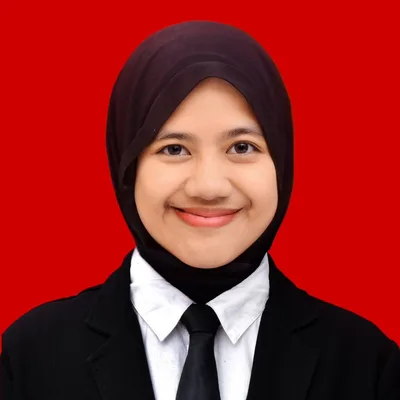
Anis A.
Indonesian Language and Literature Education, Universitas Mataram
News, adverts, and how to check information“The grade 7 lessons on news and hoaxes feel close to home for learners who open social media every day. Anis prepared for Indonesian language teaching at Universitas Mataram, and she turns stories that are currently circulating into practice material for sorting out news elements, sources, and facts.”

Ika F.
Indonesian Language and Literature Education, Universitas Jambi
Spelling and effective sentences in every writing task“Capital letters, commas, and standard word forms are frequent places where marks slip away on writing assignments. From her Indonesian Language and Literature Education studies at Universitas Jambi, Ika brings a habit of editing sentence by sentence and pointing to the EYD rule behind each correction.”

Silvester S.
Indonesian Language and Literature Education, Universitas Sanata Dharma
Poetry, figures of speech, and fiction reviews“Transparent and prismatic poems in grade 8 often leave learners unsure how to interpret them. Silvester studied literature in the Indonesian Language and Literature Education programme at Universitas Sanata Dharma, and he reads stanza by stanza with the learner, marks the figures of speech, then has the learner write an interpretation in their own words.”

Waddah P.
Indonesian Language and Literature Education, Universitas Negeri Medan
Orderly speech scripts and oral presentations“Giving a speech in front of the class calls for a well organised script and a steady voice. Waddah, who completed Indonesian Language and Literature Education at Universitas Negeri Medan, works with learners on building the opening, body, and closing of a speech, then on delivering it during the session.”

Putri P.
Indonesian Literature, Universitas Diponegoro
Close reading for explanatory and argumentative texts“In the Indonesian Literature programme at Universitas Diponegoro, Putri grew used to reading texts closely and weighing their ideas. She brings that habit to the grade 9 material, guiding learners to trace cause and effect in explanatory texts and to build arguments that rest on data.”
Cost of Private Indonesian Tutoring for Middle School
Rates come from the SMP pricing engine and apply equally to home and online lessons.
Starting from
Rp 61.000 / hour
Final price is set at registration.
This is the lowest hourly rate, derived from the 28-session monthly plan at 120 minutes per session. Per-session prices (60, 90, or 120 minutes) appear in the format options above.
Register & Get a QuoteFlexible payment — QRIS, Virtual Account, Alfamart, Indomaret, transfer & e-wallets.
The hourly figure is based on the 28-session monthly plan with 120-minute sessions. Each month takes between 4 and 28 sessions, itemised in the registration form before checkout. Bank transfer, Virtual Account, QRIS, e-wallets and cards are accepted, and so are Alfamart and Indomaret counters.
FAQ
Questions About Middle School Indonesian Tutoring
Quick answers to what students and those registering them usually ask before starting.
Private Indonesian tutoring for SMP starts from Rp61,000 per hour, based on the 28-session monthly plan with 120-minute sessions. On that same 28-session plan, a lesson cut to 60 minutes comes to Rp78,000. When two students learn together, the fee per student is lower. The final total appears in the form once the number of sessions is chosen.
The material follows the four Phase D strands: listening, reading and viewing, speaking and presenting, and writing. In practice each chapter centres on one text type, such as news texts in grade 7, observation reports in grade 8 and argumentative texts in grade 9. The tutor follows the order of the student's school textbook.
Yes. In the 2026 round, the SMP TKA had 30 Bahasa Indonesia questions in 75 minutes, in multiple-choice and complex multiple-choice form, focused on reading informational and literary texts. Tutors train literal and inferential comprehension and evaluating a text. Results still depend on the student's own practice, so EduPoint does not promise any particular score.
For an SMP Indonesian language class, durations of 60, 90 and 120 minutes are all on offer, and the start time sits inside 06.00 to 23.00, so students can pick a slot after school or after co-curricular activities. For grade 8 students with long writing assignments, 90 minutes often feels more comfortable.
There are four steps. The student, or whoever is registering them, starts with a consultation, then fills in the schedule and learning needs on the form. A suitable Indonesian tutor is then chosen by the EduPoint team, and the lessons run on the agreed timetable.
Complete Guide
A Complete Guide to Middle School Indonesian Tutoring: Topics, Practice, and Assessments
Indonesian in middle school (SMP) sits in Phase D, a single band of learning outcomes covering grades 7, 8, and 9. On the school timetable the subject gets 5 lesson periods a week, each lasting 40 minutes. The four skills assessed stay the same across all three years: listening, reading and viewing, speaking and presenting, and writing. What changes from grade to grade is the kind of text students work with and how much reasoning it asks of them.
Grade 7 introduces texts whose parts are easy to spot: descriptions, fantasy stories, procedures, news reports, and letters. Many tasks ask students to identify a text's structure and then edit their own writing. Grade 8 shifts the weight toward writing that rests on data, such as observation reports and popular science articles, along with reviews, poetry, and speeches. Grade 9 asks students to weigh what they read: separate fact, assumption, and opinion, explain cause and effect, and build an argument of their own.
Because the sequence builds on itself, a gap left in grade 7 tends to resurface later. A student still unsure about telling fact from opinion in the letters and social media chapter usually stumbles again on popular science articles, and then on argumentative texts. Private Indonesian tutoring for SMP can start from the chapter currently running in class and step back now and then to a basic idea that turns out to be shaky.
Home practice pays off most when the material sits close to schoolwork. Three habits work well for SMP students and need no extra textbooks.
First, read one short text every day and write its main idea in one or two sentences. A news story online, a popular science article, or a short story all count. This small habit trains literal and inferential comprehension, the two skills tested in everything from weekly quizzes to the TKA.
Second, edit your own writing a day after drafting it. A one-day gap makes mistakes much easier to see. Check the four things students most often get wrong: capital letters, punctuation, non-standard words, and sentences that run too long. The spelling standard in force today is EYD Edition V, so older workbooks that still cite PUEBI should be read with care.
Third, get used to opening a dictionary. It confirms meaning, spelling, and the standard form of a word, which matters most with the loanwords that fill the grade 9 chapters.
For speaking tasks, students can record themselves delivering a speech or presentation and listen back for pace and clarity. Once a lesson ends, its recording and the practice texts stay available on app.edupoint.id, which lets a student rehearse alone using the very explanations heard during the tutoring session.
Indonesian in SMP is assessed in two ways. At school, students sit one summative assessment at mid-semester and another at semester end, and each school picks its own names and dates for them. The questions follow the chapters already covered, and they often come with a writing or presentation task that the teacher marks directly.
Grade 9 students also meet the Academic Ability Test (TKA), governed by Ministerial Regulation No. 9 of 2025. In the April 2026 sitting, the SMP TKA tested Mathematics and Indonesian. The Indonesian section had 30 questions in 75 minutes, built on informational and fictional texts. The questions measure three things: understanding what the text states, inferring what it implies, and evaluating and appreciating what was read. Two formats appear: standard multiple choice, and complex multiple choice, in which a single question may have several correct options.
Complex multiple choice often catches students who are used to stopping at the first right answer. The fix is to check every option against the text, one at a time. The clock matters as well. Thirty questions in 75 minutes works out to roughly two and a half minutes each with the reading counted inside that time, so reading speed gets trained alongside comprehension.
TKA preparation for Indonesian runs most smoothly alongside the grade 9 syllabus, since the argumentative, explanatory, and report texts covered in class resemble the passages in the test. Dates for the next TKA follow the ministry's official announcement.
The tutor first needs to see where a student stalls, whether in building paragraphs, drawing conclusions from a reading, or handling punctuation. That is why the first meeting usually goes into looking at material: the textbook, class notes, worksheets, recent test results, and samples of the student's writing. From these the tutor marks recurring patterns, such as a part of the text structure that keeps getting skipped or punctuation that keeps going wrong.
For this subject, the most valuable lesson material is the student's own writing. An observation report or speech draft due for school can be taken apart together: is there enough data, does the paragraph order make sense, do the persuasive sentences land. The student then revises it alone, and the tutor reviews the new version at the next meeting.
Concept pairs that look alike, such as recount and explanation texts or transparent and prismatic poetry, become clearer when two examples sit side by side. A tutor can prepare two texts on the same topic and ask the student to explain the difference in their own words.
A session can run 60, 90, or 120 minutes. Sixty minutes suits reading drills and question practice, while longer writing tasks fit better in 90 or 120 minutes, leaving room to outline, draft, and edit in one sitting. The meeting time can sit anywhere from 06.00 to 23.00, wrapped around the school day and extracurriculars.
Demand for Indonesian tutoring usually rises and falls with the school calendar. Early in a semester, as new chapters begin, two meetings a week are often enough to keep up. Closer to end-of-semester assessments, or for grade 9 students approaching the TKA, sessions can be added.
Each month's package takes between 4 and 28 sessions. A grade 7 student who only needs weekly writing support and a grade 9 student practising almost daily both have room to fit in. A student who books 28 sessions of 120 minutes in a month pays Rp61,000 per hour, the lowest rate for this subject, while a 60-minute meeting in that plan costs Rp78,000.
The tutor can teach at the student's home, or the session can run on Zoom or Google Meet, and both cost the same. Online lessons make it easy to share a draft on screen, and in-person lessons suit marking handwritten work. Two classmates preparing the same chapter can also study together at Rp59,000 per student for a 60-minute session.
QRIS, Virtual Account, bank transfer, e-wallets and cards are all accepted, and an Alfamart or Indomaret counter can take the payment too. To get started, the student or whoever registers them books a consultation, fills in the schedule and learning needs, and the EduPoint team finds a suitable tutor before the first meeting is set.
Guides & Tips
Supporting articles to help you decide and maximize learning outcomes.
Programs Related to Middle School Indonesian
Other SMP subjects and Indonesian tutoring at other school levels.
Start Private Indonesian Tutoring for Middle School
Mention the grade, which textbook the school has assigned and the text type the class is on right now. EduPoint then looks for an Indonesian language tutor who fits, and the first meeting is agreed together.
Grades 7, 8 and 9, Kurikulum MerdekaIn person or online60, 90 or 120-minute sessions