Sociology Tutors in 60+ Cities and Online
High School Sociology Tutoring for Grades 10, 11 and 12: Using Concepts to Read Real Cases
The official TKA Sociology sample questions are built on real material, such as government infographics and research institute reports, and ask students to analyse it with the right concept. EduPoint's sociology tutoring trains that habit from the very first grade 10 chapter, follows the school syllabus, and runs at home or online at times the student picks.
1,568+
tutors
10,510+
students
4.9
rating · 3,152 reviews
60+
cities

What is High School Sociology Tutoring?
High school sociology tutoring is private support for Sociology under Indonesia's Kurikulum Merdeka: Phase E in grade 10 and Phase F in grades 11-12. Tutors train students to apply concepts such as social groups, conflict and social change to real cases, including preparation for TKA Sociology, which has 25 questions in 60 minutes. Fees start from Rp79,000 per hour.
- Grade 10 is Phase E: what sociology is for, personal identity, social action and relationships, social institutions, and social phenomena in a multicultural society.
- Grades 11-12 are Phase F, where Sociology sits in the elective subject group.
- The learning outcomes have two strands, conceptual understanding and process skills, and the second is assessed through social research and its report.
- Sociology is one of the elective TKA subjects for high school. Candidates choose two electives on top of three compulsory subjects.
- Students choose the length of each sociology session, 60, 90 or 120 minutes, along with the setting: at home, over Zoom or Google Meet, or with 2-4 classmates as a small group.
Services
Sociology Tutoring Formats
Price depends on session length and the number of students. At-home and online sessions cost the same for the same length.
Private, at Home
A sociology tutor comes to the student's home in 60+ cities, a good fit for students who focus better discussing face to face and working on paper worksheets.
Rp 124.000/ 90-minute session
Price on the 28-session monthly plan, 90-minute sessions. Fewer meetings, higher price per session.
- One tutor, one student
- Material follows the school chapter
- Case discussions and concept maps at the study desk
Private, Online
Sessions over Zoom or Google Meet from anywhere, with recordings the student can replay in the app when revising a chapter.
Rp 124.000/ 90-minute session
Price on the 28-session monthly plan, 90-minute sessions. Fewer meetings, higher price per session.
- Session recordings kept in app.edupoint.id
- Screen sharing to read infographics and articles together
- Scheduling between 06:00 and 23:00
Small Group of 2-4 Students
Suits classmates working on the same social research project, or friends who want to practise TKA questions together.
Rp 93.000/ 90-minute session
Price on the 28-session monthly plan, 90-minute sessions. Fewer meetings, higher price per session.
- Lower per-student rate
- Group discussion of social cases
- Clear roles while building a project
Online and in-person cost the same — the gap between these cards is session length, nothing else.
Sociology Topics by Grade
Lessons are built on the phase E and F Sociology learning outcomes set by BSKAP in decree 046/H/KR/2025, adjusted to the chapter order of the student's school textbook.
The official outcomes do not split Phase F into grade 11 and grade 12, and chapter order can differ between schools and publishers. The first session is therefore used to line up with the chapter the student's class is currently on.
Grade 10: Meeting Sociology and Social Phenomena
The opening part of Phase E. Students learn sociology as the study of society and start applying it to themselves and the people around them.
- How sociology helps recognise social phenomena
- Personal identity, social action and social relationships
- The role of social institutions in keeping social order
- Social phenomena in a multicultural society
Grade 10: A First Social Research Project
The Phase E process skills. Students design and carry out a small study of something happening around them, then report on it.
- Observing and framing a research question
- Collecting and organising information
- Drawing conclusions and presenting results
- Reflecting and planning a follow-up group project
Grade 11: Social Groups, Social Problems and Conflict
The four chapters of the grade 11 textbook move from how social groups form towards building social harmony. The social groups chapter carries several classification schemes that need careful telling apart.
- What makes a social group: requirements, traits, process and forming factors
- Group typologies from Durkheim, Tönnies, Cooley and Faris, Sumner and Merton
- Group dynamics: leadership, organisation, social networks, conformity
- Social problems arising from social grouping
- +1 more
Grade 12: Social Change, Globalisation and Inequality
Semester one covers social change and globalisation in a digital society. Semester two covers social inequality and community empowerment rooted in local wisdom, including designing an empowerment activity.
- Forms and effects of social change
- Globalisation and the digital society
- Social inequality
- Community empowerment based on local wisdom
- +1 more
Grade 12: TKA Sociology Preparation
The TKA Sociology framework draws on material shared by Kurikulum 2013 and Kurikulum Merdeka, with questions pitched at knowing, applying and reasoning.
- Sociology as a science: nature, history, perspectives, scope
- Social relations and phenomena, including personality and institutions
- Social research: procedure, data collection techniques, methods
- Social groups, equality and social conflict
- +1 more
Who It Is For
Who This Sociology Tutoring Suits
Private sociology tutoring adjusts to where the student is in high school and what is most pressing right now.
Grade 10 students meeting sociology for the first time
Sociology first appears in grade 10, bringing a lot of new vocabulary and a small research project. Tutoring helps the student settle into a workable study routine from the introductory chapter onward.
Recommended:
60 or 90-minute sessionsCore concepts and social researchAt home or online
Grade 11 students who chose Sociology
In Phase F, Sociology becomes an elective covering social groups, social problems and conflict. The thinker typologies pile up quickly, so steady chapter-by-chapter practice pays off.
Recommended:
Regular sessions in step with schoolA concept map per chapterCase analysis practice
Grade 12 students preparing for TKA Sociology
Students who pick Sociology as one of their two TKA electives need to revisit grades 10 to 12 while practising complex multiple-choice formats.
Recommended:
90 or 120-minute sessionsStimulus-based practice questionsReview of the five TKA content areas
Students working on a research or empowerment project
The grade 10 social research project and the grade 12 community empowerment design both benefit from staged guidance, from the research question to the final report.
Recommended:
Guidance stage by stageFeedback on report draftsAvailable as a small group
A Peek at the Material
A Sample Exercise from a Private Sociology Session
One worksheet can hold three layers of work: separating look-alike terms, testing their features, then applying the right term to a case.
Worksheet: social phenomena in a multicultural society
Terms students need to tell apart
accommodationassimilationacculturation
conflictviolenceintegration
primary groupsecondary group
in-groupout-group
Feature test: ingredients and the term they add up to
two cultures meet+original elements stay visibleacculturation
two cultures meet+both merge into a new cultureassimilation
two parties in dispute+a third party steps inmediation
Short case analysis
The minaret of the Menara Kudus Mosque is built of red brick in a temple-like form, and it is used for the call to prayer.
Question: Which social process does this show, and why?
Answer: Acculturation. The older architectural form is still visible in the minaret, while its function serves Muslim worship. The two elements sit side by side without fusing into an entirely new form, so assimilation would be the wrong label.
Tutors build exercises like this from whatever chapter the student is studying. Session notes, recordings and progress reports stay in the app.edupoint.id learner app, ready to revisit before a test.
Where High School Sociology Gets Stuck
Common Difficulties Students Meet in Sociology
Research on sociology teaching points to a handful of recurring hurdles. Here is how a sociology tutor works through each of them in private sessions.
Too many new terms at once, so students fall back on memorising definitions.
Why it happens
Sociology arrives with a large set of theories and concepts that students never met in junior high. Memorising feels fastest, yet a memorised definition is hard to use once the question turns into a case.
How we fix it
Each term is paired with an event the student already knows, such as a student council activity for group dynamics. The student then explains it back in their own words before moving to the next term.
Concepts feel broad and abstract, and are hard to link into a clear line of reasoning.
Why it happens
A single chapter can hold requirements, traits, forming factors and typologies from five different thinkers. Without a frame, it all reads as a loose list.
How we fix it
Every chapter gets its own concept map, drawn up together by tutor and student, for example the group typologies laid side by side: Durkheim, Tönnies, Cooley and Faris, Sumner, Merton. The same map comes back during practice questions.
The concept makes sense, but applying it to what happens in society does not come easily.
Why it happens
Questions at the applying and reasoning levels ask for case analysis, interpretation of social data, and arguments grounded in theory.
How we fix it
Practice uses real stimulus material such as infographics or news excerpts. The student marks the facts in the text, picks the matching concept, then writes the reasoning in two or three sentences.
Assimilation and acculturation get swapped in answers.
Why it happens
In everyday use the two words often overlap, even though the dividing feature is clear: whether the original elements remain visible or have merged.
How we fix it
The tutor applies a simple feature test before the student answers, then checks the idea against several cases written to look alike.
The social research project stalls halfway.
Why it happens
Grade 10 social research comes in layered stages: design, instruments, data collection, processing and a final report.
How we fix it
The tutor breaks the project into stages with a target for each session, reviews instruments such as interview question lists, and gives feedback on drafts the student writes.
Tutors guide the work. Assignments, projects and research reports are still written by the student.
Why Us
Why Study Sociology with an EduPoint Tutor
What sets EduPoint's private sociology tutoring apart is how sessions are run for a subject that leans so heavily on reading cases.
A sociology tutor matched to grade and needs
The EduPoint team matches the tutor to the student's grade, the chapter in progress and the goal, whether that is a class test, a project or the TKA.
Practice built on real reading material
News articles, infographics and reports serve as discussion material, because that is the form analysis questions take.
Progress reports and recordings in the app
Notes from every session, online session recordings and self-study material sit in app.edupoint.id for the student.
Tutor replacement guarantee
If a tutor's way of explaining social theory never clicks, a replacement can be requested by the student or by whoever registered them.
High School Sociology Tutors Who Studied Sociology
These six tutors studied Sociology, Sociology Education or a Master's in Sociology in Yogyakarta, Malang, Bali, Jakarta and Serang. Learners only need to share their grade, the chapter their school is covering and when they are free, and the EduPoint team picks the tutor whose university background fits that need most closely.
Tutor Qualifications
- Studied Sociology, Sociology Education or sociology at master's level
- Used to working with news stories, survey data and local cases as discussion material
- Familiar with Sociology for grades 10 to 12, including simple social research and TKA preparation
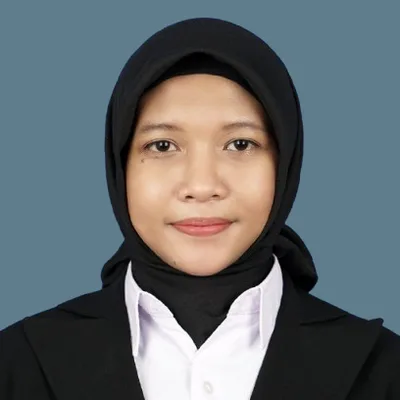
Hizma H.
Sociology Education, Universitas Negeri Yogyakarta
Naming the social patterns around the student“Hizma studied Sociology Education at UNY, a programme that pairs social theory with how to teach it. In sessions she asks students to put names to things they see every day, from neighbourhood clean-up days to the unwritten rules of a class group chat, using the terms from their textbook.”

Adis A.
Sociology Education, Universitas Negeri Malang
Building essay answers one step at a time“Sociology essay questions often ask students to explain the causes and effects of a social change. Adis, a Sociology Education graduate of Universitas Negeri Malang, drills the order of an answer: the concept first, then an example, then how both tie back to the question.”

Trya K.
Sociology, Universitas Udayana
Real examples for the diversity chapters“Trya studied Sociology at Universitas Udayana in Bali, where customary life and tourism sit side by side. That setting makes her keen to bring concrete examples when students work through social groups, diversity and the effects of globalisation.”

Rivaldi M.
Sociology, UIN Syarif Hidayatullah Jakarta
Guiding the social research project“The simple social research project in grade 11 often leaves students unsure where to begin: choosing a topic, drafting interview questions, then processing what respondents said. Rivaldi, who studied Sociology at UIN Syarif Hidayatullah Jakarta, walks students through those stages one at a time.”

Salwa R.
Sociology Education, Universitas Sultan Ageng Tirtayasa
Sorting out terms that are easy to mix up“Differentiation and stratification, assimilation and acculturation: pairs like these are easy to confuse the night before a test. Salwa, from Sociology Education at Universitas Sultan Ageng Tirtayasa, gets students into the habit of drawing comparison tables and writing their own example for each term.”

Brainer B.
Master's in Sociology, Universitas Muhammadiyah Malang
Reading tables, charts and argument texts“With a Master's in Sociology from Universitas Muhammadiyah Malang, Brainer is at home with reading that is dense in data and long arguments. He uses material of that kind to practise with grade 12 students preparing for the TKA in Sociology.”
Cost of High School Sociology Tutoring
Sociology tutoring for high school starts from Rp79,000 per hour. The final figure depends on grade, session length, number of sessions and the format chosen at registration.
Starting from
Rp 79.000 / hour
Final price is set at registration.
This is the lowest hourly rate, derived from the 28-session monthly plan at 120 minutes per session. Per-session prices (60, 90, or 120 minutes) appear in the format options above.
Register & Get a QuoteFlexible payment — QRIS, Virtual Account, Alfamart, Indomaret, transfer & e-wallets.
The grade 12 catalogue sits one tier above grades 10 and 11, so a grade 12 student's bill can come in slightly above that starting figure. The itemised total is shown on the registration form, and payment comes after that. Payment goes through QRIS, cards, digital wallets, Virtual Account, a bank transfer, or a counter deposit at Alfamart or Indomaret.
FAQ
Questions About High School Sociology Tutoring
Short answers to what students most often ask before starting private sociology lessons.
High school sociology lessons begin at Rp79,000 per hour. A standard meeting runs 90 minutes, which a student can trim to 60 or extend to 120; home and online lessons share the same hourly rate. Grade 12 can come in slightly higher, and the exact total is visible on the registration form before anything is paid.
Grade 10 is Phase E. It covers what sociology is for, personal identity, social action and relationships, social institutions, and social phenomena in a multicultural society. There is also a simple social research project, from observation through to presenting results, and the tutor can guide each stage.
Under Kurikulum Merdeka, Sociology in grades 11-12 belongs to the elective subject group, so whether it is taken depends on the student and what the school offers. For students who take it, grade 11 covers social groups, social problems, conflict and harmony, while grade 12 covers social change, globalisation, inequality and community empowerment.
The main 2026 TKA window opens on 26 October and closes on 8 November 2026, and elective subjects, Sociology among them, are sat on day four. Sociology has 25 questions in 60 minutes, in multiple-choice, true/false complex multiple-choice, and multiple-answer formats. In the 2025 TKA, the national average for Sociology was 60.07.
Yes, as guidance. The tutor helps the student frame questions, build instruments such as interview lists or questionnaires, process data and structure the report. The writing and data collection remain the student's own work, in line with school rules.
Complete Guide
A Complete Guide to High School Sociology Tutoring
High school sociology works like a staircase: each step uses the vocabulary of the step below it. In grade 10 (Phase E), students start with the most basic question, what sociology actually studies, and then apply the answer to personal identity, social action, social relationships, and the role social institutions play in keeping social order. A chapter on the variety of social phenomena in a multicultural society rounds off that first year.
Grade 11 (Phase F) takes that material and moves it up to the level of groups. The social groups chapter asks students to tell apart classifications from several thinkers, such as Durkheim's mechanical and organic solidarity or Sumner's in-group and out-group. Then come social problems arising from group divisions, social conflict, and efforts to build social harmony.
Grade 12 widens the lens again: social change, globalisation and digital society, social inequality, and community empowerment rooted in local wisdom. The learning outcomes document does not split Phase F by grade, so the order of chapters can vary a little from school to school.
The practical consequence is easy to see. Students who never got comfortable with social action and social relationships in grade 10 tend to struggle when the grade 11 conflict chapter turns to causes and resolution. That is why sociology tutoring that starts mid-year often takes a short look back at earlier chapters before moving on with the current one.
A steady sociology study habit at home can be built from three short activities repeated every week.
First, make term cards. One side holds a term such as accommodation, assimilation or acculturation; the other holds its distinguishing features and one example from the student's own surroundings. Examples from home or school stick far better than textbook ones, and they train exactly the habit that case-based questions test later.
Second, read one short news story or infographic each week and ask three questions: what social phenomenon does it show, which groups are involved, and which concept explains it best? Write the answer in two or three sentences. This ten-minute exercise uses the same reasoning as questions at the applying and reasoning levels.
Third, draw a concept map at the end of every chapter. The grade 11 social groups chapter, for example, becomes much easier to handle once each thinker's classification sits side by side on a single page, each with its own example.
Students taking private sociology lessons with EduPoint can reopen session recordings, notes and self-study materials in app.edupoint.id, so practice at home stays connected to what was covered with the tutor. Any term that still feels confusing can simply be flagged and brought to the next meeting.
The second element of the sociology learning outcomes is process skills, and it is assessed through research or projects and the reports that come with them. In grade 10, simple social research follows a sequence of observing, questioning, gathering information, organising it, drawing conclusions and presenting the results. In Phase F the research turns towards problem solving, for instance around social problems, conflict and violence, or social change driven by globalisation and information technology. Grade 12 also includes designing a community empowerment activity grounded in local wisdom.
Projects like these most often stall right at the start, when the research question is still too broad. A question such as "how does social media affect teenagers" needs narrowing first, perhaps to one habit and one group the student can realistically interview in the time available.
Once the question is clear, the next stage is building the instrument: an interview guide, a questionnaire or an observation sheet. The data is then collected, grouped and read through concepts from the relevant chapter. A strong report shows how the field findings connect to the theory studied in class.
In sociology tutoring, the tutor supports every stage by checking how the question is framed, commenting on the instrument and giving feedback on drafts. Data collection and report writing remain the student's own work, in line with school rules, so the research belongs entirely to the student.
Sitting the high school TKA is a choice. Grade 12 candidates who register complete three compulsory subjects (Mathematics, Indonesian and English) plus two electives. When Sociology is one of those electives, the student faces 25 questions in 60 minutes on day four of the exam period. The main 2026 sitting begins on 26 October and ends on 8 November 2026; make-up sessions run 16-29 November, and results come out on 23 December 2026.
The TKA Sociology framework covers five content areas: sociology as a discipline; social relationships and phenomena; social research; social groups, equality and conflict; and social change and globalisation. The content is drawn from the overlap between Kurikulum 2013 and Kurikulum Merdeka, so grade 10 chapters are tested even though they were studied long ago.
Questions are spread across three cognitive levels: knowing, applying and reasoning. The official sample questions use real stimulus material such as infographics and excerpts from institutional reports, in standard multiple-choice, true/false complex multiple-choice, and multiple-answer formats. In the complex formats each statement has to be judged on its own, which makes careful reading decisive.
With roughly 2.4 minutes per question, timed practice is a core part of TKA sociology preparation. A sensible order is to identify the weakest content area, review its concepts, then work through stimulus-based question sets against the clock and go over every answer that missed. For reference, the national average for TKA Sociology in 2025 was 60.07.
Private sociology lessons are most useful when each meeting is aimed at the point where the student is genuinely stuck. The first session usually opens with a look at the textbook, class notes and the latest test results, so the tutor can see which chapter the school is on and which parts have not yet landed.
From there, the session pattern can be adjusted. A grade 10 student overwhelmed by new terms often does well with regular 60-minute sessions. A grade 11 student catching up on social groups and conflict tends to choose 90 minutes, leaving room for concept maps and case practice. A grade 12 student preparing for the TKA can use 120 minutes for a full timed question set and its review.
A sociology package runs from 4 to 28 meetings, and lessons can be placed anywhere between 06:00 and 23:00, face to face at home or online. Classmates working on the same project can also join together as a small group of 2-4 students.
To get started, the student or whoever is enrolling them has a consultation about the grade, schedule and learning needs. The EduPoint team then finds a suitable sociology tutor and books the first session. Between meetings, it helps for the student to jot down questions that come up while studying alone, because that list is the most valuable material for the next session.
Guides & Tips
Supporting articles to help you decide and maximize learning outcomes.
How High Schoolers Can Understand Sociological Theory: Tie Concepts to Real Life
Sociological theory feels close once high school students read every concept through real events at school, at home, and in their surroundings.
How to Study Sociology for UTBK: A Concept and Reasoning Strategy
A guide to organising UTBK sociology material from core concepts to higher-order reasoning questions, with a study rhythm you can keep while still in school.
How to Understand Sociological Theory and Apply It in Exam Questions
Sociological theory is a lens for reading events in society. When students get used to choosing the right lens for each case, sociology analysis questions feel far more focused.
More Programs for High School Students
Sociology tutoring pairs well with support in other subjects at the same level.
Start High School Sociology Tutoring This Week
Share the grade, the chapter in progress and the times that work. The EduPoint team will find a suitable sociology tutor and set up the first session.
Grades 10, 11 and 12At home or onlineTutor replacement guarantee