1,984 IPAS tutors across 60+ cities
Primary School Science Tutoring for Grades 3-6, at Home or Online
IPAS enters the school timetable in grade 3, and much of the mark comes from observing, experimenting, and writing up what the learner saw. A primary science tutor brings the textbook to the study table with things already in the house: ice cubes for states of matter, a fridge magnet for forces, a torch for light. The learner watches it happen first, then tackles the questions.
1,984+
tutors
10,140+
students
4.85
rating · 3,043 reviews
60+
cities
What is Primary school science tutoring (les IPA SD)?
Primary school science tutoring is private support for IPAS, the Indonesian subject that combines natural and social science and is formally taught from grade 3 to grade 6. A tutor visits the learner's home or teaches online, working through the school's IPAS chapters with observation and small experiments, from Rp48,000 per hour on the 28-session monthly plan.
- The official subject name in Indonesian primary schools is Ilmu Pengetahuan Alam dan Sosial (IPAS); grades 1 and 2 have no IPAS in the curriculum structure set by Permendikdasmen No. 13 of 2025.
- Grades 3 to 5 get 180 lesson periods of IPAS a year and grade 6 gets 160, with each period lasting 35 minutes.
- IPAS learning outcomes fall into Phase B, which covers grades 3 and 4, and Phase C, which covers grades 5 and 6.
- Concept understanding and process skills (observing, predicting, investigating, handling data, presenting results) are taught together, so primary science tutoring trains both at once.
Services
Ways to Take Primary Science Tutoring
Choose the format that suits the learner. Each card shows the price of one session at a stated length.
Home Science Tutor
The tutor comes to the learner's home, so experiments can use the kitchen, the yard, and whatever is close at hand.
Rp 77.000/ 90-minute session
Price on the 28-session monthly plan, 90-minute sessions. Fewer meetings, higher price per session.
- One tutor, one learner
- Experiments with household items
- Topics follow the school book and test calendar
- Regular progress reports
Online Primary Science Tutoring
The learner joins through Zoom or Google Meet, where the tutor sketches each experiment setup on a shared digital whiteboard. Experiments still happen, guided over the camera.
Rp 62.000/ 60-minute session
Price on the 28-session monthly plan, 60-minute sessions. Fewer meetings, higher price per session.
- Session recordings to replay
- A digital whiteboard for recording experiment results
- Works from any time zone
- Suits learners who tire in long sessions
Small Group of 2 Learners
Two primary learners working through the same IPAS chapter, for example classmates or siblings, share one session.
Rp 58.000/ 90-minute session
Price on the 28-session monthly plan, 90-minute sessions. Fewer meetings, higher price per session.
- Price per learner
- Groups of 3 are also possible
- Experiments done in pairs
- One shared topic for the group
Online and in-person cost the same — the gap between these cards is session length, nothing else.
Primary Science Tutoring by Phase
What IPAS asks of a learner shifts between grades 3-4 and grades 5-6, mostly in how data is handled and how experiments are designed.
Phase B
Grades 3-4Investigations are still planned with the teacher. Learners practise careful observation, tally charts, and reading picture graphs. The tutor builds the habit of guessing what will happen before trying it.
Subjects:
The sensesLife cyclesStates of matterForces and energy
Focus Areas:
- Observing and recording
- Telling similar terms apart
- Linking each experiment to the textbook questions
Phase C
Grades 5-6Learners are expected to plan investigations on their own, build tables and graphs, and back up their results with an argument. The tutor rehearses each step until the learner can write a lab report unaided.
Subjects:
Human organ systemsLight and soundEcosystemsThe solar system
Focus Areas:
- Designing an experiment
- Drawing tables and graphs
- Writing a reasoned conclusion
Olympiad Preparation
Grades 4-5For learners entering the OSN science selection. The material runs wider than the class textbook, and the 2025 national round included written-answer papers and a 120-minute observation test.
Subjects:
Science concepts across gradesStaged multiple-choice papersShort-answer and written-answer questions
Focus Areas:
- Precise concepts
- Pacing under time limits
- Explaining what was observed
What Primary Science Tutoring Covers, Grade by Grade
The science side of IPAS spans four strands: living things and their environment, matter and its changes, energy and its changes, and the Earth and the universe. These are the topics that usually appear in the student book for each grade.
Learning outcomes are set per phase, while chapter order follows the textbook and the learning sequence each school designs. That is why the tutor matches the order of topics to the book the learner is using in class.
Grade 3: Living Things and Energy
The first year of IPAS. Grade 3 learners practise observing the animals and plants around them, then record what they see in tally charts and picture graphs with the teacher's help.
- Animals nearby and their features
- Life cycles and metamorphosis
- Living with nature: parts, roles, and relationships between living things
- Getting to know energy and energy sources
- +1 more
Grade 4: Matter, Forces, and Plants
Grade 4 packs in concepts that are easy to mix up. Chapter numbers and order differ between textbook editions, so the tutor follows whichever edition the school uses.
- Plants and photosynthesis
- Solids, liquids, gases, and the effect of temperature
- Melting, freezing, evaporating, condensing, sublimating, deposition
- Push, pull, friction, magnetism, elasticity, and gravity
- +1 more
Grade 5: Light, Sound, and Living Systems
The grade 5 student book opens with light and sound. From this phase on, observation data goes into tables and graphs.
- Light travels in straight lines, reflects, and refracts; mirrors and magnifying glasses
- Sound travels through solids, liquids, and gases, and cannot cross a vacuum; echoes
- Ecosystems: living and non-living components
- Magnets, electricity, and technology
- +1 more
Grade 6: The Body, the Solar System, and a Final Project
The last year of IPAS in primary school. Grade 6 learners are expected to plan their own investigations and finish the year with an IPAS final project.
- The movement system (bones, joints, muscles) and the nervous system
- Earth, Sun, and Moon; rotation gives day and night, revolution relates to seasons
- The solar system: eight planets, moons, asteroids, comets
- Energy and whether it can run out; alternative energy sources
- +1 more
Process Skills in Every Grade
The second element of the IPAS outcomes, assessed through observed experiments, lab write-ups, written tests, reflections, and portfolios. Tutoring gives the practice time a large class rarely can.
- Observing with simple measuring tools
- Asking questions and predicting before trying
- Planning and carrying out an investigation
- Handling data: tallies and picture graphs (grades 3-4), tables and graphs (grades 5-6)
- +1 more
The Primary Science Olympiad Track
In the 2025 national science olympiad for primary schools (OSN SD), the science branch was open to grade 4 and 5 learners and ran through school, regency or city, province, and national rounds.
- Regency or city round: 60 multiple-choice questions in 60 minutes
- Provincial round: 30 short-answer questions in 60 minutes, taken online
- National round: two theory papers and one observation test
- Practice with written-answer and observation questions
- +1 more
Who It Is For
Who IPAS Tutoring Helps
Primary learners come to science with different needs, from those meeting IPAS for the first time to those preparing for the olympiad.
Grade 3 learners starting IPAS
IPAS is a new subject in grade 3. Learners do better when observing, asking, and recording become habits from the start.
Recommended:
60-minute sessionsFocus on observation habitsHelp with observation tasks from school
Grade 4-5 learners stuck on a topic
States of matter, forces, magnets, light, and sound produce the most misconceptions. A private science tutor stays on them until the learner can explain the idea in their own words.
Recommended:
90-minute sessionsOne experiment per topicPractice questions after each experiment
Grade 6 learners finishing primary school
Grade 6 brings the movement system, the solar system, energy, and the IPAS final project. Learners who want to close out IPAS well can use tutoring to plan the project.
Recommended:
90- or 120-minute sessionsSupport with the final projectPractice writing reports
Learners preparing for the science olympiad
Grade 4 and 5 learners moving from the school round towards the national round need practice with multiple-choice, short-answer, written-answer, and observation questions.
Recommended:
120-minute sessionsPractice matched to each roundMaterial beyond the class textbook
Learners at international-curriculum schools
Alongside Kurikulum Merdeka, tutors support science for Cambridge Primary, IB PYP, and Kurikulum Nasional Plus, including material taught in English.
Recommended:
A tutor familiar with the school's curriculumScience vocabulary in two languagesSupport with inquiry units
IPAS Sticking Points Documented by Researchers
Primary Science Ideas Learners Most Often Get Wrong
Classroom studies in several Indonesian primary schools found misconceptions that survive even after the topic has been taught. A private science tutor has the time to take them apart one at a time.
Changes of state get mixed up, such as evaporating and boiling
Why it happens
A two-tier diagnostic test of 54 grade 4 learners at SDN Godean 2 found 69% held misconceptions about changes of state and 63% about the types of matter (Mujib & Purnomo, 2025). The order of changes and the role of temperature caused the most errors.
How we fix it
The learner predicts first, then tries it: ice on a plate, water being heated, a cold glass collecting droplets. Each event gets its proper name and is matched to the term in the book.
Forces and magnets are understood through everyday habits
Why it happens
A study at SD Negeri Ngrukeman recorded misconceptions in 65% of learners on how forces affect objects and 59% on magnets (Tsania & Kurniawati, 2024). Causes included wrong prior ideas and drills that repeat the topic without addressing the misunderstanding.
How we fix it
The tutor asks for the learner's reasoning before explaining, then tests it: a toy car pushed across carpet and across tiles, a magnet held near a spoon, a key, and paper.
Gravity is still hazy in grade 6
Why it happens
Among 10 grade 6 learners at SDN Sekarjati, misconceptions about gravity reached 66.7% (Mariyadi & WA, 2023). The idea returns when the solar system is taught.
How we fix it
Two objects of different weight are dropped together, the result is written down, and it is then connected to why the planets keep circling the Sun.
Experiment data stays as notes and never becomes a table or graph
Why it happens
Phase C expects learners to turn their own data into tables and graphs and to plan investigations independently, while a large class leaves little practice time per learner.
How we fix it
Every experiment in an IPAS tutoring session closes with a small table the learner fills in, followed by one conclusion sentence and its reason.
The percentages come from studies of particular classes and schools, so they show a general pattern and do not describe every learner.
Why Us
How EduPoint Runs Primary Science Tutoring
IPAS tutoring is built around the learner's own school book, experiments that can be repeated at home, and progress notes that whoever enrolled the learner can read.
Follows the school book and sequence
IPAS chapter order differs between schools. The tutor uses the learner's book and test calendar as the guide for what to cover.
Experiments with household items
Ice cubes, a torch, a magnet, and a glass of water cover most Phase B and C topics, so the learner can repeat the experiment alone.
Weak topics mapped
Regular reports show which topics are secure and which need another round, with practice suggestions and a consultation with an academic coordinator.
Self-study in the app
Session recordings, self-study material, and IPAS report cards are kept at app.edupoint.id, so a missed experiment can be watched again.
Sessions from 06.00 to 23.00
Lessons can sit in the morning, afternoon, or evening around school hours and the learner's other activities.
Tutor replacement guarantee
If the learner does not click with the tutor's teaching style, EduPoint finds a replacement tutor.
Primary Science (IPAS) Tutors from Science Education and PGSD
Each tutor studied Science Education, Tadris IPA, or Primary Teacher Education (PGSD), and is matched to a learner by grade, the IPAS chapter currently taught at school, and the way the learner feels most at ease studying.
Tutor Qualifications
- Graduated in Science Education, Tadris IPA, or PGSD, as recorded in the education data on their profile
- Knows what the curriculum expects in IPAS for grades 3-4 (Phase B) and grades 5-6 (Phase C)
- Prepares simple experiments with things most homes already have, such as glasses, water, magnets, and leaves
- Writes a short note after each session on which chapters the learner has grasped and which need another pass
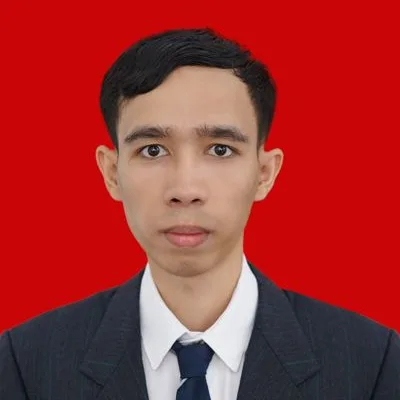
Arsyad A.
Science Education, Universitas Negeri Padang
Forces, magnets, and kitchen-table experiments“For Arsyad, grade 4 is when forces and magnets start to feel abstract. With a Science Education background from Universitas Negeri Padang, he has learners push, pull, and stick objects found around the house first, then write down together what happened.”
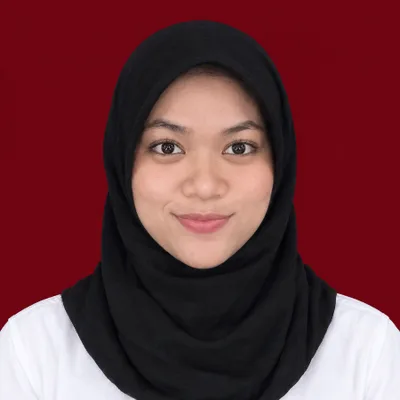
Dita D.
Primary Teacher Education (PGSD), Universitas Negeri Jakarta
Reading IPAS word problems calmly“Many grade 5 and 6 IPAS questions open with a long passage before the actual question appears. Dita, a PGSD graduate of Universitas Negeri Jakarta, trains learners to mark the key words and retell the passage in their own words before answering.”
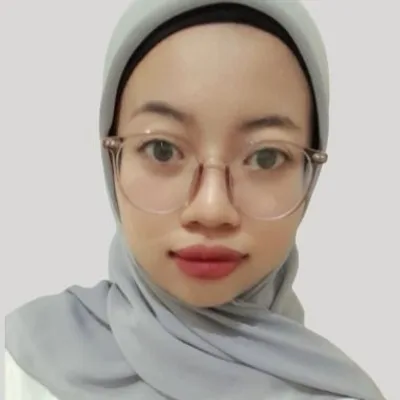
Salma S.
Science Education, Universitas Negeri Malang
The water cycle and changes of state“Water evaporating from the laundry line, dew on a glass of iced tea, and afternoon rain are Salma's favourite teaching material. She studied Science Education at Universitas Negeri Malang and uses those everyday moments to connect changes of state with the water cycle.”

Halim A.
Primary Teacher Education, Universitas Negeri Yogyakarta
Observation habits for grade 3“Halim studied Primary Teacher Education at Universitas Negeri Yogyakarta, a programme that prepares teachers for every primary school subject. For grade 3 learners meeting IPAS for the first time, he builds a small routine: observe one thing, draw it, then write one question about it.”
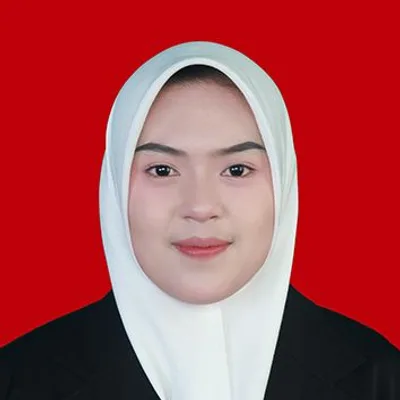
Indri I.
Tadris IPA (Science Education), Universitas Islam Negeri Salatiga
Plants, animals, and food chains“Why are leaves green, and where does the energy in food go? Questions like these are Indri's way in. A Tadris IPA graduate of Universitas Islam Negeri Salatiga, she covers plant parts, photosynthesis, and food chains through diagrams the learner draws themselves.”
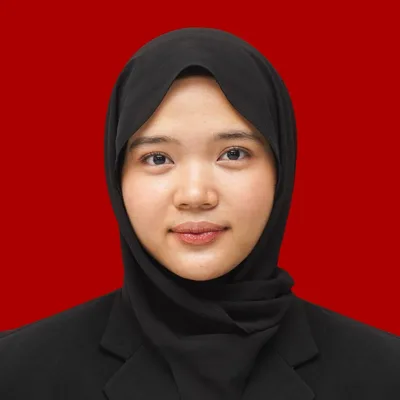
Lutfi L.
Primary Teacher Education, Universitas Sebelas Maret
One-page chapter reviews before assessments“Ahead of an end-of-chapter assessment, Lutfi builds a one-page summary with the learner listing the key terms and an everyday example of each. Her Primary Teacher Education background at Universitas Sebelas Maret has made her used to matching practice to the school textbook and the way class teachers assess.”
Primary Science Tutoring Fees
IPAS tutoring starts from Rp48,000 per hour on the 28-session monthly plan. The 120-minute session gives the lowest hourly figure, and 60- or 90-minute sessions are there for learners who prefer shorter lessons.
Starting from
Rp 48.000 / hour
Final price is set at registration.
This is the lowest hourly rate, derived from the 28-session monthly plan at 120 minutes per session. Per-session prices (60, 90, or 120 minutes) appear in the format options above.
Register & Get a QuoteFlexible payment — QRIS, Virtual Account, Alfamart, Indomaret, transfer & e-wallets.
Grade 6, Kurikulum Nasional Plus, and olympiad preparation sit on a higher rate tier, so the exact figure appears in the form once the grade and curriculum are filled in. Science lessons can be settled through QRIS, bank transfer, a Virtual Account number, a debit or credit card, or a digital wallet, and cash is accepted at whichever Alfamart or Indomaret sits nearest the learner's home.
FAQ
Questions About Primary Science Tutoring
Short answers to what people usually ask before signing a learner up for IPAS tutoring.
Primary science is taught as part of IPAS from grade 3. The curriculum structure in Permendikdasmen No. 13 of 2025 lists no IPAS for grades 1 and 2. Grades 3-4 form Phase B and grades 5-6 form Phase C, where the demands on handling data rise.
Primary science tutoring begins at Rp48,000 per hour on the 28-session monthly plan, for one learner on 120-minute sessions. Per-session prices for 60 and 90 minutes appear on the format cards. Grade 6, Kurikulum Nasional Plus, and olympiad preparation use a higher rate tier, and the exact figure shows up in the registration form.
No. The primary-level TKA covers only Bahasa Indonesia and Mathematics, and the grade 5 ANBK covers reading literacy, numeracy, and surveys. IPAS marks are set by teachers and schools through observed experiments, write-ups, written tests, reflections, and portfolios. That is why IPAS tutoring practises experiments and report writing alongside test questions.
Yes. In OSN SD 2025, the science branch was open to grade 4 and 5 learners. The regency or city round had 60 multiple-choice questions in 60 minutes, the provincial round had 30 short-answer questions, and the national round included theory papers and an observation test. The tutor drills each round's format; selection results remain with the organisers and the learner's own effort.
The first step is a consultation, over WhatsApp or through the form on the site. The team then notes the learner's grade, the IPAS book the school uses, the chapter that is causing confusion, and the days and hours that are free. With those notes EduPoint finds an IPAS tutor, and the first session runs at the time agreed together.
Complete Guide
A Study Guide to IPAS in Primary Grades 3 to 6
Indonesian primary schools teach science inside the IPAS subject, and its lessons only begin in grade 3. The curriculum structure in Permendikdasmen No. 13 of 2025 gives grades 1 and 2 no IPAS hours, so primary science tutoring in practice covers grades 3 through 6.
Grades 3 and 4 belong to Phase B. Here learners meet the five senses, the life cycles of animals and plants, states of matter and how they change, sources and forms of energy, and the forces of pushing, pulling, friction, and gravity. Observations are recorded as tallies and picture graphs, still with the teacher guiding.
Grades 5 and 6 belong to Phase C, and many earlier topics return with deeper demands. Energy comes back as saving energy and alternative sources, while forces lead on to magnets and electricity. New chapters arrive as well: light and sound, ecosystems with their living and non-living parts, human organ systems, and the solar system with the Earth's rotation and revolution. Data now goes into tables and graphs, investigations are planned by the learner, and conclusions need a reason behind them.
Because topics stack this way, a small gap in grade 4 often only shows up in grade 5 or 6. Keep in mind that the numbering of learning-outcome elements does not set the chapter order, so each school may arrange its own sequence.
- 1Match the chapters in the student book to the phases above before the first session.
- 2When grade 5 opens the energy chapter, look back at the grade 4 energy notes.
- 3In grades 5 and 6, have the learner draw an empty table before filling in any data.
The 2025 IPAS subject guide from Indonesia's curriculum centre treats process skills as equal partners to understanding concepts. It lists six steps: watching closely, asking and guessing, designing an investigation, working with data, weighing the findings, and sharing them with others. Researchers who mapped primary learners' misconceptions also recommend live demonstrations and simple experiments.
Home practice needs no lab equipment, only the habit of guessing before trying. The learner writes a prediction in one sentence, runs the experiment, and then compares the result with the guess. The gap between guess and outcome is worth talking through, because that is where a mistaken idea shows.
Each experiment ends with a short record of the materials, the steps, what was observed, and the conclusion. This layout matches the lab reports that teachers grade at school, so practice at home carries straight into class. Learners in grades 3 and 4 can record with drawings and tallies, while those in grades 5 and 6 enter their results into a table and read it together.
The experiments below use household items and work as openers for each topic.
- 1States of matter (grade 4): ice on a plate, warm water in a covered glass, then look at the droplets on the lid.
- 2Friction (grade 4): push a toy car across carpet, tiles, and a doormat, and note how far it travels.
- 3Light (grade 5): shine a torch at a mirror and into a glass of water to see the beam change direction.
- 4Sound (grade 5): a tin-can phone on a string shows sound travelling through a solid.
- 5Earth's rotation (grade 6): a torch as the Sun and a ball as the Earth to show the day side and night side.
Several IPAS chapters have clear research on misconceptions. A diagnostic test of 54 grade 4 learners at SDN Godean 2 found misconceptions in 69% of answers on changes of state and 63% on types of matter (Mujib and Purnomo, 2025). The usual mix-ups are the order of state changes, the difference between evaporating and boiling, and the role of temperature.
The forces chapter shows a similar picture. A study at SD Negeri Ngrukeman recorded 65% misconceptions about how forces affect objects and 59% about magnets (Tsania and Kurniawati, 2024). In grade 6, a study of 10 learners at SDN Sekarjati found 66.7% misunderstood gravity.
The researchers name several causes, including mistaken prior knowledge and revision that repeats material without taking apart the old idea. Memorising a definition again rarely helps, since the old belief stays in place. A more useful approach is to get the learner to say their own idea out loud and then test it together with a small experiment.
The 2025 IPAS guide picks its essential content on matching grounds: foundation material that blocks later chapters when it is shaky, and material that often goes wrong in the teaching. That is why states of matter and forces deserve a larger share of practice in primary science tutoring.
Evaporating and boiling are taken to be the same event.
Compare a little water on a plate drying slowly with water heated in a pan alongside an adult. Both turn into vapour, and in boiling water bubbles form throughout the water.
An object at rest is thought to have no forces acting on it.
Talk through a book on a table: gravity pulls it down while the table pushes it up.
IPAS assessment rests entirely with teachers and schools. Only two subjects, Bahasa Indonesia and Mathematics, appeared on the primary-level TKA held in April 2026, and the ministry has stated that the TKA is optional and does not decide graduation. The grade 5 National Assessment likewise measures reading literacy and numeracy. Grade 6 science preparation therefore aims at daily quizzes, end-of-semester summative tests, and the project tasks set by the school.
The IPAS guide lists a wide range of assessment forms: observation during experiments, lab reports, written tests, personal reflections, and portfolios. An IPAS report-card mark therefore also reflects how the learner works and writes, alongside their answers on a test paper. The grade 6 book also closes with a final IPAS project that calls for planning over several weeks.
For grade 4 and 5 learners who want to compete, OSN SD 2025 ran its science branch in stages: school, regency or city, province, and then national. The national round included a 120-minute observation test with 20 written-answer questions, so observing and explaining were tested as well. Olympiad preparation is priced at a rate tier above regular IPAS tutoring.
- 1Ask the learner to photograph the teacher's lab-report rubric or assessment sheet.
- 2Keep lab reports together in one folder as portfolio material.
- 3Break the grade 6 final project into small weekly targets.
The best material for steering private primary science lessons is whatever the learner is using in class right now. Ahead of the first session, collect the IPAS student book, the newest worksheets, and any quiz papers with a low mark. The tutor reads through them to flag which chapters already stand firm and which have to be rebuilt.
An IPAS session runs 60, 90, or 120 minutes. One hour is enough to cover a single IPAS concept while trying one small experiment, whereas 90 or 120 minutes leaves time for practice questions, a written lab report, or a chunk of project work. How many sessions fit into a month depends on how heavy the IPAS chapters at school are, from 4 to keep a topic fresh up to 28 in a test month, and lessons may begin at any point from 06.00 until 23.00.
The tutor can come to the learner's home, teach over Zoom or Google Meet, or take a small group of two to three learners. Every session is recorded and its progress notes go into app.edupoint.id, so the learner can replay an experiment walkthrough and whoever enrolled them can follow which IPAS chapters have been practised.
During the consultation, share the grade, the school curriculum, and the preferred schedule, and EduPoint then finds a suitable IPAS tutor. Whoever enrols the learner settles the IPAS fees by whichever method is easiest for them: bank transfer, card, Virtual Account, QRIS, e-wallet, or cash at an Indomaret or Alfamart outlet.
- 1Note down the learner's questions over a week to bring to the next session.
- 2Prepare the experiment items the tutor asks for a day before an online session.
Guides & Tips
Supporting articles to help you decide and maximize learning outcomes.
How to Study Science (IPA) So It Is Easier to Understand
Effective science study begins with understanding how the natural world works before memorising its terms. Six steps help primary and junior high students connect physics, chemistry, and biology into one story that makes sense.
Simple Science Experiments at Home with Kitchen Ingredients
The family kitchen holds a complete science lab. These seven experiments invite primary and junior high students to prove science concepts with their own hands, guided by the same scientific method used at school.
Programmes Related to Primary Science Tutoring
Other subjects and levels often taken alongside IPAS tutoring.
Start Primary Science Tutoring This Week
Share the grade, the school curriculum, and the IPAS topic that is causing trouble. EduPoint finds a suitable tutor and sets up the first session.
IPAS grades 3-6 and science olympiadAt home or onlineSessions 06.00-23.00Tutor replacement guarantee