1,056 SD Religious Education Tutors · Rated 5/5
SD Religious Education Tutoring: Reading, Memorisation and Daily Worship, One Tutor per Student
Private religious education tutoring for SD students working through Pendidikan Agama dan Budi Pekerti, from early graders learning their daily prayers to grade 6 pupils starting to write essay answers. The tutor follows the student's faith, the school textbook and whichever chapter still feels hard, at home or online.
1,056+
tutors
9,360+
students
5
rating · 2,808 reviews
60+
cities
What is SD Religious Education Tutoring?
SD religious education tutoring is private coaching in Pendidikan Agama dan Budi Pekerti, the religion and character subject, for grades 1 to 6 in the student's own faith. Schools give it roughly 3 lesson hours a week, so tutoring adds unhurried time for reading practice, memorisation and worship routines, at one hourly rate for all six faiths.
- Covers all six official religion subjects: Islam, Protestant Christianity, Catholicism, Hinduism, Buddhism and Confucianism
- Material follows the Kurikulum Merdeka phases: Phase A grades 1-2, Phase B grades 3-4, Phase C grades 5-6
- For Islamic studies (PAI) the five strands are all practised: Qur'an and Hadith, Creed, Character, Fiqh, Islamic History
- Sessions at the student's home or online, lasting 60, 90 or 120 minutes
Services
Ways to Take SD Religion Tutoring
In-person and online sessions share the same hourly rate. The figures on the cards differ only because the session lengths differ.
Religion Tutor at Home
Suited to hands-on practice such as ablution, prayer movements and supplications, which are easier to correct up close.
Rp 77.000/ 90-minute session
Price on the 28-session monthly plan, 90-minute sessions. Fewer meetings, higher price per session.
- The tutor comes to the student's home
- Worship practice corrected in person
- Material follows the school textbook
- Regular progress notes
Online Religious Education Lessons
Sessions on Zoom or Google Meet, handy for reviewing memorised surahs, revisiting creed topics or preparing for a test.
Rp 62.000/ 60-minute session
Price on the 28-session monthly plan, 60-minute sessions. Fewer meetings, higher price per session.
- Sessions any time from 06.00 to 23.00
- Recordings available to replay
- Digital whiteboard for writing letters
- Can be mixed with home sessions
Online and in-person cost the same — the gap between these cards is session length, nothing else.
What SD Religion Lessons Cover, Phase by Phase
The report card shows one subject name, yet the content differs by faith and by grade band. Islamic studies is laid out in full below as the most detailed example, followed by the other religion subjects.
In mid-2026 the education ministry issued BKPDM Head Decree No. 020 of 2026, which revises the learning outcomes for Pendidikan Agama dan Budi Pekerti only, drafted together with the Ministry of Religious Affairs. The revision adjusts material, refines how competencies are worded and puts more weight on character education. The topics listed here follow the 2025 wording, so the tutor always checks them against the book and timetable the student's school actually uses.
Islamic Studies Phase A · Grades 1-2
The starting point: students meet the Arabic letters of the Qur'an, the pillars of faith and of Islam, and the everyday steps of worship.
- Hijaiyah letters with vowel marks, then joined letters
- Surah al-Fatihah and several short surahs
- A hadith on cleanliness
- Pillars of faith, belief in Allah, the Asmaul Husna, belief in angels
- +3 more
Islamic Studies Phase B · Grades 3-4
Content widens into more detailed worship and the early years of the Prophet Muhammad's mission.
- Short surahs and their core message, a hadith on the duty of prayer, a hadith on good relations with others
- The attributes of Allah, the revealed books, the prophets and messengers
- Respect for parents and teachers, kalimah thayyibah, deliberation (musyawarah)
- Fasting, Friday prayer, voluntary prayers, what reaching maturity (baligh) means
- +1 more
Islamic Studies Phase C · Grades 5-6
The upper grades ask students to read, memorise and write verses while grasping what they say, plus the fiqh of giving and the rules of hajj.
- Short surahs and verses on diversity: read, memorised, written and understood
- The Last Day, qada and qadar, all six pillars of faith
- Interfaith dialogue, unity within diversity, humans as stewards of the earth
- Zakat, infaq, sadaqah, the rules of hajj, halal and haram, voluntary fasting
- +1 more
Protestant Christian Religious Education
This subject is organised into four strands that return in every grade from 1 to 6, each phase going a little deeper.
- God at Work (Allah Berkarya)
- People and Christian Values
- The Church and a Plural Society
- Nature and the Living Environment
Catholic, Hindu, Buddhist and Confucian Education
Each of these four subjects has its own set of learning outcomes. The tutor starts from the student's textbook and the notes of their religion teacher at school.
- Catholic Religious Education and Character
- Hindu Religious Education and Character
- Buddhist Religious Education and Character
- Confucian Religious Education and Character
Who It Is For
Who SD Religion Tutoring Suits
A student still learning the order of ablution and one already reciting long surahs need differently shaped practice. Pick the group that sounds most like the student today.
Grades 1-2: hijaiyah letters and daily prayers
Focus on recognising hijaiyah letters, short surahs, and the order of purification and prayer. Parents are welcome to sit in so they know how to guide their child through short practice at home.
Recommended:
60-minute sessions, 2-3 times a weekIn person for hands-on practice
Grades 3-4, when the material starts to spread out
Fasting, Friday prayer, voluntary prayers and the hijrah story all arrive at once. Tutoring helps the student put topics in order and prepare for weekly tests.
Recommended:
90-minute sessions, twice a weekIn person or online
Grades 5-6, facing more abstract ideas
Qada and qadar, the Last Day, zakat and hajj ask the student to understand concepts through examples close to daily life. The tutor also practises written, essay-style answers.
Recommended:
90-minute sessions ahead of school assessmentsOnline for memorisation review
Protestant, Catholic, Hindu, Buddhist or Confucian students
Students whose religion class differs from most of their classmates can study their own faith's material too. Mention the religion and the school textbook during the consultation.
Recommended:
Start with a consultation about tutor fitIn person or online
Where SD Students Usually Get Stuck
Common Snags in Primary School Religion Lessons
Studies carried out in several primary schools found similar patterns, most of them in Qur'an reading. Here is how a private tutor works through each one.
Single hijaiyah letters and their joined forms get mixed up
Why it happens
A letter can change shape at the start, middle and end of a word. Younger students who have just learned the standalone shapes often lose track once the same letter appears connected.
How we fix it
The tutor breaks a word into its letters and rebuilds it slowly. Practice moves from two-letter to three-letter words once the student recognises each shape without hesitating.
Halting recitation and vowel lengths that come out wrong
Why it happens
Research with grade 5 students found stumbling reading, skipped long vowels (mad) and tajwid rules that had not settled yet. In a full classroom there is little time to hear each student read one by one.
How we fix it
In a private session the student reads aloud while the tutor follows every line. Corrections come on the spot, and the same line is repeated until it flows.
Memorised by heart, meaning still unclear
Why it happens
Researchers point to lecture-and-memorise teaching without interactive activities as a reason motivation drops. Phase C also expects students to understand the core message of the surahs they learn.
How we fix it
Once memorisation is done, the tutor adds questions, stories and everyday examples so the student can retell the message of a verse in their own words.
Every student stalls somewhere different. During the first session the tutor hears a few lines of the student's reading and leafs through their exercise book, then decides what to practise first.
Why Us
Why Learn SD Religious Education with EduPoint
Religion tutoring calls for a tutor who listens patiently to every reading and keeps close to the school book. Here is what the student gets.
In step with the school book and timetable
The chapter the religion teacher has open in class sets the agenda, so practice uses the same textbook the student carries to school.
Practice at the student's own pace
A student who needs longer on one letter or one prayer movement can keep practising until it feels comfortable, since private sessions move with their readiness.
Weekly progress notes
A session summary arrives on WhatsApp: which readings are now fluent, which memorisation is in progress, and what to practise next week.
Self-study in the learner app
Session recordings and practice material are saved in the EduPoint learner app, ready for the student to replay whenever they want to go over a reading or a memorised passage.
Tutor replacement guarantee
If the student and tutor are not a good fit, a replacement tutor is free and unlimited.
Primary Religious Education Tutors with Faith-Education Degrees
Six of our primary religious education tutors, graduates of religious colleges and teacher-education programmes. Each learner is matched with a tutor of their own faith who follows the Religious Education textbook their school uses.
Tutor Qualifications
- Degree in religious education, Islamic primary teacher education, or the faith education that fits the learner
- Used to teaching children aged 6 to 12 in plain, simple language
- Follows the Religious Education and Character textbook used at the learner's school
- Passed EduPoint document screening, interview, and teaching trial

Aidil M.
Islamic Religious Education, UIN Sunan Gunung Djati Bandung
Step-by-step ablution and prayer practice“Younger pupils often mix up the order of prayer movements. Aidil, an Islamic Religious Education graduate of UIN Sunan Gunung Djati Bandung, drills each step until the learner can demonstrate it alone at the practical assessment.”
Nadia N.
Islamic Religious Education, Universitas Muhammadiyah Malang
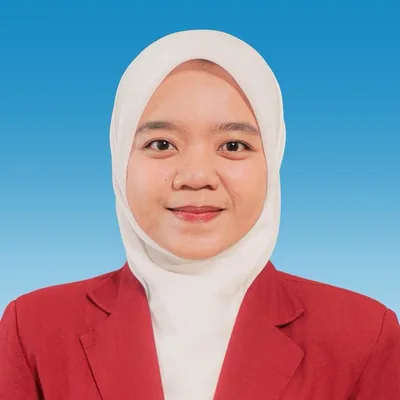
Short-surah memorisation with planned review“Her Islamic Religious Education studies at Universitas Muhammadiyah Malang taught Nadia to split short surahs into small pieces and revisit them at the next session so the memorisation holds.”

Yuda Y.
Christian Religious Education, Sekolah Tinggi Teologi Kharisma Bandung
Bible stories tied to daily life“For learners taking Christian Religious Education, Yuda works through the Bible stories in the school book and helps the learner connect them to how they act at home and in class. He graduated in Christian Religious Education from STT Kharisma Bandung.”

Hasna A.
Islamic Primary Teacher Education (PGMI), UIN Prof. K.H. Saifuddin Zuhri Purwokerto
First steps with the hijaiyah letters for grades 1 and 2“The PGMI programme at UIN Saizu Purwokerto trains teachers specifically for primary-age children. Hasna draws on that when introducing hijaiyah letters and vowel marks a little at a time to learners who are just starting.”

Nada Q.
Islamic Primary Teacher Education, UIN Syarif Hidayatullah Jakarta
Prophets' stories and character through Q&A“From grade 4 to 6 learners meet longer chapters on the prophets' stories and good character. Nada, a PGMI graduate of UIN Syarif Hidayatullah Jakarta, condenses them through light question-and-answer rounds before a test.”

Mike M.
Catholic Religious Education, Sekolah Tinggi Pastoral Kateketik St. Fransiskus Asisi Semarang
Daily prayers and primary catechesis“Mike studied Catholic Religious Education at Sekolah Tinggi Pastoral Kateketik St. Fransiskus Asisi Semarang. With Catholic learners he reviews daily prayers, the order of worship, and whichever chapter of the religion book the class is on.”
SD Religious Education Tutoring Fees
Private religion tutoring for SD is charged by the hour at the same rate for every faith; the starting figure is shown in this page's price box. Students in some cities see an adjustment based on that city's rate.
Starting from
Rp 48.000 / hour
Final price is set at registration.
This is the lowest hourly rate, derived from the 28-session monthly plan at 120 minutes per session. Per-session prices (60, 90, or 120 minutes) appear in the format options above.
Register & Get a QuoteFlexible payment — QRIS, Virtual Account, Alfamart, Indomaret, transfer & e-wallets.
Before any payment is made, the sign-up form spells out the whole calculation: hourly rate, lesson length and how many religion lessons fall in each month. Fees for these lessons can be settled by card, e-wallet, QRIS, Virtual Account or bank transfer, and Alfamart or Indomaret cashiers accept them too.
FAQ
Questions About SD Religious Education Tutoring
What learners and whoever enrols them usually want settled before primary religion tutoring starts, from choosing the right faith subject to memorisation and worship practice, answered briefly.
All six religion subjects in Kurikulum Merdeka: Islamic, Protestant, Catholic, Hindu, Buddhist and Confucian religious education, each paired with character education. During the consultation, share the student's religion, grade and school textbook. Those details are what the team uses to find a suitable tutor.
Every faith uses the same hourly rate, and the starting figure is listed in this page's price box. What the learner ends up paying comes from three things: the length chosen for a religion lesson (60, 90 or 120 minutes), the number of meetings set for the month, and the rate that applies in the learner's city. Those figures are itemised on the sign-up form ahead of payment, and the tutor's travel is already included in the rate.
BKPDM Head Decree No. 020 of 2026 revises only the learning outcomes of Pendidikan Agama dan Budi Pekerti; other subjects stay as they were. Schools roll it out with their own books and timetables, so the tutor plans from the student's textbook and teacher's notes and adjusts when the school switches books.
Grade 1 lessons begin with single hijaiyah letters carrying vowel marks, then move gently to joined letters, following the Phase A order. A 60-minute session usually suits children this age. Parents may listen in so short practice at home follows the same method.
SD religious education tutoring follows the whole school subject: creed, character, fiqh, history, and Qur'an reading for Islamic studies. Students who want to concentrate fully on Qur'an reading can take the mengaji program, and those aiming to memorise more can take the tahfidz program.
Complete Guide
A Complete Guide to SD Religious Education Tutoring: Topics, Practice and Assessment
Kurikulum Merdeka groups primary religious and character education into three two-year phases: grades 1-2 sit in Phase A, grades 3-4 in Phase B, and grades 5-6 in Phase C. With roughly 3 lesson hours a week, a chapter is often wrapped up in only a few meetings.
For Islamic religious education (PAI), in Phase A the student meets the hijaiyah letters, Surah al-Fatihah, the pillars of faith and of Islam, and the steps of purification and prayer. Phase B adds fasting, Friday prayer, voluntary prayers, the revealed scriptures, and the story of the hijrah and the building of Madinah. Phase C asks the student to read, memorise, write and understand the main message of short surahs, then moves into more abstract ideas such as the Last Day and divine decree, along with zakat, charity and the rules of hajj.
The material stacks up phase by phase. A grade 5 student who still stumbles over joined letters will struggle when asked to write out a verse, and a grade 3 student whose ablution sequence is shaky can fall behind once voluntary prayers arrive. So SD religious education tutoring usually checks the earlier phase first, then catches up with the current chapter.
The other faith subjects have their own structure. Protestant religious education, for instance, uses four strands that return in every phase at growing depth: God at Work, Humanity and Christian Values, the Church and a Plural Society, and Nature and the Living Environment. For Catholic, Hindu, Buddhist and Confucian religious education, the tutor works from the textbook the student's school uses.
Recitation and memorisation grow through short, frequent repetition, and the days between two tutoring sessions matter most. Ten to fifteen minutes of recitation each day tends to suit an SD learner better, since a single marathon on Sunday fades quickly by the next lesson.
For a Phase A student, practice can be as simple as reading one line of hijaiyah letters aloud, then finding the same letters on another page. The order of ablution and the prayer movements stick better when they are rehearsed right before a prayer the student is actually performing that day, so the practice blends into the daily routine.
Phase B and C students can use a small-recitation pattern: memorise one new verse, join it to the verse before, and only then move on. Once the recitation flows, ask the student to retell the surah's message in their own words, since Phase C also assesses understanding of the content.
For creed, character and history topics, small cards with a term on one side and a short explanation on the other let the student review without opening a heavy textbook. Students of other faiths can use the same approach for prayers, scripture passages and the stories of figures they are studying.
The tutor ends each session with a clear practice task for the coming week, and a summary is sent over WhatsApp. Recordings of each lesson sit in the EduPoint learner app next to the self-study material, which lets a parent or older sibling replay the exact hijaiyah reading or prayer movement the student is practising this week.
Assessment in Pendidikan Agama dan Budi Pekerti is run entirely by the school. It follows the Kurikulum Merdeka pattern: a diagnostic assessment at the start, formative assessment as each chapter runs, and summative assessment at mid-semester or the end of the semester. Some religion teachers also grade a worship practical or a memorisation check.
Grade 6 students often ask about one thing. The 2026 SD TKA, held from 20 to 30 April 2026, tested Indonesian and Mathematics only. Religious education is not a TKA subject, so tutoring for this subject is aimed at the assessments set by the school's religion teacher.
Good preparation starts from the teacher's assessment outline or chapter notes. An SD religion tutor maps out the chapters to be assessed, then splits them into three kinds of practice. First, multiple-choice and short-answer questions on terms such as the pillars of faith, the attributes of God or the names of the rightly guided caliphs. Second, essay questions for upper-grade students who need to explain a reason, for example why zakat is obligatory. Third, oral and practical work on recitation, memorisation, ablution and prayer movements.
Younger students often find it helpful to have tried an oral assessment at home first, with the tutor playing the teacher who listens. For grades 5 and 6, practising essay answers of two or three well-ordered sentences usually takes the most time. Sessions can be scheduled more closely before a summative assessment and spaced out again afterwards.
The first session of SD religious education tutoring is used to map where the student stands. The tutor listens to the student read, looks at the exercise book and the school's notes, and asks which chapter the class is on. From there the tutor sets a practice order, for example two weeks of tidying up joined letters before moving to the surah the teacher has assigned.
The sticking points in PAI look similar from school to school: single letters confused with their joined forms, halting reading, vowel lengths that come out wrong, and memorisation that runs ahead of understanding. In a private session the tutor has time to hear every line the student reads and correct it on the spot, which is hard to do for each pupil in a full classroom.
For the abstract topics of Phase C, the tutor draws on stories, questions and examples from the student's everyday life, so the student can explain the idea again in their own words. Students who feel shy reading aloud in front of classmates are often more willing to try in a one-tutor, one-student session.
Students who are Protestant, Catholic, Hindu, Buddhist or Confucian are supported the same way, with the tutor following the textbook and assignments from the school's religion teacher. Mention the student's religion and the book title during the consultation so the team can find a suitable tutor. A tutor replacement is free with no limit, and it applies whenever the student finds the tutor's way of teaching does not suit how they learn their faith.
The lessons can happen at the student's home with a visiting tutor, or online over Zoom or Google Meet. In-person lessons suit ablution practice, prayer movements and prayers that need to be watched up close. Online lessons suit memorisation review and revising creed or history. The two formats can be mixed within the same month.
Three meeting lengths are on offer: 60, 90 or 120 minutes. Grade 1 and 2 students are usually comfortable with 60 minutes because their attention span is still short, while upper-grade students working on essay questions often choose 90 minutes. Any slot from 06.00 to 23.00 is open, leaving room for a lesson before the school run, after class, or in the evening once other activities are done.
The monthly meeting count is flexible, from a minimum of 4 sessions up to 28. One session a week keeps practice on track, and the frequency can be raised ahead of a summative assessment.
SD religious education tutoring is priced by the hour at one rate across all six faith subjects, starting from Rp48,000 per hour; the monthly plan runs anywhere from 4 up to 28 sessions. The monthly total comes from the session length, the number of sessions and the rate for the student's city, and it is shown on the registration form before any payment. Payment works through whichever channel is easiest: card, e-wallet, QRIS, a transfer, Virtual Account, or cash at any Alfamart or Indomaret store.
Getting started takes four steps: a consultation, sharing the student's schedule and needs, the team finding a suitable tutor, and then the first meeting.
Programs Often Taken Alongside
SD religion tutoring pairs well with a Qur'an program or other SD subject tutoring.
Start SD Religious Education Tutoring
Tell us the student's religion, grade and the part of the subject to work on. The EduPoint team finds a suitable SD religion tutor, at home or online.
One hourly rate for every faithAll six official religion subjectsUnlimited tutor replacement guaranteeAvailable in 60+ cities and online