832 Primary English Tutors, Rated 4.85 out of 5
Primary School English Tutoring, a Head Start Before Grade 3
From the 2027/2028 school year, English becomes a compulsory subject in Indonesian primary schools starting in Grade 3. With a private tutor at home or online, a pupil practises listening, speaking, reading and writing at a comfortable pace.
832+
tutors
11,080+
students
4.85
rating · 3,323 reviews
60+
cities
What is Primary School English Tutoring?
Primary school English tutoring at EduPoint gives pupils in Grades 1-6 one-to-one lessons built on Kurikulum Merdeka Phase B and C outcomes, Cambridge Primary, or their own school books, at home or online. The rate starts at Rp48,000 an hour on the 28-session monthly plan. From 2027/2028, English is compulsory from Grade 3.
- Until the 2026/2027 school year, English in Indonesian primary schools is an optional subject, so some schools already teach it and others do not. The first session finds out where the pupil actually stands.
- The national English learning outcomes start at Phase B (Grades 3-4). Grades 1-2 have none, because those years concentrate on reading and writing in Indonesian.
- Phase B and Phase C aim at roughly CEFR A1: understanding and using simple sentences about everyday life.
- The TKA SD national assessment covers Indonesian and Mathematics only, so English lesson time can go to speaking confidence, reading and schoolwork.
- Trained bilingual tutors held to a native-speaker standard are available for pupils at bilingual and Cambridge Primary schools.
Services
Ways to Take Private English Lessons in Primary School
Private primary English lessons can run at home, online, or with a friend. Each card shows the price and length for that format.
Tutor Comes to Your Home
Suits younger pupils who focus better face to face, using picture cards, books and everyday objects around the house as things to talk about.
Rp 77.000/ 90-minute session
Price on the 28-session monthly plan, 90-minute sessions. Fewer meetings, higher price per session.
- A 90-minute session leaves room to speak, read and write
- The tutor brings materials matched to the school book
- Tutor travel is included in the rate
- Parents are welcome to watch the first session
Online Lessons on Zoom or Google Meet
A 60-minute online session with live listening and speaking practice. A good fit for Grade 4-6 pupils who already handle a laptop or tablet with ease.
Rp 62.000/ 60-minute session
Price on the 28-session monthly plan, 60-minute sessions. Fewer meetings, higher price per session.
- Schedule any time between 06:00 and 23:00
- Session recordings available in the learner app
- Worksheets and reading texts shared on screen
- Zoom and Google Meet work equally well
Small Group of 2 Pupils
Two primary pupils at the same phase share one tutor, such as siblings in Grades 3 and 4 or two classmates. Conversation practice livens up with a partner of the same age.
Rp 47.000/ 60-minute session
Price on the 28-session monthly plan, 60-minute sessions. Fewer meetings, higher price per session.
- Per-pupil rate for a pair
- Dialogue practice between the two pupils
- Material pitched at both pupils' phase
- At home or online
Online and in-person cost the same — the gap between these cards is session length, nothing else.
English Through the Three Primary Phases
Kurikulum Merdeka splits primary school into three phases, and each one asks something different of a young English learner. A Grade 2 child and a Grade 6 pupil need very different lessons.
Grades 1-2 (Phase A)
A gentle introduction, with no English outcomes setThe national curriculum sets no English outcomes in Phase A, since Grades 1-2 are for building reading and writing in Indonesian. Lessons here stay light: pictures, songs and short exchanges, offered when the school already uses English or the child is curious. The tutor keeps Indonesian reading practice as the first priority.
Subjects:
Picture vocabularyShort everyday expressionsSongs and word games
Focus Areas:
- Getting comfortable hearing English
- Indonesian literacy stays first
Grades 3-4 (Phase B)
Spoken English first, then a first look at printPhase B is where the English outcomes begin, and Grade 3 is the year the subject turns compulsory from 2027/2028. Pupils learn to understand and respond to simple spoken texts about daily life, read short written texts, and put an idea into a few written lines. A response can be a word, a gesture or a drawing.
Subjects:
Listening and speakingReading and viewingWriting and presenting
Focus Areas:
- Answering short spoken questions
- Early reading: letter sounds and words
- Writing short sentences about themselves
Grades 5-6 (Phase C)
Spoken and written, working towards CEFR A1In Phase C, pupils follow the flow of information in spoken texts and reply in short sentences, pick out the main idea and key details in short texts, and write about ideas and experiences in several simple text types. Grade 6 pupils at Cambridge schools are also approaching the Checkpoint at the end of Stage 6.
Subjects:
Main idea and detailMultimodal textsWriting about experiences
Focus Areas:
- Answering in complete simple sentences
- Reading short texts without translating word by word
- Linking several sentences into a short story
What Primary English Lessons Cover, by Learning Strand
Kurikulum Merdeka groups English into three paired strands: listening with speaking, reading with viewing, and writing with presenting. Each lesson plan draws on those pairs and is then lined up with the pupil's school books and test dates.
The national outcomes are not broken down by grade. Whether a topic lands in Grade 3 or Grade 4, Grade 5 or Grade 6, is decided by the school's learning sequence (ATP) and textbook. So the tutor starts by looking through the pupil's coursebook and notes, and builds the lessons from there.
Listening and Speaking
Pupils practise following everyday spoken English and having a go at answering. In Grades 3-4 an answer may be short or non-verbal; by Grades 5-6 they reply in simple sentences.
- Following short spoken instructions
- Answering questions about themselves and their day
- Following the thread of a short conversation or video
- Pronouncing high-frequency words
- +1 more
Reading and Viewing
It starts with early reading, because primary pupils often sound out English letters the Indonesian way. Once words and sentences flow, Grade 5-6 pupils move on to finding the main idea and the details.
- Telling vowel and consonant sounds apart
- Blending letters into syllables and words
- Reading sentences with attention to punctuation
- Making sense of picture-based and multimodal texts
- +1 more
Writing and Presenting
Pupils put everyday ideas into short written texts, then read them aloud or show them to the tutor. From Grade 5, they start writing about their own experiences in a few simple text types.
- Copying and completing short sentences
- Writing a few lines about themselves, family or school
- Retelling an experience in a simple paragraph
- Making a labelled poster or picture card in English
- +1 more
Cambridge Primary English as a Second Language
For pupils at Cambridge Primary schools, the tutor follows the English as a Second Language curriculum (code 0057) and the books the school uses.
- Support with class material at the pupil's Stage
- Preparing for Checkpoint at the end of Stage 6, around age 11
- Understanding the Checkpoint report: a 0-50 scale and a Statement of Achievement
- Note: each pupil sits only one of the two Checkpoints, English or English as a Second Language
Schoolwork and School Assessment
Primary English is assessed by the school through formative and summative assessment and the report card. Lessons help pupils get ready for each of these.
- Doing homework themselves, with real understanding
- Practice before class tests and end-of-semester assessments
- Preparing project work and class presentations
- Catching up on lessons missed through illness
Who It Is For
Who English Lessons for Primary Pupils Suit Best
Needs vary with the grade and the school. These four groups make up most of our primary English enrolments.
Grade 2-3 pupils ahead of the compulsory subject
Grade 3 is the first year English becomes compulsory from 2027/2028. Pupils who start a little earlier walk into class with ears already used to the language.
Recommended:
90-minute home sessionsListening and speaking first
Pupils whose school does not teach English yet
As long as the subject is optional, some schools have no English lessons at all. Grade 4-6 pupils at those schools can start from Phase B basics in reading and speaking.
Recommended:
Start with Phase B strandsTwice a week
Pupils at bilingual and Cambridge Primary schools
Other subjects may already be taught in English, so these pupils need help reading questions and writing answers. Stage 6 pupils can prepare for Checkpoint.
Recommended:
Bilingual tutorESL curriculum 0057
Grade 5-6 pupils polishing their writing
Pupils who can speak a little but find it hard to build written sentences, or who want to be readier for longer texts at the next school level.
Recommended:
60-minute online sessionsPhase C reading and writing
Where Young Learners Get Stuck
Common Primary English Hurdles and How a Tutor Handles Them
Several of these difficulties are documented in education research from Indonesian primary schools. EduPoint's primary English tutors use those findings as a starting point.
English letters read with Indonesian sounds
Why it happens
A study of early reading in lower primary grades (Suhud and Puspita, 2024) found pupils struggling to tell vowel and consonant sounds apart, dropping or swapping letters, and reading one word at a time.
How we fix it
The tutor builds up letter sounds and letter combinations step by step, starting with short words that appear often in the school book, then moving on to phrases and sentences.
Hesitant pronunciation of new words
Why it happens
Research on primary pupils (Eniati and Numertayasa, 2024) points to a weak foundation, too little speaking practice, low interest, and teaching methods that fail to engage.
How we fix it
Every session has dedicated speaking time. With one tutor and one pupil, the child gets many more turns to say words and sentences than a classroom can offer.
Afraid of getting it wrong out loud
Why it happens
In a large class each pupil gets few chances to speak. The ministry itself has asked for communicative, enjoyable teaching that gives pupils the nerve to speak even when their English is still imperfect.
How we fix it
The tutor values every attempt. Corrections to pronunciation or grammar come after the pupil finishes speaking, so the flow stays intact.
Reluctant to read English texts
Why it happens
The same early-reading study recorded low interest in reading, weak motivation while reading, and a belief that reading is hard.
How we fix it
Texts are kept short, close to the pupil's interests, often illustrated, and finished within one session so the pupil feels the win.
School English provision varies widely
Why it happens
While English stays optional, some schools teach it from Grade 1 and others not at all. The government is training class teachers to teach basic English; in 2026, 5,777 primary teachers had been trained against a target of 13,964.
How we fix it
The tutor maps the pupil's starting point in the first session, then sequences lessons around the school book or, where there is none yet, around the outcomes for the pupil's phase.
Every pupil brings a different mix. During the opening lesson the tutor hears the pupil read aloud and talk, then picks which hurdle comes first.
Why Us
Why Learn Primary English with EduPoint
A service shaped around primary pupils meeting English for the first time, run in a way parents can follow.
Starts where the pupil is
The first session is spent hearing the pupil read and speak. Later lessons are planned from that and from the school's own textbook.
Trained bilingual tutors
For pupils at bilingual or Cambridge schools, trained bilingual tutors held to a native-speaker standard are available, with audio and video material recorded by native speakers.
Regular progress notes
Parents receive regular notes on which skills are now fluent and which are still being practised, so progress is visible from one session to the next.
Self-study in the learner app
Between sessions, pupils can open study material, session recordings and their report, all kept in the EduPoint learner app at app.edupoint.id.
Free tutor swap, protected deposit
When a pupil and tutor do not click, EduPoint arranges another tutor at no charge, as often as needed. A 30-day guarantee protects the deposit.
Primary English Tutors Trained in English Education
The six tutors below studied how to teach English at university, on campuses in Jakarta, Surabaya, Surakarta, Palembang, Makassar and the Riau Islands. Matching for a primary learner looks at the grade, the curriculum phase and whichever English skill is being worked on right now.
Tutor Qualifications
- Graduates of English Education or English Language and Literature Education, from the campus recorded on each tutor's profile
- Familiar with the Phase B and Phase C outcomes of the Merdeka Curriculum, including the move to compulsory English from Grade 3 in 2027/2028
- Start from sounds and words close to the learner's daily life before moving on to sentences and short texts
- Give the learner plenty of speaking turns every session and note the words that are still hard to pronounce
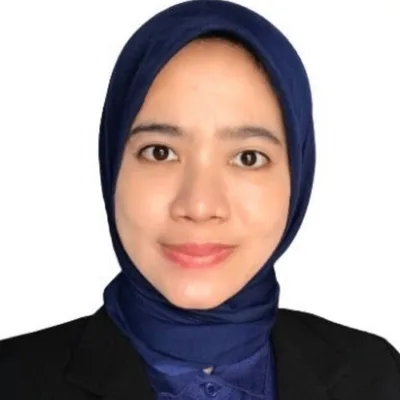
Dini D.
English Education, Universitas Negeri Jakarta
Building the habit of listening before answering“At Universitas Negeri Jakarta, Dini studied English Education. With primary learners she begins with listening: short songs, simple instructions and picture stories, then invites the learner to repeat each sentence one at a time.”

Dayat M.
English Education, Universitas Negeri Makassar
Pronouncing everyday words“The th and v sounds and the -ed ending often make learners in Grades 4 to 6 hesitate to speak. Dayat, an English Education graduate of Universitas Negeri Makassar, practises those sounds through words the learner already uses at home and at school.”
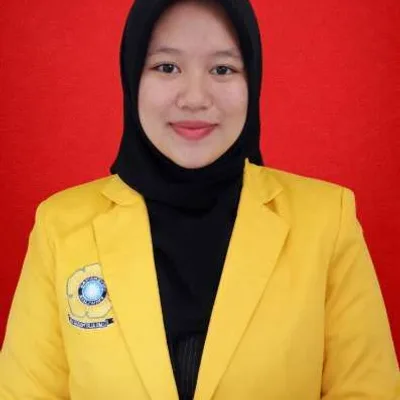
Aisyah A.
English Education, Universitas Sriwijaya
Vocabulary through pictures and nearby objects“A primary learner's vocabulary grows fastest from things they can point at. Aisyah brings her English Education training from Universitas Sriwijaya to sessions that use picture cards, the contents of a school bag and the rooms of the house as practice material.”

Rosyid M.
English Education, IAIN Surakarta
The first sentence a learner dares to say“Fear of mistakes often keeps learners silent. Rosyid, an English Education alumnus of IAIN Surakarta, opens each session with a short dialogue practised together, so the learner has ready-made sentences before trying to build their own.”
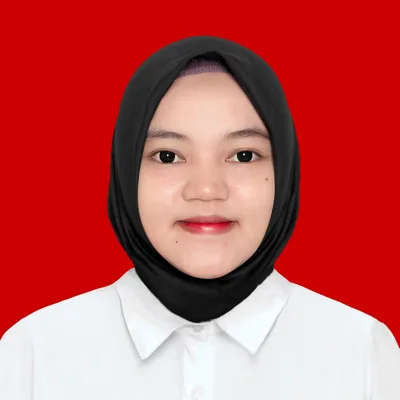
Eka K.
English Language and Literature Education, Universitas Negeri Surabaya
Reading short Phase C texts“Eka trained as an English teacher at Universitas Negeri Surabaya, where reading a text together with the class became a habit she still keeps. For Grades 5 and 6 she uses brief descriptions, school notices and short stories, then asks the learner to retell the content in their own words.”

Wawan W.
English Education, Universitas Maritim Raja Ali Haji
Writing simple sentences neatly“Writing a first English sentence needs examples close to home. Wawan, an English Education graduate of Universitas Maritim Raja Ali Haji, has learners compose sentences about themselves, their family and their hobbies, then checks the spelling and word order with them.”
Primary English Tutoring Fees
Primary English is billed at the primary-school rate, starting at Rp48,000 an hour when the 28-session monthly plan is booked, with every lesson running 120 minutes.
Starting from
Rp 48.000 / hour
Final price is set at registration.
This is the lowest hourly rate, derived from the 28-session monthly plan at 120 minutes per session. Per-session prices (60, 90, or 120 minutes) appear in the format options above.
Register & Get a QuoteFlexible payment — QRIS, Virtual Account, Alfamart, Indomaret, transfer & e-wallets.
Each month a pupil can book anywhere between 4 and 28 sessions. The final total appears on the registration form after the session count, lesson length, format and city are filled in. Payment works through bank transfer, virtual accounts, QRIS, e-wallets and cards, or at an Indomaret or Alfamart counter.
FAQ
Questions About Primary School English Tutoring
Short answers on curriculum, assessment, fees and enrolment for primary English learners.
Not yet. Up to the 2026/2027 school year, primary English is an optional subject. From 2027/2028, the Ministry of Primary and Secondary Education makes it compulsory from Grade 3 of SD/MI, under Permendikbudristek No. 12 of 2024 as amended by Permendikdasmen No. 13 of 2025.
There is no requirement. The national curriculum sets no English outcomes in Phase A (Grades 1-2), because those years focus on reading and writing in Indonesian. If the school already uses English or the child is keen, lessons can be a light introduction through pictures, songs and short exchanges that leaves Indonesian reading practice in first place.
No. TKA SD/MI 2026 covers Indonesian and Mathematics only, and ran from 20 to 30 April 2026. A primary pupil's English mark comes from school assessment: assignments, class tests, end-of-semester assessment and the report card. That leaves lesson time free for communication skills and schoolwork.
From Rp48,000 per hour, which applies when a pupil takes 28 lessons a month at 120 minutes each. A single 60-minute lesson on that same 28-session plan comes to Rp62,000. A pupil picks between 4 and 28 lessons per month, and the registration form totals the exact fee once the lesson count, lesson length and city are chosen.
Yes. Checkpoint is taken at the end of Stage 6, around age 11, and is offered in English and in English as a Second Language (code 0057). A pupil sits one or the other. Results are reported on a 0-50 scale and pupils receive a Statement of Achievement. The tutor prepares the pupil for whichever route the school follows.
Complete Guide
A Complete Guide to Primary School English Tutoring, Grades 1-6
Primary English in Indonesia is arranged in steps that follow the three phases of the Kurikulum Merdeka. The learning outcomes in force since the 2025/2026 school year, set by BSKAP Decree No. 046/H/KR/2025, only begin at Phase B. Grade 1 and Grade 2 pupils therefore have no official English targets, because those two years are kept for building reading and writing in Indonesian.
Phase B (Grades 3-4) puts spoken English first. Pupils learn to understand simple speech and short texts about daily life and to respond, whether with a word, a nod or a drawing. Written English comes in gradually through short texts. The Phase B outcomes also cover Phase A skills, so a pupil meeting English for the first time in Grade 3 still has a sensible starting point.
Phase C (Grades 5-6) raises the demand in every skill. When listening, pupils follow the flow of information and reply in short sentences. When reading, they look for the main idea and the supporting details. When writing, they describe ideas and experiences across several types of simple text. Both phases aim at a level equivalent to CEFR A1.
The outcomes do not split topics by grade, so what Grade 3 covers at one school can differ from another. That breakdown lives in each school's learning-objective sequence (ATP) and textbook. For that reason, a primary English tutoring plan is drawn up only after the tutor knows which chapter the pupil's class is working on.
A pupil sees the tutor a few times a week, yet a young ear benefits from hearing English almost every day. Ten minutes of English on most evenings tends to stay with a young learner longer than one long stretch on a Saturday. A few habits a pupil can keep, with or without a parent alongside:
- Read aloud for 5-10 minutes. Use a text from the school book that has already been covered in the lesson, so the pupil reads something familiar and the letter sounds practised with the tutor come back to mind. - Answer one English question a day. Ask about lunch or what happened after school. For a Grade 3 pupil, a one-word reply is a perfectly good answer. - Watch a short English video with subtitles. This works the viewing element of the curriculum, and afterwards the pupil retells it in their own words. - Write two or three sentences in a diary. For Phase C pupils, this habit goes straight to the writing element.
Parents who are not confident in English can still help a great deal. Their part is to set aside the time, listen while the pupil reads, and ask what was learned that day. Pronunciation correction can wait for the tutor at the next lesson. Tutors can also leave practice sheets in the EduPoint learner app, where online session recordings are stored too, giving the pupil clear material to revisit without hunting for it.
A question that often comes up during consultation is whether primary English tutoring should aim at the TKA. The TKA SD/MI 2026 tested only Indonesian and Mathematics, running from 20 to 30 April 2026 with a make-up window from 11 to 17 May 2026. English was not part of it.
A primary pupil's English mark comes entirely from school assessment, which usually takes three forms:
- Formative assessment: daily tasks, classroom exercises and the teacher's observation of how the pupil speaks. - Summative assessment: end-of-chapter tests and the end-of-semester assessment. - Report card: a summary of both, often with a written comment from the teacher.
Since marks are spread across the whole semester, preparation is spread out as well. The tutor works through homework with the pupil until the reasoning is clear, revisits a chapter a few days before a test, and rehearses presentations when a project calls for one.
Pupils at Cambridge Primary schools have a different milestone. Cambridge Primary Checkpoint is taken at the end of Stage 6, at around age 11, in one of two routes: English, or English as a Second Language (curriculum 0057). The school decides the route, and each pupil sits only one. Results are reported on a 0-50 scale alongside a Statement of Achievement. Checkpoint preparation is best started a few months ahead, by getting to know the question formats and getting used to reading English instructions unaided.
Up to the 2026/2027 school year, English at primary level is an optional subject. From the 2027/2028 school year it becomes compulsory from Grade 3 of SD/MI. The legal basis is Permendikbudristek No. 12 of 2024 as amended by Permendikdasmen No. 13 of 2025, and the plan was restated by Minister Abdul Mu'ti at KONASPI in Nusa Dua, Bali, in early October 2026.
In the first stage, class teachers are being trained to teach basic English skills, while hiring dedicated English teachers is not the priority. During 2026, 5,777 primary teachers completed deep-learning training in English, against a target of 13,964. The intended approach is communicative and enjoyable, with everyday conversation ahead of complicated grammar, so that pupils feel brave enough to speak even when their sentences are still imperfect.
Pupils now in Grade 2 will move up to Grade 3 just as the compulsory rule takes effect. Sensible preparation at this age is light: getting the ear used to English sounds and growing comfortable answering short questions, while keeping Indonesian reading practice going.
Pupils in Grades 4-6 whose schools have no English lessons yet have a different need. They have to catch up on Phase B foundations at a quicker pace so they are ready for Phase C material. Private tutoring makes this easier, as the sequence of topics can be compressed to fit what the pupil can already do.
The opening lesson starts with the pupil reading a page of their English school book aloud, followed by a short chat in simple English and a check on which chapter the class has reached. These show what to tackle first. Research in Indonesian primary schools records several recurring trouble spots: English letters read with Indonesian sounds, words read one at a time, punctuation skipped, and hesitant pronunciation from too little speaking practice.
Later sessions usually flow in three parts: a conversational warm-up, focused practice on one difficulty, and then applying it to reading or writing from the school book. Session length is picked from three options: 60, 90 or 120 minutes. Pupils in Grades 1-3 tend to settle best with 60 minutes, while Grade 5-6 pupils who are also preparing for tests often choose a longer slot.
A primary pupil's English plan holds between 4 and 28 meetings in a month. A session can begin as early as 06:00, before the school run, or be pushed as late as 23:00 when the afternoon is already taken by other activities. Fees can be settled at an Alfamart or Indomaret counter, by card, by bank transfer, through a Virtual Account, with an e-wallet, or by scanning QRIS.
The enrolment steps:
- start with a consultation on WhatsApp or through the form; - share the grade, school curriculum, schedule and preferred lesson format; - EduPoint finds a primary English tutor who fits; - the first session is booked and lessons begin.
If the fit with a tutor does not feel right, a free tutor replacement can be requested at any time. Regular progress notes help the pupil and whoever supports them see which parts are already fluent and which still need another pass.
Guides & Tips
Supporting articles to help you decide and maximize learning outcomes.
How to Build English Vocabulary Fast, the Proven Way
Vocabulary grows fastest when the right words are learned in context and reviewed at the right spacing.
How to Learn English from Scratch for Absolute Beginners
English is a skill anyone can build step by step, starting from core vocabulary and simple input you understand every day.
How to Learn English Grammar for Beginners (The Right Order)
A solid grammar foundation for beginners is built one sentence pattern at a time, with daily practice that lets each rule settle in naturally.
How to Speak English Fluently and Overcome the Fear of Speaking
Speaking fluency grows from a sense of safety and practice hours that accumulate every day.
More Programmes for Primary Pupils
Primary-level private tutoring, English for children, and the Cambridge route.
Start Primary English Lessons Matched to the Pupil's Grade
Share the pupil's grade, school and available days. EduPoint looks for a primary English tutor who fits, and then the first lesson goes on the calendar.
Home visits or online lessonsLessons follow the pupil's phase or school bookFrom Rp48,000 an hour on the 28-session planUnlimited free tutor replacement