1-on-1 Online Program
Online Violin Lessons Where Your Teacher Watches Every Bow Stroke
Violin progress lives in the small details: bow angle, finger placement, a relaxed shoulder. EduPoint's violin teachers coach all of it through private one-teacher-one-student video sessions, covering classical and pop repertoire with ABRSM grades available as an optional benchmark.
180+
tutors
950+
students
4.9
rating · 1,208 reviews
60+
cities
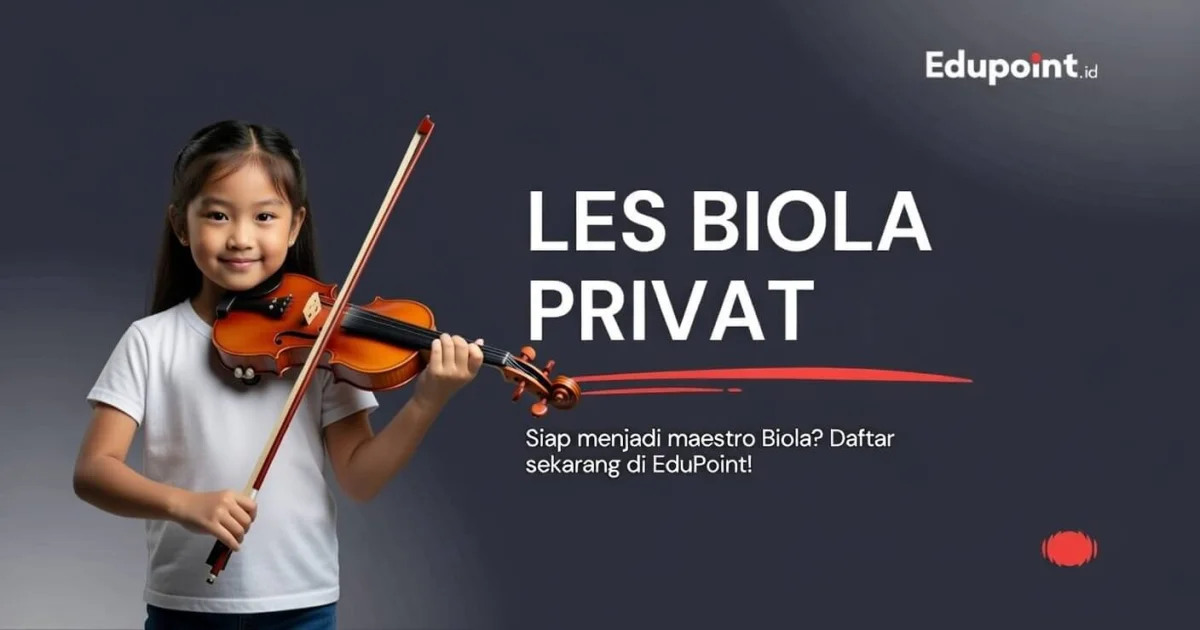
What is Online Violin Lessons?
Online violin lessons are private one-teacher-one-student sessions held over video call, where the teacher corrects posture, bow grip, and intonation straight from the screen. At EduPoint, teachers come from more than 60 cities, and each day's schedule opens at 6 AM and runs until 11 PM Jakarta time, with sessions of 60, 90, or 120 minutes for children and adults working through both classical and pop material.
- The full session belongs to one student, so every minute goes into refining your technique, from bow hold to intonation
- Teachers join from 60+ cities, which means your options are never limited to whoever happens to live nearby
- Classical and pop repertoire run side by side, with ABRSM grades available as a benchmark for those who want one
- Sessions run in 60, 90, or 120 minute lengths, and the clock stays open from early morning at 6 AM Jakarta time through to 11 PM
- Session recordings, self-practice materials, and progress reports all live in the EduPoint learner app
Services
Session Lengths for Online Violin Lessons
One teacher works with one student, always over video call, for the entire session; choose whichever duration best fits the student's age and practice goals
60-Minute Session
The most comfortable length for kids and beginners: long enough for one technical focus, short enough to keep concentration fresh.
Rp 78.000/ 60-minute session
Price on the 28-session monthly plan, 60-minute sessions. Fewer meetings, higher price per session.
- One technique focus per meeting
- Well suited to ages 6-12
- Session recordings saved in the app
90-Minute Session
The favorite format for teens and adults: room for a scale warm-up, technique work, and repertoire in a single meeting.
Rp 97.000/ 90-minute session
Price on the 28-session monthly plan, 90-minute sessions. Fewer meetings, higher price per session.
- Warm-up, technique, and pieces in one session
- Repertoire progress you can feel sooner
- Weekly review of practice recordings
120-Minute Session
Built for intensive preparation: grade exam simulations, performance run-throughs, or chasing a specific repertoire target with your teacher.
Rp 123.000/ 120-minute session
Price on the 28-session monthly plan, 120-minute sessions. Fewer meetings, higher price per session.
- Complete ABRSM exam simulation
- Dress rehearsal for a performance or recording
- Deep work on interpretation
Online and in-person cost the same — the gap between these cards is session length, nothing else.
Violin Levels Absolute Beginner through Exam-Ready
Every online violin student starts with a short assessment, then gets placed at the level that matches their current playing
Beginner
Starting from zero, kids or adultsThe focus here is a clean sound on open strings, comfortable posture, and healthy practice habits from day one. Posture mistakes are easiest to prevent at this level.
Subjects:
Posture and holding the violinBow hold and open stringsBasic rhythm and pizzicatoIntroduction to staff notation
Focus Areas:
- A straight tone without scratching
- Keeping the body and shoulders relaxed
- A 15-20 minute daily practice routine
Intermediate
Already playing simple melodiesThis level builds stable intonation and two-hand coordination. Students play complete pieces, and scales become the standard warm-up menu.
Subjects:
First position with major and minor scalesDetache, legato, staccatoClassical and pop pieces at early-intermediate levelIntonation drills against a drone
Focus Areas:
- Pitch accuracy on a fretless instrument
- Light sight-reading
- Steady tempo with a metronome
Advanced
Toward expression and grade examsAdvanced students refine a mature tone, vibrato, and interpretation. For those pursuing certification, the teacher runs thorough ABRSM exam simulations.
Subjects:
Shifting through positions 1-3 and vibratoGrade exam repertoire (ABRSM optional)Dynamics and interpretation of worksPerformance preparation and recording
Focus Areas:
- Tone quality and sound projection
- Stage confidence through regular recording
- Full simulation of every exam component
The EduPoint Online Violin Curriculum
Four stages built for a fretless instrument: ear, posture, and bow arm develop together from the very first session
Module order and pacing adapt to each student's age, goals, and initial assessment. Treat this curriculum as the map; your teacher plots the route.
Posture and Bow Foundations
Everything starts with how you stand and how you hold. This opening module of your online violin lessons gets the body relaxed before a single note is played.
- Standing and seated posture, chin rest and shoulder rest setup
- Bow hold fundamentals and open-string work on G-D-A-E
- Pizzicato and basic rhythm to get familiar with the instrument
- Camera placement protocol so your teacher can see the bow arm clearly
Left Hand and Intonation
A violin has no frets, so pitch accuracy depends on the ear and finger placement. Your teacher trains both through structured drills.
- First position and placing fingers 1 through 4
- One-octave major scales with a tuner and drone
- Ear training: matching a pitch before playing it
- Early-stage staff notation reading
Bowing Technique and Repertoire
Once the sound comes out clean, sessions shift toward bowing variety and complete pieces, from classical melodies to pop songs the student picks.
- Detache, legato, and staccato with bow distribution
- Dynamics and phrasing in simple pieces
- Light classical repertoire and pop arrangements
- Duets with your teacher to build ensemble awareness
Musicality and Grade Preparation
The advanced stage sharpens expression and performance readiness. Students on the exam track train against the ABRSM syllabus.
- Shifting through positions 1-3 and introducing vibrato
- Interpreting works: tempo, character, and period style
- Grade exam simulation: pieces, scales, sight-reading, aural
- Recorded performances reviewed together with your teacher
Who It Is For
Who These Online Violin Lessons Are For
From a child holding a quarter-size violin for the first time to an adult picking the instrument back up, the teacher adapts the approach
Children ages 6-12
Sessions are kept short, playful, and full of encouragement. The teacher helps parents choose the right violin size and build a brief daily practice routine.
Recommended:
60-minute sessionsViolin sizes 1/4 to 3/4Parent sitting in on early sessions
Middle and high school students
The right age to get serious: technique gets tidied up, repertoire expands, and ABRSM grades can become a measurable training target.
Recommended:
90-minute sessionsOptional ABRSM grade trackRegular performance recordings
University students and adult beginners
Learning violin from scratch as an adult is entirely doable; the keys are a realistic curriculum and a consistent evening schedule. A favorite pop song makes a fine starting point.
Recommended:
90-minute evening sessionsPop and film-score repertoireA clear first-song target
Returning players
Took violin lessons years ago and stopped? Your teacher maps what skills remain, straightens out technique that has drifted, and plans an efficient road back.
Recommended:
A full technique assessment up front90 or 120 minute sessionsRepertoire matched to your last level
Why Us
Why Take Online Violin Lessons with EduPoint
Five reasons parents and adult learners stay with our violin teachers
Technique monitored in detail on camera
From the first session, your teacher guides camera placement so the bow arm, fingers, and posture stay visible. Corrections arrive on the spot, before a bad habit takes root.
Violin teachers from 60+ cities
Experienced violin teachers are spread across dozens of cities. The online format lets us match you with the teacher who best fits your age, goals, and learning style from that entire range.
Practice materials and recordings in one app
The EduPoint learner app keeps self-practice materials you can open anytime, session recordings, and progress reports. Daily home practice stays on track, and parents can follow along.
Schedule from 6 AM to 11 PM, zero commute
Sessions fit before school, in the afternoon, or at night after work. The time a family would normally spend driving to a music school turns into practice time.
Teacher replacement guarantee
If a teacher's style doesn't quite click, just tell us and we'll pair you with someone new; no additional fee applies, and we keep adjusting until the learning rhythm feels right.
Online Violin Lesson Fees
Rates are calculated per hour by the same pricing engine behind our registration form, so the number you see here matches the number on your invoice.
Starting from
Rp 61.000 / hour
Final price is set at registration.
This is the lowest hourly rate, derived from the 28-session monthly plan at 120 minutes per session. Per-session prices (60, 90, or 120 minutes) appear in the format options above.
Register & Get a QuoteFlexible payment — QRIS, Virtual Account, Alfamart, Indomaret, transfer & e-wallets.
Flexible monthly packages of 4-28 sessions in 60, 90, or 120 minute durations. Every payment method is accepted, from bank transfer and Virtual Account to QRIS and e-wallets.
EduPoint Online Violin Lessons vs the Alternatives
An honest comparison: each way of learning violin has its strengths, so choose what fits your family
| Feature | EduPoint Private Tutoring | In-person music school | Free video tutorials |
|---|---|---|---|
| One teacher per student with a curriculum shaped around your goals | |||
| Practice materials you can open anytime through the app | |||
| Posture and bowing corrected live by a teacher | |||
| Meeting your teacher physically in a classroom | - |
Where Online Violin Lessons Are Available
Online Tutoring
Online WorldwideEduPoint's online violin lessons reach every corner of Indonesia, including towns and regencies that have never had a music school nearby. Teachers join from more than 60 cities, and every one of them connects over video call inside a daily window that opens at 6 AM and runs until 11 PM Jakarta time.
- One teacher, one student over video call
- Sessions of 60, 90, or 120 minutes
- Recordings and progress reports in the learner app
- Teacher replacement guarantee if the match isn't right
FAQ
Online Violin Lessons: Questions and Answers
Here are the nine things we get asked most by parents and prospective students before that first session
Yes, with the camera placed well. Your teacher guides you to angle it 45 degrees at 1.5-2 meters so the whole bow arm stays visible, then corrects bow angle, distribution, and pressure in real time. Session recordings can also be replayed slowly to break down any movement that needs fixing.
Lessons generally become effective around ages 6-7, once a child can focus for 30-60 minutes and follow two-step instructions. For ages 6-8 we suggest 60-minute sessions with a parent nearby for the first few meetings, using a 1/4 or 1/2 size violin matched to arm length.
There's no need yet. Start with the consultation; your teacher will help determine the right size (1/16 up to 4/4) and suggest a sensible price range for your needs. Many families rent first while a child is still growing, then buy once the size settles at 4/4.
With 15-20 minutes of daily practice, most beginners play a simple melody all the way through within their first 8-12 sessions. Pace varies with age and practice routine, so your teacher sets a first-song target with you in the early sessions and tracks it through the app's progress report.
Yes. We use the ABRSM Grade 1-8 syllabus as an optional benchmark: your teacher trains all four exam components (pieces, scales, sight-reading, aural) and runs simulations in 120-minute sessions. Exam registration itself goes through the official board, and your teacher accompanies the preparation right up to exam day.
Complete Guide
The Complete Guide to Starting Online Violin Lessons
Violins come in sizes from 1/16 up to 4/4 (full size), and the wrong size makes a child's posture tense quickly. A simple check: have your child stretch the left arm out to the side and measure from the neck to the middle of the palm. Around 47-51 cm generally suits a 1/2 violin, 53-56 cm a 3/4, and 58 cm or more is ready for a 4/4. Adults almost always play a 4/4. Your EduPoint online violin teacher will verify the sizing on camera during the introductory session, so there is no need to rush a purchase before you consult.
- 1Rent first while a child is still on a 1/4 or 1/2; kids grow and the size will change
- 2Include a shoulder rest from the start, posture gets far more comfortable
- 3Have the teacher assess an old violin over camera before deciding to buy a new one
- 4Prepare rosin plus a clip-on tuner or a tuner app on your phone
The quality of technique correction in online violin lessons depends on what your teacher can see and hear. Place the camera at chest height, 1.5 to 2 meters away, angled about 45 degrees, so the bow arm, left-hand fingers, and body posture all fit in one frame. Light your face from the front and avoid sitting with a window behind you. For audio, turn off noise suppression in your video call app, because that feature treats violin sound as background noise and cuts it out.
- 1Use a phone stand or tripod; leaning your phone against something that slides will ruin the frame
- 2Around 10 Mbps is plenty for a music video call; prefer Wi-Fi over mobile data
- 3Wear earphones so your teacher's instructions stay clear while you play
- 4Teachers occasionally ask for a close-up clip of the right hand; save it in the app to review together
Violin progress grows out of short, regular practice. For children, 15-20 minutes every day delivers far steadier results than two hours once a week; for adults, 30 daily minutes is already ideal. A simple structure: 5 minutes of open strings to feel the bow, 5-10 minutes of scales with a tuner, and the rest on repertoire. Your EduPoint online violin teacher writes a weekly practice menu into the app's progress report, so the student always knows exactly what to work on today.
Pressing the bow so hard the sound turns scratchy
Practice long tones on open strings with minimal pressure; let the arm's own weight do the work, then record and compare the sound week to week
Jumping straight to songs and skipping scales
Make scales a mandatory 5-10 minute warm-up; intonation in pieces improves on its own once the fingers memorize their spots
Practicing without a tuner or drone until out-of-tune notes start sounding right
Switch on a clip-on tuner or a drone app every practice; a trained ear is built from small, consistent checks
ABRSM is a UK-based music exam board recognized worldwide, and its Grade 1 through 8 syllabus has become a common yardstick for violin playing ability in many countries. Four components make up the exam: pieces (three works), scales and arpeggios, sight-reading, and an aural test. At EduPoint this track stays entirely optional, students aiming for certification train against the syllabus, and students who just want to enjoy the instrument can still use the same material to track their progress without ever booking an actual exam.
For children under 10, a parent's involvement determines how smoothly online sessions run. Your role is simple yet important: set up the device and camera position 10 minutes before the session, sit nearby during the first few meetings, and protect a short daily practice slot. Through the learner app, parents can open progress reports and session recordings anytime, so every conversation with the teacher starts from the same data.
- 1Praise the process (choosing to practice today) and let polished playing arrive in its own time
- 2Record a small performance each month; watching their own progress is a child's best motivator
- 3Tell the teacher if your child starts losing interest; a favorite song can be woven into the material
- 4Anchor practice to a fixed moment, like right after the afternoon bath, until it becomes automatic
Guides & Tips
Supporting articles to help you decide and maximize learning outcomes.
How to Choose Violin Lessons for Your Child: Readiness, Method, and the Right Teacher
Choosing violin lessons for your child feels far calmer once parents gauge readiness first, match the method to their age, look at how a teacher supports young beginners, then prepare a properly sized violin before the first session begins.
How to Hold a Violin and Bow Correctly for Beginners
Supporting the violin calmly and holding the bow loosely, the earliest foundation before a single note is sounded.
How to Learn Violin from Scratch: Posture, Fingering, and Reading Notes
Learning violin from scratch goes most smoothly in stages: settle the posture that holds the violin first, master first-position fingering, train an even bow stroke, then link your fingers to notes on the page.
Violin Bowing Technique for Beginners: How to Hold the Bow and Produce a Clean Sound
A bow-arm guide for beginners, from a flexible hold to smooth string crossings.
Start Online Violin Lessons with a Teacher Who Fits
Tell us the student's age, goals, and preferred schedule. We'll match you with the right violin teacher from 60+ cities, and your first session can start this very week.
One teacher, one student via video callFlexible scheduling 6 AM-11 PM Jakarta timeTeacher replacement guarantee at no extra costSession recordings and reports in the app