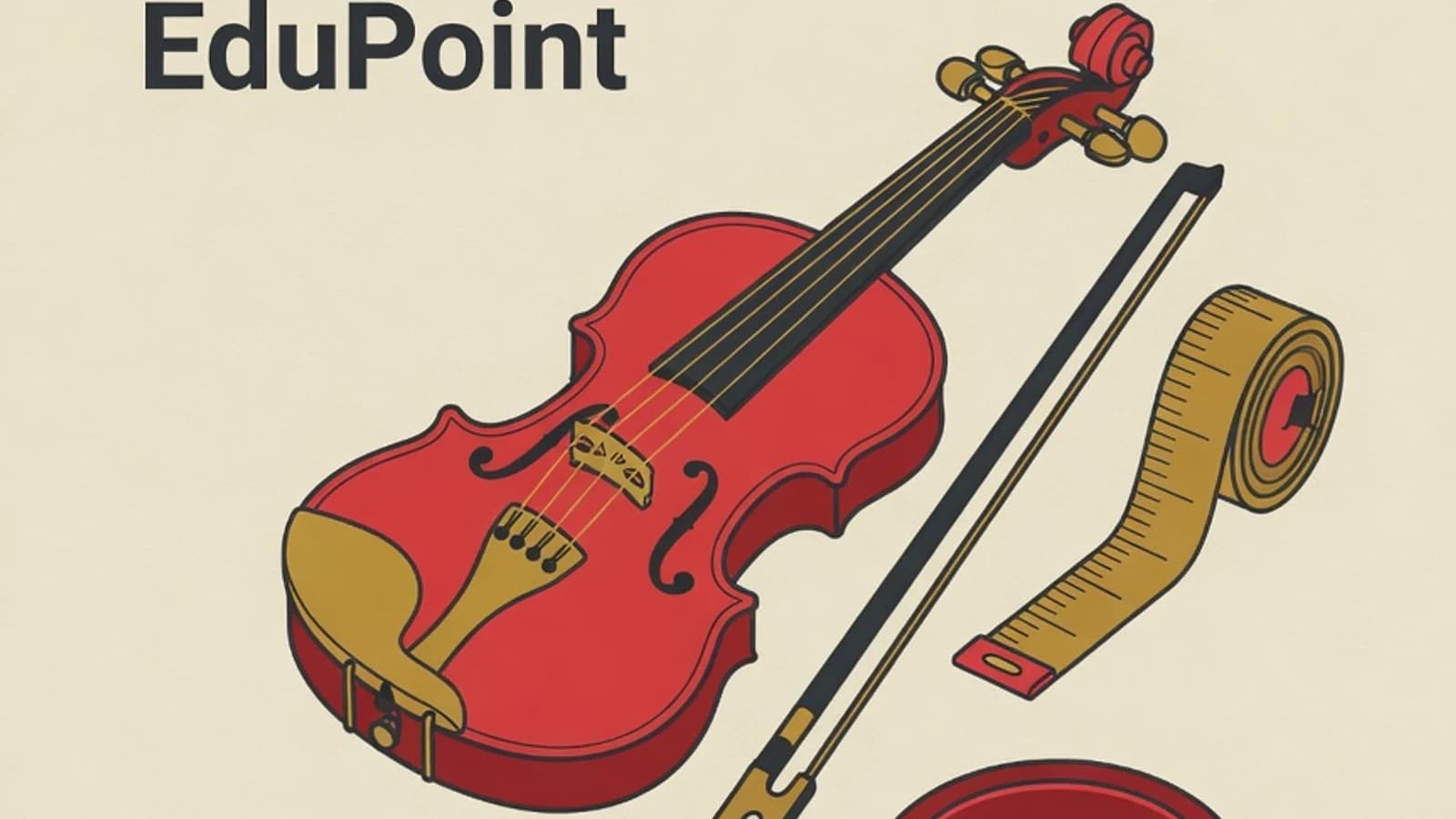
Choosing violin lessons for your child starts with gauging readiness, picking a method that suits their age, then finding a teacher used to guiding young beginners and preparing a properly sized violin. Parents who shortlist the method and teacher first, before rushing to buy an expensive instrument, tend to accompany their child's practice far more patiently and purposefully.
- Judge a child's readiness from their attention span and interest, which weigh more than the age recorded on paper
- Match the children's violin method, from a Suzuki approach to note reading, to their stage of development
- A properly sized violin and a teacher who is patient with young beginners keep practice enjoyable
- A short note on your child's age, free time after school, and what draws them to the violin
- A rough monthly budget for lessons and the violin, including the option to rent first
- A quiet enough space at home for short daily practice
Numbers That Help You Choose Violin Lessons for a Child
Why readiness is assessed before signing up
The violin asks for patience early on because its neck has no fret markers for pitch. A child needs to listen closely while holding the hand position, so attention span and interest come first when choosing violin lessons for a child. A youngster who enjoys tapping rhythms, imitating tunes, and can sit focused for a few minutes is usually more ready to enjoy regular sessions. Age is often used as a reference, and many children start between three and six through an approach that emphasises listening and playing. Even so, two children of the same age can differ in readiness. Parents who observe a child's interest in the sound of the violin, then introduce it through songs and short games, find it easier to judge the right time to begin violin lessons for kids. Readiness need not be perfect from the start. A teacher experienced with young beginners can build focus gradually through short, enjoyable sessions. Gauging readiness first helps parents pick a method and pace that fit, so the child feels successful from the first week and their interest holds.
6 Steps to Choose Violin Lessons for Your Child
These six steps move from the most basic decision to the most technical: measuring readiness, picking a method and teacher, settling the format, then preparing the violin and a practice rhythm. Work through each one calmly before moving on, because the right early choices make the child's journey smoother.
- Step 1
Observe your child's readiness and interest before setting a start time
Watch for simple signs of readiness in your child: they can sit focused for a few minutes, enjoy imitating notes or rhythms, and show interest when they hear the violin. Play a short violin excerpt and watch their response. These signs gauge a start time more accurately than the age number does, because readiness varies from child to child even at the same age. If your little one is not yet settled sitting still, begin with an introduction through songs and rhythm games at home while their interest grows. Gauging readiness first lets parents choose violin lessons for kids at a time that feels joyful and stays light for the child.
Tips- Play a simple violin recording and turn guessing high or low notes into a game
- Note how many minutes your child stays focused at play, then use it to set the early session length
- Step 2
Pick a violin method that suits your child's age
Several approaches exist for teaching children the violin. The Suzuki approach, developed by Shinichi Suzuki in Japan after the Second World War, uses a principle of learning the way a child absorbs a mother tongue: the child listens and imitates tunes before reading notes, with parents actively involved. The traditional approach emphasises reading staff notation from the start, suiting a child already comfortable with symbols and letters. Many teachers blend the two to match a child's development. For very young children, an approach that prioritises listening and play is usually friendlier, while an older child can move into note reading sooner. Discuss this method choice with a prospective teacher so it fits your little one's learning style.
Tips- Ask a prospective teacher which main method they use and how they adapt it for children
- For very young children, choose a method that leans on songs and enjoyable repetition
Pushing a very young child straight into note reading before building the ear and a sense of joy can lead to early boredom. - Step 3
Find a teacher used to young beginners and check their track record
The teacher shapes most of a child's experience with the violin. Look for a teacher comfortable with beginners, able to explain their approach in plain language, and who asks about the child's temperament and schedule before starting. The right teacher frames home practice as short, realistic repetition that stays manageable for the child. Ask about their experience teaching children your little one's age, how they track progress, and how they keep sessions enjoyable. Recommendations from other parents, music schools, or a trusted string-teacher directory help narrow the choice. At EduPoint, your child's criteria guide the teacher match, and a teacher-replacement guarantee is available if the fit does not feel right in the early sessions.
Tips- Prepare a short list of questions on how the teacher handles a child and a session that is going roughly
- Observe the first session to see whether your child is at ease and the teacher guides patiently
Be wary of a teacher who stresses talent over practice habits, or who brushes off parents' questions about a child's readiness. - Step 4
Decide the format: private or group, in person or online
The format affects both rhythm and cost. Private lessons give full attention to a child's posture and intonation, which matters because the violin demands careful ear correction. A small group class adds the atmosphere of playing together and peer motivation, often used in the Suzuki approach through weekly group classes. In-person sessions make it easier for a teacher to adjust the child's hand position directly, while online sessions offer scheduling flexibility and a wider choice of teachers for families with limited time. Many families combine private sessions as the core with occasional group activities. Weigh your child's age, distance, and family schedule when considering the most sustainable format for violin lessons for kids.
Tips- For an easily distracted child, a short private session is often more focused than a large class
- If you choose online, set up a camera angle that clearly shows the child's hands and posture
- Step 5
Prepare a properly sized violin and consider renting first
A child's violin size is set by their arm length, ranging from 1/16 for small children up to 4/4 for full size. A violin that is too big makes it hard for the child to reach finger positions and tires the shoulder, while one too small limits movement. Measure your child's arm length to the middle of the palm, then match it against a sizing guide or ask a teacher and violin shop for help. Because children keep growing and will change sizes a few times, renting a violin early is often more economical before deciding to buy. Complete the setup with a bow, chin rest, shoulder rest, and rosin. A properly sized violin keeps practice comfortable and the child's interest intact.
Tips- Bring your child along when trying a violin so holding and reaching truly feel comfortable
- Ask the teacher whether your child needs to move up a size every few months as they grow
Buying a full-size violin for a small child hoping it will last only makes their posture and fingering harder. - Step 6
Agree on a daily practice rhythm and the parent's supporting role
A child's progress on the violin is carried more by short, regular practice than by occasional long sessions. Agree on a realistic daily practice time, around fifteen to thirty minutes depending on age, and place it at a consistent hour so it becomes a habit. The parent's role matters, especially in the Suzuki approach that relies on the triangle of child, parent, and teacher. Parents need not play the violin themselves; simply accompanying, helping prepare the instrument, and keeping the practice mood positive is enough. Celebrate small progress, such as a note starting to sound clean or a short tune finished, to keep spirits up. A rhythm agreed early keeps violin lessons for kids sustainable without forcing burdensome targets.
Tips- Make a simple star chart to record daily practice as encouragement for the child
- Break practice into small parts, such as tuning, bow strokes, then one short tune
Understanding Violin Teaching Methods for Children
Suzuki Approach
The child listens and imitates tunes first, the way they absorb a mother tongue, with parents supporting practice and a weekly group class. Friendly for early ages.
Note-Reading Approach
The child meets staff notation and theory from the start, suiting one already at ease with symbols and letters who enjoys reading scores.
Blended Approach
The teacher combines listening, imitating, and reading notes to match the child's development. Flexible with the little one's interest and pace.
Private Lessons vs Group Class for Children
| Aspect | Private Lessons | Group Class |
|---|---|---|
| Attention to child | Full focus on posture and intonation | Shared, with turns per child |
| Learning mood | Calm and personal | Playing together, mutual encouragement |
| Pace of material | Follows the child's tempo | Follows the group's rhythm |
| Peer motivation | Limited | Strong through joint activities |
| Cost per child | Generally higher | Generally lighter |
Many families make private lessons the core of a child's learning, then add occasional group activities for the fun of playing together.
In-Person vs Online Violin Lessons for Children
- More flexible scheduling and saved family travel time
- A wider choice of teachers without being limited by distance
- Sessions can be recorded for the child to replay while practising alone
- The teacher needs a camera angle showing the child's hands and posture
- Very young children usually still need a parent beside the screen
- A stable internet connection keeps pitch correction clearly audible
“For a child, the right teacher matters more than an expensive violin. A child who feels happy and successful in early sessions will want to come back and practise, and that is where progress grows. Start from a properly sized violin, a light practice rhythm, and warm parental support.”
Checklist Before Choosing Violin Lessons for Your Child
- The child's readiness and interest have been observed through songs and simple games
- The chosen method suits the child's age and learning style
- The teacher is used to young beginners and explains their approach
- The format, private or group and in person or online, fits the family schedule
- The violin size is matched to the child's arm length, with the option to rent first
- The daily practice time and the parent's supporting role have been agreed
- Choosing violin lessons for your child starts with gauging readiness, then matching the method, teacher, format, and violin size to their age.
- The Suzuki approach prioritises listening and imitating with parental support, while note reading emphasises the score from the start.
- A child's violin size is set by arm length, and renting first is often more economical because children keep growing.
- Short, regular daily practice plus a teacher patient with young beginners keeps a child's interest intact.