Arts #1 — Friendly for Kids & Beginners
Private Drawing Lessons for Children, Teens, and Beginners
200+ artist tutors from ISI Yogyakarta, IKJ, and ITB Fine Arts alumni ready to guide students from their first pencil sketches to a personal portfolio. Medium options: pencil, watercolor, acrylic, charcoal, and anime/manga. Tutors train the eye to read shapes and shadows first, then the hand follows. In-person across 60+ cities or online through a document camera; a 60-minute session is Rp69,000.
200+
tutors
1,500+
students
4.8
rating · 984 reviews
60+
cities
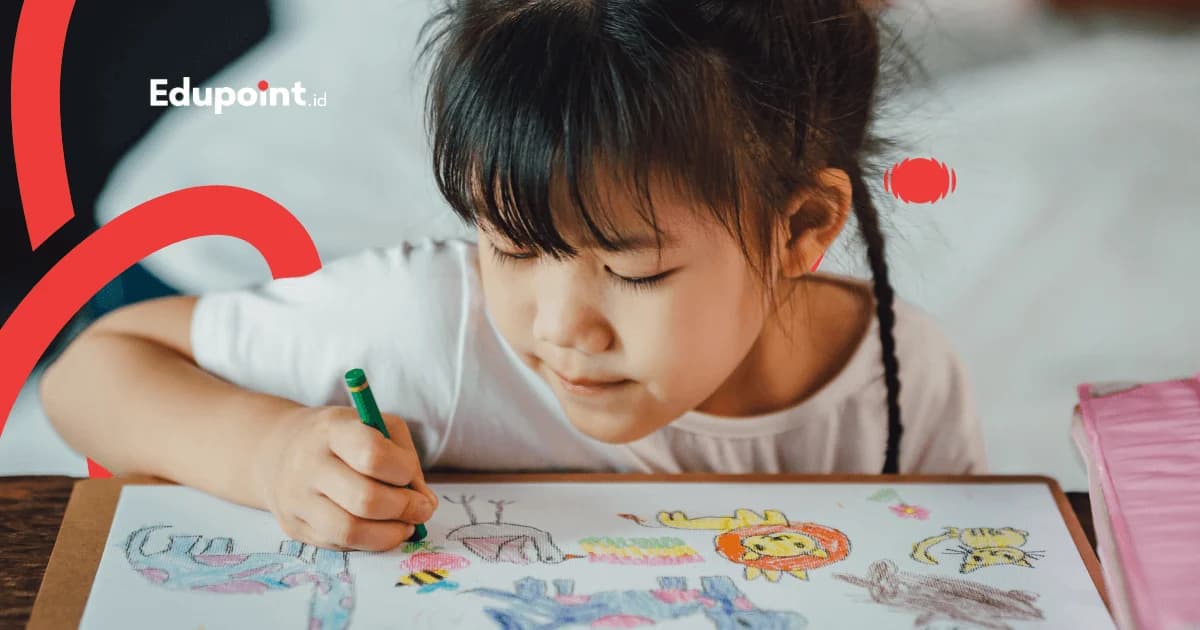
What is Drawing Lessons?
are private drawing tutoring programs with professional artist or fine-arts teacher tutors. Open to all ages from 6 — from kids picking up a pencil for the first time, to teens preparing for art high schools, to adult beginners wanting a creative hobby. The curriculum adjusts to the chosen medium (pencil sketching, watercolor, acrylic, charcoal, anime/manga) and to each student's starting level.
- Active artist tutors & art school alumni
- Full medium options: pencil, watercolor, acrylic, charcoal, anime
- Child-friendly — patient approach starting at age 6
- Real portfolio output at the end of each program
- In-home, partner studio, or online
Services
Drawing Lessons at Home or Through a Document Camera
In-Home Drawing Lessons
Artist tutor visits with reference work; the student prepares the supplies
Rp 86.000/ 90-minute session
Price on the 28-session monthly plan, 90-minute sessions. Fewer meetings, higher price per session.
- 1-on-1 or small groups of 2-3 children
- Tutor brings sample works + references
- Output can be displayed immediately
- Familiar environment for shy children
Online Drawing Lessons
Via Zoom with document camera + pen tablet (optional)
Rp 69.000/ 60-minute session
Price on the 28-session monthly plan, 60-minute sessions. Fewer meetings, higher price per session.
- Live tutor demo via document camera
- Tutor access from any city
- Session recordings to replay
- Cost-effective for families outside major cities
Online and in-person cost the same — the gap between these cards is session length, nothing else.
Learning Levels
Tailored to age and starting experience
Beginner (Kids 6-9 Years)
Exploration & Fine Motor SkillsFocus on building confidence through doodles, basic shapes, and color exploration
Subjects:
Basic lines & shapesIntroduction to primary & secondary colorsFree-theme doodlingColored pencils & crayons
Focus Areas:
- Build fine motor skills
- Drawing confidence
- Regular creative habit
- Exploration without fear of mistakes
Intermediate (Kids 10-13 + Teen Beginners)
Proportion, Shading & CompositionStart with structure — simple body proportions, 1-point perspective, basic shading
Subjects:
Proportion & symmetry1-2 point perspectiveShading & value scaleStill-life composition
Focus Areas:
- Foundation drawing techniques
- Real-object observation
- Medium experimentation (watercolor, acrylic)
- Discovering personal style
Advanced (Teens 14+ & Adults)
Anatomy, Portfolio & Personal StyleDeeper anatomy of the human figure, realistic rendering, and personal portfolio assembly
Subjects:
Human figure anatomyComplex 2-3 point perspectiveRealistic lighting renderingPortfolio assembly
Focus Areas:
- Advanced technique mastery
- Develop a signature style
- Prep for art high schools/universities
- Competition & exhibition preparation
Curriculum & Mediums Taught
Modular curriculum — students may focus on one medium or explore several
Pencil Sketching & Basics
The foundation of every drawing medium
- Basic lines (contour, hatching, cross-hatching)
- Simple composition & framing
- Pencil shading HB-6B
- Quick gesture drawing
Watercolor
An expressive, beginner-friendly liquid medium
- Wet-on-wet & wet-on-dry
- Basic color mixing (primary → secondary)
- Washes & gradients
- Landscapes & simple subjects
Acrylic Paint
A flexible medium — fast-drying and layer-friendly
- Canvas and media preparation
- Acrylic layering & blending
- Impasto texture
- Still life and basic portraits
Charcoal
A dramatic medium for portraits and value studies
- Using vine vs compressed charcoal
- 9-tone value scale
- Smudging and lifting
- Monochrome portraits
Anime / Manga Style (Entry)
A popular style among teens
- Chibi & semi-realistic face proportions
- Expressions & anime iconography
- Inking with drawing pens
- Introduction to Copic marker coloring
Color Theory & Composition
Color theory foundations used in every medium
- Color wheel & color relationships
- Warm vs cool palette
- Rule of thirds & golden ratio
- Compositional harmony
Who It Is For
Four Learner Profiles Who Fit These Drawing Lessons
Elementary Kids Who Love to Doodle
Children 6-12 years old who love drawing but have never had structured lessons
Recommended:
Beginner LevelPencil Sketching + Colored Pencils
Teen Anime/Manga Fans
Teens 12-17 years old who want to draw their own anime/manga OCs (original characters)
Recommended:
Intermediate LevelAnime/Manga Style
Students Preparing for Art Schools
Students aiming for art-focused high schools (SMK Seni, SMSR) or universities like ISI Yogyakarta, IKJ Jakarta, or ITB Fine Arts
Recommended:
Advanced LevelCharcoal + RealismPortfolio prep
Adult Beginners Seeking a Hobby
Working professionals starting a creative hobby — weekend stress relief
Recommended:
Beginner-Intermediate LevelWatercolor (most beginner-friendly for adults)
From the Drawing Studio
The Drawing Mistakes We See Most Often
What holds drawing back is usually not talent but wrong habits in how we observe and stroke. Here are five of them.
Drawing what you know, not what you see
Why it happens
Students draw the symbol in their head, not the real shape in front of them.
How we fix it
We train the eye to observe the real shapes, shadows, and proportions before the hand draws.
Pressing the pencil too hard from the start
Why it happens
Students draw bold lines that are hard to erase.
How we fix it
Start with light, thin lines as a sketch, then darken once the shape is right.
Guessing facial proportions
Why it happens
Students place the eyes too high on the head.
How we fix it
We use proportion guides: the eye line sits roughly in the middle of the head, not near the top.
Ignoring perspective
Why it happens
Students draw far and near objects at the same size.
How we fix it
Objects that recede look smaller and their lines head toward a vanishing point. We train this with simple sketches.
Fearing mistakes and erasing constantly
Why it happens
Students stall because every line must be perfect.
How we fix it
A sketch is exploration. Construction lines are normal and helpful, so there is no need to fear mistakes.
Drawing is the skill of seeing. Train the eye, and the hand follows.
Why Us
Six Things That Make EduPoint Drawing Lessons Feel Different
Artist tutors with real bodies of work, a curriculum that bends to the chosen medium, and a child-friendly room from age six onward.
Tutors Who Are Practicing Artists
Our 200+ tutors are alumni of formal art schools who are also active artists. They have real portfolios that go well beyond basic drawing ability.
Modular Curriculum per Medium
Students can focus on one medium (e.g. watercolor only) or explore several. No forced standard curriculum.
Child-Friendly from Age 6
Tutors pass child-interaction screening. Pressure-free approach focused on exploration and confidence.
Real Artwork Output
At the end of every program, students go home with finished works ready to display. Advanced students build a portfolio for competitions or art-school applications.
Flexible at Home or Online
In-person across 35 partner cities or online via Zoom with a document camera + session recordings. Broad options for every family.
Hobby or Career Preparation
Suits students wanting a destressing hobby and those seriously aiming for art school. Tutors matched to your goal.
EduPoint Drawing Tutors
Active artists and professional fine-arts school alumni
Tutor Qualifications
- Alumni of ISI Yogyakarta, IKJ, ITB Fine Arts, or equivalent art schools
- Active artists with real portfolios (exhibitions/commissions)
- At least 2 years teaching children or teens
- Patient and child-friendly — passed child-interaction screening
- Completed EduPoint teaching methodology training
Nani N.
Fine Arts Education, Universitas Sebelas Maret
Proportions that fit“Nani starts by training proportion, because an object with the right proportions already makes a drawing look convincing.”
Rayhan R.
Fine Arts Education, Universitas Negeri Jakarta
Quick, loose sketching“Rayhan gets students sketching quickly and loosely first, so the hand loosens up before moving into detail.”
Umay Y.
Fine Arts Education, Universitas Negeri Medan
Light, shadow, and dimension“Umay trains the play of light and shadow, the key that makes a flat drawing look like it has form and depth.”
Celia F.
Fine Arts, ISI Yogyakarta
Observing before drawing“With her ISI fine-arts background, Celia stresses the habit of observing closely, because good drawing is born from careful observation.”
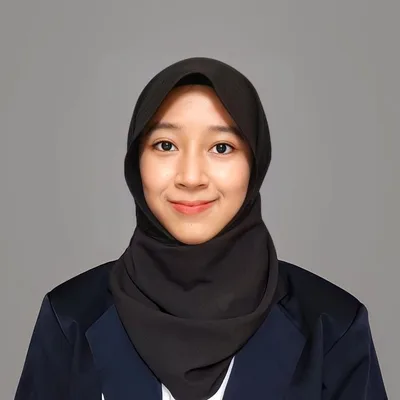
Aghnia A.
Fine Arts, ISBI Bandung
Confident lines“Aghnia trains students to draw lines with confidence, so the strokes look sure and alive.”
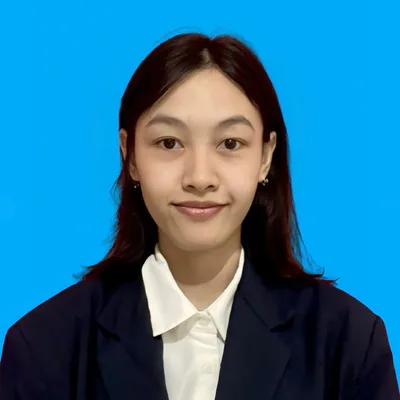
Nabilah N.
Fine Arts Education, Universitas Negeri Surabaya
Perspective that makes sense“Nabilah helps students understand perspective, so space and distance in a drawing feel believable.”
Testimonials
Voices of Parents and Students in EduPoint Drawing Lessons
From elementary kids who now draw regularly to teens admitted to art school, here is what families who guided their children's work have to say.
Drawing Lessons Pricing
Packages by age, duration, and artwork goals
Starting from
Rp 54.000 / hour
Final price is set at registration.
This is the lowest hourly rate, derived from the 28-session monthly plan at 120 minutes per session. Per-session prices (60, 90, or 120 minutes) appear in the format options above.
Register & Get a QuoteFlexible payment — QRIS, Virtual Account, Alfamart, Indomaret, transfer & e-wallets.
Price covers the tutor's coaching. Paper, pencils, and other supplies (watercolor/acrylic/charcoal) are prepared by the student.
Drawing Lessons Availability
Online Tutoring
Online WorldwideOnline drawing lessons via Zoom with document camera, available for students across Indonesia and abroad
In-Person Tutoring
All CitiesIn-person drawing lessons at home or partner studios in these cities
Yogyakarta45+ tutorsBandung38+ tutorsJakarta50+ tutorsSurabaya22+ tutorsSemarang18+ tutorsDenpasar15+ tutorsMalang14+ tutorsSolo12+ tutors
+2 more citiesStudent Achievements
Success Stories from Drawing Lesson Students
Real achievements from EduPoint students
Success
From Doodles to a National Illustration Award
Janeeta D.
SD Negeri 03 Jakarta
Challenge
Loved doodling but had never had structured lessons
Journey
Month 3: Can sketch with basic pencil shading
Month 6: Begins watercolor exploration with good control
Month 12: Works regularly displayed at school exhibitions
Month 18: Second Place, National Children's Illustration Competition
“From doodling in her notebook, Janeeta now has her own work shelf. The tutor built her habits and technique from nothing.”
Tutors:
Kak Annisa V. (Pencil Sketching & Watercolor)
Success
Shy Teen Who Got Admitted to IKJ
Reviano W.
SMA Negeri 7 Bogor
Challenge
Had drawing talent but no idea how to assemble a portfolio
Journey
Month 2: Completed initial portfolio diagnostic, set target major
Month 5: Finished 5 realistic charcoal portraits
Month 9: Portfolio of 15 works across multiple mediums ready
Month 12: Admitted to Fine Arts at IKJ Jakarta
“Without Kak Benediktus, I wouldn't have known what should go into a portfolio for IKJ. He curated from start to submission-ready.”
Tutors:
Kak Benediktus S. (Charcoal, Anatomy, Portfolio Prep)
Success
Adult Beginner Who Opened Her Own Watercolor Workshop
Putra W.
32-year-old professional
Challenge
Wanted to pivot from corporate to creative career, starting from zero
Journey
Month 3: Can paint basic watercolor landscapes (mountains, beaches)
Month 9: Personal watercolor style starts becoming consistent
Month 15: First piece sold to a local collector
Month 24: Opened her own weekend watercolor workshop in Jakarta
“24 months ago I couldn't hold a brush. Now I'm the one teaching weekend workshops. Kak Sharleen played a huge role in this transformation.”
Tutors:
Kak Sharleen A. (Watercolor & Mixed Media)
FAQ
Parents' Concerns About Drawing Lessons
Minimum age 6. At 6-7 years old, the goal is exploration and building drawing confidence, not polished work. EduPoint tutors are trained child-friendly with a pressure-free approach. Sessions ideally 60 minutes with varied activities.
Drawing lessons at EduPoint are priced by the hour: Rp69,000 an hour for an hour-long meeting and Rp54,000 an hour for the two-hour format or the 28-session monthly plan, with 90 minutes in between. Choose longer meetings and each hour gets cheaper. The registration form will show you these same figures, teens assembling an art portfolio included.
Not at all. EduPoint's drawing lessons are designed for children who have just picked up a pencil. Tutors start from the very basics — lines, shapes, color exploration — adjusted to the child's age and responses. Children with some base can start at intermediate level after a diagnostic.
HB-6B pencils are most recommended as foundation for all ages — cheap, erasable, train line control. After 2-3 months with pencil, the child can explore another medium: watercolor for patient children, colored pencils/crayons for younger kids who love color, or anime/manga style for teens who love Japanese pop culture.
Very effective if the tutor has a good document-camera setup (additional camera facing the tutor's working surface). Students see the tutor's strokes in real time, plus session recordings can be replayed. EduPoint provides specialized tutor training for online drawing so the experience matches in-person.
Complete Guide
Complete Guide to Drawing Lessons for Kids & Beginners
The most common question from parents: when is a child ready for drawing lessons? EduPoint's answer: starting from age 6, with an important note.
Ages 6-7: Fine motor skills are just developing. The lesson goal is NOT polished artwork but building drawing confidence and enjoying exploration. Sessions of 60 minutes with varied activities work best — doodling, color play, simple finger painting.
Ages 8-10: Children can focus for 90 minutes. Basic techniques like lines, shapes, and basic shading can be taught. Children are more patient about repeating practice.
Ages 11-13: Sweet spot for technique foundations. The child is mature enough to receive feedback and willing to redo work. Ideal for starting medium exploration (watercolor, acrylic).
Ages 14+: Can enter advanced level directly — anatomy, complex perspective, and portfolio preparation.
Signs a child is ready: the child draws spontaneously in free time, can sit for at least 30 minutes, and doesn't get frustrated when results aren't 'perfect'. If the child cries each time a drawing isn't 'good', wait first — build confidence through play.
Many parents are confused when their child asks for drawing lessons — which medium first? Here's a simple guide:
Pencils HB-6B (most recommended for all ages): - Pros: cheap, erasable, trains line control - Best for: brand-new beginners, any age - Output: sketches, shading, realistic drawings
Colored pencils / crayons (for younger kids): - Pros: direct color, no mixing required - Best for: ages 6-9 still exploring color - Output: colorful story illustrations
Watercolor: - Pros: expressive, trains water control, beautiful results quickly - Best for: ages 8+ who can patiently repeat - Output: landscapes, flora-fauna, simple portraits - Note: needs special paper (300gsm minimum)
Acrylic paint: - Pros: fast-drying, layer-friendly, can cover mistakes - Best for: ages 10+ or adult beginners - Output: canvas paintings, still life
Charcoal: - Pros: dramatic, trains value/light-dark - Best for: serious teens 12+ - Output: monochrome portraits
EduPoint recommendation: Start with pencils HB-6B as foundation for 2-3 months, then move to a medium the child chooses.
A personal drawing style is an artist's visual fingerprint — what makes their work recognizable without a signature. Many students ask: when will I have my own style?
The answer is organic — style cannot be forced, but it can be nurtured with these steps:
1. Study from many references In the first 6-12 months, copy works from favorite artists to understand how they think. This is not plagiarism — this is visual learning through your own hand.
2. Explore different mediums Style often emerges from the medium that fits your hand and personality best. Try 3-4 different mediums before 'falling in love' with one.
3. Notice what you enjoy While drawing, notice: which part puts you most 'in flow'? Small details? Big color washes? Expressive lines? Those are early style clues.
4. Be consistent for 6-12 months without worrying about style Style emerges after 100-200 works, not 10. Focus on quantity first.
5. Reflect every 3 months Gather your 10-15 most recent works and lay them side by side. What patterns appear? That's your emerging style.
EduPoint tutors help students recognize their style patterns through regular reflection at the end of each package.
A classic parental dilemma: private lessons at home/online vs an art studio with many students? Here's a comparison:
| Aspect | Private Lessons | Art Studio | |--------|----------------|------------| | Tutor attention | 100% focused on 1 child | Shared with 10-20 children | | Curriculum | Tailored to personal needs | Generic curriculum for all | | Schedule | Flexible to family | Fixed weekly schedule | | Social environment | Solo, focused | Peers present, competitive | | Price | Higher per session | Cheaper per month | | Location | Home or online | Travel to studio |
When to choose private: - Shy children uncomfortable in groups - Specific needs (portfolio prep, competition) - Quality studio is far from home - Busy family schedule needs flexibility - Hyperfocus-type child needing patient 1-on-1
When art studio fits: - Child enjoys socializing and learning from peers - Tight family budget - Quality studio close to home - Child is independent, needs little guidance
Most effective combo: weekly studio for socialization + private lessons 1-2x/month for personalized technique growth.
For serious teens — applying to art-focused high schools or universities like ISI, IKJ, or ITB Fine Arts — a portfolio is not optional. Here's a guide to a portfolio that gets noticed:
Number of works: 10-15 finalized works. Not 50 half-done sketches.
Medium variety: Minimum 3 mediums (e.g. pencil + watercolor + charcoal). Show range.
Consistent theme: Pick one theme/story for 3-5 core works so reviewers can follow how your ideas develop across the pieces, well beyond pure technical showing-off.
Include observation studies: 2-3 works from real-life objects (still life, life portrait) — proving foundational skill drawn from direct observation, well beyond imagination alone.
Include process (initial sketches + final): Some art schools want to see thinking. Include 2-3 sets of initial sketches → finished work.
Clean documentation: Photograph works with natural light, neutral background. Not crooked or blurry phone shots.
Portfolio packaging: A3 or A4 professional black folder. Digital: curated PDF, not random Google Drive album.
Assembly timeline: Ideally 6-12 months before application deadlines. EduPoint's Advanced Portfolio Package helps curate from start to mock review.
One of the most common issues: children are enthusiastic in sessions 1-2 but start getting bored by sessions 4-5. What can parents and tutors do?
Diagnose the cause first:
1. Monotonous curriculum — Tutor repeats the same things without progression. Solution: change tutor or request theme variation.
2. Theme not aligned with child's interests — Child loves robots but is told to draw flowers. Solution: tutor matches themes to interests (robots, anime, animals, vehicles, etc).
3. Sessions too long — A 7-year-old asked to focus for 90 minutes. Solution: shorten to 60 minutes with 5-minute play breaks.
4. No output to display — Child feels artwork ends up 'in a drawer'. Solution: display work on the fridge or home shelf so the child feels valued.
5. Pressure for 'good' results — Parents/tutor correct too quickly. Solution: 80% praise the process, 20% technique feedback. Children need to feel safe experimenting.
6. Lack of medium variety — Only pencil for 3 straight months. Solution: introduce watercolor by session 8 to refresh interest.
Tip for EduPoint tutors: Re-diagnose every 4 sessions. If boredom signs appear, swap theme/medium in the next session.
Guides & Tips
Supporting articles to help you decide and maximize learning outcomes.
How to Draw Anime for Beginners from Guidelines
Seven steps to build an anime face from the head circle and guidelines, set the large signature anime eyes, then shape the hair, with practice you can run from home.
How to Learn Drawing for Beginners From Scratch
Six drawing practice steps you can start today, from training your eye to read shapes to shading light and dark, with no special talent required.
How to Teach a Child to Draw From Basics
A step-by-step guide for parents who want to support their child from the very first scribble.
Pencil Shading Techniques: How to Shade Light and Dark
Learn the four ways to shade, build a value scale from light to dark, and grow a sense of volume step by step so your pencil drawings feel three-dimensional.
Related Creative Programs
Other programs that might be suitable for you
Pick Up That First Pencil and Begin Drawing Lessons Today
Give your child room to express themselves with artist tutors who patiently guide from the first line to a finished piece.