#1 Javanese Course
Private Javanese Lessons, from Ngoko to Krama Inggil
One student, one tutor, learning Javanese from everyday ngoko conversation, polite krama and its unggah-ungguh, all the way to reading the Javanese script. Taught by native speakers who grew up with the language, at home or online.


60+
tutors
450+
students
4.9
rating · 1,984 reviews
60+
cities
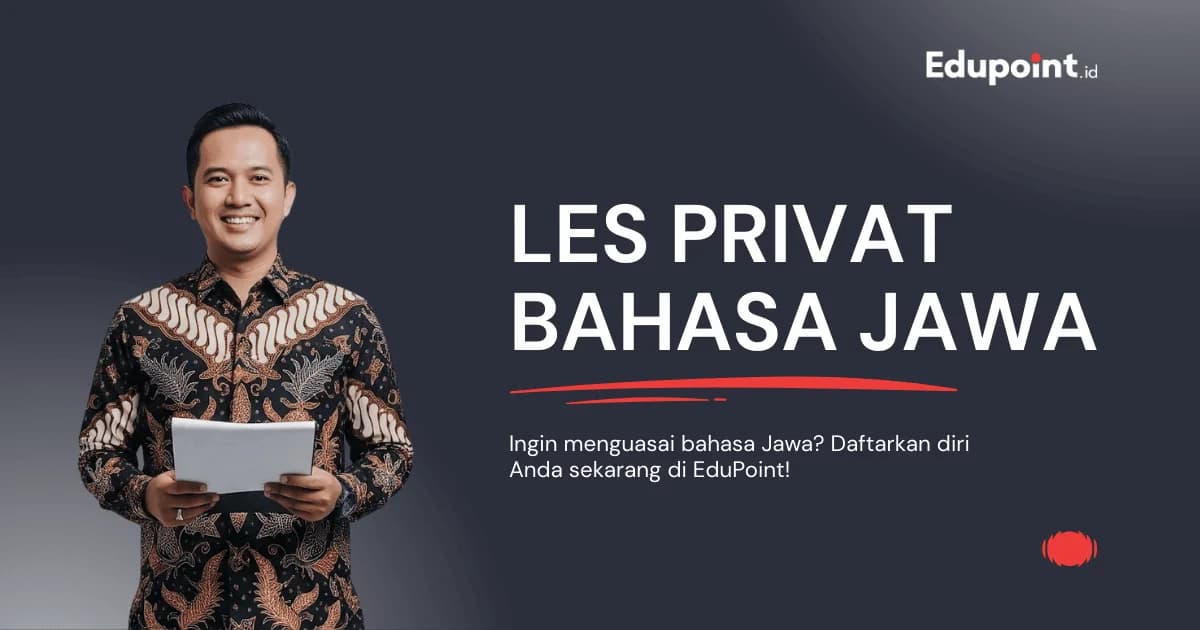
What is Javanese Language Course?
A Javanese language course is private one-on-one guidance to learn Javanese, from everyday ngoko conversation to refined krama and reading the Javanese script. Lessons are tailored to each student's goal: chatting with grandparents, bonding with a spouse's extended family, keeping up with the local-content school subject, or exploring Javanese literature and culture. Tutors are native speakers, teaching at your home or online, with a 60-minute session carrying a starting rate of Rp62,000.
- One student, one tutor, from ngoko to krama following your goal
- Start from zero, no prior ability needed
- Master unggah-ungguh: when to use ngoko and when krama
- Can continue all the way to reading and writing the Javanese script
- Taught by native speakers who grew up with Javanese
Services
Learn Javanese at Home, Online, or Together as a Family
Whatever the format, the same curriculum carries you from everyday ngoko to polite krama.
In-Person Javanese Lessons
A tutor comes to your home for direct speaking practice with pronunciation and accent correction.
Rp 62.000/session
60 minutes
- Native-speaker tutor visits your home
- Direct ngoko and krama practice
- Correcting the dh, th, and distinct Javanese vowels
- Flexible schedule that suits you
Online Javanese Lessons
Learn via Zoom with digital materials, ideal for migrants and the diaspora anywhere.
Rp 62.000/session
60 minutes
- No transport cost, more affordable
- Ideal for migrants and the diaspora
- Sessions recorded for replay
- Available for students abroad
Small-Group Javanese Lessons
Learn with family or 2-3 friends; the session price shown is the private baseline, and the form splits the group saving across students by itself.
Rp 77.000/session
90 minutes
- 2-3 students per group
- Great for a whole family learning together
- Lower cost per student
- Practice ngoko-krama conversation together
Stages of Learning Javanese
Four progressive stages, from ngoko conversation to literature and the Javanese script.
Beginner (Ngoko & Basic Conversation)
Never studied JavaneseGet to know everyday ngoko vocabulary, greetings, and simple sentences. Within a few sessions you can hold a casual Javanese chat.
Subjects:
Everyday ngoko vocabularyGreetings and introductionsNumbers and timeSimple sentences
Focus Areas:
- Casual everyday conversation
- Understanding ngoko lugu
- Building basic vocabulary
- Correct pronunciation from the start
Unggah-Ungguh (Krama & Etiquette)
Already know basic ngokoLearn the krama speech level to speak politely to elders. A crucial stage so your Javanese feels respectful and context-appropriate.
Subjects:
Krama vocabularyThe four speech levelsKrama inggil and krama andhapPolite and formal situations
Focus Areas:
- Speaking politely to elders
- Choosing the right speech level
- Understanding Javanese language etiquette
- Confidence at family gatherings
Javanese Script (Reading & Writing)
Want to read and writeMaster the Javanese script (Hanacaraka), from the 20 base letters to sandhangan and pasangan, then read short texts in script.
Subjects:
20 nglegena base lettersSandhangan (vowel marks)Pasangan and aksara murdaReading short texts
Focus Areas:
- Reading the Javanese script
- Writing words and sentences
- Understanding scripted texts
- A foundation for reading old manuscripts
Advanced (Literature & Culture)
Already fluent in speechExplore Javanese literature and culture: tembang, geguritan, paribasan, sesorah (speeches), and the philosophy behind wayang stories.
Subjects:
Tembang and geguritanParibasan and bebasanSesorah and pranatacaraWayang stories and their philosophy
Focus Areas:
- Understanding Javanese literature
- Delivering a Javanese speech (sesorah)
- Enjoying tembang and wayang
- Exploring Javanese moral teachings
Javanese Course Curriculum
Four core pillars built up gradually and in balance.
Tutors adjust the emphasis to your goal. Those who want to bond with family focus on conversation and unggah-ungguh, school students add the Javanese script, culture enthusiasts dive into literature.
Ngoko & Everyday Conversation
Ngoko vocabulary and sentences for casual chatting in daily situations.
- Everyday vocabulary
- Javanese sentence structure
- Casual conversation
- Listening and imitating the accent
Krama & Unggah-Ungguh
The four Javanese speech levels and how to choose them based on whom you speak to.
- Krama vocabulary
- The four speech levels
- Krama inggil to show respect
- Roleplay of polite situations
Javanese Script (Hanacaraka)
Reading and writing the Javanese script, from base letters to sandhangan and pasangan.
- 20 nglegena base letters
- Sandhangan vowel marks
- Pasangan and aksara murda
- Reading and writing sentences
Javanese Culture & Literature
Tembang, paribasan, sesorah, and Javanese philosophy that enrich language ability.
- Paribasan and moral teachings
- Macapat tembang
- Sesorah and pranatacara
- Wayang stories and their philosophy
Who It Is For
Families, In-Laws, Students, Culture Lovers: All Begin with the Same Javanese
Javanese-Descent Families
Children and grandchildren who want to speak Javanese with their grandparents and keep their family roots, including those born and raised outside Java.
Recommended:
Start from ngoko conversationFocus on family communication
Non-Javanese Spouses & In-Laws
Those who marry into a Javanese family and want to bond with the extended family and understand etiquette so they feel accepted.
Recommended:
Emphasis on krama and unggah-ungguhPolite phrases for family events
Local-Content Students
Primary to high-school students in Central Java, East Java, and Yogyakarta who study Javanese as a local-content subject.
Recommended:
Guidance on the Javanese scriptPractice matched to the school curriculum
Culture Lovers & Migrants
Researchers, artists, migrants, and anyone wishing to explore Javanese literature, wayang, and philosophy through its language.
Recommended:
Literature and culture trackTembang, sesorah, and paribasan
A Peek at the Material
Getting to Know the Javanese Script (Hanacaraka)
A peek at how to read and write the Javanese script, step by step, the way our tutors do it in class.
Javanese Script Worksheet
20 nglegena base letters (default vowel sound 'a')
hanacaraka
datasawala
padhajayanya
magabathanga
Base letter + sandhangan (vowel mark) makes a new syllable
ka+wulu (·i)ki
pa+suku (·u)pu
la+taling (è)lé
sa+pepet (ê)sê
Try reading this simple sentence
Aku tuku sega ing pasar.
Question: Apa tegese ukara iki? (What does this sentence mean?)
Answer: I bought rice at the market.
The Javanese script looks complex from afar, but it is built from 20 base letters you can learn gradually. Once the pattern clicks, reading simple words starts to feel logical.
From Teaching Javanese
Four Hurdles That Often Come Up When Learning Javanese
The obstacles we see most often, and how tutors work through them with students.
Mixing ngoko and krama in one sentence
Why it happens
Learners memorize vocabulary separately without knowing which speech level a word belongs to, so ngoko and krama blend unintentionally.
How we fix it
Tutors train one situation using one speech level consistently through real conversation, until word choice becomes automatic.
Choosing the wrong speech level for elders
Why it happens
Indonesian has no language levels, so the habit of speaking on equal terms carries over and can sound impolite in Javanese.
How we fix it
Through roleplay of greeting a grandmother, a teacher, then a friend, students get used to choosing krama or ngoko based on the listener.
Confused reading the sandhangan in the Javanese script
Why it happens
One base letter can change its vowel sound depending on the sandhangan, and many learners try to memorize all of it at once.
How we fix it
We start from the 20 nglegena letters until fluent, only then add the sandhangan one at a time.
Pronouncing 'dh', 'th', and the slanted 'o' vowel
Why it happens
These sounds have no equivalent in Indonesian, so they are often flattened into ordinary d, t, or a.
How we fix it
Tutors model and correct pronunciation directly in every session, the part hardest to get from self-study.
Why Us
Taught by Native Speakers Who Feel the Language: That Is What Sets This Javanese Course Apart
Tutors who grew up with Javanese guide you one-on-one, from ngoko conversation and krama unggah-ungguh to the Javanese script.
One Student, One Tutor
You set the pace. Practice ngoko and krama as much as you like without shyness, moving fast without waiting for a class.
Taught by Native Javanese Speakers
Tutors who grew up with Javanese, so their pronunciation and feel for the language are authentic, grown from everyday use.
Understand Unggah-Ungguh, the Key to Javanese Courtesy
You learn when to use ngoko and when krama, the hardest part that defines politeness in Javanese.
Can Go All the Way to the Javanese Script
From conversation to reading and writing Hanacaraka, complete in one coherent learning path.
Transparent Per-Session Pricing
Open per-session pricing, starting from one session with no big package commitment.
Flexible at Home or Online
Choose a tutor at home or an online class, on a schedule that follows your family’s routine.
Selected Javanese Tutors
Our tutors are graduates of Regional Literature, Regional Language, and Indonesian Literature from campuses in Java, as well as native speakers who grew up with Javanese from childhood.
Tutor Qualifications
- Graduates of Regional Literature, Regional Language, and Indonesian Literature from Java campuses
- Native speakers who grew up with Javanese and its etiquette
- Experienced teaching from ngoko conversation to the Javanese script
- Understand Javanese culture, from unggah-ungguh to tembang and wayang
Eka E.
Javanese Language & Literature Education, Universitas Negeri Semarang
Unggah-ungguh from early on“A graduate of Javanese Language and Literature Education at Universitas Negeri Semarang who introduces speech levels through everyday conversation, so students get used to choosing ngoko or krama naturally.”
Musa M.
Javanese Language Education, Universitas Negeri Yogyakarta
Krama for real situations“With a background in Javanese Language Education at Universitas Negeri Yogyakarta, Musa leans on family-situation roleplay so krama feels alive and immediately usable.”
Veve V.
Javanese Language Education, Universitas Negeri Yogyakarta
Easy-flowing ngoko conversation“Veve gets students chatting in ngoko from the first session, because in her view Javanese sticks fastest when it is spoken often.”
Dika M.
Javanese Language & Literature Education, Universitas Negeri Surabaya
Step-by-step Javanese script“This Javanese Language and Literature Education alumnus from Universitas Negeri Surabaya teaches Hanacaraka one step at a time, starting from the nglegena letters before the sandhangan.”
Dita E.
Regional (Javanese) Language Education, Universitas Negeri Yogyakarta
Supporting school students“Dita is used to supporting local-content Javanese students, aligning practice with school material so understanding and grades grow together.”
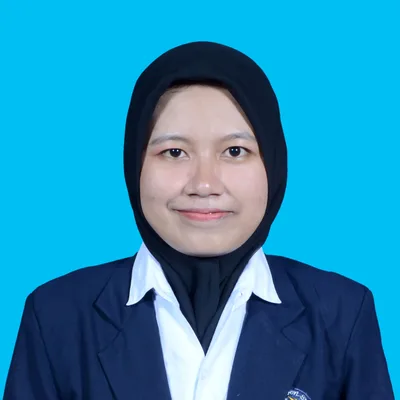
Rara M.
Javanese Language & Literature Education, Universitas Negeri Surabaya
Javanese literature and tembang“From her studies in Javanese Language and Literature Education at Universitas Negeri Surabaya, Rara introduces paribasan and tembang as a way into Javanese values.”
Testimonials
From Awkward to At Home with the Javanese Extended Family
Honest experiences from EduPoint students, from grandchildren wanting to speak with their eyang to in-laws wanting to be embraced by the family.
My child was born in Jakarta and could not speak Javanese, even though the grandparents are in Solo. Now my child can greet them in krama and the grandparents were so moved. The tutor was patient starting from zero.
Ibu Diah A.
Parent • Jakarta
I married into a Javanese family and used to just smile while the extended family chatted. After lessons focused on krama and unggah-ungguh, I began to understand and could reply politely. I feel far more accepted now.
Ibu Yayu K.
In-law of a Javanese family • Semarang
I am a migrant who lived outside Java for years and my Javanese had faded. These online lessons restored my ngoko, and now I am even more confident using krama with my parents. Recorded sessions make it easy to review.
Pak Agus W.
Migrant, learning online • Surabaya
My child is in grade 8 and the local-content Javanese grade had dropped, especially the script. The tutor taught the script gradually and now my child can read it. The grade rose a lot.
Ibu Budi S.
Parent of a junior-high student • Jogja
I am drawn to Javanese culture and wanted to understand tembang and paribasan. The tutor teaches the language together with the philosophy behind it. Learning feels deep and meaningful.
Shantika B.
Student and culture enthusiast • Solo
Being relocated to Yogyakarta made me want to honor the local culture. Learning basic krama made daily interaction with neighbors much warmer. The tutor adapted to my office and neighborhood situations.
Putri N.
Professional relocated to Java • Magelang
I love wayang but often missed the dialogue. Through these lessons I learned Javanese vocabulary and expressions that come up a lot. Now watching wayang is far more enjoyable because I understand it.
Karina R.
Javanese culture enthusiast • Surabaya
I joined because I wanted to chat casually with friends in Malang. The tutor taught ngoko through fun everyday conversation. Within a few months I dared to join in.
Rasya I.
Student from out of town • Malang
Javanese Course Pricing
Javanese tutoring keeps its hourly price out in the open, covering unggah-ungguh etiquette, krama inggil, and Aksara Jawa script. Pick 60-, 90-, or 120-minute sessions and settle on 4 to 28 meetings each month; the arithmetic of the total is laid bare on the registration form.
Starting from
Rp 48.000 / hour
Final price is set at registration.
This is the lowest hourly rate, derived from the 28-session monthly plan at 120 minutes per session. Per-session prices (60, 90, or 120 minutes) appear in the format options above.
Flexible payment — QRIS, Virtual Account, Alfamart, Indomaret, transfer & e-wallets.
The hourly rate follows your city. If the teaching style isn't a fit, a replacement tutor comes at no cost, however many times you ask.
Javanese Course Availability
Online Tutoring
Online WorldwideOnline Javanese lessons are available for migrants and the diaspora across Indonesia and abroad.
- Ideal for the diaspora outside Java and abroad
- Sessions recorded for replay
- No transport cost
In-Person Tutoring
All CitiesIn-person Javanese lessons, with a tutor visiting your home in these cities.
Jogja12+ tutorsSolo10+ tutorsSemarang9+ tutorsSurabaya9+ tutorsMalang7+ tutorsSidoarjo6+ tutorsMagelang5+ tutorsJakarta8+ tutors
+4 more citiesStudent Achievements
Javanese Learning Journeys
Real progress stories from EduPoint students.
Success
From Not a Single Word to Close with Eyang
Audrey A.
Junior-high student, born in Jakarta
Challenge
Audrey was born and raised in Jakarta and had never used Javanese, yet wanted to chat with her grandparents in Yogyakarta.
Journey
Month 1: Mastered greetings and everyday ngoko vocabulary
Month 4: Could greet the grandparents with simple krama
Month 8: Held two-way chats and read basic Javanese script
Conversing in krama with grandparents within eight months
Tutors:
Kak Eka E.
Success
A Non-Javanese In-Law Who Finally Felt at Home
Benedikta V.
Professional, married into a Solo family
Challenge
Benedikta married into a Javanese family and felt awkward not understanding krama at extended-family gatherings.
Journey
Month 1: Understood the difference between ngoko and krama
Month 3: Could greet parents-in-law with krama inggil
Month 6: Followed family conversations and replied politely
Speaking krama with the extended family within six months
Tutors:
Kak Musa M.
Success
Local-Content Grade Up and Fluent in the Javanese Script
Hanun F.
High-school student, Semarang
Challenge
Hanun struggled with the Javanese subject at school, especially reading the script, which dragged the grade down.
Journey
Month 1: Fluent in the 20 nglegena letters
Month 3: Reads words with sandhangan and pasangan
Month 5: Reads short scripted texts fluently
Fluent reading the Javanese script and school grade up
Tutors:
Kak Dika M.
FAQ
Confused About Ngoko, Krama, or the Javanese Script? Here Are the Answers
The questions that come up most before starting, answered honestly.
Complete Guide
Complete Guide to Learning Javanese
Guides & Tips
Supporting articles to help you decide and maximize learning outcomes.
Related Programs
Other programs that might be suitable for you
Sugeng Rawuh! Start Learning Javanese Today
A free consultation to set your goal, match a native-speaker tutor, and plan your path from ngoko to krama and the Javanese script.
Free consultation, no commitmentTaught by native-speaker tutorstutor changes are always free