Online Arabic Tutoring 1-on-1
Online Arabic Tutoring for Every Intention
Children through adults learn Arabic online, one teacher for one student over video, with chosen teachers who graduated from Al-Azhar, LIPIA, and Middle East campuses. The journey opens with recognizing the Hijaiyah letters and harakat, moves through Nahwu and Sharaf, and reaches reading classical texts and speaking fluently. Teacher and student write the same letters on a digital whiteboard, each session is recorded for replay, and per-skill progress is reported to you regularly, all from home.




3,500+
tutors
68,000+
students
4.9
rating · 952 reviews
60+
cities

What is Online Arabic Tutoring?
Online Arabic tutoring is private one-teacher-one-student learning that runs live over video. Hijaiyah letters, harakat, and the module in hand open on a shared digital whiteboard, so Qira'ah (reading), Kitabah (writing), Istima' (listening), and Kalam (speaking) are practised in turn. Levels climb from Mubtadi to Mahir, with Nahwu and Sharaf, and teachers from Al-Azhar, LIPIA, or Middle East universities.
- Online teachers who graduated from Al-Azhar, LIPIA, and Middle East campuses, plus native speaker options
- Hijaiyah letters and harakat written together on a digital whiteboard, materials replayable in the app
- Every session is recorded so the student can replay writing strokes and makhraj practice
- Every level from Mubtadi to Mahir, from zero to reading texts without harakat
- Per-skill progress in Qira'ah, Kitabah, Istima', Kalam recorded and reported via WhatsApp
Services
Three Ways to Learn Arabic Online, One Shared Focus
Full private lessons for undivided attention, a small family group so speaking practice feels alive, or intensive TOAFL preparation. Whichever you choose, the teacher still corrects the student's makhraj and letter strokes live on screen.
Private Online Arabic Tutoring
One teacher one student over video, letters and harakat written together on a digital whiteboard.
Rp 78.000/ 60-minute session
Price on the 28-session monthly plan, 60-minute sessions. Fewer meetings, higher price per session.
- Undivided attention, one teacher one student
- Makhraj and pronunciation corrected live on screen
- Session recording available for replay
- Learn from home, savings with no transport
Online Arabic Family Group
Learn online with 2-4 family members or study friends, with livelier muhadatsah practice.
Rp 73.000/ 90-minute session
Price on the 28-session monthly plan, 90-minute sessions. Fewer meetings, higher price per session.
- Maximum 4 students per group
- Role-play of hajj and umrah situations on screen
- Lighter cost per student
- The same module opened together
Online Arabic TOAFL Preparation
Focus on Istima', Tarkib, and Qira'ah with guided simulations over video.
Rp 97.000/ 90-minute session
Price on the 28-session monthly plan, 90-minute sessions. Fewer meetings, higher price per session.
- Strategy for each TOAFL section
- Periodic simulations with discussion
- Detailed writing and speaking correction
- Recordings to replay before the test
Online and in-person cost the same — the gap between these cards is session length, nothing else.
Online Arabic Learning Levels
A gradual journey from Mubtadi to Mahir, mapped from the very first online session through a placement test
1
Mubtadi' (Beginner)
Script Foundation & Basic VocabularyThe student learns the Hijaiyah letters, harakat, and everyday vocabulary on the digital whiteboard, until they can introduce themselves and build very simple conversation.
Focus Areas:
- Hijaiyah letters and harakat on screen
- 200+ basic vocabulary (mufradat)
- Simple greetings and introductions
- Reading short words and sentences
2
Mutawassith (Intermediate)
Grammar & Practical ConversationThe student understands basic Nahwu and Sharaf, widens their mufradat, and begins communicating in everyday situations, with modules replayable in the app.
Focus Areas:
- Basic Nahwu (sentence structure)
- Basic Sharaf (word form change)
- 500+ vocabulary
- Situational muhadatsah on screen
3
Mutaqaddim (Advanced)
Deepening Rules & ExpressionThe student masters intermediate Nahwu and Sharaf, begins reading Arabic texts without harakat, and discusses a range of topics with the teacher in two-way sessions.
Focus Areas:
- Intermediate Nahwu-Sharaf
- 1000+ vocabulary
- Reading texts without harakat
- Writing paragraphs corrected on screen
4
Mahir (Advanced Fluent)
Fluent & Academic-ReadyThe student climbs into high-level Nahwu-Sharaf and Balaghah, can read classical texts, and prepares for the TOAFL and academic or professional needs.
Focus Areas:
- Balaghah (Arabic rhetoric)
- Reading classical texts with the teacher
- Guided TOAFL preparation
- Academic and business Arabic
The Online Arabic Program
Structured modules opened together on screen, tuned to each student's level and learning intent
Online material is tuned to the Mubtadi through Mahir levels and to the student's goal, from study to exam preparation.
Script & Pronunciation
The foundation of Arabic reading and writing, built together on a digital whiteboard
- Hijaiyah letters (29 letters)
- Harakat and diacritics
- Makhraj, the point where sound is produced
- Basic tajwid through replayable recordings
Vocabulary (Mufradat)
Command of vocabulary by need, stored in the app for review
- Everyday vocabulary
- Worship and religious vocabulary
- Hajj and umrah travel vocabulary
- Business and professional vocabulary
Nahwu (Syntax)
The rules for building correct sentences, discussed two ways on screen
- Isim, Fi'il, and Huruf
- I'rab, the change at a word's ending
- Jumlah Ismiyah and Fi'liyah
- Maf'ul, Hal, and Tamyiz
Sharaf (Morphology)
The rules of word-form change, mapped through recurring patterns
- Wazan, word patterns
- Tashrif, verb conjugation
- Isim Fa'il and Isim Maf'ul
- Masdar and Isim Alat
Muhadatsah (Conversation)
Two-way Arabic speaking practice over video
- Everyday conversation
- Role-play of real situations on screen
- Thematic discussion with the teacher
- Short presentation and question-answer
Insya' (Writing)
Arabic writing corrected live on the digital whiteboard
- Imla', writing dictation
- Guided paragraph writing
- Formal and informal letters
- Simple written work
Who It Is For
Online Arabic Tutoring for Every Intention and Stage
Pilgrims preparing provisions for the Holy Land, seekers of classical study, a child first spelling the hijaiyah, and professionals looking to the Middle East, all can learn Arabic online from home with a teacher chosen for their need.
Hajj & Umrah Pilgrims
Want to understand prayers and dhikr and communicate while worshipping in Makkah and Madinah. Online sessions flex around departure preparation, with recordings to replay at home.
Recommended:
Worship vocabularyPractical conversation in the Holy LandUnderstanding the khutbah
Islamic Study Seekers
Want to read classical books, understand tafsir, and deepen religious knowledge from the source. Guided online Nahwu-Sharaf with modules that can be reopened.
Recommended:
In-depth Nahwu-SharafReading classical textsReligious vocabulary
Children & Teens
Primary, junior high, and high school students learning Arabic as an extra provision or pesantren preparation. Short online sessions with a fun method so they do not tire on screen.
Recommended:
Basic letters and vocabularyEducational songs and games60-90 minute sessions
Professionals & Business Owners
Want a career or business in Saudi Arabia, the UAE, and Qatar. Online scheduling around a busy workday with no time lost on the road.
Recommended:
Business ArabicProfessional conversationEmail and correspondence
University Students & Academics
Preparing for the TOAFL, a Middle East scholarship, or Arabic research, all flexible through online lessons around a class schedule, with recorded simulations.
Recommended:
Intensive TOAFL preparationAcademic ArabicReading Arabic journals
Absolute Beginners
Just starting Arabic from zero and comfortable because online lessons keep privacy. A systematic program from the hijaiyah letters to fluent reading with a patient teacher.
Recommended:
Full Arabic script moduleA gentle paceLearning from home
Featured
Track Your Child's Arabic Progress from Anywhere
Every online session is neatly recorded. We map which skills are strong and which need strengthening, then report to you through the app and WhatsApp.
Report Features
Per-Skill Report
Online learning progress per skill (Qira'ah, Kitabah, Istima', Kalam) recorded in the app.
Level Mapping
Track the student's position from Mubtadi toward the next level, from the first placement test.
Vocabulary Mastered
The count of mufradat and letters read fluently, stored and replayable in the app.
Simulation Scores
TOAFL practice scores and periodic evaluations, complete with discussion recordings.
Sample Progress Report
Hafiz R.
June 2026
73%
Overall Progress
Sessions Completed
10 of 16
Next Milestone
Reading a short text without harakat via an online session
Jul 1, 2026
Qira'ah (Reading)
Improving78/88
Already fluent reading harakat-marked words, needs practice reading without harakat via recordings
Kitabah (Writing)
On Track70/82
Letter shapes are neat, the Hamzah stroke order needs firming up on the digital whiteboard
Istima' (Listening)
On Track74/85
Vocabulary comprehension is good, needs to get used to the teacher's speaking pace via session recordings
Kalam (Speaking)
Needs Attention66/80
The makhraj of several letters needs regular correction through two-way conversation
A foundation built together on screen before moving to conversation, with a right-to-left writing system
Mastering the Arabic Script on a Digital Whiteboard
The Arabic script has a writing system of its own that comes first. In online lessons the teacher draws each letter shape on the digital whiteboard and the student follows step by step, then replays the recording until the hand movement becomes familiar.
Module 1
Hijaiyah Letters
2-4 weeks
29 Arabic letters with four different shapes by position, introduced one by one on screen
4 Skills
Module 2
Harakat & Diacritics
2-3 weeks
The marks that set the sound of each letter, tagged live by the teacher on screen
4 Skills
Module 3
Reading Words & Sentences
3-4 weeks
From spelling simple words to reading whole sentences, guided two ways over video
4 Skills
Module 4
Arabic Writing (Imla')
3-4 weeks
Writing words and sentences by the correct rules, with the stroke order shown on the digital whiteboard
4 Skills
Module 1
Hijaiyah Letters
2-4 weeks
29 Arabic letters with four different shapes by position, introduced one by one on screen
4 SkillsModule 2
Harakat & Diacritics
2-3 weeks
The marks that set the sound of each letter, tagged live by the teacher on screen
4 SkillsModule 3
Reading Words & Sentences
3-4 weeks
From spelling simple words to reading whole sentences, guided two ways over video
4 SkillsModule 4
Arabic Writing (Imla')
3-4 weeks
Writing words and sentences by the correct rules, with the stroke order shown on the digital whiteboard
4 SkillsCompletion
Mastering Arabic Script
Duration
10-15 weeks to master the Arabic script through online sessions
Completion
Once this module is complete, the student can read and write Arabic fluently and is ready to move to the conversation and grammar levels. Because each session is recorded, the correct letter stroke order can be practiced again anytime.
Notes from Thousands of Online Arabic Sessions
The Arabic Mistakes We Most Often Straighten Out on Screen
Across thousands of online sessions, a few slips recur because makhraj and harakat let a small error change the meaning. On the digital whiteboard, here are the five we correct most.
Blurring the makhraj of similar letters
Why it happens
Letters like sin and tsa, or ha and kha, come from different places.
How we fix it
Over video we show the tongue and throat position for each letter, then the student compares the sound with the recording until the difference is clear.
Ignoring the harakat at a word's ending (i'rab)
Why it happens
The change in the final harakat sets the word's role in the sentence.
How we fix it
We tag the final harakat right on the digital whiteboard and explain the reason, so the student understands why one word is read differently in a different structure.
Joining letters that must not connect
Why it happens
Some letters like alif, dal, and ra connect only on one side.
How we fix it
On screen we draw each letter in its position within a word, so the student knows which ones join and which stand alone.
Fixating on memorizing without grasping the Sharaf pattern
Why it happens
The student memorizes each word separately, though many words are born from the same root.
How we fix it
We show the recurring wazan patterns on the digital whiteboard, so from one three-letter root the student can guess other word forms.
Reading fast before firming up short and long vowels
Why it happens
The student rushes to read before the mad sound is truly settled.
How we fix it
We drill short and long readings patiently through recorded, repeated examples, so the reading stays accurate even when read fluently.
Because every session is recorded, the student can replay these makhraj and writing explanations until the pattern truly sticks. Building both habits early prevents errors that are hard to fix later.
Why Us
What Makes Our Online Arabic Tutoring Feel Different
Three things merge in every meeting: a genuine teacher guiding up close, Hijaiyah letters and harakat set down together on screen, and recordings always ready to play again, all moving forward with progress that stays mapped by level.
Live 1-on-1 with a Real Teacher
The student learns directly, one teacher for one student over video with a chosen online teacher, a Middle East graduate or native speaker, two ways and full of conversation practice.
Letters & Harakat Written Together on Screen
Teacher and student open the same Hijaiyah letters and harakat on a digital whiteboard, and the material can be reopened in the app for independent practice.
Every Session Recorded
Makhraj practice, writing strokes, or listening strategy can be replayed anytime, especially before a memorization recitation and the TOAFL exam.
Per-Skill Progress Reported to Parents
Command of Qira'ah, Kitabah, Istima', and Kalam is neatly recorded along the Mubtadi to Mahir levels and reported regularly on WhatsApp.
Access to Middle East Teachers with No Distance Limit
The best teachers who graduated from Al-Azhar and LIPIA, even native speakers from Egypt, can teach students in any city, and the cost is lighter because there is no travel expense.
More Guided Than a Video Class
The student is guided directly by a teacher who corrects makhraj and writing strokes on the spot on screen, with the same letters in front of both.
Chosen Online Arabic Teachers
Our teachers are students and alumni of Arabic Education and Arabic Literature from various universities, at home teaching over a digital whiteboard and writing letters together with students on screen.
Tutor Qualifications
- Students and alumni of Arabic Education or Arabic Literature from leading universities, many with a UIN and pesantren background
- Passed selection for academic ability, a teaching test, and an online teaching simulation
- Trained to write Hijaiyah letters and Nahwu-Sharaf modules together with students on a digital whiteboard
- Teaching Qira'ah, Kitabah, Istima', and Kalam two ways on screen
- Patient, communicative, and warm with students of every age and intent
Tri T.
Arabic Literature, Universitas Gadjah Mada
Arabic through its original texts“With an Arabic Literature background, Tri invites students to read original texts directly on screen, then discusses the sentence structure two ways until the grammar feels logical and easy to follow.”
Najwa N.
Arabic Education, UIN Maulana Malik Ibrahim Malang
Vocabulary that sticks“Najwa ties each mufradat to a context that comes up often and writes it on the digital whiteboard, so new words are easier for the student to remember from home.”
Salsabila A.
Arabic Education, UIN Sunan Gunung Djati Bandung
Patient from the hijaiyah“Salsabila accompanies students from the very introduction of the hijaiyah letters and their marks on screen, making sure the reading foundation is solid before moving to sentences.”
Farhan A.
Arabic Language and Literature, UIN Sunan Kalijaga
Taming Nahwu and Sharaf“Farhan simplifies Nahwu and Sharaf into clear patterns on the digital whiteboard, until the student can predict a word's form change from its root.”

Arif A.
Arabic Education, Universitas Negeri Malang
Plenty of conversation practice“Arif puts muhadatsah first, inviting students to build simple sentences through two-way sessions so they dare to use them in everyday conversation.”
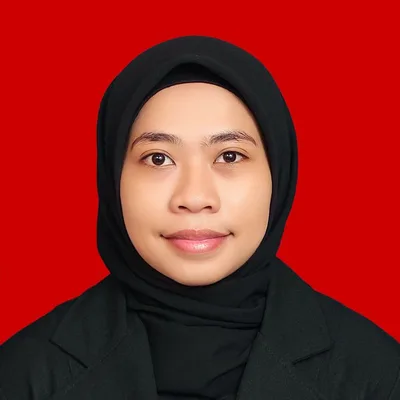
Aulia R.
Arabic Education, Universitas Pendidikan Indonesia
Connecting to the verses“Aulia links vocabulary to verses and expressions already familiar to the student's ear, so learning Arabic online feels close and meaningful.”
Testimonials
Stories from Families Who Chose Online Arabic Tutoring
From a child first spelling the hijaiyah to pilgrims and scholarship candidates, here is the experience of families who walked the journey on screen.
Online Arabic Tutoring Cost
Transparent pricing with no hidden fees, lighter because there is no transport cost for a tutor to reach your home.
Starting from
Rp 61.000 / hour
Final price is set at registration.
This is the lowest hourly rate, derived from the 28-session monthly plan at 120 minutes per session. Per-session prices (60, 90, or 120 minutes) appear in the format options above.
Flexible payment — QRIS, Virtual Account, Alfamart, Indomaret, transfer & e-wallets.
The cost adjusts to the level, the teacher choice (native, bilingual, or local), and the online format you pick. Please take the free consultation for a firm quote suited to your learning intent.
Online Arabic Tutoring Reach
Online Tutoring
Online WorldwideOnline Arabic tutoring reaches students across Indonesia, from big cities to areas far from a course center, as well as families currently abroad. The best teachers, including native speakers from Egypt and Jordan, can teach with no distance in the way, on a schedule that follows the family's rhythm.
- National reach, from big cities to remote areas
- Access to Middle East graduate and native speaker teachers with no distance limit
- A seven-day-a-week schedule that follows the family's rhythm
- Letters, modules, and session recordings stored in the app
Student Achievements
Stories of Learning Arabic Online from Home
Real journeys of EduPoint online Arabic students, told while protecting their privacy.
Success
From Not Knowing the Letters to Reading Classical Texts on Screen
Ridho M.
Challenge
Wanted to follow classical study without relying on translation, but could not yet read Arabic letters
Journey
Month 1: Recognized the Hijaiyah letters and harakat on the digital whiteboard
Month 4: Moved up to the intermediate level, began learning Nahwu two ways
Month 8: Began reading texts without harakat and holding simple dialogue
Month 12: Able to follow classical study with online teacher guidance
“Learning from home did not lessen the closeness with the teacher. Every letter was written together on screen, and I replayed the recording when I forgot.”
Success
Preparing for the TOAFL While Studying Full-Time
Nabila F.
Challenge
Needed to prepare for the TOAFL for a scholarship, but found it hard to attend regular in-person classes
Journey
Month 1: Online placement test and mapping of the exam sections
Month 3: Got used to Istima', Tarkib, and Qira'ah strategies
Month 5: Regular recorded simulations with thorough discussion
Month 6: Completed the preparation with measured steps
“Online sessions flexed around my classes, and the recorded simulations could be replayed before the exam. The preparation felt well ordered.”
Success
Arabic Provisions Before the Journey to the Holy Land
Mr. Usman H.
Challenge
Wanted to understand prayers and communicate at a basic level while worshipping, with limited study time
Journey
Month 1: Mastered worship vocabulary and greetings through short online sessions
Month 2: Practiced practical conversation and asking directions through role-play
Month 3: Understood the prayer readings and ready to greet in Arabic
“Learning over video at night after work fit our time well, and the teacher patiently repeated pronunciation until we were comfortable.”
FAQ
Unsure About Online Arabic Tutoring? Here Are the Answers
From whether learning the Hijaiyah works on screen, the app used, native-teacher availability, a focus on conversation, TOAFL preparation, to how payment works, we explain it all here.
Complete Guide
The Complete Guide to Online Arabic Tutoring
Guides & Tips
Supporting articles to help you decide and maximize learning outcomes.
How to Learn Arabic from Scratch for Beginners
A step-by-step roadmap so beginners can start Arabic calmly and consistently from the very first week.
How to Learn Nahwu and Sharaf to Understand the Quran
A step-by-step path through nahwu and sharaf so you move from simply reciting toward grasping the meaning of every word in the Quran, supplications, and hadith.
How to Learn Nahwu and Shorof for Beginners
A learning map for the two complementary sciences of Arabic grammar, arranged for beginners starting from zero.
How to Learn to Read and Speak Arabic from Scratch
Reading and speaking Arabic from scratch flows best when both are trained together: start by recognising the Hijaiyah letters and vowel marks for reading, while absorbing simple conversation phrases from the very first week.
Related Programs
Other programs that might be suitable for you
Accompany Your Child and Yourself to Fluent Arabic from Home, Through Online Lessons
Start with a free placement test to map the level, then our team helps find the online Arabic teacher who fits best through a free consultation, for study, provisions for the Holy Land, or TOAFL preparation.
Free consultation and placement test with no commitmentA Middle East graduate or native teacher who fits, matched to your learning intentSessions recorded and per-skill progress reported to parentsNot the right fit after the first session? Free teacher change