Online IPA Tutoring, Live 1-on-1
Online IPA Tutoring - Science You Can Actually See on Screen
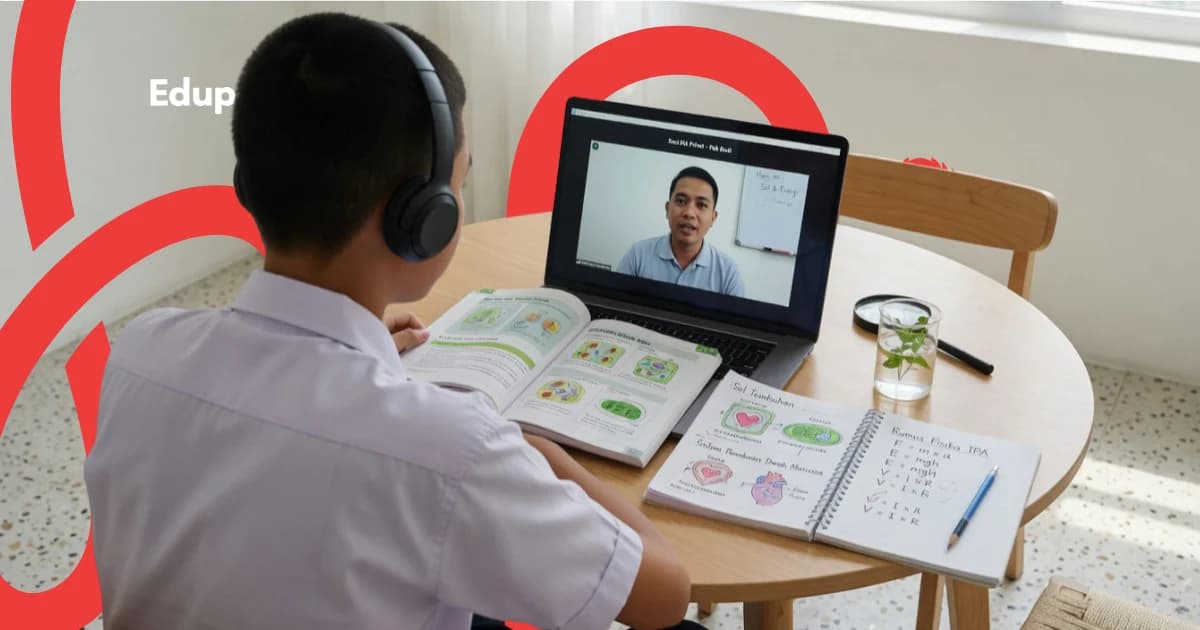
EduPoint online IPA tutoring pairs your child with one science teacher through live sessions. The teacher opens the same modules and experiment simulations on screen with your child, guides simple experiments at home, then records every step of progress to share with parents.




3,500+
tutors
4,200+
students
4.9
rating · 856 reviews
60+
cities
What is Online IPA Tutoring?
Online IPA tutoring is private science guidance, one teacher for one student, delivered through live video sessions. The teacher and child open the same structured module on screen, run simulations of force, energy, cells, and chemical reactions, then try them out with materials found at home. Every session is recorded, and the child's progress is reported to parents at regular intervals.
- Live 1-on-1 sessions with a science teacher chosen to fit your child
- Modules and experiment simulations opened together on screen
- Guided home experiments using everyday materials
- Recorded sessions to replay difficult concepts
- Regular progress reports for parents
Online IPA Tutoring by Level
Online IPA material adjusts to your child's level, from an introduction to science in SD through integrated IPA in SMP and a foundation heading into SMA.
SD Grades 4 to 6
Introducing Science Through CuriositySD children learn to observe the world around them and answer simple questions through enjoyable experiments guided by the teacher from the screen.
Subjects:
IPASLiving thingsSimple energyEarth and sky
Focus Areas:
- Nurturing curiosity
- Safe home experiments
- Approachable science language
SMP Grades 7 to 9
Integrated IPA of Physics, Chemistry, BiologyIn SMP, IPA brings physics, chemistry, and biology together. The teacher helps the child see the thread linking these strands through structured modules and simulations.
Subjects:
Basic physicsBasic chemistryBiologyProcess skills
Focus Areas:
- Integrated concepts across strands
- Tiered practice questions
- School exam preparation
Preparing for SMA
A Foundation Before Science Splits ApartHeading toward SMA, the child strengthens core IPA concepts so they are ready when physics, chemistry, and biology begin to be taught separately and in more depth.
Subjects:
Strengthening core conceptsReasoning practiceExam strategy
Focus Areas:
- Concepts ready for SMA
- Independent study habits
- Question analysis
Support Before Exams
Focused Topics and Targeted PracticeWhen school exams or final assessments draw near, sessions turn to the topics the child finds most challenging, with practice discussed one question at a time.
Subjects:
Reviewing the blueprintQuestion discussionIndependent simulation
Focus Areas:
- Closing gaps in understanding
- Time management
- Exam confidence
IPA Topic Strands Opened Together on Screen
Every online IPA topic has a module, moving diagrams, and practice sheets the teacher opens with your child, all reopenable later through the EduPoint app.
Living Things and Our Bodies
Children explore the classification of living things, the human body systems, and food chains through interactive diagrams the teacher walks through step by step on screen.
- Classification of living things
- Digestive and respiratory systems
- Photosynthesis
- Food chains and webs
- +1 more
Force, Motion, and Energy
Concepts of force, work, and energy are unpacked through simulations that can be replayed, so the child sees cause and effect instead of having to imagine it.
- Force and laws of motion
- Energy and its transformation
- Simple machines
- Electricity and magnetism
- +1 more
Matter and Its Changes
States of matter, mixtures, and simple reactions are shown through particle animations plus safe home experiments the teacher guides during the live session.
- States and properties of matter
- Mixtures and solutions
- Simple acids and bases
- Physical and chemical changes
- +1 more
Earth and Space
The solar system, the water cycle, and Earth's layers are explained through moving visuals impossible to draw on an ordinary whiteboard, making big ideas feel close.
- The solar system
- Earth's rotation and revolution
- The water cycle
- Earth's layers and weather
- +1 more
Science Process Skills
Children practice observing, forming hypotheses, and drawing conclusions through guided home experiments, growing used to thinking like a young researcher.
- Framing questions
- Designing simple experiments
- Recording data
- Reading tables and graphs
- +1 more
Who It Is For
Who Online IPA Tutoring Is For
Learning IPA through a screen suits families who need quality science teaching unbound by distance and schedules.
Children Where IPA Teachers Are Scarce
Families in areas where it is hard to find an experienced science teacher can now learn with alumni of well-known campuses through online sessions.
Recommended:
Teachers across campusesRecorded sessionsFull modules in the app
Parents with Busy Schedules
Sessions run from home within the 06:00 to 23:00 window, so parents can stay close to their child without the trip to a tutoring center.
Recommended:
Flexible schedulingLearning from homeNo time lost commuting
Children Who Learn Best Through Pictures and Motion
For children who lean on visuals, on-screen experiment simulations make abstract IPA concepts far easier to picture.
Recommended:
Visual simulationsGuided home experimentsRecordings to review
Students Who Value Being Tracked
Families who appreciate clarity receive regular progress notes, so they know which topics are solid and which still need another pass.
Recommended:
Progress reportsMeasurable study targetsRegular evaluation
A Peek at the Material
The EduPoint Learning System: IPA Modules Opened Together
The heart of online IPA tutoring is the co-learning module. Teacher and child look at the same sheet on screen, building understanding from small parts toward a whole conclusion.
A glimpse of one co-learning module the teacher opens with the child during a live session.
Concept ladder: from energy source to living things
The Sunprimary energy sourcelight and heat
Plantsproducersturn light into food
Plant-eating animalsfirst consumerstake energy from plants
Animal-eating animalsnext consumerspass the energy flow along
Building a food chain step by step
The Sun+Rice plantThe rice plant grows with help from sunlight
Rice plant+GrasshopperThe grasshopper eats the rice plant and gains energy
Grasshopper+FrogThe frog preys on the grasshopper, energy moves again
Frog+SnakeThe snake closes the chain as the top predator
Checking understanding at the end of the module
After building the chain of Sun, rice plant, grasshopper, frog, then snake, the child is asked to explain the direction of its energy flow.
Question: Which way does energy flow in this food chain?
Answer: Energy flows in one direction, from the sun to the plant, then on to each animal that preys above it.
An energy-flow module remade specifically for this page, not raw classroom material.
Diagnosed from the live session room
Online IPA Learning Hurdles and How Teachers Handle Them
Learning science through a screen has its own challenges. EduPoint online IPA teachers come ready to meet them from the very first session.
Children memorize IPA terms without grasping their meaning
Why it happens
Science material is full of unfamiliar words like photosynthesis and heat, tempting children to memorize for a test without understanding the process.
How we fix it
The teacher opens the process animation on screen and asks the child to retell it in their own words, until the term is tied to a real picture.
Experiments feel impossible to do from home
Why it happens
Many families assume IPA experiments need a full laboratory, so limited equipment often leaves the child reading instead of trying.
How we fix it
The teacher prepares experiments with kitchen materials and nearby objects, then guides each step live so the child still feels the scientific process.
Focus drifts while learning through a screen
Why it happens
Without the teacher physically in the room, some children are easily pulled away by notifications or the household around them.
How we fix it
The 1-on-1 session keeps the teacher constantly inviting the child to interact, ask, and shape answers, so attention stays engaged throughout.
Children feel shy about asking when they are lost
Why it happens
In a large class, many children stay quiet when confused because they feel embarrassed in front of friends.
How we fix it
A private space with just the teacher makes the child braver to ask, and the teacher can repeat an explanation without making them feel left behind.
Each solution comes from teachers accompanying children through IPA from a distance, not from general theory.
Why Us
Why EduPoint Online IPA Tutoring Feels Different
Watching lesson videos is convenient, yet a child still needs a teacher who answers their confusion right then. This is where EduPoint online IPA tutoring works.
A Live Teacher Who Answers Right Away
When a child is stuck on force or a chemical reaction, the teacher re-explains it another way on the spot, something a one-way recording cannot do.
Guided Modules, Not a Pile of Videos
The child is never left to watch alone. The teacher opens a structured module on screen and leads the child from one concept to the next.
Science That Is Genuinely Practiced
Guided home experiments let the child truly try things, so IPA concepts stick through hands-on experience that lasts.
The Best Teachers Without Distance Limits
Many science teachers from well-known campuses join to teach, and through online sessions they can accompany a child in any city.
Families Always Know How the Child Is Doing
Session recordings and progress reports let parents share in understanding just how far the child has come in mastering IPA.
The Online IPA Teachers Who Accompany Your Child
Science-education alumni from various campuses, used to making IPA feel close through a screen.
Tutor Qualifications
- Relevant science-education background
- Used to teaching through interactive online sessions
- Patient at guiding a child's home experiments
- Explain concepts in everyday language
Dhila N.
Science Education, Universitas Sebelas Maret
Linking science to everyday events4.93-5 years experience
“I like asking a child to find IPA examples in their own kitchen, so science feels real from the first minute of the session.”
Dany D.
Science Education, Universitas Negeri Surabaya
Guiding simple experiments through the camera4.83-5 years experience
“A small experiment guided live helps a child remember the concept far better than just reading the theory.”
Hashfi H.
Physics Education, Universitas Pendidikan Indonesia
Making force and energy make sense4.94-6 years experience
“On-screen simulations help a child see motion and force for real, so a formula becomes far easier to understand.”
Husna H.
Chemistry Education, Universitas Negeri Jakarta
Explaining matter and reactions through nearby objects4.83-5 years experience
“When a child mixes kitchen materials while I guide them, chemistry turns from a hard word into something enjoyable.”

Syafa S.
Biology Education, Universitas Negeri Malang
Bringing living things and the body to life4.94-6 years experience
“I love asking a child to retell how their own body works, because that is where real understanding forms.”

Helian H.
Biology Education, Universitas Negeri Surabaya
Growing the habit of asking like a researcher4.83-5 years experience
“I value every question a child asks, because that curiosity is the most honest door into science.”
Testimonials
Stories from Families Learning IPA Online
Parents and students share their experience accompanying online IPA sessions, told plainly.
My child used to fear IPA because of all the terms. Since the online lessons, the teacher patiently opens pictures and simulations, and now she even enjoys talking about food chains.
Rina W.
Mother of an SMP student • Samarinda
We live in an area where good IPA teachers are hard to find. Through online sessions, my child learned with an alumnus of a well-known campus and can replay the recording when they forget.
Bagus P.
Father of an SD student • Ende
What helped me most was the report. Every few meetings there is a note on which topics are strong and which need another pass, so I follow my child's growth too.
Sari M.
Mother of an SMP student • Balikpapan
Simple experiments with kitchen materials can actually be guided from the screen. My child feels they are truly doing practical work, right there from home.
Deni A.
Father of an SMP student • Pontianak
Clear Online IPA Tutoring Costs from the Start
The EduPoint pricing engine sets the online IPA rate on an hourly basis, and no travel component applies because the child studies from home.
Starting from
Rp 61.000 / hour
Final price is set at registration.
This is the lowest hourly rate, derived from the 28-session monthly plan at 120 minutes per session. Per-session prices (60, 90, or 120 minutes) appear in the format options above.
Flexible payment — QRIS, Virtual Account, Alfamart, Indomaret, transfer & e-wallets.
Families set each meeting to one of three lengths, an hour, an hour and a half, or two hours. Monthly meetings fall somewhere between four and twenty-eight, and the final figure reads out on the form according to the child's level.
How an Online IPA Session Runs
Consultation and Finding the Right Teacher
The family shares the child's level, curriculum, and the topics they find challenging. EduPoint then finds a science teacher who fits those needs.
A First Session to Get to Know the Child
In the first meeting, the teacher gauges the child's understanding and shapes a study plan. Parents are welcome to observe so they feel at ease.
Regular Learning with Shared Modules
Each live session opens modules and simulations on screen, runs a guided experiment, and closes with practice discussed on the spot.
Recordings, Notes, and Reports
Sessions are recorded for replay, material is stored in the app, and the child's progress is summarized in regular reports for parents.
Live Online IPA Tutoring Compared to Studying Science Alone
An honest comparison of the learning experience, not of any promised result.
| Feature | EduPoint Private Tutoring | Recorded Class | Self-Study from Books |
|---|---|---|---|
| Teacher answers confusion in real time | |||
| Modules and simulations opened together on screen | |||
| Home experiments guided step by step | |||
| Sessions recorded for replay | |||
| Regular progress reports for parents |
Schedule and How to Access Online IPA Tutoring
Online Tutoring
Online WorldwideLive sessions run through Zoom, Google Meet, or the family's own choice, while modules and recordings are stored in the EduPoint app. Scheduling follows the family's rhythm within the 06:00 to 23:00 window, with no transport cost.
- Live 1-on-1 sessions via Zoom or Google Meet
- Modules and recordings stored in the EduPoint app
- Flexible scheduling within the 06:00 to 23:00 window
- Savings with no travel cost
Student Achievements
Learning Journeys That Leave a Mark
Short accounts from online IPA students, written with identities masked.
Success
SMP Grade 8 student
Student R.
Before
60
After
85
Up 25 points in integrated science
Several months of regular guidance
“Physics and chemistry once felt like a frightening set of formulas. Through online simulations I saw the patterns and dared to tackle word problems.”
Success
SD Grade 5 student
Student F.
Before
72
After
90
Up 18 points, now notes observations
One semester of learning
“My teacher had me note every experiment until I could draw conclusions in my own words.”
FAQ
Questions About Online IPA Tutoring
A few things families tend to ask before starting science lessons with an online teacher.
Guides & Tips
Supporting articles to help you decide and maximize learning outcomes.
How to Prepare for Junior High Science Exams Calmly and With Direction
Six sequential stages that carry a junior high student from reading the syllabus to sitting in the exam room with a working grasp of Biology, Physics, and Chemistry ready to use.
How to Study Integrated Science for Junior High
A clear guide to understanding physics, chemistry, biology, and earth science as one connected subject, from grade 7 through grade 9.
How to Study Science (IPA) So It Is Easier to Understand
Effective science study begins with understanding how the natural world works before memorising its terms. Six steps help primary and junior high students connect physics, chemistry, and biology into one story that makes sense.
Simple Science Experiments at Home with Kitchen Ingredients
The family kitchen holds a complete science lab. These seven experiments invite primary and junior high students to prove science concepts with their own hands, guided by the same scientific method used at school.
Related Programs
Other programs that might be suitable for you
Start Online IPA Tutoring for Your Child Today
Tell us what your child needs, and EduPoint will find the science teacher who fits for their first live session.
Live 1-on-1 sessions with a science teacherModules and recordings in the EduPoint appProgress reports for parents