#1 Creative Writing Lessons
Creative Writing Lessons, Turn the Ideas in Your Head Into Writing That Lives
One student, one mentor: learn to write short fiction, poetry, essays, and novels that move readers. From finding ideas to building scenes to editing sentences until they breathe, guided online from anywhere.

85+
tutors
1,100+
students
4.9
rating · 1,016 reviews
60+
cities

What is Creative Writing Lessons?
Creative writing lessons are private one-on-one guidance to learn creative writing: short fiction, poetry, personal essays, and novels. You practice finding ideas, building characters and scenes, choosing a point of view, and editing sentences until they feel alive. These skills serve writing competitions, publishing a book, blogging, and strengthening personal narrative. Mentors are writers trained in Literature and Journalism who guide you directly through your own manuscript, with 60-minute sessions starting at Rp98,000.
- One student, one mentor, with material that follows your writing goals
- Direct guidance on your own manuscripts and writing
- Master short fiction, poetry, essays, and novels
- Useful for competitions, book publishing, blogs, and content
- Ideal for beginners ready to start writing seriously
Services
Learn Creative Writing Online, Private, or in a Small Group
Whatever the format, the curriculum trains you to turn ideas into writing that gets read to the very end.
Online Creative Writing Lessons
Learn via Zoom with live manuscript guidance and paragraph-by-paragraph feedback from your mentor.
Rp 98.000/ 60-minute session
Price on the 28-session monthly plan, 60-minute sessions. Fewer meetings, higher price per session.
- Live manuscript edits, line by line
- Sessions recorded for replay
- Digital worksheets and writing samples
- Available to students across Indonesia
In-Person Creative Writing Lessons
The mentor comes to your home for guided writing sessions and face-to-face manuscript discussion.
Rp 124.000/ 90-minute session
Price on the 28-session monthly plan, 90-minute sessions. Fewer meetings, higher price per session.
- Mentor comes to your home
- Live guided writing sessions
- Face-to-face manuscript discussion
- Flexible scheduling to suit you
Small-Group Creative Writing Lessons
Learn with 2-3 peers in a writing circle, reading each other's work and giving feedback on manuscripts.
Rp 74.000/ 60-minute session
Price on the 28-session monthly plan, 60-minute sessions. Fewer meetings, higher price per session.
- 2-3 students per group
- Writing circle and shared reading of manuscripts
- Group discount applied automatically in the form
- Constructive feedback among peers
Online and in-person cost the same — the gap between these cards is session length, nothing else.
Creative Writing Learning Stages
Four progressive stages, from daring to write your first line to finishing a complete long-form manuscript.
Beginner (Daring to Write)
Has ideas but afraid to startConquer the fear of the blank page and build a writing habit. Learn the basic elements of creative writing: character, setting, mood, and sentences that flow.
Subjects:
Beating the blank pageBasic elements of creative writingWriting simple scenesBuilding a writing habit
Focus Areas:
- Daring to put ideas down
- Writing with flow
- Bringing a mood to life
- Confidence in your own writing
Intermediate (Sharpening Craft)
Already writing regularlyGo deeper into core creative writing technique: show don't tell, point of view, natural dialogue, and short-story structure. The stage where your writing starts to mature.
Subjects:
Show don't tellPoint of view and voiceWriting living dialogueShort-story structure
Focus Areas:
- Depicting through scene and detail
- Choosing the right point of view
- Dialogue that feels real
- Whole, well-shaped short stories
Writing for Competitions & Publishing
Ready to be read by othersPrepare manuscripts for writing competitions, anthologies, or media. Learn to self-edit, respond to feedback, and polish work until it is ready to submit.
Subjects:
Editing your own manuscriptResponding to editor feedbackPreparing competition manuscriptsSubmitting to media and anthologies
Focus Areas:
- Submission-ready manuscripts
- Revision that strengthens writing
- Meeting competition rules
- Confidence in publishing your work
Advanced (Long-Form Manuscripts)
Working on a novel or bookDesign and finish long-form manuscripts such as a novel or story collection. Manage large arcs, character development, and the discipline of long-term writing.
Subjects:
Designing a novel outlineManaging long arcsFull character developmentSustained writing discipline
Focus Areas:
- Finishing long-form manuscripts
- Keeping the story consistent
- Characters that grow convincingly
- Finding your distinct voice
Creative Writing Curriculum
Five pillars built step by step, from finding ideas to editing a manuscript until it breathes.
Mentors adjust the emphasis to your goal. Students focus on short stories and competitions, aspiring authors on novels and publishing, and professionals on essays and personal narrative.
Finding Ideas & Material
How to mine ideas from experience, observation, and imagination, then store them as writing material.
- Mining ideas from daily life
- Observing keenly
- The writer's notebook
- Turning experience into story
Character, Setting & Scene
Build living characters, settings that feel real, and scenes that keep readers turning the page.
- Building layered characters
- Bringing settings to life
- Constructing scenes
- Keeping tension in the story
Sentence & Style
Sharpen sentences until they flow, choose the right diction, and find your distinctive writing voice.
- Show don't tell
- Choosing diction
- Sentence rhythm and pace
- Finding your writer's voice
Forms of Writing
Learn the traits of each creative form: short fiction, poetry, personal essay, and the novel.
- Short-story structure
- Foundations of poetry
- The personal essay
- Designing a novel
Editing & Publishing
Edit your own writing, respond to feedback, and prepare manuscripts for competitions or publication.
- Self-editing
- Using feedback well
- Polishing the final manuscript
- Submitting work to media
Who It Is For
Students, Aspiring Authors, Professionals, Educators: Everyone Has a Story to Write
Students & University Students
Pupils and students who want to write short fiction or poetry for competitions, school magazines, or simply to channel their ideas.
Recommended:
Foundations of short fiction and poetryCompetition preparation
Aspiring Book Authors
Those holding an idea for a novel or story collection who finally want to finish a first manuscript.
Recommended:
Designing and writing a novelPreparing a manuscript to publish
Bloggers & Content Writers
Bloggers, content creators, and professionals who want their writing to feel more alive and personal beyond a report style.
Recommended:
Engaging personal essaysPersonal narrative for content
Educators & Parents
Teachers and parents who want to nurture a love of writing in children, or write more vivid teaching material.
Recommended:
Growing children's interest in writingCreative writing for teaching
A Peek at the Material
Turning a Flat Sentence Into a Scene You Can Feel
A peek at how to turn one ordinary sentence into a living scene, step by step, just as mentors train in class.
Creative Writing Worksheet
The raw material of a scene
Sensory detailActionEmotion
SettingDialogueTension
Combine the elements, and a scene is born
Character+a small actionthe scene starts to move
Sensory detail+settingthe reader is present
Dialogue+tensioncuriosity appears
Action+emotionthe scene feels alive
Compare: telling vs depicting
Mother looked sad that day.
Question: How do you turn it into a scene?
Answer: Mother stirred her coffee far too long, then stared at the empty chair across the table without a word.
Readers remember what they can see and feel more than what they are simply told. By adding sensory detail, action, and emotion, a once-flat sentence turns into a scene that feels real.
From Editing Hundreds of Manuscripts
Four Habits That Make Writing Feel Flat
The obstacles we see most often in beginning writers, and how mentors train students to overcome them.
Telling instead of depicting
Why it happens
Writing she was sad or the place was beautiful hands the reader a conclusion without letting them feel it, so the scene stays distant.
How we fix it
Mentors train the show don't tell principle: replacing emotion labels with detail, action, and dialogue that let readers conclude for themselves.
Delaying too long before the story starts
Why it happens
Many manuscripts open with long setting descriptions, while readers are waiting for a scene and characters in motion.
How we fix it
We teach opening with a scene, then weaving in background information little by little once the story is already moving.
Dialogue that sounds stiff
Why it happens
Dialogue that is too neat and formal feels like a speech script instead of a conversation, so characters lose their life.
How we fix it
Mentors train natural dialogue: interrupted, implied, and carrying character, just like real people speaking.
Stopping at the first draft
Why it happens
Many beginning writers think writing is finished once the first draft is done, when the real strength of writing is born in editing.
How we fix it
We build the habit of writing then editing: rereading, trimming the excess, and strengthening the parts that matter.
Why Us
Direct Guidance on Your Manuscript: That Is What Sets These Creative Writing Lessons Apart
Literature-trained mentors guide you one-on-one, from finding ideas to editing a manuscript until it breathes.
One Student, One Mentor
You set the pace. Write and revise as much as you like, with feedback aimed directly at your own writing.
Guided by Literature-Trained Writers
Mentors who graduated in Literature and Journalism, used to writing and editing short fiction, essays, and long-form manuscripts.
Learn Five Forms of Writing
You are free to choose a focus, from short fiction, poetry, essays, to the novel, with craft tailored to each form.
Guidance on Your Real Manuscript
The material uses your own writing and ideas, so every note directly makes your work better.
Transparent Per-Session Pricing
Clear per-session pricing, starting from a single manuscript with no months-long package.
Flexible and Online
Learn online from anywhere, with a schedule that fits your school, university, or work commitments.
Selected Creative Writing Mentors
Our mentors are graduates of Indonesian Literature, English Literature, and Journalism from leading universities, used to writing and editing short fiction, essays, and long-form manuscripts.
Tutor Qualifications
- Graduates of Indonesian Literature, English Literature, and Journalism from leading universities
- Used to writing and editing short fiction, poetry, essays, and long-form manuscripts
- Teach through guidance on students' real manuscripts, alongside a foundation in literary theory
- Understand how to make writing feel alive and read to the very end
Sam S.
English Language and Literature, Universitas Pendidikan Indonesia
Fiction in English“Many beginning writers rush to spell out how their characters feel. Sam, a graduate of English Language and Literature from Universitas Pendidikan Indonesia, trains students to build scenes so readers draw their own conclusions, then keeps that voice natural when writing in English.”
Ana N.
Indonesian Language and Literature Education, Universitas Negeri Yogyakarta
Short stories and story structure“For Ana, a whole short story is born from one conflict kept alive from start to finish. With a background in Indonesian Language and Literature Education from Universitas Negeri Yogyakarta, she helps students tidy the arc so a story feels tight and memorable.”
Lia Y.
English Literature, Universitas 17 Agustus 1945
Competition drafts and editing“A manuscript ready for a competition demands the eye of an editor. Lia, a graduate of English Literature from Universitas 17 Agustus 1945, reads student writing line by line, trims the excess, and strengthens the parts that matter.”
Cinta C.
English Literature, Universitas Terbuka
Personal essay and self-narrative“Personal experience moves readers most when written honestly without preaching. Cinta, with a background in English Literature from Universitas Terbuka, helps students find the thread that runs through their memories and close an essay with a meaning that fits.”
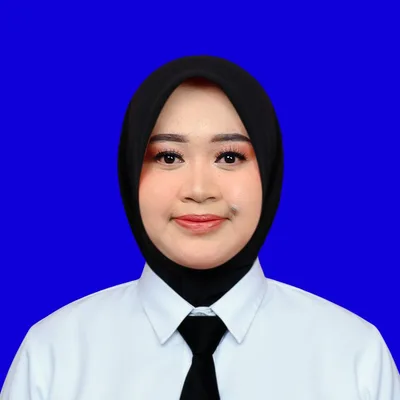
Iyak A.
Indonesian Language and Literature Education, Universitas PGRI Silampari
Writing for beginners and children“Iyak believes the courage to write grows from enjoyable practice. This graduate of Indonesian Language and Literature Education from Universitas PGRI Silampari patiently accompanies beginners and children as they shed the fear of the blank page, starting from one small scene.”
Nesya R.
Indonesian Literature, Universitas Nasional
Poetry and a feel for language“Writing poetry is the art of condensing feeling into a few words. Nesya, a graduate of Indonesian Literature from Universitas Nasional, invites students to play with imagery and the rhythm of line breaks, then to hold back from explaining so the poem lingers.”
Testimonials
From Fearing the Blank Page to Daring to Finish a Manuscript
Honest experiences from EduPoint students, from pupils entering competitions to aspiring authors completing their first book.
I always had story ideas but was afraid to write them down. My mentor helped me start from one small scene, and slowly my first short story was finished. Now I write regularly without fear.
Pak Hadi P.
Beginning writer • Jakarta
My poems used to over-explain and felt ordinary. After learning to play with imagery and condense words, my writing landed better. One of my poems was even published in a community anthology.
Ibu Lestari W.
Poet • Bandung
I entered a national short-story competition and needed serious guidance. My mentor edited my manuscript line by line until it was much sharper. My story finally made the nominee list.
Galih S.
University student, competition entrant • Surabaya
I held a novel idea for years without ever starting. My mentor helped me design an outline and keep a weekly writing rhythm. For the first time my manuscript truly moved forward.
Ibu Wulan M.
Aspiring novelist • Semarang
As a blogger, my writing felt stiff like a report. Learning the personal essay changed how I tell stories, more honest and flowing. My blog readers say the writing has become more touching.
Bagus R.
Blogger • Depok
I wanted to write fiction in English for foreign media. My mentor guided me to keep voice and arc natural in another language. One of my short stories was finally published in an online magazine.
Ibu Renita A.
Bilingual fiction writer • Tangerang
I am shy and struggle to express my feelings. Through creative writing, I found a way to channel them into stories. My writing improved, and I also felt lighter and got to know myself.
Hafidz N.
High school student • Bekasi
My child loves reading but was afraid to write on their own. I enrolled them in these lessons to dare to create. Now they write their own short stories and join the school wall magazine with confidence.
Ibu Sekar D.
Parent of a student • Malang
Creative Writing Lesson Pricing
Write fiction and essays on a straightforward hourly fee. Writing sessions can run for one, one and a half, or two full hours, on a cadence of 4 to 28 meetings monthly to match your drafting rhythm; the total shows up openly at sign-up.
Starting from
Rp 79.000 / hour
Final price is set at registration.
This is the lowest hourly rate, derived from the 28-session monthly plan at 120 minutes per session. Per-session prices (60, 90, or 120 minutes) appear in the format options above.
Flexible payment — QRIS, Virtual Account, Alfamart, Indomaret, transfer & e-wallets.
Prices may adjust to your learning goal, location, and lesson format. Contact us for an exact quote.
Creative Writing Lesson Availability
Online Tutoring
Online WorldwideOnline creative writing lessons are available to students across Indonesia and abroad.
- Live manuscript guidance over a shared screen
- Sessions recorded for replay
- Digital worksheets and writing samples
In-Person Tutoring
All CitiesIn-person creative writing lessons, with mentors coming to your home in the following cities.
Jakarta16+ tutorsBandung11+ tutorsSurabaya10+ tutorsJogja9+ tutorsDepok7+ tutorsTangerang6+ tutorsBekasi6+ tutorsSemarang6+ tutors
+4 more citiesStudent Achievements
The Journey From the First Scribble to Work That Gets Read
Real journeys from EduPoint students, from hesitating to write to finishing work they are proud of.
Success
From Afraid to Write to a Published Short Story
Rangga P.
Challenge
Kept deleting his own writing because he felt it was never good enough
Journey
Month 1: Finished a first scene without deleting it
Month 3: Completed a first whole short story
Month 6: Short story published in online literary media
Success
Finding a Voice Through Poetry
Maharani T.
Challenge
Loved writing poetry but felt the work over-explained
Journey
Month 2: Began using strong imagery
Month 5: Compiled a personal poetry collection
Month 9: Read her poetry at a community event
Success
A Novel Manuscript That Finally Got Done
Yoga F.
Challenge
Held a novel idea for years without ever starting
Journey
Month 2: Designed an outline and the main character
Month 8: Completed half of the manuscript
Month 14: Finished the first draft of his novel
FAQ
Unsure About the Benefits, Format, or Cost of Creative Writing Lessons? Here Are the Answers
The questions that come up most before starting, answered honestly.
Complete Guide
Complete Guide to Creative Writing Lessons
Guides & Tips
Supporting articles to help you decide and maximize learning outcomes.
How to Learn Creative Writing for Beginners From Scratch
A step-by-step learning path for anyone who wants to start writing stories, poems, or personal essays, with clear moves you can repeat every day.
How to Start Writing a Short Story for Beginners, From First Idea
A step by step guide to shaping your first short story, from catching one small conflict to finishing a draft worth sharing with another reader.
Related Programs
Other programs that might be suitable for you
Start Writing the Story That Has Been in Your Head All Along
A free consultation to set your writing goal, match a mentor, and map a path from the first line to a complete manuscript.
Free consultation with no commitmentDirect guidance on your manuscriptfree tutor replacement whenever needed