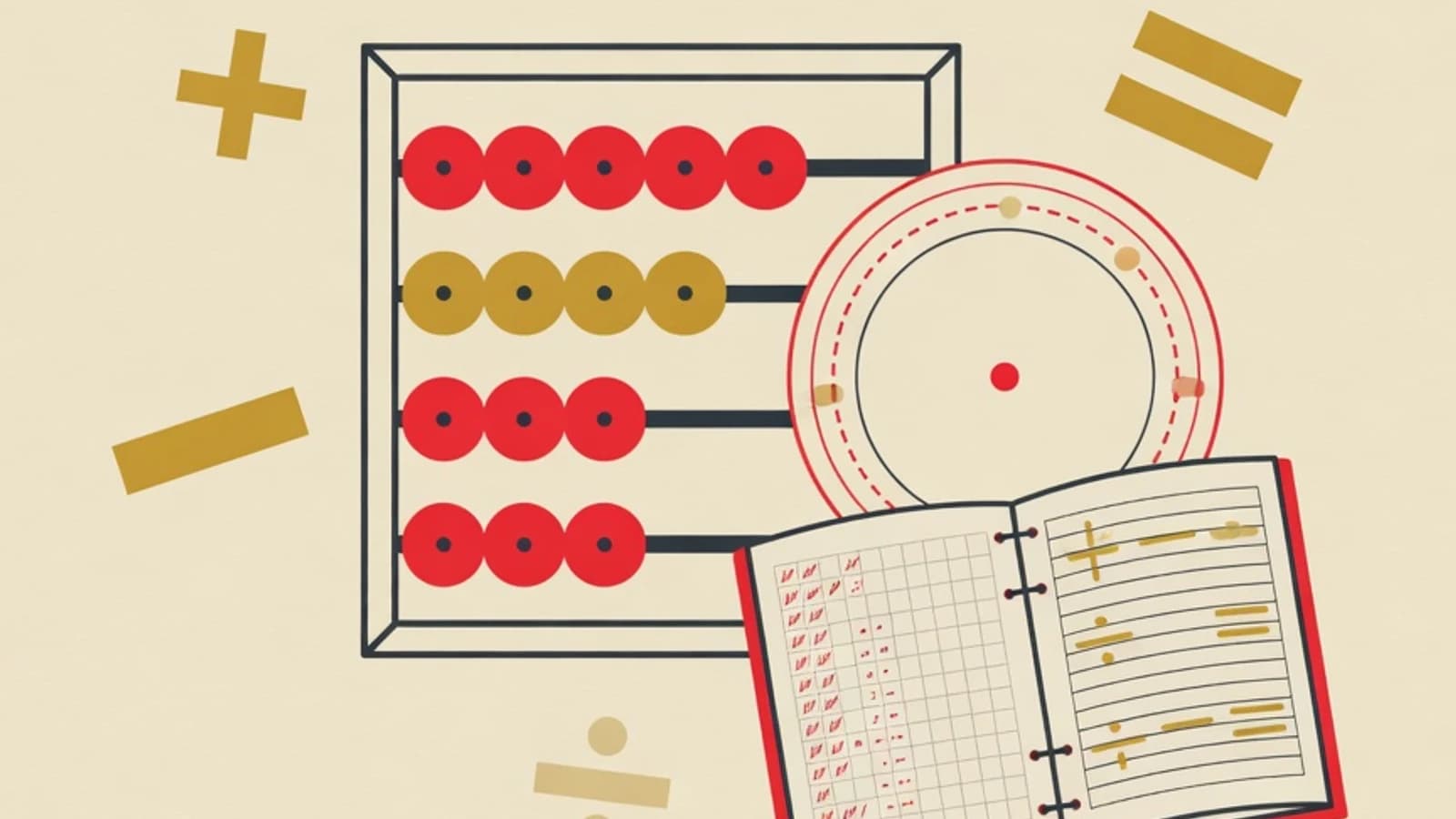
The benefits of learning the abacus for children lie in fast calculation that also sharpens visual memory, focus, and confidence with numbers. A child who pictures rows of beads in the mind trains the brain to build a mental image, a skill that research links to stronger mathematical ability.
- Calculation becomes fast as the child moves beads within an imagined image
- Visual working memory and focus are exercised in every session
- Benefits grow gradually through short, regular practice
Figures that explain why a numeracy foundation matters
What the abacus actually trains in a child
The abacus invites a child to translate numbers into rows of beads that can be seen and touched. Each bead carries a place value, so the child grasps ones, tens, and hundreds through the position of each bead. This understanding rests on a concrete image that is easy to recall. Once finger movements become fluent, the child begins to picture the abacus inside the mind. That imagining stage is what we call mental arithmetic, and this is where many of the benefits of learning the abacus for children take root. As the child pictures beads sliding, the brain holds that image clearly while carrying out the calculation. Holding and processing an image at the same time draws on visual working memory. Repeated practice makes this line of thinking more trained over time. The child grows used to focusing attention on a single task for a set stretch, a habit that serves well across many other subjects.
Six benefits of learning the abacus for children
Fast, confident calculation
The child moves beads within an image to add and subtract briskly. This speed builds ease when facing everyday number problems.
Stronger visual working memory
Picturing rows of beads trains the brain to hold an image while processing it. Neuroscience research links this practice with better visuospatial working memory.
Longer-lasting concentration
Each session demands focus on a sequence of steps. The child gets used to keeping attention directed, a habit that helps when studying other subjects.
Grasp of place value
Bead position teaches ones, tens, and hundreds in a concrete way. The child builds a sense of number that supports school mathematics.
Persistence and a practice habit
Abacus progress grows from short, regular practice. The child learns that skill develops through patient, steady repetition.
Hand and mind coordination
Sliding beads with thumb and index finger while reading numbers trains finger movement in tune with thought. This fine coordination sharpens step by step.
Abacus benefits across a child's developmental stages
| Stage | What is trained | Benefits that appear |
|---|---|---|
| Introduction (age 5 to 6) | Reading bead rows and place value | Meeting numbers concretely and enjoying playing with figures |
| Physical abacus (age 6 to 8) | Addition and subtraction with fingers | Fluent finger movement, care, and growing concentration |
| Mental arithmetic (age 7 and up) | Picturing the abacus in the mind | Fast calculation, visual working memory, and more trained focus |
Age ranges are approximate. Each child's readiness differs, and teachers adjust the pace to individual ability.
How parents can maximize abacus benefits at home
- Provide short practice of 10 to 15 minutes each day to keep the skill fresh
- Put praise first on the child's effort and practice process, then celebrate the calculation result as a bonus
- Mix practice with simple number games so the mood stays enjoyable
- Let the child explain how they picture the beads, which strengthens understanding
- Keep the abacus within easy reach so the child can practice whenever they want
- Discuss the learning pace with the teacher if the child seems bored or rushed
“The benefits of the abacus last longest when a child enjoys the process. We see children who practice briefly but regularly grow more confident with numbers, and that confidence carries over into other subjects at school.”
Weighing the abacus benefits with a clear head
- The child grows more at ease and faster with basic calculation
- Visual working memory and concentration are exercised too
- A regular practice habit builds persistence
- A grasp of place value strengthens the school mathematics foundation
- Benefits grow gradually and ask for patience from parents
- The abacus complements school mathematics, with a different role and scope
- A child pushed to go fast risks losing interest
- Each child's results vary with readiness and pace
- The benefits of learning the abacus for children include fast calculation, visual working memory, focus, and place value understanding
- Picturing the abacus in the mind is the heart of mental arithmetic, training the brain to hold and process an image at once
- Benefits grow gradually through short, regular, and enjoyable practice, at a pace the child enjoys
- The abacus works alongside school mathematics and strengthens a child's numeracy foundation