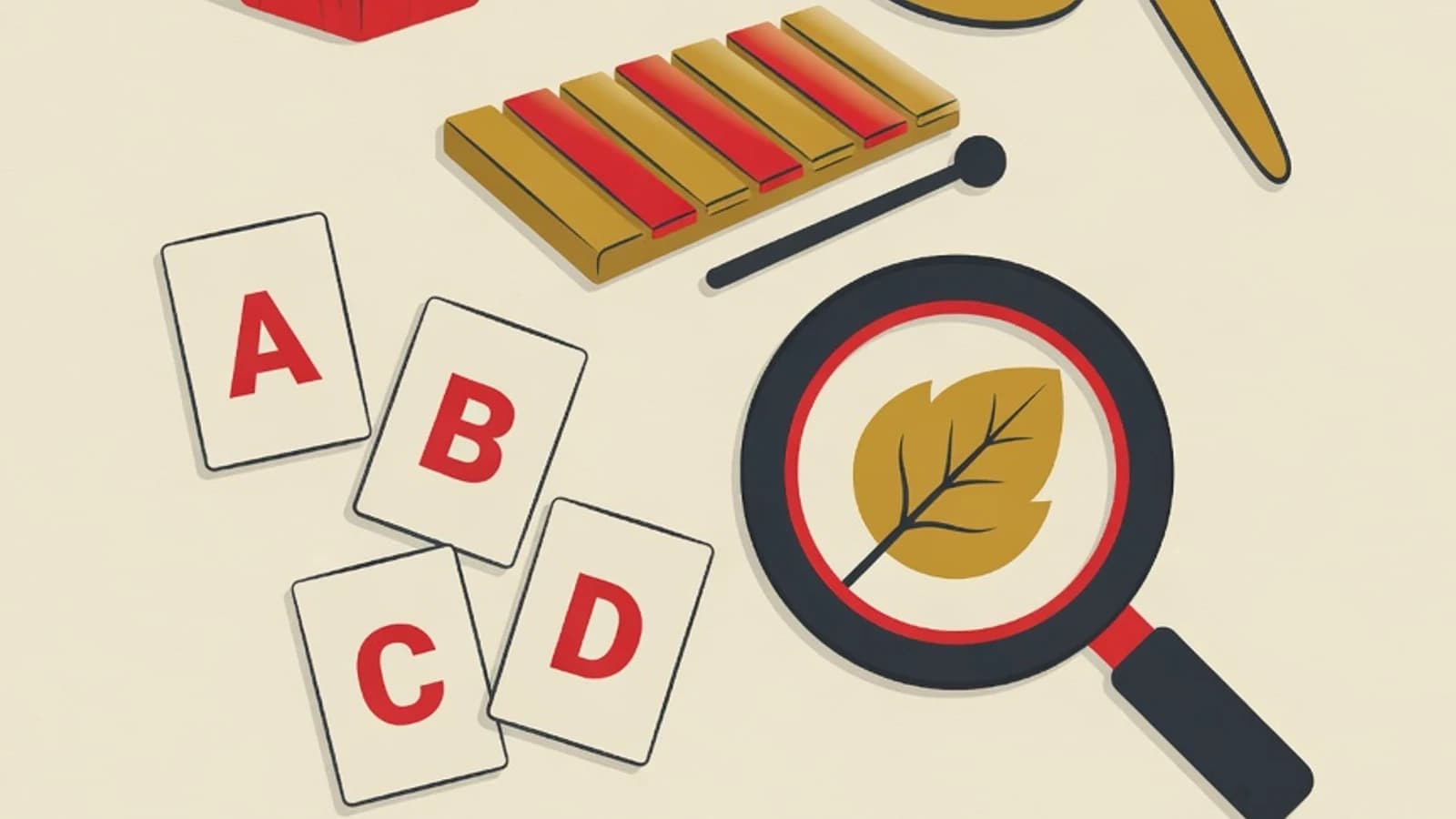
Home multi-skill stimulation works best as a weekly rotation: one skill family each day, moving through art, music, language, logic, movement, and science, all through simple play. Parents prepare a 20 to 40 minute activity, observe the child's response, then note which family lights them up most as a map for discovering talent.
- Rotating six families keeps children from getting bored and gives varied experiences
- Simple household materials are enough for stimulating a child's skills
- Notes on the child's response become a far more honest interest map than guessing
- A simple, fixed play corner at home within the child's easy reach
- Everyday materials: paper, crayons, used containers, dried beans, and safe kitchen tools
- A small notebook to record the child's response after each session
- A posted weekly schedule so the child knows the order of activities
Why the Early Years Matter for Child Stimulation
Home Stimulation as the Foundation, Lessons as the Companion
Home is where a child first learns. Long before entering any classroom, a child absorbs colors, sounds, words, and textures from the objects around them. Home multi-skill stimulation makes deliberate use of these everyday moments, giving the child varied activities that sharpen many abilities at once. Child development research affirms that play is the most natural way to learn in early childhood. The American Academy of Pediatrics, through the report by Yogman and colleagues, highlights how play develops language, executive function, and emotional regulation. Indonesia's Kurikulum Merdeka for early childhood also places play at the center of learning, so household activities framed as games align with the recommended approach. Home stimulation and multi-skill lessons complement each other. At home, parents build the daily habit of exploring. Through lessons, trained tutors add depth, read the child's interests more keenly, and guide deeper practice once talent begins to show. This guide gives you a framework to start from home whenever you are ready.
6 Steps to Run Multi-Skill Stimulation at Home
A weekly rotation makes stimulation feel light and enjoyable for both child and parent. These six steps build it from scratch, using things already in your home.
- 1
Set up a play corner and gather simple materials
Choose one fixed corner at home for the activities, such as a spot in the family room or a small table by the window. A consistent corner helps the child recognize that this is playtime with a purpose. Gather everyday materials into a few containers: paper and crayons for art, a pot and wooden spoon for music, storybooks for language, buttons or dried beans for counting logic, cushions for movement games, and a glass of water for simple science. There is no need to buy expensive equipment. The value of stimulation lies in the variety of experiences, and the price of the toys hardly matters.
Tips- Store materials in clear labeled boxes so the child helps choose and tidy up
- Start with what you already have, then add new materials little by little
- 2
Build a rotation schedule across the six skill families
Divide the week into six sessions, one family per day, with one free day for open play. For example: Monday art, Tuesday music, Wednesday language and storytelling, Thursday logic and numbers, Friday movement and motor skills, Saturday simple science, Sunday free. Post an illustrated schedule on the wall so the child can guess the day's activity, because anticipation builds excitement. This rotation ensures the child samples every family within one week, so no ability is left behind and each session feels fresh.
Tips- For children aged 4 to 5, three or four sessions a week is plenty, adjusted to stamina
- Let the day order stay flexible; what matters is that all six families are touched in one cycle
Avoid cramming many families into one day to chase a target. A tired child loses interest, and the goal of stimulation is to grow the joy of exploring. - 3
Run each family's activity through play
Frame every session as a short, guided 20 to 40 minute game that stays far from a lesson to be tested. In the art session, invite the child to draw freely or make a collage from torn paper. In music, create rhythm by tapping a pot while singing a favorite song. In language, read a story then ask the child to guess what happens next. In logic, sort buttons by color or count toys while playing shop. In movement, play cushion jumps or dance to music. In science, watch an ice cube melt or plant mung beans on damp cotton. Your role is to accompany, ask, and be curious alongside them, so the child feels supported in exploring.
Tips- Ask open questions like "what do you think will happen?" to spark curiosity
- Get involved and show enthusiasm; children mirror their parents' energy
- 4
Observe and note the child's response each session
This is the step that turns play into an interest map. After each session, jot a quick note: which activity made the child lose track of time, which one they asked to repeat, and which they quickly abandoned. Watch for signs of genuine interest, such as the child asking more questions, trying on their own without prompting, or talking about the activity later. Weeks of notes will reveal a pattern invisible from a single try. This pattern is what later helps you and a tutor guide the child toward the family that fits best.
Tips- One or two sentences per session is enough; light notes are more likely to stay consistent
- Avoid concluding talent from one day; wait for the pattern to emerge after a few cycles
- 5
Involve the child and keep the mood light
Children learn best when they feel safe and happy. Give the child small choices, such as the paint color or the song to sing, so they feel ownership of the activity. Celebrate the child's effort, and praise the process with specific words like "you were so patient putting that puzzle together." If the child refuses one family for days, do not force it. Offer it again later in a different form, or skip it for now and return later. A pressured mood makes a child afraid to try, while a warm mood makes them braver to explore further.
Tips- End the session while the child is still happy, so they look forward to the next one
- Make this a bonding moment, so the child links learning with family warmth
- 6
Review monthly and guide toward deeper practice
After roughly a month of rotation, set aside time to reread your notes. Look for the family that repeatedly appears as the child's favorite and where they grow fastest. At this point, you can add more of that family, say two sessions a week, while still leaving room for the others. If the child shows strong and consistent interest in one area, this is the moment to consider more focused support, whether through extra learning resources or a tutor experienced in reading a child's development. Broad exploration stays valuable, and deeper practice adds depth on top of that foundation.
Tips- Discuss your findings with a partner or caregiver so the observation is more complete
- Deepening does not mean closing off other families; skills often reinforce each other
Stimulation Activity Ideas per Skill Family
Art & Creativity
Free drawing, coloring, making collages from magazine scraps, or printing shapes with cut vegetables. Sharpens imagination, expression, and fine motor skills.
Music & Rhythm
Tapping rhythm on used containers, singing together, or guessing the sounds of objects around the house. Grows a sense of rhythm and the courage to perform.
Language & Storytelling
Reading storybooks aloud, guessing what comes next, or making up a story from pictures. Enriches vocabulary and the child's courage to speak.
Logic & Numbers
Sorting buttons by color, counting toys through a play shop, or building patterns with dried beans. Trains orderly thinking and problem solving.
Movement & Motor
Cushion jumps, dancing to songs, walking a tape line on the floor, or throwing and catching a cloth ball. Trains gross motor skills, balance, and coordination.
Science & Basic Tech
Watching ice melt, planting mung beans on cotton, mixing water colors, or sorting objects that sink and float. Grows curiosity and attention to detail.
Adapting Activities to the Child's Age
| Age | Stimulation Focus | Example Activities |
|---|---|---|
| 4-6 years | Sensory experience and the joy of play | Color play, songs and movement, picture stories |
| 7-9 years | More directed interest exploration | Collage projects, simple science experiments, storytelling |
| 10-12 years | Deepening the skills that stand out | Themed works, logic challenges, small portfolio |
Duration and difficulty follow the child's readiness. Older children still enjoy exploration, with activities that challenge them at their age.
“Parents often feel they need to buy many educational toys. What a child needs most is our presence and permission to try. One container of dried beans and a simple question can open an hour of meaningful exploration.”
Signs the Child Enjoys and Is Growing
- The child looks forward to sessions and guesses the day's activity
- There are one or two families they always ask to repeat
- The child tries on their own without prompting and asks more questions
- They proudly show a small work made in their session
- The mood stays cheerful, with no tears from being forced
- Small progress appears over time in their favorite family
- A weekly rotation of six skill families makes stimulation feel light, varied, and easy for parents to run at home.
- Everyday materials such as used containers, buttons, paper, and dried beans are plenty; variety of experience beats the price of tools.
- Notes on the child's response each session become a far more honest interest map than guessing talent from a single try.
- Home stimulation and multi-skill lessons complement each other: home builds the habit of exploring, tutors add depth and direction.