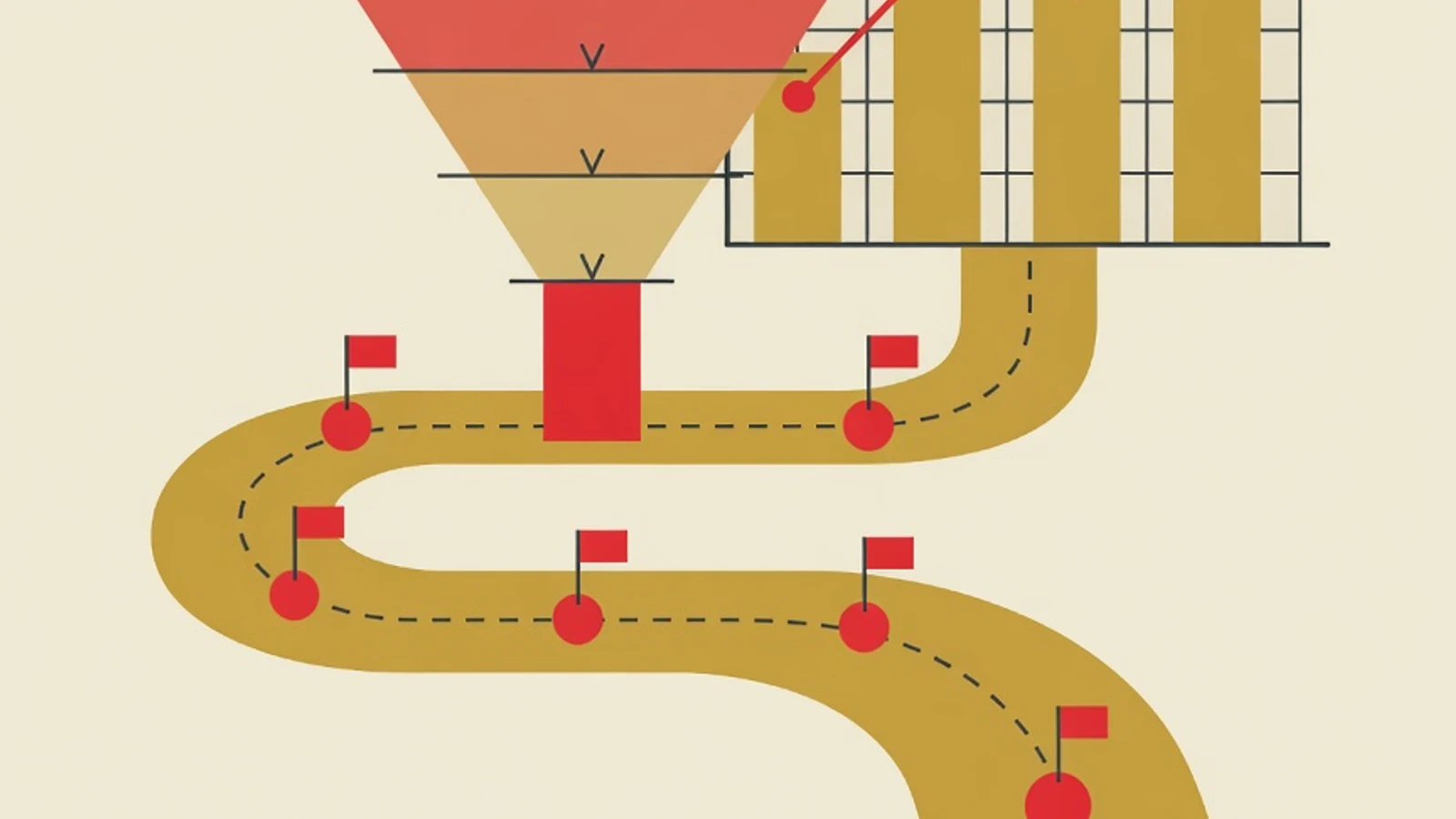
A digital marketing learning roadmap from scratch begins with marketing fundamentals and audience research, then moves to content and organic social media, followed by SEO, small-budget paid ads, and reading your data. At a rhythm of around eight to ten hours per week, the stretch from the basics to a first project usually takes four to six months of consistent study.
- Marketing fundamentals come first, before touching any channel or tool
- Each phase has a simple readiness signal that gates the move to the next topic
- Study-hour estimates stay realistic for anyone learning while working or studying
- A laptop with a stable internet connection
- A dedicated social media account for practice
- A small learning ad budget, starting at around Rp50,000
- A notebook or digital log to record weekly progress
Why this learning map is worth following now
What learning digital marketing from scratch means and how long it takes
Learning digital marketing from scratch means building layered understanding: grasping how people make buying decisions, how to craft a relevant message, then how to deliver that message through the right channel. The digital marketing learning roadmap we lay out places marketing concepts at the very bottom layer, because every channel tactic rests on top of it. The four-to-six-month estimate applies to a learner who keeps a rhythm of around eight to ten hours each week. This figure is a study estimate that adapts to each person's circumstances. Everyone's pace differs, depending on free time, background, and how much hands-on practice they do. What makes this learning map work is its order. Fundamentals are understood first, one channel is practiced until fluent, then the next channel is added.
Seven phases of the digital marketing learning roadmap from scratch
Work through the phases in order. Each phase closes with a simple readiness signal that gates the step into the next topic.
- 1
Phase 1: Set your learning rhythm and schedule
Before touching any technical material, lock in the study habit first. Decide how many hours are realistic each week, for example two weeknight sessions and one longer weekend session. Write that schedule on a calendar and treat it like an appointment that does not get moved. A steady rhythm makes the digital marketing learning roadmap feel light, because progress comes from small, regular repetition instead of a single overnight sprint. In this phase, also prepare a progress log. One page per week is enough to record what you studied, one thing you tried, and one question still unanswered.
Tips- Start with a target that is easy to keep, such as eight hours a week, then raise it once it feels comfortable
- Separate reading time from hands-on time, giving practice the larger share
Do not delay starting just to build a perfect schedule. A simple schedule you actually follow is more useful. - 2
Phase 2: Master marketing fundamentals before touching channels
The most important phase in the order of learning digital marketing sits at the beginning. Understand the customer journey, from becoming aware of a brand, to weighing it, to deciding to buy. Learn how to define the audience you want to reach, how to frame a message that answers their needs, and how to set a product apart from competitors. Every channel tactic, from content to ads, only works when this foundation is clear. Spend time mapping one real example: pick one local product you like, then describe who its audience is and what message fits each stage of its journey.
Tips- Practice with a simple frame: who is the audience, what is their problem, and what message answers it
- Read local brand case studies so the concepts feel close to the Indonesian context
- 3
Phase 3: Practice one organic channel through content and social media
Once the foundation is in place, pick one organic channel and practice it until fluent. Social media is a sensible first choice because access is easy and feedback is quick. Learn copywriting basics, how to build a content calendar, and how to read audience response. Create a practice account, publish content regularly over several weeks, then observe which posts draw the most attention. Focus on quality and consistency instead of follower counts. The goal of this phase is to build the habit of creating relevant messages and measuring their response honestly.
Tips- Publish content on a fixed schedule so you have enough response data to read
- Save your three best-performing posts and write down why you think each one worked
Avoid running many channels at once. One channel mastered teaches deeper lessons than five channels done halfway. - 4
Phase 4: Learn SEO and basic site structure
This phase adds a long-lasting traffic source. Learn how search engines work, how to find keywords people search for, and how to arrange pages so they are clear to both machines and readers. Connect the SEO material to the content skills from the previous phase, because good writing is the fuel of SEO. Practice by making one page or one article that targets a specific keyword, then watch how it gets indexed over time. The digital marketing material in this phase trains patience, since SEO results grow slowly.
Tips- Start with long-tail keywords that face lighter competition so you see early results faster
- Use free tools to check page structure and load speed
- 5
Phase 5: Test paid ads with a small learning budget
After you understand how to attract an audience organically, move into paid ads. Learning ads is best done with a small budget allocated specifically as a learning cost, for example tens of thousands of rupiah per campaign. Get familiar with the structure of Meta Ads Manager and Google Ads, understand the difference between search ads and social ads, then run one simple campaign. Observe how targeting, ad creative, and budget affect the outcome. This phase completes the digital marketing learning roadmap with the skill companies value most, namely managing paid ads in a measurable way.
Tips- Change one variable at a time so you know what caused a change in results
- Record the cost per result of each test as study material, treating the numbers as lessons
Treat the first campaign's funds as a learning cost. Do not raise the budget before you can read the numbers. - 6
Phase 6: Build the habit of reading data
The skill that sets serious learners apart is the ability to read data. Learn the basics of Google Analytics 4: how to see where visitors come from, which pages they open, and what actions they complete. Connect numbers to decisions, for example which content is worth expanding or which campaign is worth stopping. Train yourself to read one report each week, then write down one conclusion and one next step. This habit turns every earlier phase into a focused cycle of improvement.
Tips- Set only a few core metrics so you are not overwhelmed by too many numbers
- Make a habit of asking what a number means for the next decision before concluding
- 7
Phase 7: Consolidate with a personal project and choose a direction to specialize
The closing phase unites every skill into one complete project. Pick a real topic, for example promoting a family product, a community, or a friend's small business. Run the full cycle: set a goal, create content, arrange the page, test one small ad, then read the data and improve. This project becomes proof of ability and a place to discover your interests. From here, a specialization direction starts to feel clear, whether leaning toward content, SEO, paid ads, or data analysis. The digital marketing learning roadmap from scratch ends as a starting point for deeper study, with enough foundation to choose an advanced path consciously.
Tips- Document the project process and results so it can become portfolio material later
- Choose a specialization from the part you most enjoyed while working on the project
A map of learning sources: self-taught, courses, or guided support
| Learning path | Best suited for | Cost estimate | Speed of understanding |
|---|---|---|---|
| Self-taught from free material | High discipline, flexible free time | Almost no cost | Depends on personal persistence |
| Certified online courses | Needs an ordered curriculum and a certificate | Moderate, one-time payment | Directed because material is structured |
| Mentoring or guided tutoring | Needs feedback and quick correction | Higher, priced by the hour | Fast because guidance is direct |
All three paths can be combined. Many learners start from free material, then add mentoring when they hit a part that feels stuck.
Three study habits that speed up mastery
Practice more than theory
Give a larger share to practice than to watching material. Digital marketing skills grow from doing directly and repeatedly.
A short weekly review
Spend fifteen minutes each week rereading your progress log. A regular review keeps direction and flags the parts that need another pass.
Learn from your own data
Make the numbers from your practice account the teacher. Personal data is more relevant than generic examples in any material.
“Learners who advance quickly are usually the ones most diligent about practicing one phase until fluent before adding the next. The order keeps confidence growing throughout the journey.”
Signals that you are ready for the next phase
- Can explain a product's customer journey in your own words
- Have published content regularly and read its audience response
- Can build one page that targets a specific keyword
- Have run one small ad campaign and understood its result numbers
- Are used to reading one data report and turning it into one decision
Fully self-taught or mentored
- Very light cost and a fully flexible schedule
- Trains independence and the habit of finding sources yourself
- Freedom to go deep on the part that most interests you
- Feedback on mistakes arrives slowly or not at all
- Easy to get lost when you hit a part that feels stuck
- Requires strong discipline to keep the order and rhythm consistent
- The digital marketing learning roadmap from scratch runs through seven ordered phases, from setting a learning rhythm to a consolidation project.
- Marketing fundamentals are understood first, because content, SEO, and ads all stand on top of them.
- The four-to-six-month estimate applies to a rhythm of eight to ten hours per week, and that figure is a study estimate.
- Each phase has a simple readiness signal that gates the move into the next topic.