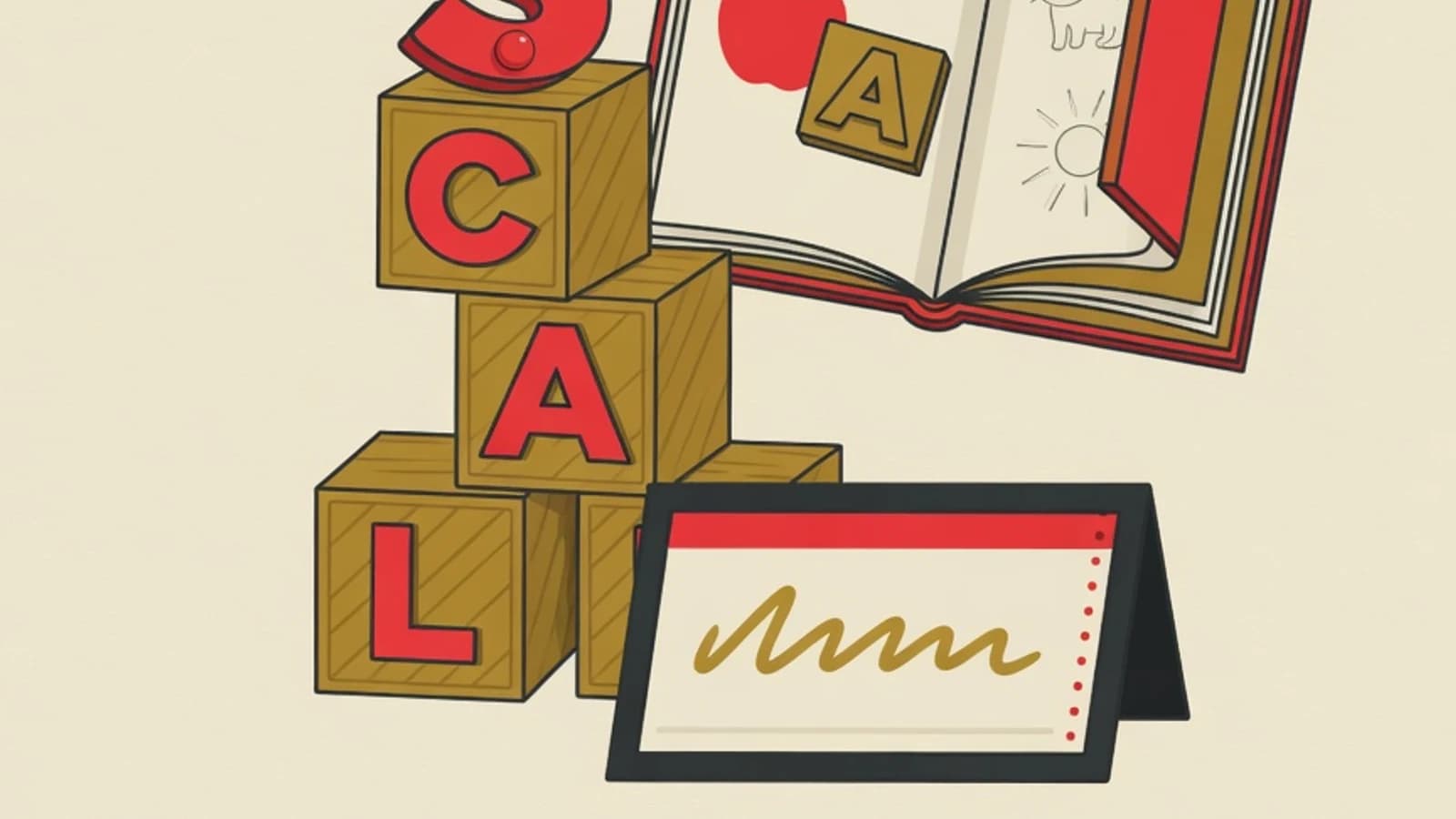
Introducing letters to toddlers works best when you start from the letters in their own name, through calm and pressure-free multisensory play. Children aged 2 to 5 absorb letters through touch, song, and everyday conversation. A gradual introduction that follows the child's curiosity makes letters feel familiar and enjoyable.
- The letters in a child's name are the most meaningful entry point
- Five to ten minutes of play beats a long, demanding session
- Letter sounds help a child connect shapes with reading
- Letter cards or magnetic letters
- The child's favourite picture books
- Crayons and large blank paper
- The child's name written large on paper
Numbers that reassure parents
When is the right time to introduce letters to toddlers?
Many parents wonder whether a two-year-old is ready for letters. The answer is flexible: a toddler can meet letters whenever curiosity appears, and that signal often shows when the child points at print on a food package or a shop sign. Introducing letters at an early age flows most smoothly as play, so the child links letters with a feeling of joy. The best entry point is the letters in the child's name. Those letters carry personal meaning, appear often, and are easy to remember. Once the name letters are familiar, frequently used letters such as a, m, n, s, and t can follow. This usefulness-based order helps a child form simple syllables sooner than memorising the alphabet from A to Z all at once. In Indonesia, the pressure to read quickly has eased. Since Ministerial Regulation No. 1 of 2021, primary schools may no longer screen applicants through literacy tests. This change gives parents room to introduce letters patiently, following the child's readiness, and keeping the learning mood cheerful.
Six steps to introduce letters to toddlers
The steps below are designed to apply at home without expensive tools. Practise one step in a small portion each day, then move to the next when the child seems comfortable.
- 1
Start with the letters in the child's name
Write the child's name in large capitals on a sheet of paper and stick it where they often look, such as a bedroom door or a toy box. Point to the first letter while saying their name, then invite the child to trace that letter with a finger. A name is the most familiar word to a toddler, so its letters feel special and stick quickly. Once the child knows the first letter, move gently to the second. Weave this moment into daily routines, like labelling a cup or a bag, so the letters recur naturally without feeling like a lecture.
Tips- Alternate the letter name and its sound, for example "this is A, its sound is a"
- Let the child decorate the letters of their name with a favourite crayon colour
- 2
Engage several senses at once
Toddlers learn through movement and touch, so present letters in forms they can hold. Shape letters from playdough, arrange magnetic letters on the fridge, or invite the child to draw large letters in a tray of sand or flour. When a finger traces a letter's curve while the ear hears its sound, the memory forms from several directions at once. This multisensory activity keeps letter play feeling like fun. Change the medium every few days so the child stays interested, and let them choose which letter to touch first so curiosity keeps leading.
Tips- One or two letters per session is enough so the child is not overwhelmed
- Add a simple letter song to bring in a cheerful mood
- 3
Introduce letter sounds alongside their names
Beyond letter names, introduce the sound each letter makes, because these sounds later help a child build words. Reading research shows that letter-sound knowledge has the closest relationship to the ability to decode words. Begin with letters whose sounds are clear and frequently used, such as m, s, a, and t. Say short, crisp sounds, for example the mmm sound for the letter M, then find objects at home that begin with that sound, like a mat or a mug. This object hunt turns letter sounds into a small adventure the child looks forward to.
Tips- Avoid adding extra vowels; keep the m sound as a short mmm
- Link letter sounds to the child's favourite objects to make them memorable
- 4
Use letters in the everyday environment
Letters are everywhere, and the surroundings are a rich, free teaching resource. While shopping, point to letters on a milk carton or a bread wrapper. On the road, invite the child to spot letters on signs and number plates. The habit of greeting letters in public helps a child realise that letters serve a real purpose in daily life. Learning letters through the environment also turns dull waiting time into a chance to learn. Ask light questions such as "can you find the letter that matches your name?", then praise the effort of searching.
Tips- Carry a small notebook to collect interesting letters you find together
- Focus on the letter being learned so the child is not confused
- 5
Read books and sing letter songs
Reading a picture book every day gives the child letter exposure inside a story they enjoy. Choose an alphabet book with large pictures and bright colours, then point to the first letter of a word that catches their attention. Alphabet songs and letter claps add a rhythmic layer that makes sounds and order easier to remember. A bedtime reading routine becomes a warm moment that strengthens the bond while introducing letters. Let the child turn the pages and choose the book, because a sense of ownership grows a lasting interest in reading.
Tips- Repeat a favourite book as often as the child asks; repetition builds memory
- Pause on a letter the child already knows and ask them to name it
- 6
Follow the child's pace and celebrate small wins
Every child has their own speed, and letter learning goes best when it follows their readiness. Watch for signs of boredom, such as looking away or walking off, then end the session on a positive note. Celebrate small progress, for instance when the child successfully points to one letter, with a hug or a sincere word of praise. A pressure-free mood keeps the child's confidence around letters growing. Note which letters are already known so you can revisit them occasionally, and let the child enjoy the process at a pace that feels comfortable.
Tips- A short daily session works better than an occasional long one
- Avoid comparing the child's speed with their peers
If the child refuses or cries, pause the activity and try again later in a more relaxed way.
Simple tools for introducing letters at home
Magnetic letters on the fridge
The child can arrange and move letters while saying their sounds each time they pass the kitchen.
Picture letter cards
Pairing a letter with an object picture helps the child connect the shape with a real word.
Sand or flour tray
Writing letters with a finger in sand gives a memorable motor experience.
Picture story books
Stories become a natural bridge to point out the first letter of a word the child loves.
Songs and letter claps
Rhythm helps the child remember sounds and order without feeling forced to memorise.
Crayons and large paper
Scribbling big letter shapes trains the hand muscles while introducing the curves of letters.
Supportive ways and hindering ways
| Aspect | Supportive way | Hindering way |
|---|---|---|
| Letter order | Start with name letters, then frequent letters (s, a, t, i, m, n) | Memorising A to Z in order all at once |
| Duration | Short play of 5 to 10 minutes each day | Long sessions full of demands |
| Focus | Letter sounds and shapes through touch and story | Copying letters repeatedly in a workbook |
| Feedback | Praising the child's effort and curiosity | Correcting every small mistake |
Toddlers absorb letters best when letters appear inside games and stories they enjoy.
“Toddlers remember letters most strongly when they touch them, hear them, and find them in their favourite objects. Our job is to prepare a small game each day, then give room for their curiosity to lead the direction of learning.”
Small daily habits for introducing letters
- Stick the child's name in large capitals where they often look
- Slip one short letter game into the daily routine
- Say the letter name and its sound in turn
- Point to letters on packages or signs while out and about
- Read a picture book every day and point to its first letters
- Celebrate every small win with sincere praise
- An effective introduction starts from the letters in a child's name, then frequently used letters
- Short daily multisensory play beats a long session full of demands
- Letter sounds give a child an important tool for building words later
- A calm, pressure-free mood keeps a child's curiosity about letters growing