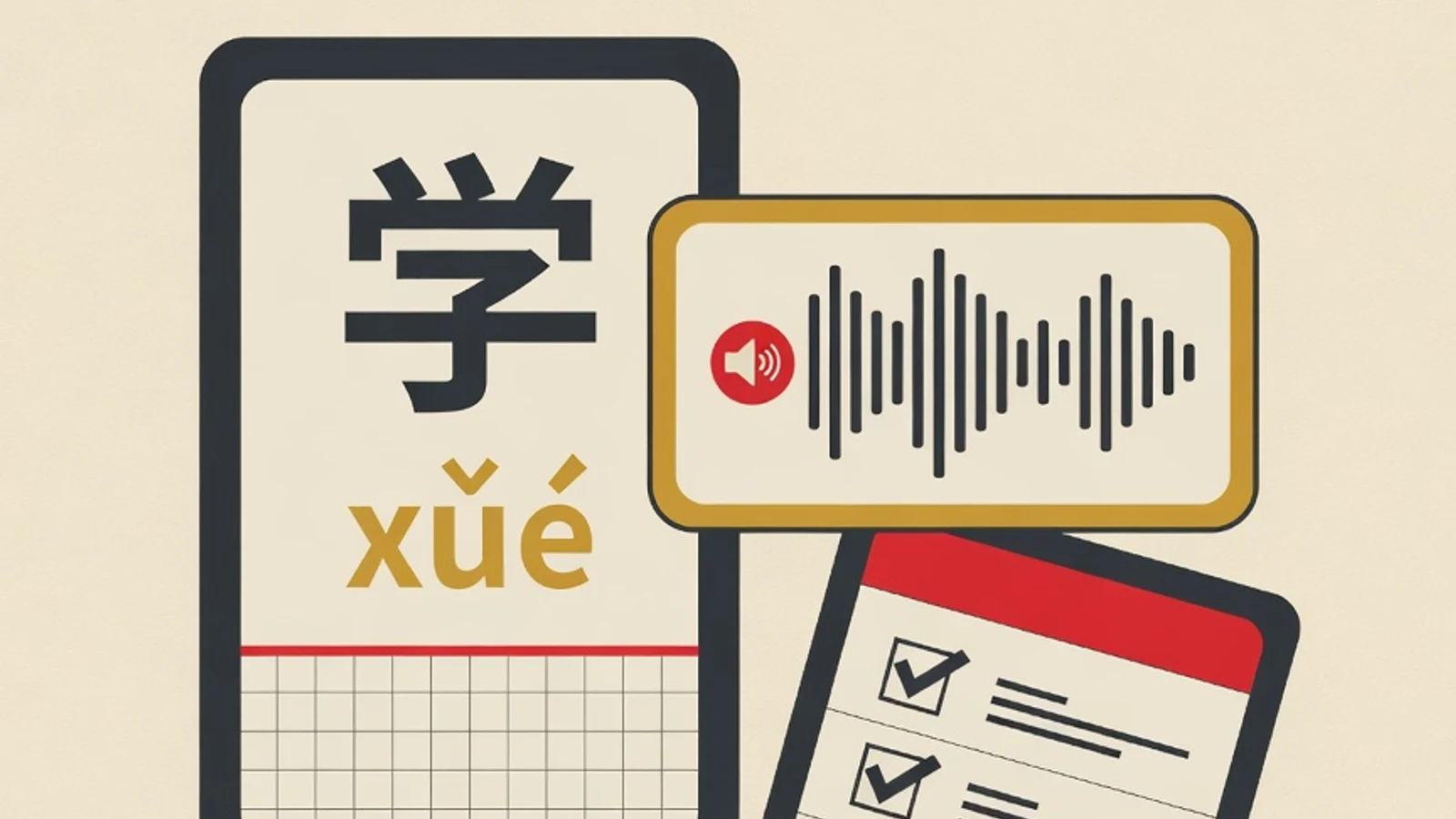
HSK 1 preparation for beginners revolves around two things: memorizing roughly 150 basic words (about 300 under the new format from July 2026) and getting comfortable with the two sections, listening and reading. Every HSK 1 question still carries pinyin, so you do not need to memorize Hanzi shapes first. Practicing timed sample tests makes the exam rhythm feel familiar.
- HSK 1 only tests listening and reading, with no writing or speaking section
- Every question includes pinyin, which is kind to those new to Hanzi
- The core foundation is the basic vocabulary list and command of the four tones
- The official HSK 1 vocabulary list with its Hanzi characters and pinyin
- One complete HSK 1 sample test with its listening audio files
- A flashcard app that auto-schedules its own review intervals for the basic vocabulary
Key HSK 1 figures worth knowing
What HSK 1 is and why it makes a good first step
HSK 1 (Hanyu Shuiping Kaoshi level one) is the most basic tier of the standardized Mandarin proficiency exam for non-native speakers. It targets people who have just started learning and can already handle the simplest Mandarin sentences and phrases for everyday needs, such as greeting someone, saying numbers, or asking about the time. Two things make HSK 1 friendly for beginners. First, the exam only tests listening and reading, with no essay writing or spoken component. Second, every sentence on the question sheet carries pinyin above the Hanzi characters, so you can read through the latin spelling while gradually recognizing the shapes of the script. Many beginners use HSK 1 as a milestone to measure progress after their first few months of study. The certificate becomes tangible proof that your vocabulary foundation and basic comprehension are in place, and a motivation to move on to HSK 2.
HSK 1 old format and the new 2026 standard, what differs
| Aspect | Old format (HSK 2.0) | New standard (HSK 3.0) |
|---|---|---|
| Basic vocabulary | About 150 words | About 300 words |
| Sections tested | Listening and reading | Listening and reading |
| Number of questions | 40 questions | Still about 40 questions |
| Takes effect | Still in use through the transition | Officially effective July 2026 |
During the transition through the end of 2026, both formats may run side by side. Confirm which version the test center where you register actually uses.
How to prepare for HSK 1 as a beginner, step by step
The five stages below build HSK 1 readiness in layers, starting with sound and ending in the simulation room. Beginners already familiar with pinyin usually find four to eight weeks enough, adjusting their daily practice share.
- Step 1
Strengthen the pinyin and four-tone basics first
Before touching the vocabulary list, make sure you can read pinyin and confidently tell the four Mandarin tones apart. Pinyin is the latin spelling system that marks the sound of each syllable, and tone determines meaning: the single sound ma can point to four different meanings purely through a shift in tone. In HSK 1, this skill is used directly in the listening section, because the audio speaks each word with its correct tone. Practice pronouncing each syllable's initial and final until your mouth is at ease, then say every new word aloud with its tone. A strong sound foundation makes new vocabulary far easier to retain, because the sound of a word becomes a memory anchor that complements its spelling.
Tips- Record yourself saying each tone and compare it with the sample audio
- Drill word pairs that sound alike but differ in tone to sharpen your ear
A word memorized with the wrong tone is hard for the ear to catch when the listening audio plays, even when you already know its spelling. - Step 2
Memorize the HSK 1 vocabulary list with spaced repetition
The core of HSK 1 preparation is mastering its official vocabulary list, about 150 words in the old format and 300 under the new standard. This count is still manageable to chip away at daily. Rely on a flashcard app whose auto-scheduling brings new words up more densely and slips older words back in now and then for a refresher. Learn each word inside one short example sentence, complete with its pinyin and Hanzi, so you recognize it both when hearing it and when reading it. For beginners, a target of 10 to 15 new words per day is enough to finish the list within a few weeks, as long as you review older words regularly. Group words by theme such as family, numbers, time, and daily activities to make them easier to recall.
Tips- Learning a word alongside one example sentence makes its meaning stick
- Review cards you often confuse in a separate session for extra attention
- Step 3
Get to know the pattern of the two HSK 1 sections early
HSK 1 has two sections with easily recognizable patterns. The listening section holds 20 questions: you hear a word or short sentence, then match it to a picture or decide whether a statement is true or false. The audio plays twice at this level, which feels more forgiving for beginners. The reading section also holds 20 questions: matching pictures to words, pairing sentences, and filling gaps with the choices provided. Study each question type from one official sample set, work through a few items, and note the shape of the instructions. Since all the text still carries pinyin, the main challenge is recognizing the sound and meaning of a word, something you have already trained in the earlier step.
Tips- Make short notes of each question type per section for quick review
- Learn the pictures that appear often, such as family members and numbers
- Step 4
Train listening with HSK 1 audio speed
The listening section often feels the most nerve-racking for beginners, because the audio keeps moving without waiting. The good news is that HSK 1 audio is deliberately slow and the pauses between questions are fairly long. Get your ears used to it by hearing sample audio files every day, even for just ten minutes. Start by listening while reading the transcript, then move up to listening without any text. Practice catching key words such as numbers, time, and everyday nouns, because questions usually revolve around them. After a few sessions the audio rhythm will feel familiar and you will have more time to choose an answer calmly.
Tips- Replay any part you missed, then check it against the transcript
- Practice listening at the same time each day so it becomes a habit
The listening section always plays at the start of the exam and is not repeated beyond the two plays per question, so keep your focus from the very first audio. - Step 5
Run timed simulations, then register for the exam
Roughly two weeks out from the exam, work through one full HSK 1 set while running a countdown set to 40 minutes. This kind of practice gets you used to moving from the listening part into reading without long gaps, echoing the atmosphere of the exam room. After each session, study your answer sheet and group where the slips came from: a word that had not stuck, a tone caught wrong, or an instruction read past too quickly. That kind of review yields a clear list of fixes for your next study block. When you are ready to register, open the official HSK provider's page or visit a test center in your city, settle on a date, then pick the paper or computer mode. At HSK 1 both feel light, since neither demands handwriting Hanzi yet. Match the details on your ID with the registration form, and leave ample time to reach the venue.
Tips- Mirror the exam setting while practicing: a quiet room, earphones ready, and phone notifications off
- Note when results are announced so you can lay out a plan toward HSK 2 straight away
The two HSK 1 sections and what they test
Listening (20 questions)
You hear a word or short sentence played twice, then match it to a picture or judge whether a statement is true or false. The words revolve around numbers, time, family, and daily activities.
Reading (20 questions)
You pair pictures with words, match sentences to context, and fill gaps from the choices provided. All text carries pinyin, so it stays readable even when the Hanzi is not yet memorized.
Basic vocabulary
About 150 words in the old format and 300 under the new standard. Mastering this list is the key, since almost every question revolves around those words.
Pinyin and tones
The ability to read pinyin and distinguish the four tones is used directly in both sections, especially when the audio speaks a word with a particular tone in the listening part.
“The beginners who stay calm in the HSK 1 room are usually not the ones who memorized the most words, but the ones who listened to sample audio most often. An ear used to the rhythm and tones makes half the exam feel light from the first question.”
Readiness checklist before registering for HSK 1
- You can read pinyin and confidently tell the four tones apart
- You have mastered over 80 percent of the HSK 1 list for your version
- You recognize the pattern of both sections, listening and reading
- Your full simulation scores break past the passing threshold repeatedly
- You have confirmed the format version and prepared your ID documents
Should a beginner take the HSK 1 certificate right away
- It gives a measurable milestone to map your progress in the first months
- It builds confidence through a friendly first official exam experience
- It trains the habit of timed practice from the most basic level
- An HSK 1 certificate is rarely a requirement for scholarships or study, which usually ask for HSK 4 and above
- Some learners choose to target HSK 2 directly since the material gap is small
- There is an exam registration fee to budget for at each level
Common beginner mistakes when preparing for HSK 1
A few misguided patterns tend to slow beginners down, even when their memorization hours pile up. The first is stacking vocabulary without ever hearing sample audio, which leads to a shock at the rhythm of the listening section on exam day. The second is memorizing words through writing alone without pronouncing their tones, when the ear needs to recognize the sound of the word. The third is skipping timed simulations, so the 40-minute duration feels foreign during the real exam. Guided Mandarin tutoring helps close these gaps from the basic level. A teacher corrects your tone pronunciation, gives example sentences drawn from the HSK 1 vocabulary list, and schedules light simulations until the exam setting feels ordinary. That kind of continuous guidance keeps practice focused on the two sections that HSK 1 actually tests.
- HSK 1 only tests listening and reading, with every question still carrying pinyin
- Its most important foundation is pinyin, the four tones, and the basic vocabulary list
- HSK 1 vocabulary rises from about 150 to 300 words under the new July 2026 standard
- Daily practice with sample audio gets your ear used to the exam rhythm
- No one guarantees a pass; what exists is measured guidance toward readiness