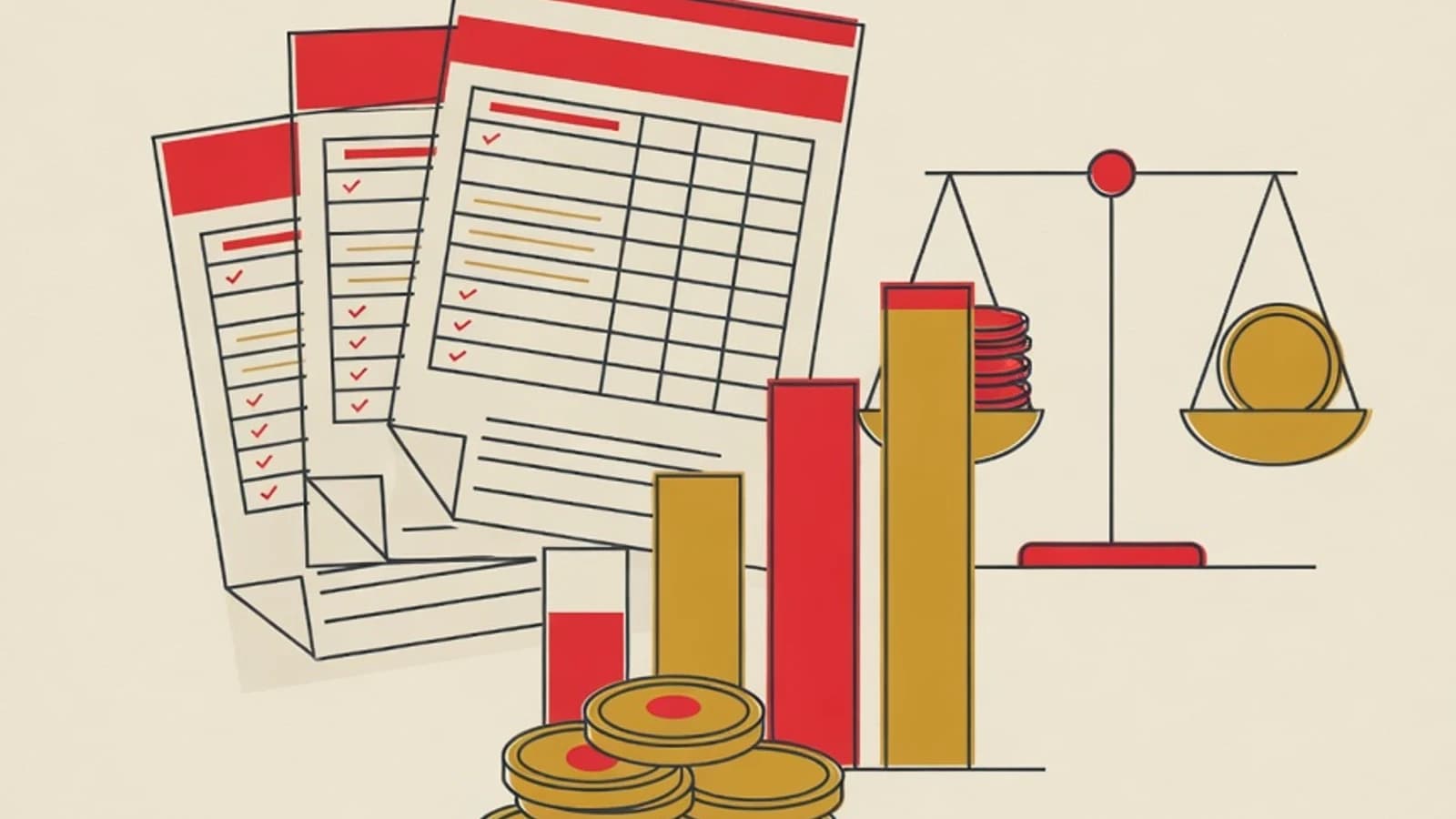
To prepare financial statements, build four reports in sequence from an adjusted trial balance: the income statement first, then the statement of changes in equity, next the balance sheet, and finally the cash flow statement. Numbers from one report flow into the next, so this order keeps everything consistent and easy to verify.
- Build the four reports in a fixed order: income statement, equity, balance sheet, then cash flow
- Make sure net profit and each ending balance feed into the following report
- Check that the balance sheet balances as proof the statements are built correctly
- All transaction records for the period, from sales receipts to expense proofs
- An adjusted trial balance from your bookkeeping
- The opening balances of cash, inventory, and payables at the start of the period
Why financial statements follow a set order
Financial statements are the final summary of a full period of bookkeeping that captures the performance and financial position of a business. Small-business owners often find the process intimidating, yet the difficulty usually comes from preparing the reports at random. The income statement is done first because its final result, net profit, is needed by the next report. The statement of changes in equity uses that net profit to compute the owner's ending capital. That ending capital figure then appears on the balance sheet as part of the liabilities and equity side. The cash flow statement is done last because it needs the opening and closing cash balances visible across two balance sheets. This chain of figures is what makes the order of preparation matter. The Financial Accounting Standards for Micro, Small, and Medium Entities issued by the Indonesian Institute of Accountants give small businesses some relief. Micro and small enterprises only need to prepare a statement of financial position, an income statement, and notes to the financial statements. Understanding the full set of four statements still helps, so that business decisions rest on a complete picture.
The four financial statements and what they do
Income Statement
Shows the performance of a business over one period by comparing total revenue against total expenses. Its final result is net profit or loss.
Statement of Changes in Equity
Tracks the movement of owner's capital from the start to the end of the period, adding net profit and subtracting personal withdrawals.
Balance Sheet (Statement of Financial Position)
Snapshots the position of assets, liabilities, and equity at one point in time. The asset side must equal liabilities plus equity.
Cash Flow Statement
Traces cash moving in and out across operating, investing, and financing activities, so the sources and uses of cash are clear.
6 Steps to Build Financial Statements from a Trial Balance
These six steps carry the numbers from an adjusted trial balance into one complete set of financial statements. Finish each report until its figures agree before moving to the next.
- 1
Group the accounts from the adjusted trial balance
Open the adjusted trial balance, then split its accounts into two large groups. The first group holds revenue and expense accounts that belong to the income statement. The second group holds asset, liability, and equity accounts that belong to the balance sheet. This early grouping maps each number to its destination report, so the work that follows runs without confusion. For an SME owner, this step also reveals quickly which figures describe the profit and loss of the business and which describe its wealth.
Tips- Use a different colour for income-statement accounts and balance-sheet accounts in the spreadsheet
- Make sure each account enters only one group so it is never counted twice
- 2
Build the income statement to find net profit
List all revenue accounts at the top and add them to a total revenue figure. Below that, list all operating expenses and add them to a total expense figure. Total revenue minus total expenses yields net profit when positive, or net loss when negative. For a trading business, insert the cost of goods sold right after sales to obtain gross profit first. The net profit figure from this step becomes the main input for the next report, so confirm the arithmetic is right before moving on.
Tips- Order expenses from largest first so efficiency is easy to evaluate
- Separate operating expenses from non-operating ones so the operating profit reads clearly
Do not record the owner's personal withdrawals as an expense. Those withdrawals reduce capital and are recorded in the statement of changes in equity, so operating profit still reflects genuine performance. - 3
Compute ending capital via the statement of changes in equity
Start from the opening capital of the period, add the net profit you just calculated, then subtract the owner's personal withdrawals or drawings. The result is the ending capital for the period. If the business made a loss, net profit is replaced by the loss figure that reduces capital. This short report answers one important question for an owner, namely how much their stake in the business grew or shrank during the period. The ending capital it produces will be used directly on the balance sheet in the next step.
Tips- Record every personal withdrawal through the period so none is missed
- Compare ending capital with opening capital to gauge the growth of the business
- 4
Build the balance sheet and confirm both sides match
On the left or top, list all assets, from current assets such as cash and receivables to fixed assets such as equipment net of depreciation. On the right or bottom, list liabilities first, then the ending capital carried over from the statement of changes in equity. Total both sides. When total assets equal total liabilities plus equity exactly, the balance sheet is proven to balance and the work so far is consistent. This balance is the clearest sign that the financial statements are built correctly.
Tips- Present fixed assets at cost less accumulated depreciation
- If it does not balance, trace back to the equity statement and the trial balance
A small difference in the balance sheet often comes from depreciation forgotten in the subtraction or ending capital carried over incorrectly. Trace these two points first before checking every account. - 5
Prepare the cash flow statement from cash movements
The cash flow statement separates cash moving in and out into three activities. Operating activity covers cash from sales and cash used to pay daily expenses. Investing activity covers buying or selling fixed assets such as machinery and vehicles. Financing activity covers added capital from the owner and personal withdrawals. For a small business, the direct method is easiest because you simply group the cash transactions already recorded. The ending cash balance it produces must equal the cash figure on the balance sheet, and this match closes the whole chain of preparation.
Tips- Start from the opening cash balance, then add and subtract each activity
- Reconcile the ending cash balance with the cash account on the balance sheet
- 6
Add notes and cross-check between statements
Complete the set with notes to the financial statements that explain key policies, for example the depreciation method or inventory valuation. After that, run a cross-check. Net profit on the income statement must equal what is used in the equity statement. Ending capital on the equity statement must equal capital on the balance sheet. The cash balance on the cash flow statement must equal cash on the balance sheet. When these three matches hold, one set of financial statements is declared complete and ready to read for business decisions.
Tips- Build one cross-check row in the spreadsheet so any difference shows up instantly
- Keep a record of the assumptions used so the next period's statements stay consistent
Three Activities in the Cash Flow Statement
| Activity | Scope | Examples |
|---|---|---|
| Operating | Cash from the core daily activity of the business | Receiving sales money, paying wages and rent |
| Investing | Cash for long-term assets | Buying machinery, selling an old vehicle |
| Financing | Cash from the owner and funding sources | Capital injection, personal withdrawals, loan instalments |
For a small business, the direct method is more practical because it follows the cash transactions already recorded.
Standards That Guide Small-Business Financial Statements
“Many business owners stop at daily bookkeeping and feel financial statements are too complex. Once the trial balance is tidy, the four reports are simply a rearrangement of numbers already there in the right order. The key to staying calm is finishing one report fully before moving to the next.”
Checklist Before Declaring the Statements Done
- The trial balance has been adjusted with the relevant adjusting entries
- Net profit on the income statement equals what is used in the equity statement
- Ending capital on the equity statement equals the capital shown on the balance sheet
- Total assets on the balance sheet equal total liabilities plus equity
- The ending cash balance on the cash flow statement equals the cash account on the balance sheet
- Notes to the financial statements explain the depreciation and inventory methods
Manual Spreadsheet vs Accounting Software
- Forces a direct understanding of how numbers flow between statements
- Cheap and flexible for a business with few transactions so far
- Ideal for practising until the logic of all four reports truly sticks
- Prone to typos and formula errors that spread across every statement
- The more transactions there are, the more time manual preparation takes
- Software such as Accurate or MYOB assembles the four reports automatically once transactions are entered correctly
- The four financial statements are built in sequence because the result of one report becomes the input for the next
- Net profit flows into the equity statement, ending capital into the balance sheet, and cash is reconciled in the cash flow statement
- A balanced balance sheet and cross-checks between statements are the proof the financial statements are built correctly