Private Online Program
Online Tahfidz Classes: Grow New Memorization, Keep the Old Alive
Recite to a dedicated teacher through two-way video call, one teacher for one student. Your teacher listens verse by verse, corrects tajweed the moment it slips, and keeps your revision schedule on track so earlier memorization stays firm.
850+
tutors
3,400+
students
4.9
rating · 765 reviews
60+
cities
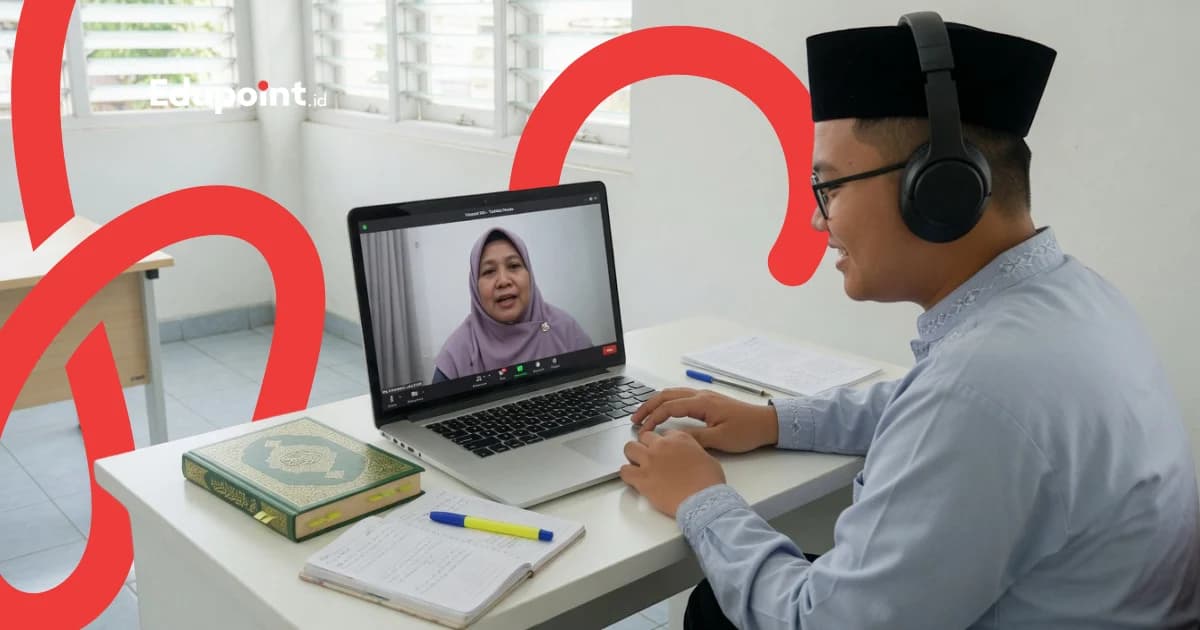
What is Online Tahfidz (Quran Memorization) Classes?
Online tahfidz is a private one-teacher-one-student program for memorizing the Quran over two-way video call. The teacher receives your recitation through talaqqi, corrects articulation and tajweed in real time, and builds a structured revision (muraja'ah) schedule around it. Three session lengths are available, 60, 90, and 120 minutes, slotted anywhere between the 6 AM start and the 11 PM WIB cutoff each day, taught by teachers drawn from 60+ cities across Indonesia.
- Recitation is received through live two-way talaqqi, so the teacher hears every detail of your articulation
- One teacher, one student: the memorization pace follows each learner, never a classroom average
- Weekly revision slots are built into the program so older memorization stays solid
- Makhraj and tajweed corrections land on the spot, with every session recorded for review
Services
Session Lengths for Online Tahfidz Classes
Each meeting runs as a private, two-way video call between a single teacher and a single student. Pick whichever length suits the student's age and typical attention span.
60-Minute Session
The favorite length for elementary-age kids and beginners. Enough time for recitation, tajweed correction, and a short review without wearing a child out.
Rp 69.000/session
60 minutes
- New memorization recited through live talaqqi
- Makhraj and tajweed corrected in real time
- A quick review of last week's verses
- Session notes saved in the app
90-Minute Session
More breathing room for teens and adults. New memorization and scheduled revision both fit comfortably in a single meeting.
Rp 86.000/session
90 minutes
- A larger memorization portion per session
- Scheduled revision heard live by the teacher
- Work on look-alike verses
- Monthly targets evaluated together
120-Minute Session
For active memorizers keeping an intensive rhythm. Ideal when preparing for verse-linking tests or reviewing a full juz.
Rp 108.000/session
120 minutes
- New memorization plus a full review block in one sitting
- Simulated verse-linking and surah-linking tests
- Deep dives into advanced tajweed
- Regular check-ins on the memorization plan
Online Tahfidz Levels for Every Starting Point
Whether you are still polishing basic recitation or actively memorizing toward mastery, your teacher builds the program around where you stand today.
Foundational Tahsin
Preparation before memorizingFor students whose recitation still needs work. The focus falls on articulation points, core tajweed, and reading fluency, with the teacher listening in every session.
Subjects:
Articulation pointsCore tajweedReading fluencyLive guided recitation
Focus Areas:
- Accurate, fluent recitation
- A solid base before new memorization
Juz 30 and Selected Surahs
The first steps of memorizationStarting with the short surahs plus favorites such as Al-Mulk and Ar-Rahman. A natural fit for children and adult beginners building their first recitation routine.
Subjects:
Juz 30Selected daily surahsPrayer recitationsWeekly recitation routine
Focus Areas:
- A recitation habit that sticks
- Memorization used immediately in worship
Active Memorizer
Balancing new and oldFor students already holding several juz. The teacher keeps new memorization and scheduled revision in healthy proportion so neither crowds out the other.
Subjects:
Gradual ziyadahScheduled muraja'ahLook-alike versesMonthly target management
Focus Areas:
- Older memorization stays intact
- A steady ziyadah rhythm
Itqan and Consolidation
Refining memorization qualityStrengthening what you already hold through verse-linking tests, full-juz review, and fine-grained tajweed polishing until the recitation is truly settled.
Subjects:
Verse and surah linking testsFull-juz reviewAdvanced tajweed detailTartil and melody
Focus Areas:
- Memorization that lasts for years
- Mature, measured recitation
What Online Tahfidz Classes Cover, across Tahsin, Ziyadah, and Consolidation
Your teacher sequences the material from a recitation assessment in the first session. Students whose recitation is already solid move straight into new memorization.
The order and weight of each module adapts to the student's age, reading fluency, and memorization goals.
Tahsin and Tajweed
Polishing recitation before memorization begins. Memorization built on correct recitation is far easier to protect for the long run.
- Articulation points (makharijul huruf) and letter attributes
- Rules of nun sukun, mim sukun, and madd
- Guided reading practice with live teacher feedback
- Unlearning long-held recitation habits that miss the mark
Ziyadah: New Memorization
Adding fresh verses at a sustainable daily portion. The teacher recites first, the student echoes, then recites it back at the next session.
- The talaqqi technique: teacher models, student mirrors
- Daily memorization portions matched to real capacity
- Locking down look-alike verses (mutashabihat)
- New-verse recitation at every session
Structured Muraja'ah
Reviewing older memorization on a calculated schedule, from short daily self-review to full-length review sessions with the teacher.
- Daily, weekly, and monthly revision cycles
- Spaced repetition for long-held passages
- Verse-linking and surah-linking drills
- Independent revision logged through the app
Tartil and Melody
Building a calm, measured recitation style that is pleasant to hear and faithful to the tajweed rules already learned.
- Keeping a steady recitation tempo
- Choosing the right stopping and starting points (waqf and ibtida)
- A simple base melody for beginners
- Reciting memorized passages in daily prayer
Etiquette and Motivation
Protecting long-term motivation. Memorizing the Quran is a journey of years, and the heart carrying it needs regular care.
- Etiquette toward the Quran and the learning gathering
- Building light daily habits that stick
- Working through plateaus and low-motivation weeks
- The family's role as a support system
Who It Is For
Who These Online Tahfidz Classes Are For
Each program is rebuilt around its student, from a child meeting Juz 30 for the first time to an adult starting from zero.
Elementary-Age Kids
The golden years for memorization. Teachers use short child-friendly segments, small targets celebrated often, and regular updates to parents.
Recommended:
60-minute sessionsStart with Juz 30Afternoon slots after school
Students in School or University
Memorizing alongside classes demands a smart schedule. Your teacher helps set a realistic memorization rhythm around study hours.
Recommended:
90-minute sessionsEvening or weekend slotsAgreed monthly targets
Working Adults and Busy Parents
With no commute to a learning center, sessions fit after Fajr before work or at night once the kids are asleep. Consistency becomes far easier to keep.
Recommended:
60 or 90-minute sessionsPost-Fajr scheduleApp-guided independent revision
Muslimah Students
Prefer a female teacher to hear your recitation? Mention it during the first consultation and we will match you with a female tahfidz teacher who fits your schedule and goals.
Recommended:
Female teacher on request90-minute sessionsFlexible at-home schedule
Featured
Memorization and Revision Reports in the App
Progress stays visible, logged, and open any time to parents or adult learners through the EduPoint app.
Report Features
Per-Session Recitation Log
Verses recited, recitation quality, and tajweed corrections recorded neatly after every meeting.
Revision Checklist
The list of older passages due for review each week, done or pending, visible on a single screen.
Progress Charts
Month-over-month curves for new memorization and revision quality, making target reviews straightforward.
Session Recordings
Every session is recorded and replayable, turning past lessons into material for self-review.
Sample Progress Report
Nadia
Grade 5 • June 2026
74%
Overall Progress
Sessions Completed
9 of 12
Next Milestone
Reciting An-Naba' in full without prompting
Aug 15, 2026
New Memorization: Juz 30
Improving78/90
An-Naba' verses 1-30 recited fluently; moving on to An-Nazi'at at three verses per day.
Short Surah Revision
On Track85/90
Ad-Dhuha through An-Nas remain solid; weekly revision is running consistently.
Tajweed and Articulation
Needs Attention70/85
The letters 'ain and ha still need work; adding a 10-minute articulation drill each session.
Why Us
Why Families Choose EduPoint for Online Tahfidz
Memorizing the Quran calls for an attentive listener and a schedule someone actually protects. We designed this program around both.
Two-Way Talaqqi, Like Sitting Before Your Teacher
Two-way video lets the teacher watch your lip movement and hear the fine detail of your articulation. A slipped makhraj gets caught the moment it happens, just as it would face to face.
One Teacher, One Student
The whole session belongs to one learner. Memorization pace, daily portions, and teaching style all follow that student, with no classmates to wait for or chase.
A Protected Recitation and Revision Schedule
Sessions are available from 6 AM to 11 PM WIB, including the quiet post-Fajr window. A fixed routine keeps recitation and revision moving week after week.
Tajweed Corrected on the Spot
The teacher stops the recitation exactly at the verse that went wrong, models the correct version, and has the student repeat it until it lands. Mistakes never get time to settle in.
Memorization Reports and Session Recordings
Every recitation is logged in the EduPoint app: verses recited, tajweed notes, and the revision checklist. Parents can open it any time.
Tahfidz Teachers from 60+ Cities
Our teacher network spans more than 60 cities across Indonesia, wide enough to include female teachers matched specifically for Muslimah students. A learner in a small town draws from the same pool of qualified teachers as one living in a major city.
Teacher Replacement Guarantee
Chemistry matters on a journey this long. If a teacher's method never quite clicks, tell us and we will find a replacement who fits better.
Testimonials
Families Memorizing with Us
From elementary kids to office workers, here is what private online tahfidz has looked like for them.
I doubted whether reciting over video call could work, then the teacher caught my son's mispronounced 'ain in the very first session, a mistake we had missed for years. His Tuesday and Friday recitation slots are now the routine he looks forward to.
Ratna Puspita
Mother of a 6th grader • Bekasi
I started from zero at 27 and almost felt too embarrassed to sign up. My ustadzah was patient, the targets were small and steady, and revision was scheduled properly. A year in, my whole relationship with the Quran has changed.
Annisa Rahmi
Private-sector employee • Makassar
The revision checklist made the biggest difference for me. My older memorization used to crumble under a busy campus schedule; now every week has a review slot my teacher actually listens to. I replay the session recordings before bed too.
Fikri Ananda
University student • Yogyakarta
The post-Fajr slot saved me as an office worker. Fifteen minutes before the session I open my laptop, recite, then head to work. The teacher sends notes through the app, so my wife follows the progress as well.
Hendra Wijaya
Father of two, state-enterprise employee • Balikpapan
Transparent Pricing for Online Tahfidz Classes
Rates are calculated per hour from your session length and monthly frequency, with packages of 4 to 28 sessions. The figure on this page matches the calculation in the registration form exactly.
Starting from
Rp 54.000 / hour
Final price is set at registration.
This is the lowest hourly rate, derived from the 28-session monthly plan at 120 minutes per session. Per-session prices (60, 90, or 120 minutes) appear in the format options above.
Flexible payment — QRIS, Virtual Account, Alfamart, Indomaret, transfer & e-wallets.
Whatever payment channel a family already uses works here, from bank transfer and QRIS to Virtual Account, e-wallets, debit or credit cards, plus the option to pay in cash at an Alfamart or Indomaret counter. That total never grows behind the scenes once it is set.
FAQ
Online Tahfidz Classes: Questions and Answers
Before a family commits to an online memorization program, these are the questions that come up again and again.
Complete Guide
The Complete Guide to Online Tahfidz Classes
Guides & Tips
Supporting articles to help you decide and maximize learning outcomes.
How to Choose the Right Private Tahfidz Teacher for Your Child
Being a hafidz alone is not enough. The right private tahfidz teacher must have a verified sanad, strong tajwid mastery, experience with your child's age group, and a structured memorization method. This guide helps you evaluate each factor clearly.
Qur'an Memorization Schedule for School Students: How to Build One Around Study Hours
Students already fill most of the day with school, tutoring, and homework. A good memorization schedule tucks short sessions into the right moments, then lets daily consistency do the work. With locked slots, memorization grows without disturbing school performance.
Quran Memorization Methods for Beginners: 7 Practical Ways to Start
Beginners who are just starting need a clear system: begin with short surahs, repeat with a measured dose, recite to a teacher, then protect the memory through scheduled review. This system lets memorization grow slowly and stay firmly in place.
Tahsin First or Tahfidz First? The Correct Order to Protect Your Child's Memorisation
Experienced Quran scholars and teachers agree: correct the recitation first, then begin memorisation. The reason is straightforward: errors that get memorised are far harder to fix than building the right foundation from the start.
Why Children Forget Their Qur'an Memorization and How to Preserve It with Muraja'ah
Memorization that was once fluent then fades is a common challenge in tahfidz programs. Consistent muraja'ah is a centuries-proven solution, and parents play a central role in making it work.
Begin the Memorization Journey from Home
Tell us your family's targets and schedule, and we will match you with the right tahfidz teacher from our network across 60+ cities.
One teacher, one student, two-way talaqqiFlexible schedule, 6 AM to 11 PM WIBMemorization reports and session recordings in the appTeacher replacement guarantee if the fit is off