Hobby & Strategy
Chess Classes
Private chess classes for children, teens, and adults with PERCASI-certified coaches, National Masters, and FIDE Masters. Build your Elo rating, master opening-middlegame-endgame, and prepare for official tournaments. One board, thousands of possibilities, and a coach beside you for every calculation.




180+
tutors
4,200+
students
4.9
rating · 984 reviews
60+
cities
What is Chess Classes?
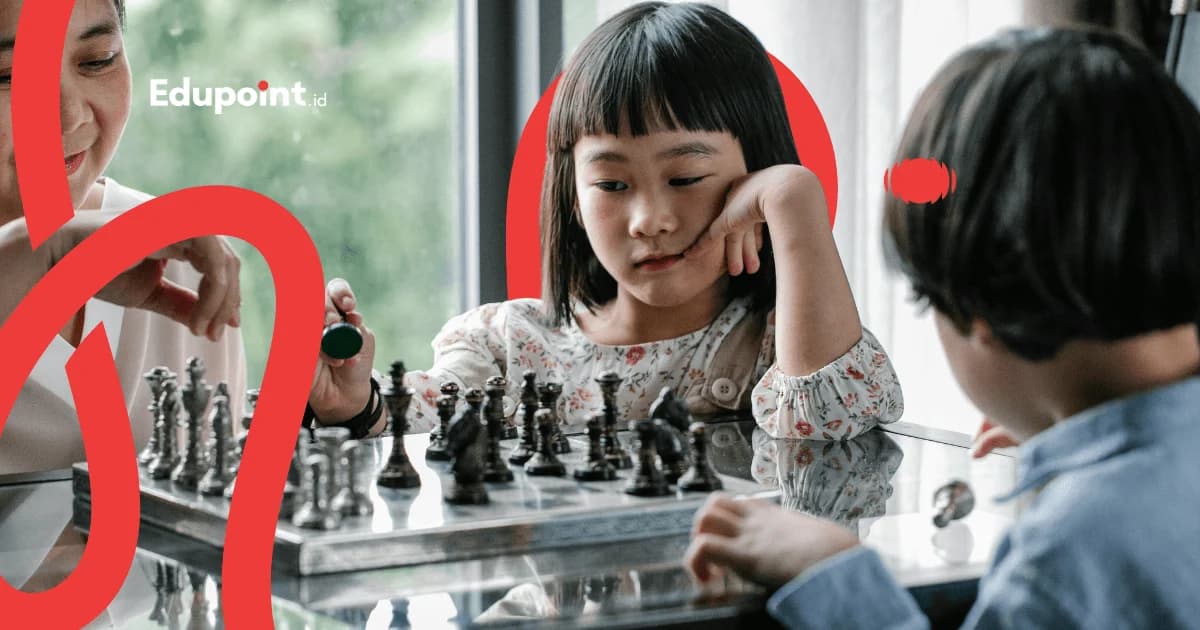
A chess class is a private coaching program designed to master chess from beginner level to competitive tournament play. Coaches guide students through the three phases of the game - opening, middlegame, and endgame - while developing calculation skills, pattern recognition, and disciplined thinking that extend far beyond the board.
- Suitable for ages 5+ to adult learners
- Coaches certified by PERCASI, National Master, and FIDE Master
- Level system based on FIDE Elo rating
- Material: opening, middlegame, endgame, tactical puzzles
- Preparation for O2SN, Porseni, and PERCASI tournaments
- Hands-on practice via physical board or Lichess/Chess.com
Services
Wooden Board, Screen, or Club: The Chess Class Format That Fits
From the feel of a wooden piece to game analysis on Lichess, each format sharpens calculation at its own rhythm.
In-Person Class
Coach comes to your home with a full chess board
Rp 109.000/ 90-minute session
Price on the 28-session monthly plan, 90-minute sessions. Fewer meetings, higher price per session.
- Physical board practice to build board vision
- Live game analysis on the board
- Ideal for kids not yet accustomed to screens
- Practice games against the coach
Online Class
Via Zoom with Lichess/Chess.com boards as the medium
Rp 87.000/ 60-minute session
Price on the 28-session monthly plan, 60-minute sessions. Fewer meetings, higher price per session.
- Flexible from anywhere
- Access to thousands of master games for analysis
- Puzzle and rapid game practice on platform
- Automatic session recording for self-review
Small Group Class
Learn with 2-4 children of similar age for tournament simulation
Rp 104.000/ 120-minute session
Price on the 28-session monthly plan, 120-minute sessions. Fewer meetings, higher price per session.
- Each child's group price adjusts on its own inside the form
- Mini tournament simulation every meeting
- Learn to play against varied styles
- Ideal for school chess clubs
Online and in-person cost the same — the gap between these cards is session length, nothing else.
Chess Mastery Levels
A tiered roadmap from understanding piece movement to readiness for official tournaments
Beginner Level
Beginner (≤800 Elo)Foundation for those new to chess or only familiar with piece movements. Focus on rules, basic checkmate, and the discipline of thinking before moving.
Subjects:
Rules & PiecesBasic CheckmateAlgebraic Notation
Focus Areas:
- Movement of each piece and basic terminology
- One-move and two-move checkmates
- Special rules: castling, en passant, promotion
- Algebraic notation (e2-e4, Nf3) to read games
Developing Level
Developing (800-1200 Elo)Build opening principles, basic tactical ideas, and K+P endgame techniques. Ideal for kids who already play against friends or mobile apps.
Subjects:
Opening PrinciplesBasic TacticsK+P Endgame
Focus Areas:
- 3 opening principles: center, development, king safety
- Basic tactical patterns: fork, pin, skewer, discovered attack
- King+Pawn vs King endgame: the box and opposition
- Daily puzzle practice (10-20 puzzles)
Intermediate Level
Intermediate (1200-1600 Elo)Prepare opening repertoire, tactical combinations, and middlegame strategy. Ideal for school and club tournament participants.
Subjects:
Opening RepertoireMiddlegame StrategyAdvanced Endgame
Focus Areas:
- Opening repertoire selection for White & Black
- Tactical combinations of 3-5 moves
- Strategy concepts: open file, weak square, isolated pawn
- Queen vs King, Rook vs King endgames
Candidate Master Level
Advanced (1600-2000 Elo)Deep opening theory, middlegame control, and technical endgames. Ready for provincial and national tournaments.
Subjects:
Advanced Opening TheoryPositional PlayTechnical Endgame
Focus Areas:
- Advanced opening variations with deep analysis
- Positional play: prophylaxis, pawn structure
- Technical endgames: Lucena, Philidor, opposite-coloured bishops
- Tournament preparation: training schedule and time management
Master Level
Master (2000+ Elo)Elite-level training for aspiring National Masters or FIDE Masters. Includes preparation for international Elo-rated tournaments.
Subjects:
Theory Repertoire DatabaseComputer-Assisted AnalysisSport Psychology
Focus Areas:
- Building a personal repertoire database of 50+ games
- Computer-assisted analysis with Stockfish/Leela
- Tournament psychology: blunder check & time pressure
- Opponent preparation: pre-game scouting
Chess Learning Modules
Seven modules combinable to each student's level and goals
Material is tailored: kids preparing for competitions get more tactics, hobbyists get more game analysis. Coaches build personalized plans.
Foundation & Rules
Basic rules, notation, and the discipline of thinking before moving
- Movement of all eight piece types
- Special rules: castling, en passant, promotion
- Algebraic and descriptive notation
- One, two, and three-move checkmates
- +1 more
Opening Repertoire
Selecting and mastering openings for White and Black
- Opening principles: center, development, king safety
- Open games: Italian, Ruy Lopez, Scotch
- Semi-open games: Sicilian, French, Caro-Kann
- Closed games: Queen's Gambit, London System, English
- +1 more
Tactical Patterns
Tactical patterns that form the foundation of all combinations
- Fork, Pin, Skewer, Discovered Attack
- Double Attack and Removing the Defender
- Back Rank Mate and Smothered Mate
- Zwischenzug, Decoy, Deflection
- +1 more
Middlegame Strategy
Positional concepts and long-term plans in the middle game
- Pawn structure: isolated, doubled, passed pawn
- Open files, weak squares, outposts
- Bishop pair, good vs bad bishop
- Initiative, tempo, and space
- +1 more
Endgame Technique
Endgame techniques that often determine game outcomes
- K+P vs K: opposition, the box, rule of the square
- Lucena and Philidor: rook endgames
- Bishop endings and knight endings
- Opposite-coloured bishops and rook technique
- +1 more
Game Analysis
Analysis of own and grandmaster games for accelerated progress
- How to analyze your own games without engine first
- Using Stockfish/Leela constructively
- Classical game studies: Morphy, Capablanca, Fischer
- Modern game studies: Carlsen, Caruana, Ding
- +1 more
Tournament Preparation
Mental, physical, and technical preparation for official tournaments
- Tournament systems: round-robin, Swiss, knockout
- Time management: blitz, rapid, classical
- Opponent preparation: pre-game scouting
- Nutrition and fitness during multi-day tournaments
- +1 more
Who It Is For
From First-Graders to Candidate Masters: Who Sits Across the Board
Chess unites a six-year-old just learning knights and rooks with a PERCASI athlete chasing a FIDE title, each with their own Elo rating goal.
Elementary Students (Age 6-12)
Developing critical thinking, concentration, patience, and resilience in the face of loss. A cognitive asset useful for life.
Recommended:
Foundation & RulesTactical PuzzlesK+P Endgame
Competitive Teens (Junior/Senior High)
Students competing in O2SN, Porseni, or club tournaments. They need polished opening repertoires and middlegame strategy.
Recommended:
Opening RepertoireMiddlegame StrategyTournament Preparation
Adult Hobbyists & Comebackers
Players who loved chess and want to be serious again. Many are active on Chess.com but their rating is stuck at 1000-1400.
Recommended:
Tactical PatternsGame AnalysisEndgame Technique
Talented Children (Future Athletes)
Kids with chess talent who've won school/city-level tournaments. They need serious coaches for the path to national level.
Recommended:
Theory RepertoireComputer-Assisted AnalysisSport Psychology
Club Players & Streamers
Active online players who stream or create chess content. They need master-level analysis and educational content depth.
Recommended:
Opening RepertoireGame AnalysisStreaming Content
Seniors & Mental Hobbyists
Retirees or seniors who want to keep their brain fit. Chess is proven to help slow cognitive decline.
Recommended:
Foundation & RulesPattern RecognitionGame Analysis
FIDE Elo Rating
5 Elo Rating Levels & Chess Roadmap
Map your level in the FIDE Elo system and set a target for advancement
The Elo rating is the global standard for measuring chess player strength. Free consultation available for an initial rating estimate.
Assessment Criteria
Tactical Skill
25%
Ability to spot and execute tactical combinations (fork, pin, skewer, etc.)
Opening Knowledge
15%
Understanding and mastery of opening repertoire for White and Black
Middlegame Strategy
20%
Ability to formulate long-term plans and understand pawn structure
Endgame Technique
20%
Mastery of theoretical endgame techniques: K+P, Lucena, Philidor, etc.
Tournament Composure
20%
Time management, emotional control, and bouncing back from losses
≤800 Elo
Beginner
Understands the rules and plays simple games. Hasn't yet recognized basic checkmate threats.
Target Age
Starting from age 5
Estimated Sessions
8-12 sessions (2 months)
Frequency: 1-2x per week
Skills:
- Knows the movement of all pieces
- Can castle and execute en passant
- Recognizes 1-2 move checkmates
800-1200 Elo
Developing Player
Starting to apply opening principles and recognize basic tactical patterns. Can play a full game without major blunders every move.
Target Age
Elementary-junior high kids, adult beginners
Estimated Sessions
16-24 sessions (4 months)
Frequency: 2x per week
Skills:
- Follows 3 opening principles: center, development, king safety
- Recognizes tactical patterns: fork, pin, skewer, discovered attack
- King+Pawn vs King endgame using opposition
1200-1600 Elo
Club Player
Has a stable opening repertoire, sees combinations of 3-5 moves, and understands basic positional concepts.
Target Age
School competition students, serious adults
Estimated Sessions
32-48 sessions (8 months)
Frequency: 2x per week + daily practice
Skills:
- Opening repertoire of 3-5 variations for White & Black
- Tactical combinations of 3-5 moves
- Understanding pawn structure: isolated, passed, doubled pawn
1600-2000 Elo
Tournament Player
Serious player with tournament experience. Understands deep positional strategy, prophylaxis, and opponent preparation.
Target Age
Provincial-national chess athletes
Estimated Sessions
64+ sessions (1-2 years)
Frequency: 3x per week + regular tournaments
Skills:
- Deep opening repertoire with 10+ move preparation
- Positional play: prophylaxis, weak squares
- Technical endgame: opposite-coloured bishops, lone queen vs pawn
2000+ Elo
Master Level
Aspiring or current holder of FIDE titles (CM, FM, IM). Preparing for international Elo-rated tournaments.
Target Age
National chess athletes, FIDE candidates
Estimated Sessions
100+ sessions (ongoing coaching)
Frequency: Customized + Elo-rated tournaments
Skills:
- Personal repertoire database with 50+ analyzed games
- Computer-assisted analysis with modern engines
- Multi-day tournament preparation with mental stamina
Your Learning Journey
L1
L2
L3
L4
L5
Chess Certification & Title Path
PERCASI
PERCASI Athlete
Registered as a chess athlete with PERCASI with a national Elo rating
CM
Candidate Master (CM)
First FIDE title, achieved with Elo 2200+ or via Elo-rated tournament norms
FM
FIDE Master (FM)
Permanent FIDE title, achieved with Elo 2300+ or international tournament norms
IM/GM
International Master / Grandmaster
Highest FIDE titles: IM (Elo 2400+, 3 norms) and GM (Elo 2500+, 3 norms). Indonesia has more than a dozen IMs and several GMs.
Why Us
Three Pillars of EduPoint Chess Classes That Lift Your Elo Rating
FIDE-titled coaches, a measurable Elo roadmap, and personal game analysis combine to break the plateau that keeps players stuck for years.
Certified Coaches with FIDE Titles
Learn directly from National Masters, Candidate Masters, FIDE Masters, and PERCASI-certified coaches. Every coach undergoes rating verification and background checks.
Measurable Elo Rating Roadmap
5 mastery levels from Beginner (≤800) to Master (2000+). You'll know exactly where you stand and what steps you need to advance.
Personal Game Analysis
Every game is analyzed with the coach to identify your specific weaknesses. Beyond telling you the right move, the coach teaches you how to think in similar positions.
Official Tournament Preparation
Coaching for O2SN, Porseni, and PERCASI from regional to national level. Includes tournament simulation, opponent preparation, and psychology management.
Flexible Format: Kids to Seniors
Curriculum tailored: elementary kids get more play, competitive teens get more theory, adult hobbyists get more game analysis, seniors get more pattern puzzles.
Online Platform Integration
Daily Chess.com/Lichess practice tracked by the coach. Puzzles with progress targets, online games analyzed in the next session, and access to master games.
Professional Chess Coaches
Learn from National Masters, FIDE Masters, and PERCASI-certified experienced coaches
Tutor Qualifications
- PERCASI-certified at regional or national level
- Holds FIDE title (CM/FM) or national Elo 1800+
- Min. 3 years of experience coaching school/club chess athletes
- Completed EduPoint internal training and certification
- Background check and FIDE/PERCASI rating verification
Faiz F.
EduPoint Chess Instructor
Openings and basic tactics“Faiz guides beginners through solid openings and basic tactics, building the habit of thinking a few moves ahead before committing.”
Rahmat M.
EduPoint Chess Instructor
Middlegame strategy“Rahmat enjoys breaking down middlegame positions with students, showing how to read an opponent's threats and form a patient plan.”
Kharis K.
EduPoint Chess Instructor
Chess coaching for children“Kharis is used to teaching children new to the pieces, turning rules that feel complex into a game that is fun and easy to grasp.”
Faqih M.
EduPoint Chess Instructor
Endgame and calculation“Faqih trains students to stay calm in the endgame, sharpening move calculation when few pieces remain and every decision counts.”

Aldi A.
EduPoint Chess Instructor
Disciplined thinking before moving“Aldi stresses the habit of checking each move before touching a piece, training students to cut down blunders through care.”
Henry H.
EduPoint Chess Instructor
Tournament preparation“Henry helps students who want to try tournaments, from managing thinking time to holding focus through a long game.”
Testimonials
When the Rating Climbs and the First Checkmate Lands
Parents, O2SN athletes, and comeback players share the Elo points gained and the thinking habits that travel beyond the board.
Ibu Fitria
Parent of an elementary student
Yogyakarta
Improved focus, more patient with hard problemsMy 8-year-old struggles to focus on schoolwork. After 4 months of chess class with Herman, his concentration improved and his math grades followed. The unexpected bonus: he's more patient with difficult problems now.
Muh Ikram A.
University student, Chess.com player
Makassar
Chess.com rating 1100 → 1450 (+350)I was stuck at Chess.com rating 1100 for 2 years. Playing hundreds of games with no progress. After 16 sessions with Sandi focused on analyzing my own games, my rating climbed to 1450 in 5 months.
Shafira Inkania A.
Junior high student, school chess athlete
Surabaya
2nd place at regency-level O2SNI joined the regency O2SN but always lost in the playoff rounds. Learning with Alfina taught me a stable Sicilian Kan repertoire and endgame technique. This year I placed second at the regency level.
Pak Suhendro
Retiree, senior chess hobbyist
Jakarta
Strongest technical member at the residential complex clubAs a retiree, I sought an activity to keep my brain active. Pak Nurwahyudi is patient and never rushed. Now I play regularly at the residential complex chess club and have become its most technically sound member.
Chess Class Pricing
An investment in lifelong strategic thinking
Starting from
Rp 69.000 / hour
Final price is set at registration.
This is the lowest hourly rate, derived from the 28-session monthly plan at 120 minutes per session. Per-session prices (60, 90, or 120 minutes) appear in the format options above.
Register & Get a QuoteFlexible payment — QRIS, Virtual Account, Alfamart, Indomaret, transfer & e-wallets.
Prices vary based on coach level (NM/FM/CM) and specialization. Free consultation available for package recommendations matching your target.
Chess Classes Availability
Online Tutoring
Online WorldwideOnline classes via Zoom with Lichess/Chess.com boards available for participants across Indonesia and the diaspora
- Automatic session recordings for self-review
- Access to master games via Lichess Studies
- Daily puzzle practice with tracking
- Blitz/rapid sparring games with coach
In-Person Tutoring
All CitiesIn-person classes where the coach visits your home and plays on the family's own chess board are available in the following cities
Jakarta55+ tutorsBandung22+ tutorsSurabaya28+ tutorsTangerang18+ tutorsBekasi16+ tutorsDepok14+ tutorsSemarang16+ tutorsYogyakarta22+ tutors
+6 more citiesStudent Achievements
Elo Rating Climb Success Stories
The Elo rating journey of EduPoint chess students
Success
From Chess.com 900 to FIDE 1600 in 1 Year
Muhamad Daniel A.
Public Junior High School
Before
900
After
1600
+700 Elo (1 year)
12 months, 2x per week sessions
“My coach didn't just teach new tactics; he taught me how to analyze my own games. That's what kept my rating climbing even without constant lessons.”
Tutors:
NurwahyudiSandi Mahdias A.
Success
Provincial O2SN Champion from a School Club Player
Nathasya Magdalena S.
Private International High School
Before
1250
After
1750
+500 Elo (10 months)
10 months of intensive O2SN preparation
“I used to think practicing at the school club was enough. Private lessons with Alfina opened my eyes - preparing for provincial level requires a different depth of theory.”
Tutors:
Alfina KhairaniKamrullah
Success
Qualified for Provincial PERCASI Candidate Team
Maharani Navila S.
Public Junior High School
Before
1450
After
1900
+450 Elo (14 months)
14 months, 3x per week sessions + regular tournaments
“Provincial PERCASI is a major leap from school tournaments. Without a FIDE Master coach, I'm not sure I could have made it here. EduPoint connected me with Kamrullah.”
Tutors:
KamrullahHerman, B.Ed.
FAQ
Chess Classes: Age, Cost, Rating, and Tournaments
Honest answers for parents and prospective players, from when a child is ready to learn openings to how long it takes to gain 100 Elo points.
A chess class at EduPoint is a private 1-on-1 or small-group program with coaches certified by PERCASI, National Masters, or FIDE Masters. Unlike school chess clubs that typically offer group training with general material, private classes tailor the curriculum to your Elo level and personal goals - whether for casual hobby, O2SN/Porseni preparation, or a path toward a FIDE title.
EduPoint chess coaching is priced by the hour along session length: Rp87,000 an hour for a 60-minute session, and on a 120-minute session or the 28-session monthly plan it falls to Rp69,000 an hour, the most economical hourly figure. These are exactly the figures the registration form calculates, whether you play for fun or train for tournaments with a titled coach. Bring a small group and the form immediately reworks what each child pays.
Children can be introduced to chess from age 5, but structured classes are most effective from age 7-8. At this age, kids can focus for 60-90 minutes, grasp cause-and-effect logic, and are motivated by achievement. Our coaches handling young learners are specifically trained with a fun approach: lots of play, light theory. Many of our young alumni are now active in Porseni and O2SN tournaments.
Online classes work excellently for teens and adults accustomed to screens - particularly for Chess.com/Lichess rating preparation, learning openings via master databases, and accessing FIDE Master coaches from other cities. In-person classes suit elementary kids aged 5-9 who aren't accustomed to screens, players preparing for over-the-board tournaments, and deep endgame practice. Many students combine both.
Our coaches are senior practitioners with minimum 3 years of experience, including: National Masters (NM), Candidate Masters (CM), FIDE Masters (FM), PERCASI-certified coaches at regional/national level, and National Arbiters. Most hold a national Elo of 1800+, and the Master Track Package pairs you with a FIDE-titled coach. Background checks and rating verification are conducted for every coach.
Complete Guide
Complete Chess Class Guide
This is one of the most common questions parents ask. The short answer: age 5-6 for introduction, age 7-8 for structured classes, age 10+ for competitive tournaments.
Age 4-5: Piece Introduction
At this age, children can be introduced to chess pieces as toys. They learn the names (knight, bishop, rook) but aren't ready for complex rules. What matters here: building interest first, while playing ability follows later.
Age 5-7: Basic Rules
Ready to learn how to play: piece movement, one-move checkmate, and simple games. Sessions of 30-45 minutes work best, with plenty of play and minimal theory.
Age 7-10: The Sweet Spot for Structured Classes
This is the ideal age to start serious chess classes. Children can sit for 60-90 minutes, grasp cause-and-effect logic, and are motivated by achievement. Many young Indonesian chess champions began at this age.
Age 10+: Tournament Preparation
Children with competitive drive and training discipline can be channeled directly into tournaments. O2SN, Porseni, and PERCASI tournaments all have youth categories.
Note for Adults
There is no age too old to learn chess. Many adult players start seriously at 30-40 and reach club rating within 1-2 years. Adult brains grasp strategic concepts faster, though they're slower at reading tactical patterns.
The Elo rating is the ranking system used by FIDE (the world chess federation) and online platforms like Chess.com and Lichess. Understanding it helps you set realistic targets and plan your practice.
The Global Elo Scale
- Below 800: New to chess - 800-1200: Beginner club player, knows basic tactics - 1200-1600: Active club player, plays school tournaments - 1600-2000: Competitive player, national candidate level - 2000-2200: National Master in many countries - 2200-2300: Candidate Master (first FIDE title) - 2300-2400: FIDE Master - 2400-2500: International Master (IM) - 2500+: Grandmaster (GM) - 2700+: Super Grandmaster, world top 50
Important Note
Chess.com and Lichess ratings are generally 100-300 points higher than official FIDE ratings. A Chess.com 1500 is equivalent to a FIDE 1200-1300 in over-the-board tournaments. This is because online play happens without coach intervention and at faster tempos.
How Long to Gain 100 Elo?
At the beginner level (≤1200), gaining 100 Elo can be done in 2-3 months of structured training. At club level (1200-1600), it takes 4-6 months. Above 1800, gaining 100 Elo takes 1-2 years. The higher the rating, the harder it is to climb because opponents grow stronger too.
This question is especially relevant since the pandemic. The answer: it depends on age, goal, and learning style.
In-Person Classes Suit:
- Children aged 5-9 not yet accustomed to long screen time - Beginners who need physical pieces for board vision - Players who will compete in over-the-board tournaments (the feel of a wooden board differs from a screen) - Endgame practice that requires deep position analysis - Kids easily distracted by laptops or phones
Online Classes Suit:
- Teens and adults already accustomed to screens - Preparation for Chess.com/Lichess ratings - Learning openings with reference to master databases - Access to FIDE Master coaches from other cities - Flexible schedules for busy professionals - Lots of fast game practice (blitz, rapid)
The Optimal Combination
Many of our students thrive with a hybrid: in-person 1x/week for deep analysis and long games, plus online 1-2x/week for theory and puzzle practice. This format combines both worlds without the downsides of either.
Selection Tips
For elementary kids: start in-person. For teens and adults: online is often more practical and equally effective. For serious tournament preparation: a combination of both.
Online players often plateau for years. The cause lies in a flawed practice pattern, regardless of talent. Here's how to break through the plateau:
1. Stop Playing Random Bullet
Bullet (1+0, 2+1) is fun but doesn't help long-term rating climbs. Your brain trains for fast reactions, while deep calculation gets neglected. Switch to Rapid (10+0 or 15+10) which gives time for thought.
2. Analyze Every Game for 5 Minutes
After every game (especially losses), open Chess.com analysis WITHOUT the engine. Ask: where did I go wrong? What was the opponent's plan I missed? Do this before reviewing engine suggestions. The engine is only for confirmation.
3. Choose 1 Opening for White, 2 for Black
Players who plateau usually try 10 openings without mastering any. Pick: 1 White opening (e.g., 1.e4 with Italian/Ruy Lopez), 1 response to 1.e4 (e.g., Caro-Kann or Sicilian Najdorf), and 1 response to 1.d4 (e.g., King's Indian or Slav). Play 100+ games with each.
4. Solve Puzzles 15 Minutes Daily
Pattern recognition is a muscle. Train it with Chess.com Puzzle Rush or Lichess Tactics. Target: 50 puzzles/day with 80%+ accuracy. Don't rush.
5. Learn Basic Endgames
Most players ≤1500 are weak in the endgame. Learning these 5 endgames will raise your rating by 100+ points: - K+P vs K (opposition) - K+R vs K - K+Q vs K - Lucena and Philidor (rook endgames) - Opposite-coloured bishops
6. Play Classical Games Alongside Online
Join a local over-the-board tournament once a month. Classical time controls (60 minutes per player or more) force deep thinking - a habit that carries over to online play.
Les Privat
Rp69,000/hour (120-minute session) up to Rp87,000/hour (60-minute session)
1-on-1 coaching with a personalized plan
Coach can identify specific weaknesses
Practice tailored to goals: hobby, tournament, or FIDE title
Access to FIDE Master/National Master coaches
Measurable progress from initial rating to target
Higher cost per session
Requires regular schedule commitment
Bimbel
Monthly club dues vary by city and facilities
Many similar-age sparring partners
Community atmosphere and healthy competition
Cheaper monthly for children
General training with little personalization
Club coaches sometimes only ordinary player level
Hard to focus on individual weaknesses
Inflexible schedule
Les Online
Free for solo practice on Chess.com/Lichess; coached sessions follow our standard rates
Lichess free for puzzles and unlimited games
Plenty of free YouTube content (GothamChess, Hikaru, Hanging Pawns)
Access to millions of game databases
Flexible time and place
Self-learners often plateau without understanding why
YouTube content stays too general and impersonal
No practice accountability
Hard to identify weaknesses without a coach
Conclusion: For children new to chess and wanting a hobby: a school chess club is enough. For those serious about climbing the rating or preparing for tournaments: private classes deliver the highest ROI through personal coaching and accountability. Self-learning via Chess.com is great for daily practice but ideally combined with a coach for game analysis and learning direction. The most effective combination: private classes 1-2x/week + daily practice on Chess.com/Lichess + a school/community club for sparring.
- 1Play more long games (15+10 or classical) than blitz - your brain needs time to build deep calculation habits
- 2Solve at least 30 tactical puzzles every day - pattern recognition is a muscle that needs daily practice
- 3Analyze your own games before checking the engine - ask 'what was my plan? what was my opponent's plan?' then compare with computer suggestions
- 4Learn basic endgames before complex openings - many 1500 players lose because they don't know how to convert K+R vs K
- 5Pick 1 opening for White and 2 for Black, then play them hundreds of times before trying new ones
- 6Watch master-level coach streams while taking notes on their insights - GothamChess, Hikaru, Eric Rosen, and Daniel Naroditsky are good for beginners
- 7Join a local tournament at least once every two months - over-the-board experience trains psychology that online can't
- 8Every loss is a lesson - make a 'what I learned from this game' note after every tournament
Related Programs
Other programs that complement cognitive development and children's interests
Open Your First Game with EduPoint Chess Classes
Free consultation for an initial Elo rating estimate and a package recommendation best suited to your or your child's target.
Free initial Elo rating assessmentCoach recommendation matching level and goalsCoach free tutor replacement whenever needed