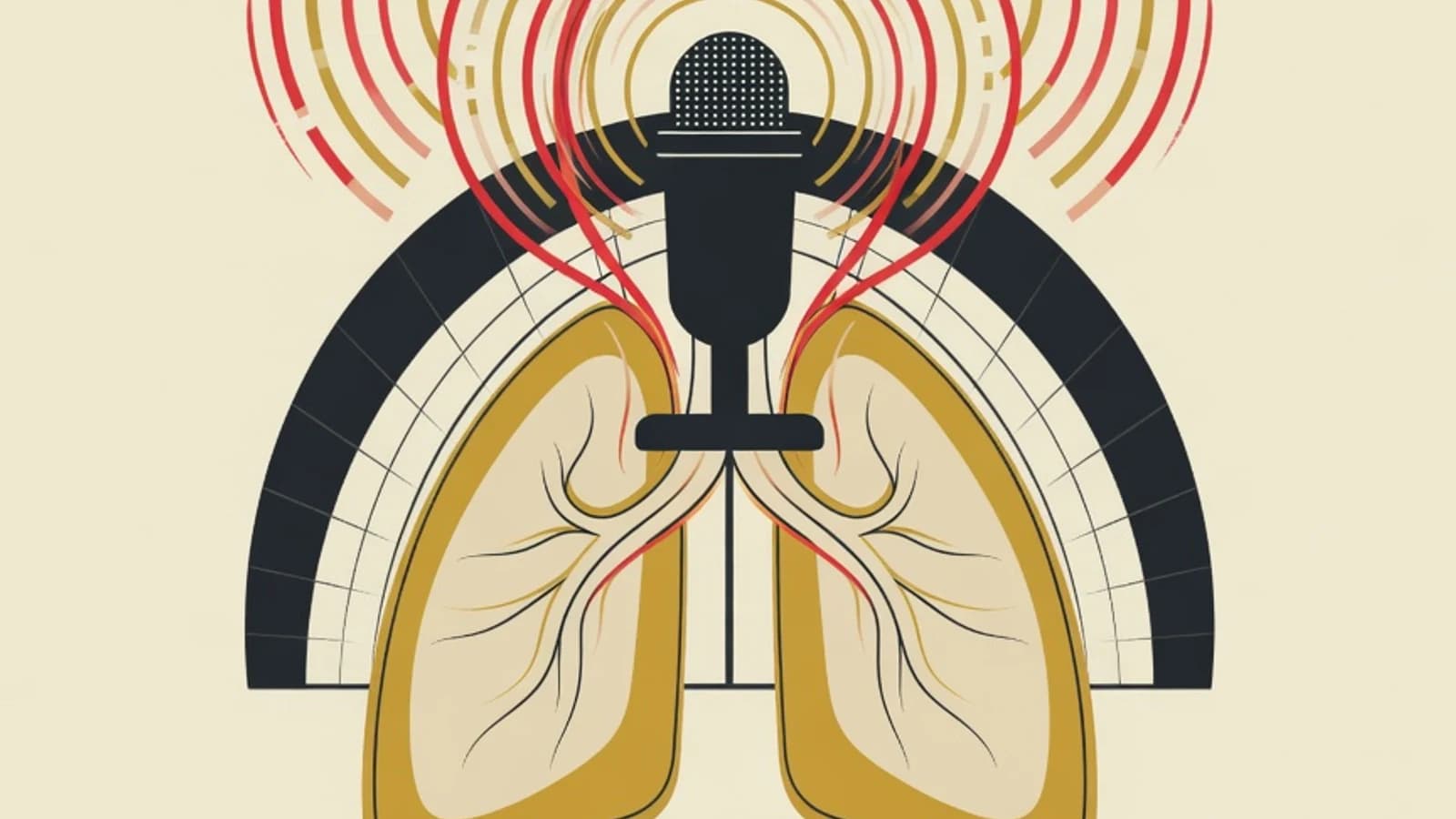
Diaphragmatic breathing for singing means drawing a deep breath into the lower lungs so the belly expands, then releasing it slowly with support from the abdominal muscles. This technique supplies steady air to sustain long notes. Build it through belly breathing while lying down, a steady hissing exhale, and lip trills every day.
- The diaphragm works automatically on the inhale; what you train is control over the release of air
- A low breath that expands the belly gives you a longer air reserve
- Ten to fifteen minutes of daily practice is enough to build the habit
- A mat or flat surface to lie on
- A thin book to mark belly movement
- A mirror to watch your shoulders and chest
- Room-temperature drinking water
BUnderstanding How the Diaphragm Works While Singing
The diaphragm is a dome-shaped muscle that separates the chest cavity from the abdominal cavity. When you inhale, this muscle contracts and moves downward, giving the lungs room to expand toward the belly. That downward movement pushes the abdominal wall outward, which is why diaphragmatic breathing is often called belly breathing. Here is a detail beginners should grasp: when you exhale to sing, the diaphragm naturally rises again. What you control are the abdominal and intercostal muscles that regulate how slowly the air is released. This ability to manage the rate of release is what teachers call breath support. Steady breath support keeps long notes from wavering and makes vocal volume more even across a phrase. Breathing kinematics research shows that trained singers use rib and belly patterns different from untrained people. They keep the chest lifted longer while deflating the belly slowly and precisely. That pattern can be built through consistent practice at any age.
The phrase "singing from the diaphragm" is a handy popular expression, even if it is anatomically loose. You cannot command the diaphragm to push air out, because that muscle actually relaxes as you exhale. The right practice focuses on the three things below.
- Take a low breath so the belly and lower ribs expand, without lifting the shoulders
- Hold that open feeling in the belly for a moment before you sing, as if leaning on the air
- Release the air slowly and evenly by keeping the abdominal muscles engaged instead of letting the chest collapse at once
Diaphragmatic Breathing Practice Step by Step
These six steps take you from recognizing the diaphragm's movement to applying diaphragmatic breathing to a full musical phrase. Work through them in order, and move to the next step once the previous one feels comfortable.
Notice the breath while lying down
Lie on your back on a mat with your knees slightly bent. Place one thin book on your belly, just below the breastbone. Inhale slowly through the nose and watch the book rise as the belly expands. As you exhale through the mouth, the book lowers again. Lying down relaxes the shoulders and chest, so the body naturally chooses the low diaphragmatic breath. Feel this rhythm for two to three minutes until the book's rise and fall feels automatic.
- Keep your shoulders resting on the floor; only the belly area should move
- Count four beats on the inhale and six beats on the release
Move the belly breath into a standing position
Stand tall in front of a mirror with your feet shoulder-width apart. Place both palms on your lower ribs, thumbs pointing toward your back. Inhale and feel the lower ribs expand to the sides while the belly moves forward gently. The mirror helps you confirm the shoulders stay still and the chest does not lift abruptly. Standing is harder than lying down because gravity tends to pull the breath back into the chest. Repeat eight to ten breaths while keeping the movement in the ribs and belly.
- Imagine expanding a belt all the way around your waist, including the sides and back
- Record yourself from the side to check the shoulders stay relaxed
Train the air release with a steady hiss
Take a low breath as in the previous step, then release the air on a long, even "sss" sound, like a tire deflating slowly. The hiss creates a small resistance so you learn to release air little by little. Aim for a steady hiss of ten seconds in the first week, then build gradually to fifteen and twenty seconds. Feel the lower abdominal muscles work gently to sustain the flow while the chest stays open. This exercise trains the exact breath control needed to hold long notes.
- Keep the hiss volume even from start to finish, without fading at the end
- Leave a little air at the end; do not empty the breath to the point of strain
Connect breath to sound with lip trills
Lip trills unite diaphragmatic breathing with sound production. Close your lips lightly, then blow air so the lips vibrate into a "brrr" sound. Once the vibration is steady, add a low pitch and glide up and down slowly like a gentle siren. The lip trill keeps air pressure balanced behind the lips, so you feel how steady breath support produces a flowing tone. Do three to four rounds, each lasting one full breath.
- If your lips struggle to buzz, support your cheeks with two fingers to reduce tension
- Start on a pitch that is comfortable in the middle of your range
Apply breath support to one musical phrase
Choose one line of a song you know and sing it with diaphragmatic breathing. Before you start, take a low breath and hold the open belly sensation for a split second, as if leaning on the air. This idea of leaning on the breath is known in the Italian vocal tradition as appoggio, which keeps the inhaling muscles active as you begin to sing. Sing the phrase while keeping the ribs wide for as long as possible, and let the belly deflate slowly until the phrase ends. Feel the difference from singing on a shallow chest breath that runs out quickly.
- Mark in the score or lyrics where you will take your next breath
- Breathe earlier before a long phrase so your air reserve is enough
Extend duration and integrate into a full song
Once one phrase feels solid, link two or three phrases in a row while planning your breathing points. Raise the challenge gradually: sing a section at a slower tempo first so you have time to manage the breath, then return to the original tempo. Record yourself once a week and listen for whether long notes sound steadier and volume more even. Daily consistency gives better results than long practice done rarely.
- Insert a five-minute breathing warm-up before singing the song
- Note which phrases still feel stuck so you can practice them separately
Chest Breathing vs Diaphragmatic Breathing
| Aspect | Chest Breathing | Diaphragmatic Breathing |
|---|---|---|
| Body movement | Shoulders and upper chest lift | Belly and lower ribs expand |
| Breath depth | Shallow, runs out quickly | Deep, longer reserve |
| Note stability | Wavers at phrase ends | Steadier and more even |
| Throat sensation | Tends to feel tense | More open and relaxed |
Many beginner singers use chest breathing without noticing. Practicing while lying down helps the body find the deeper diaphragmatic breath.
Reading Your Body's Signals
- The belly and waist expand as you inhale while the shoulders stay still
- Long notes sound steady all the way to the end of the phrase
- The throat feels open after singing several songs
- You still have a little air left at the end of a phrase
- The shoulders rise every time you inhale
- The voice weakens or shakes at the end of a long note
- You run out of air in the middle of a phrase
- The neck and jaw feel tense after practicing
“The key to breath support lies in how you release the air with control. A calm singer lets the air out slowly and evenly, so every note has enough energy without forcing the throat.”
Supporting Exercises to Round Out Your Routine
Straw Phonation
Make sound while blowing through a straw into a glass of water. Even bubbles signal controlled airflow and train breath support gently.
Breath Counting
Take a low breath, then count softly aloud from one to the highest number you can reach on a single breath. Note the number each week to track progress.
Calming Breath
A deep diaphragmatic breath activates the parasympathetic nervous system and lowers the heart rate. Useful for easing nerves before a performance.
A 12-Minute Daily Breathing Routine
- Two minutes of lying-down breathing with a book on the belly as a warm-up
- Three minutes of standing breathing with hands on the lower ribs
- Three minutes of steady hissing, building duration gradually
- Two minutes of lip trills with gentle pitch glides
- Two minutes applying diaphragmatic breathing to one musical phrase
- Diaphragmatic breathing for singing is a low breath that expands the belly, followed by a controlled release of air through the abdominal muscles
- The diaphragm works automatically on the inhale; what singers train is the breath support that regulates the rate of air release
- Core exercises of lying-down breathing, steady hissing, and lip trills can be done in about 12 minutes each day
- Steady diaphragmatic breath helps long notes sound solid and vocal volume stay more even