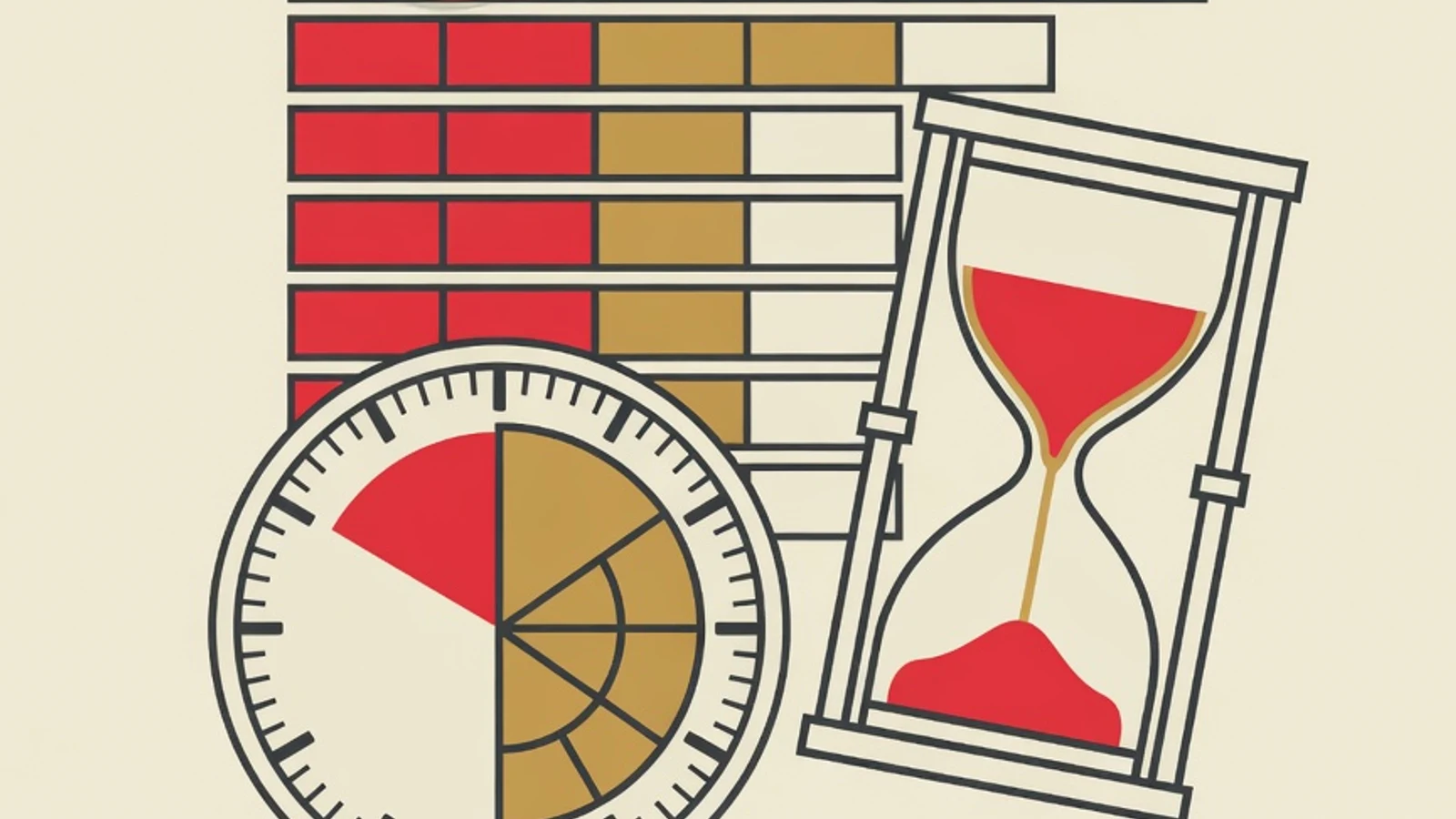
Per-subtest time management for UTBK means splitting the full 195 minutes across seven SNBT subtests by question count and difficulty, then setting a budget for each question. General Reasoning gets about 60 seconds per question, while Mathematical Reasoning deserves a little over two minutes. Each subtest runs its own clock, so the minutes that pass cannot be pulled back.
- UTBK SNBT 2025 holds 160 questions across seven subtests, each with a separate timer
- The per-question budget ranges from 45 seconds to more than two minutes across subtests
- A skip rule for hard questions keeps any single item from eating a subtest's allowance
- The seven-subtest time map for UTBK SNBT
- Full mock tests with a separate timer per subtest
- A pacing log from every practice run
BWhy Per-Subtest Time Management Shapes Your UTBK Result
UTBK SNBT uses a timer that runs separately for each subtest. When one section's time ends, the screen moves automatically to the next subtest and any unanswered questions expire. This design makes per-subtest time management for UTBK a skill that stands alongside mastery of the material. Many candidates lose points because one long question holds them too long, even when they could solve it. A tricky Mathematical Reasoning item can absorb four to five minutes, and the subtest allowance drains right away. Splitting the per-question budget keeps every item to a fair share, so candidates reach every number before the section changes. UTBK SNBT time allocation also asks candidates to read their own rhythm. Literacy subtests demand reading long passages, while quantitative subtests demand quick calculation. Noticing this shift in rhythm keeps the mind calm when moving from one subtest to the next.
Time Budget for Each UTBK SNBT 2025 Subtest
| Subtest | Questions | Time | Per Question |
|---|---|---|---|
| General Reasoning | 30 | 30 min | 60 sec |
| General Knowledge & Understanding | 20 | 15 min | 45 sec |
| Reading Comprehension & Writing | 20 | 25 min | 75 sec |
| Quantitative Knowledge | 20 | 20 min | 60 sec |
| Indonesian Literacy | 30 | 42.5 min | 85 sec |
| English Literacy | 20 | 20 min | 60 sec |
| Mathematical Reasoning | 20 | 42.5 min | 127 sec |
Per-question figures are averages of the official allocation. Use them as a starting point, then adjust to the personal speed you find in practice.
How to Build Per-Subtest Time Management for UTBK
These five steps grow your per-subtest pacing from the time map into a habit that runs on its own inside the exam room.
Memorize the seven-subtest time map
Begin by memorizing the question count and minutes for each subtest until you know them by heart. A candidate who knows that General Reasoning gives 30 minutes for 30 questions will automatically hold a pace of one question per minute. Stick the time map on your study desk and reread it before every mock test. Knowing these figures makes per-subtest time management for UTBK feel natural on exam day, freeing your mind to focus on the questions themselves.
- Write the time map from memory every morning for a week
- Group the fast subtests (45 to 60 seconds) and the slow ones (above 80 seconds)
Compute the per-question budget for each subtest
Turn the official allocation into a per-question budget that is easy to recall. General Knowledge and Understanding gives 45 seconds per question, so it rewards quick answers and solid recall. Mathematical Reasoning gives about two minutes and more per question, so a candidate may reread and calculate calmly. Attaching a seconds figure to each subtest helps the brain set the right speed from the very first question.
Apply a skip rule for slow questions
Set a time threshold: if a question passes one and a half times its normal budget, flag it and move to the next number. Record the skipped item, then return to it once every easy question is done. This keeps a single hard question from draining the subtest and dragging other numbers into expiry. The habit of skipping heavy questions on time sits at the heart of healthy pacing.
Place a checkpoint at the midpoint of each subtest
Split each subtest into two halves. In Indonesian Literacy, which runs 42.5 minutes for 30 questions, aim to reach number 15 by minute 21. This checkpoint gives an early signal when the pace is too slow, so a candidate can speed up before the time truly runs thin. Without a checkpoint, candidates only notice a shortfall when many questions remain.
Rehearse pacing through mocks with a per-subtest timer
Pacing becomes automatic only through repetition in exam-like conditions. Run full mock tests with a separate timer for each subtest, then log how many questions you reached and how many expired. Compare results across sessions to see which subtest still overspends time. This data points to the section that needs extra practice so the per-question budget lands comfortably.
- Record each subtest's speed in one simple table
- Repeat a full mock at least once a week as the exam nears
The UTBK SNBT timer runs independently for each section. Leftover minutes in General Knowledge and Understanding will not add time to Mathematical Reasoning. So finish the fast subtests early to lock in points, then enter the slow subtests calmly.
- Do not save time hoping to spend it in another section
- Use leftover minutes in one subtest to review flagged answers within that same subtest
- The change between subtests happens automatically, so make sure every number is filled before a section's time ends
Pacing Profile for Each Subtest
General Reasoning
Three reasoning types at a tempo of one question per minute. Hold a steady rhythm from the first inductive item.
General Knowledge & Understanding
The fastest subtest. Answers rest on solid recall, so a question that does not answer at once is best skipped first.
Reading Comprehension & Writing
Short passages with grammar questions. Read once carefully, then answer straight away.
Quantitative Knowledge
Short calculations that demand precision. Do the quick-arithmetic questions first and set aside the longer ones.
Indonesian Literacy
Long passages demand full understanding. Place a checkpoint at the midpoint to keep the reading pace under control.
English Literacy
English passages with a tighter clock. Catch each paragraph's main idea without translating every word.
Mathematical Reasoning
The loosest per-question budget. You may reread and calculate calmly, while still flagging any question that runs long.
“The candidates whose scores climb are usually the ones most disciplined about their internal clock for each subtest, well ahead of raw talent. We train students to recognize when to release a question and move on, because one item left on time saves four other numbers.”
Time-Management Checklist During the Exam
- Read the subtest duration on screen and recall its per-question budget
- Do the easy questions first, flag the heavy ones for review
- Check the midpoint checkpoint and speed up if you are behind
- Keep one to two minutes to review the answers you doubt
- Make sure no number is blank before the screen changes subtest
- UTBK SNBT 2025 splits 160 questions across seven subtests with timers that run separately, so time cannot move between sections.
- The per-question budget differs by subtest, from 45 seconds in General Knowledge and Understanding to about 127 seconds in Mathematical Reasoning.
- Skipping heavy questions on time and placing a midpoint checkpoint keep every number within reach.