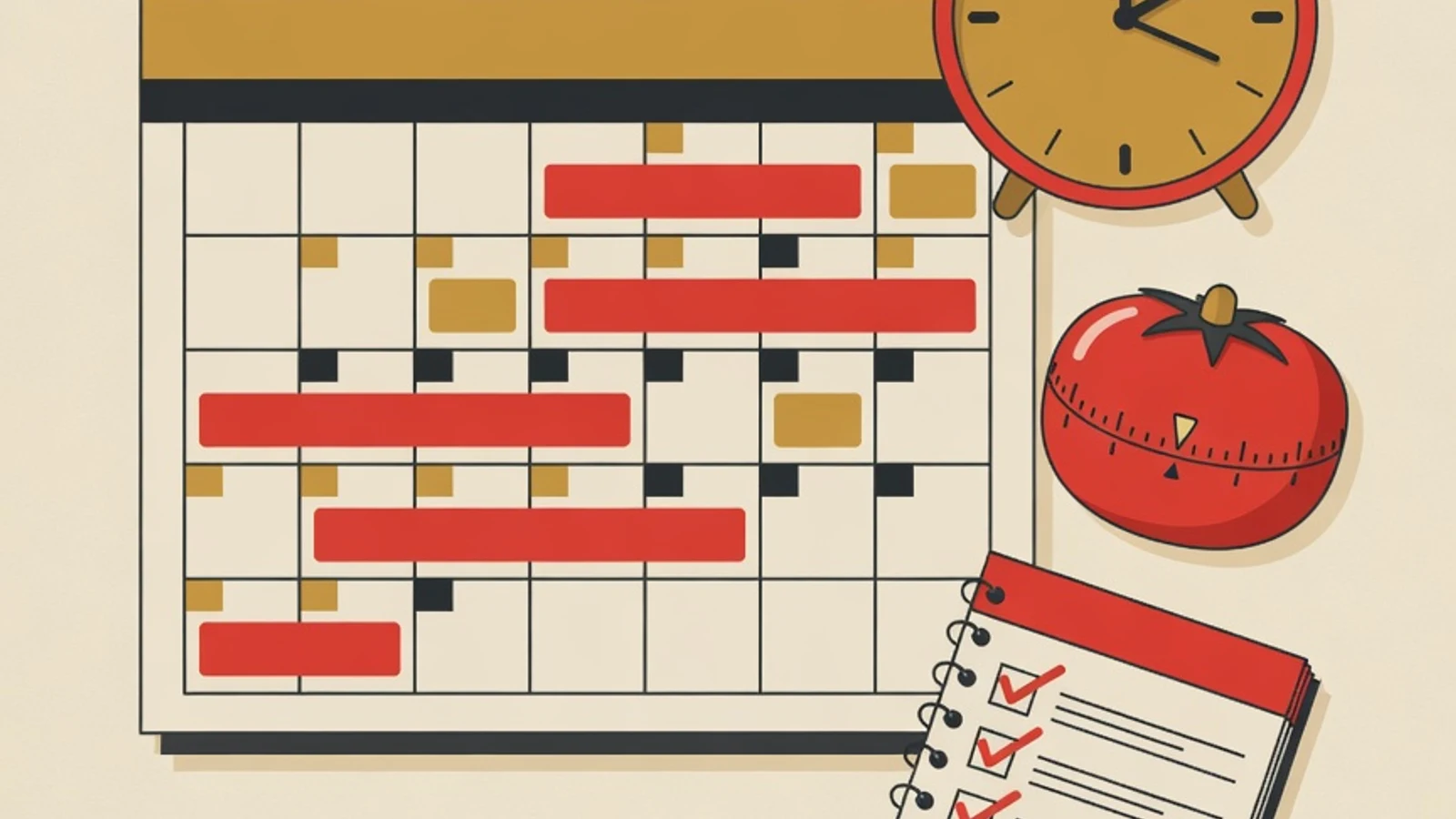
The most effective way to manage study time in high school starts by mapping the 168 hours in a week, then placing study sessions into fixed blocks before the rest of the calendar fills up. High school time management works when study is treated as an appointment already booked, with other activities arranged around it.
- Start from a weekly time audit before building a high school study schedule
- Book study blocks first, then fill the rest with activities and rest
- Protect 8 to 10 hours of sleep as recommended for teenagers
- A weekly calendar (planner or app)
- A list of all fixed activities: school hours, clubs, tutoring, worship
- A timer for focus sessions
The numbers that shape a high school study schedule
Why high school students often feel out of time
The high school workload climbs sharply above middle school. Subjects grow deeper, assignments arrive from many teachers at once, and clubs or organizations start to demand real commitment. Many students then study in a patchwork way: handling whatever feels most urgent that night, then staying up late when tests pile up. The root of the problem sits in how time is allocated. Every student holds the same 168 hours in a week, so the real question lives in where the study hours are placed. When study only fills whatever is left after every other activity, that leftover usually arrives tired and late at night. Managing study time in high school flips the order: decide first when study happens, then arrange everything else around it.
Steps to build a realistic high school study schedule
Follow this order during the first week. Once the rhythm forms, later adjustments stay light.
- 1
Audit your 168 hours across the week first
Before making a schedule, record where time actually flows over seven days. Note sleep, the commute to school, class hours, clubs, worship, meals, and screen time. Many students are surprised by how many hours slip into social media scrolling without notice. This audit gives an honest picture of how much time is genuinely free for independent study. Skipping it leaves a schedule built on guesswork that tends to collapse by the third day.
Tips- Run the audit with simple notes on your phone for 7 days
- Separate genuinely productive time from time that only feels busy
- 2
Book study blocks before anything else fills the calendar
Once the free time is clear, place independent study sessions as fixed blocks in the calendar, each with a date and time. Treat every block like an important appointment that is already booked and hard to cancel. Pick hours when energy is still strong, such as before sunset for students who tire at night, or weekend mornings. With blocks booked first, clubs and entertainment fill the remaining space, so study stops sliding into the small hours.
Tips- Name each block with a specific subject so it feels concrete
- Keep one spare block each week for surprise assignments
Avoid stacking every block into a single day. Study spread across the week sticks in memory far better than an all-night cramming session. - 3
Use short focus sessions with the Pomodoro method
Inside each block, split the time into 25-minute focus sessions broken by 5-minute breaks, then take a longer break after four sessions. This pattern, developed by Francesco Cirillo, keeps the brain fresh because every session has a visible finish line nearby. During those 25 minutes, the phone is set aside and one task is worked through. The short length makes it easier to start, which lowers the inertia at the beginning of study and makes procrastination easier to beat.
Tips- Start with two Pomodoro sessions per block, then add more slowly
- Spend the 5-minute break standing up and drinking water, away from social media
- 4
Set task priorities with the urgent-important matrix
Not all tasks carry equal weight. Sort tasks into four quadrants: urgent and important go first, important but not yet urgent get scheduled inside study blocks, urgent but less important are done quickly or handed off, and the unimportant ones are dropped. This approach helps high school students stop merely chasing the loudest task and start tending to big things like test preparation and report card grades whose impact lasts.
Tips- Review the task list every Sunday evening for the coming week
- Flag long-term important tasks so they stop losing to the merely urgent
- 5
Balance clubs, organizations, and study time
Clubs and organizations build leadership and enrich a profile during college applications. Trouble appears when they overlap with core study hours. Set a limit on how many activities can truly be handled well, then fit practice schedules around the study blocks already booked. During a packed week of competition or performance, shift study blocks to other hours within the same week instead of erasing them. This balance keeps grades steady while staying active.
Tips- Choose one or two main activities over many half-hearted ones
- Tell club coaches about a packed week early
When grades start dropping, trim the activity load before cutting into sleep. - 6
Protect sleep and breaks as part of the schedule
Sleep and rest count as part of the learning process. Teenagers in high school are advised to sleep 8 to 10 hours each night to protect memory, mood, and concentration. Set a fixed bedtime and make it the finish line of the day, so study blocks naturally end before it arrives. Keep one empty block each week for full rest without guilt. A well-rested brain absorbs lessons faster, so the same study time yields stronger understanding.
Tips- Stop screens 30 to 60 minutes before bed to fall asleep more easily
- Schedule big tests well ahead so all-nighters become unnecessary
Study as leftover time vs study booked first
| Aspect | Study as leftover time | Study as a booked block |
|---|---|---|
| Start time | Late at night when already tired | Fixed hour while energy is still good |
| Study trigger | Pressure of an urgent assignment | A schedule agreed with yourself |
| Pattern before tests | All-nighters piling up material | Steady chipping across the week |
| Effect on sleep | Sleep hours get cut | 8-10 hours of sleep stay safe |
This table shows common patterns that often occur. Each student's results still vary.
Weekly high school study schedule checklist
- Last week's time audit reviewed and adjusted
- All subject study blocks placed in the calendar
- Big projects or tests already split into small tasks across several days
- Club schedules do not clash with core study blocks
- Bedtime kept within the 8 to 10 hour range
- One spare block ready for surprise assignments
“Students who schedule study at fixed hours tend to stay more consistent than those who wait for the mood to arrive. Booked time is easier to protect than an intention that still floats.”
- Every student holds the same 168 hours each week, so the key lies in allocating the hours already owned
- Book study blocks in the calendar first, then arrange clubs and entertainment around them
- Short Pomodoro-style focus sessions make study easier to start and procrastination easier to beat
- Sleeping 8 to 10 hours and taking enough breaks are part of learning that keeps memory sharp