Preparing your child for kindergarten and preschool rests on three things you can practise at home: everyday independence such as eating and using the toilet alone, the ability to say goodbye calmly, and a daily routine that mirrors the school day. The goal is your child's sense of comfort, not early reading skills.
- Daily independence and a secure goodbye shape a smooth first day more than knowing letters
- Indonesia's 2025 age rules: playgroup at 3, kindergarten A from 4, kindergarten B from 5 as of 1 July
- A gradual six to eight week build-up helps your child start school calmly
- A simple daily schedule you can post at home
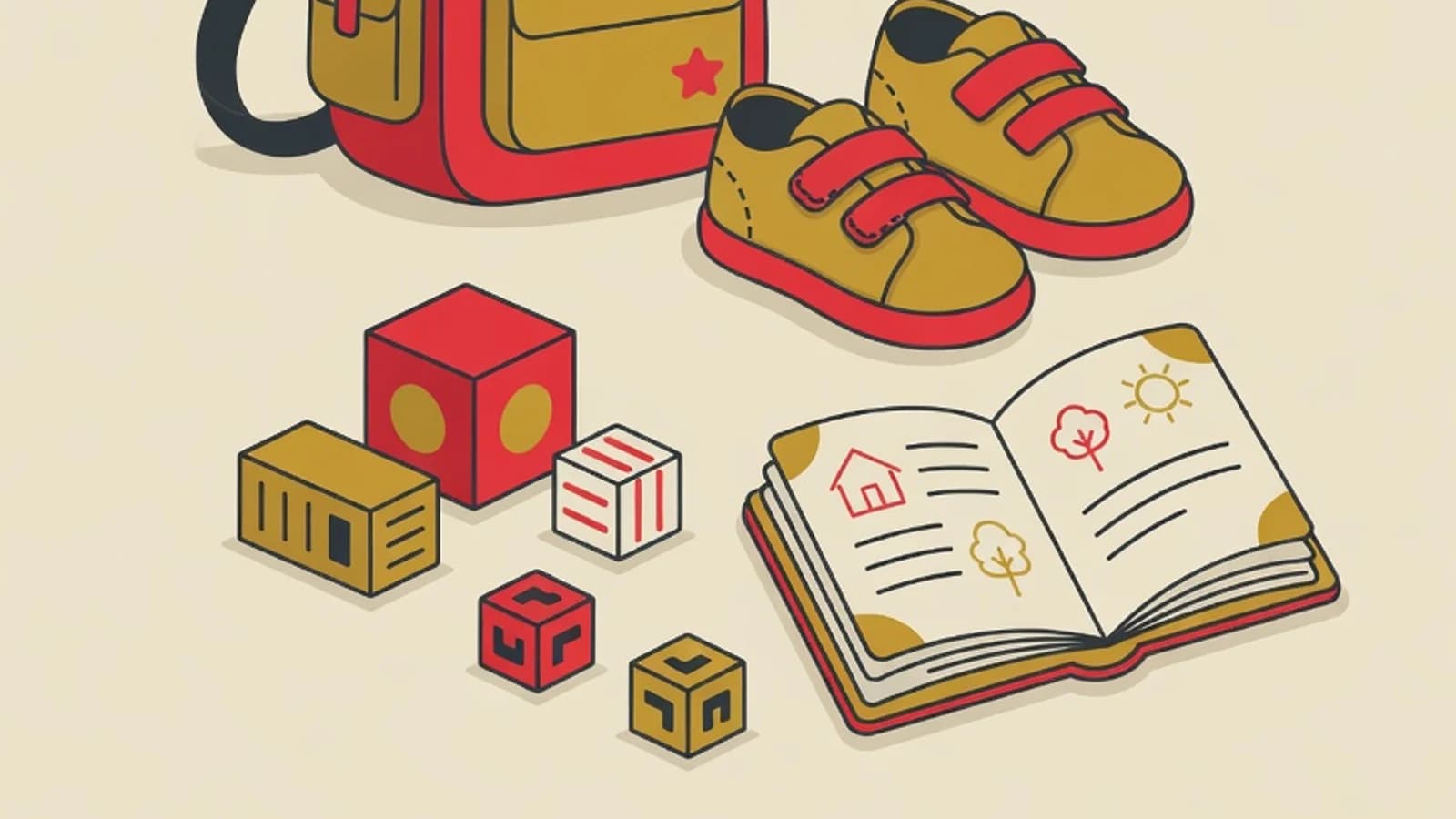
- Child-friendly essentials: a water bottle, a bag, and easy-to-wear shoes
- Storybooks about starting school to read together
Key Numbers Before Your Child Starts Kindergarten
What Readiness for Kindergarten and Preschool Really Means
A child is ready for kindergarten and preschool when they can feel safe in a room with adults other than their parents, join simple activities alongside peers, and express basic needs such as wanting a drink or the toilet. This readiness is social and emotional, not academic. Many parents assume a child must know the alphabet before their first school. In practice, early childhood teachers design play-based activities so children meet colours, shapes, and stories naturally. Early childhood is when children learn through direct experience and play. Once a child is used to following a simple routine at home, adapting to the flow of classroom activities becomes far easier. A reassuring approach to preparing your child for kindergarten grows from strengthening confidence and everyday independence, so the first day feels like an adventure they look forward to.
Basic Independence Skills Before Kindergarten
- Eating and drinking alone with utensils that fit their hands
- Telling an adult when they need the toilet and moving away from daytime nappies
- Taking off and putting on lace-free shoes and a simple jacket
- Tidying toys back into place after playing
- Expressing wishes in simple words, such as asking for help or saying they are hungry
- Waiting for a turn and sharing toys during short play with peers
Steps to Get Your Child Ready for the First Day
This sequence is designed for the six to eight weeks before starting school. Keep it relaxed and follow your child's pace.
- 1
Introduce the idea of school through stories and a short visit
Begin by building positive curiosity about school. Read storybooks about a first day at kindergarten, show photos or videos of the classroom and play yard, and describe the fun activities your child will meet, such as singing, drawing, and playing outside. If the chosen school holds an open day, take your child to see the classroom, the toilet, and the play area in person. Seeing the place beforehand reduces anxiety about unfamiliar settings. Use a light, cheerful tone so your child senses that school is a safe and exciting place.
Tips- Mention the teacher's or school's name warmly so it feels familiar
- Avoid scary phrases such as the teacher will be angry if you misbehave
- 2
Shift sleep and meal times closer to the school schedule
A well-rested child adapts more easily and manages their emotions better in class. About four weeks before starting, begin adjusting bedtime and wake-up time to approach the school rhythm. A consistent breakfast time also helps your child's body get ready for activity. A steady routine gives your child the comfort of predicting what comes next, and that keeps them calm. Apply the change gradually, shifting fifteen to thirty minutes every few days so your child's body adjusts without fuss.
Tips- Keep a fixed bedtime ritual, such as a bath, brushing teeth, then one storybook
- Prepare a simple lunch together so your child is eager to eat it at school
A tired child cries more easily and struggles to focus during the first week. - 3
Practise short goodbyes step by step
The ability to part calmly is key to your child settling into kindergarten. Practise gradually by leaving your child briefly with a trusted grandparent or relative, then extend the time little by little. Always say goodbye clearly and return exactly when you promised, because this consistency builds trust that a parent always comes back. Create a short, cheerful goodbye ritual, such as a high five or a special wave. Avoid slipping away without saying goodbye, as that only makes your child more anxious about being left.
Tips- Give a definite closing line, such as I will pick you up after you finish playing
- Send along a small comfort item if the school allows it
- 4
Build social skills through play with peers
Before starting, give your child chances to play with peers at the park, family gatherings, or a small playgroup. There they learn to wait for a turn, borrow and return toys, and greet new friends. Stay nearby without always taking over, so your child tries to resolve small disputes their own way. These social skills help your child feel comfortable in a group, which is at the heart of daily activities in kindergarten and preschool. Offer simple phrases for introducing themselves and asking to join a game.
Tips- Praise your child's effort when they share or greet someone first
- Retell happy moments with friends so your child looks forward to friendships at school
- 5
Prepare the essentials and let your child choose them
Invite your child to pick a bag, water bottle, and shoes they can put on themselves. A sense of ownership over their things makes them keener to go. Make sure clothes and shoes are simple, without many buttons or laces, so your child can manage independently at school. Label every item so nothing gets mixed up. A few days before starting, run a morning simulation, from waking up and putting on the uniform to saying goodbye, so the flow feels familiar when the first day arrives.
Tips- Choose hook-and-loop shoes so your child can wear them without help
- Practise opening and closing the water bottle until your child does it smoothly
Understanding Preschool Levels by Age
Playgroup
For children around age 3. It focuses on play, motor skills, and a gentle first introduction to a social setting.
Kindergarten Group A
Minimum age 4 as of 1 July. Children begin meeting colours, shapes, numbers, and letters through structured play.
Kindergarten Group B
Minimum age 5 as of 1 July. It strengthens the six foundational abilities as a bridge toward first grade.
Starting Early: Considerations for Parents
- Your child gets used to being in a group and following a shared routine
- Language and motor stimulation through purposeful play activities
- A chance to grow confidence in a new environment
- Every child adapts at a different pace, and some need more time
- Emotional readiness matters more as a benchmark than simply reaching an age
- Discuss the level with the teacher if your child seems uneasy about separating
“A child who feels emotionally safe is braver about exploring a new environment. That safety grows from a goodbye the child can predict and a parent who always keeps the promise to return.”
- Preparing your child for kindergarten and preschool centres on daily independence, secure goodbyes, and a steady routine
- Your child does not need to read first; kindergarten activities introduce letters and numbers through play
- Indonesia's 2025 age rules: playgroup at 3, kindergarten A from 4, kindergarten B from 5 as of 1 July
- Gradual short-goodbye practice and consistent farewells build your child's trust
- Crying on the first day is normal and usually eases within one to two weeks