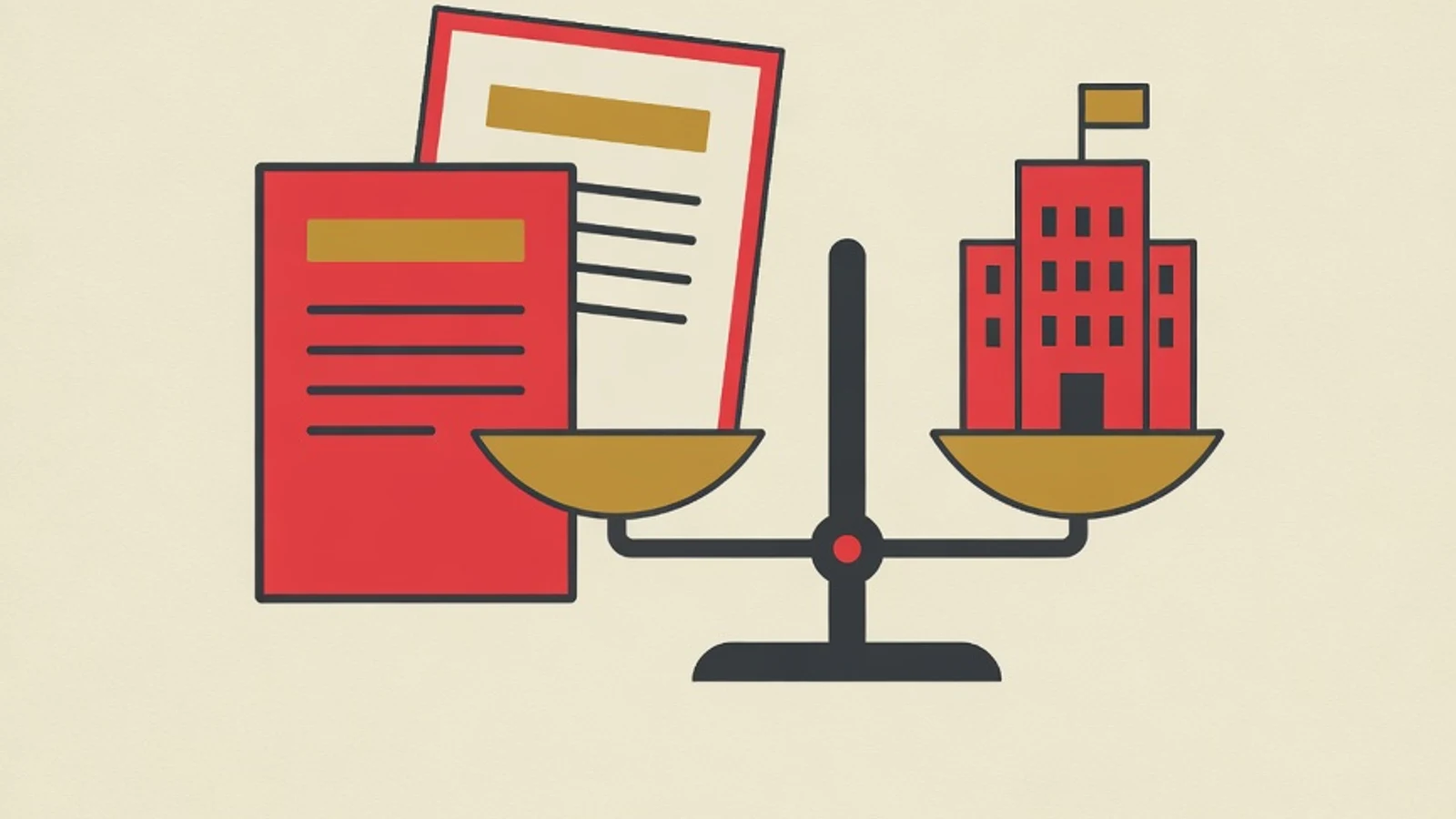
The BUMN test (Joint SOE Recruitment, RBB) and the civil service test (CPNS) differ in four main ways: organizer (FHCI vs BKN), test composition (RBB tests English and Learning Agility, both absent from the CPNS SKD), the culture assessed (SOE AKHLAK vs civil service BerAKHLAK), and final status (SOE employee vs civil servant). Understanding these differences shapes both your preparation strategy and your path.
- RBB is run by FHCI with the Ministry of SOEs, CPNS by BKN
- English and Learning Agility are tested only in RBB
- TWK material and basic reasoning reinforce preparation for both
Two Giant Selections in Numbers
Two Paths with Different Philosophies
RBB and CPNS are both national elimination-based selections competing for stable positions, and the similarity ends there. RBB hunts corporate talent. SOEs are companies: they carry business targets, market competition, and technology pressure. That is why RBB tests English (large SOEs operate across borders) and Learning Agility (fast learning in new situations). The culture assessed is AKHLAK: Amanah, Kompeten, Harmonis, Loyal, Adaptif, Kolaboratif. CPNS hunts future civil servants. The orientation is public service and accountable bureaucracy. Its SKD tests national insight (TWK), general intelligence (TIU), and personal characteristics (TKP) against the ASN BerAKHLAK value framework, which centers on service orientation. The consequences reach all the way to your study desk: an RBB applicant with weak English carries a heavy workload a CPNS applicant never feels, while the CPNS applicant faces a TIU with deeper reasoning demands.
The Full RBB vs CPNS Comparison
| Aspect | BUMN Test (RBB) | Civil Service Test (CPNS) |
|---|---|---|
| Organizer | FHCI with the Ministry of SOEs | BKN with government institutions |
| Registration portal | rekrutmenbersama.fhcibumn.id | sscasn.bkn.go.id |
| Test location | Online from home (Stages 1 and 2) | CAT at BKN test locations |
| Early-stage components | TKD, AKHLAK test, TWK | TWK, TIU, TKP (SKD) |
| Thresholds (latest reference) | TKD 58, AKHLAK 65, TWK 50 (RBB 2025) | TWK 65, TIU 80, TKP 166 |
| Later components | English (threshold 450) and Learning Agility, then field tests, interviews, LGD per SOE | SKB matching the position |
| English test | Yes, mandatory, 60% of Stage 2 | Absent from the SKD |
| Value framework | AKHLAK (SOE core values) | BerAKHLAK (civil service core values) |
| Final status | SOE employee under each company's terms | Civil servant (CPNS then PNS) |
| Common S1 age limit | 30 on the regular path, 45 experienced (RBB 2025) | Generally 35 |
Details can change per batch. Always check the latest official rules on each portal before registering.
Which Profile Fits Which Path
Leaning RBB
Comfortable in English, drawn to corporate life and business targets, wanting careers that can move across SOEs, ready for a dynamic work culture.
Leaning CPNS
Called to public service, seeking the certainty of civil servant status with structured ladders, strong in TIU reasoning, ready for placement at any institution.
Weighing It from the Test Preparation Side
- Online tests from home, zero travel costs to test locations
- TKD material is friendlier for those strong in verbal and basic logic
- One registration opens doors to hundreds of positions across many SOEs
- TWK and situational question practice carries over to CPNS too
- Mandatory English with a 450 threshold, a heavy load for the long out of practice
- Learning Agility has scarce practice material in the market
- The AKHLAK test carries 50% weight and demands its own value calibration
- Final stages (interviews, LGD) are human-scored and hard to train alone
Four Misconceptions That Often Mislead the Choice
Misconception one: SOE salaries always beat civil service pay. In reality, SOE remuneration varies enormously between companies, from highly competitive packages to regional-minimum-wage levels plus standard allowances. Civil servants have salary structures and performance allowances that also differ widely between institutions. Comparing the two paths through a single average misleads; compare the specific positions you are targeting on each path. Misconception two: civil service work is more relaxed. Government workloads vary as widely as SOE workloads. Ministries with major agendas can demand long hours, just as certain SOEs run on steady rhythms. Choose based on the kind of work that grows you, never on workload stereotypes. Misconception three: the BUMN test is easier because it is taken online from home. The online format actually adds variables: connection stability, discipline without a physical proctor, and the stamina of staring at a screen through a long test sequence. Per-component thresholds eliminate just as mercilessly. Misconception four: failing one path closes them all. Both selections appear nearly every year. Many applicants eliminated from RBB pass the civil service test months later using the same study capital, and the reverse happens too. A failed batch is diagnostic data for the next one: you learn exactly which component needs strengthening.
“Applicants preparing both paths are often surprised by the overlap: studying TWK and basic reasoning once covers most of what both need. What decides their fate is almost always each path's signature component, English for RBB and TIU depth for CPNS.”
How to Decide Your Path
- Your English simulation score: above 400 leans RBB-ready, far below means 2+ extra months of work
- Your dream work environment: business targets and corporate life (RBB) or public service and policy (CPNS)
- Your age against each limit: S1 up to 30 on the RBB regular path, generally 35 for CPNS
- Your readiness for placement: SOEs can move you across cities by business unit, civil service can place you at institutions nationwide
- Your preparation time: under 3 months, commit to one path; 6 months or more, two paths stay reasonable
- RBB and CPNS differ in organizer, portal, test composition, value framework, and final status. Understand them before choosing a path.
- English (threshold 450) and Learning Agility are tested only in RBB; deep TIU reasoning exists only in CPNS.
- TWK material, basic reasoning, and situational formats reinforce each other, making dual-path preparation realistic with 6 months.
- The most practical deciders: your English ability, your preferred work environment, and each path's age limits.